Fresh Unprocessed Goat Skin
CN → USProduct Images
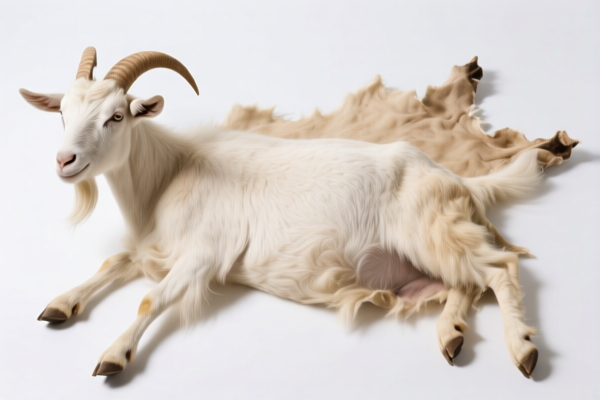
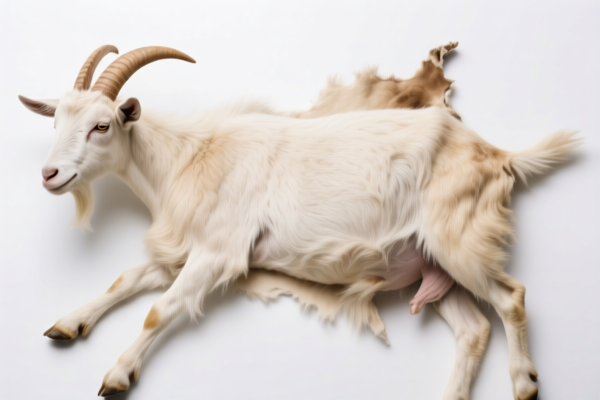
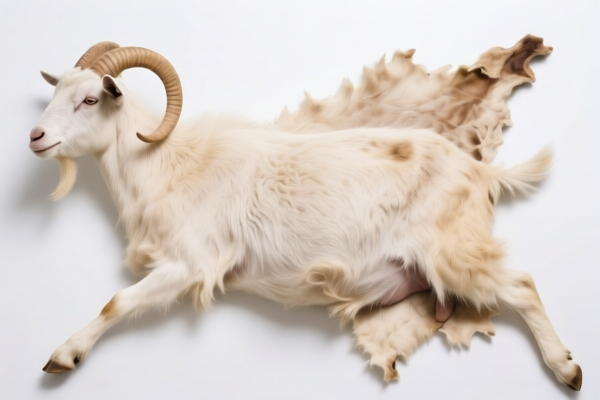
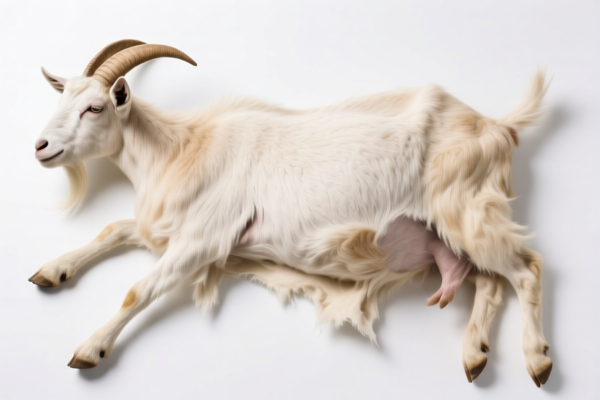
AI Analysis
🐐 Fresh Unprocessed Goat Skin (Hides & Skins)
🌐 HS Code Reference & Customs Clearance Guide | 2026 Latest Tariff Analysis | Professional Clearance Strategy
📌 Part I: Product Definition & Classification: What Exactly Is "Fresh Unprocessed Goat Skin"?
In international trade, Fresh Unprocessed Goat Skin refers to raw animal hides/skins that have been removed from the goat but have not undergone any preservation process (such as salting, drying, liming, or tanning). They are perishable goods requiring strict temperature control and rapid customs clearance to prevent spoilage.
Critical Distinction:
- Fresh/Unprocessed: Must be classified under Chapter 41 or 05 based on specific conditions.
- Salted/Dried: Even if "unprocessed" in the tanning sense, if salted/dried for preservation, they often fall under different subheadings or require different documentation.
- Tanned/Led: Fully processed leather falls under Chapter 41 headings for leather, not raw skins.
⚠️ Key Classification Point:
- If fresh, raw, and unprocessed (raw meat-like state): Typically falls under 0501 (for wool) or 4101/4102 (for cattle, sheep, goats, etc., depending on weight and type).
- Goat Skin Specifics: Goat skins are generally lighter than cattle hides. Under the Harmonized System, fresh goat skins are primarily classified under 4102.21 or 4102.31, depending on whether they are "with wool" or "without wool."
- Note: Some jurisdictions may classify very small or specific goat skins under 0501 if considered waste, but 4102 is the standard for tradeable raw skins.
📦 Part II: HS Code Classification Details (2026 Latest Tariff Authority Comparison)
| HS Code | Product Description | Applicable Scenario | Weight/Condition |
|---|---|---|---|
4102.21.00.00 |
Goat skins, with wool, fresh | Raw goat pelts with fleece intact | < 5 kg per skin |
4102.31.00.00 |
Goat skins, without wool, fresh | Raw goat skins, hair removed or naturally hairless | < 5 kg per skin |
4102.29.00.00 |
Other sheep/goat skins, with wool (other than <5kg) | Larger skins or different weight thresholds | ≥ 5 kg per skin |
4102.39.00.00 |
Other sheep/goat skins, without wool | Standard fresh goat skins ≥ 5 kg | ≥ 5 kg per skin |
0501.00.00.00 |
Wool grease; scraped wool; horsehair waste | Incorrect for skins; only for wool/hair by-products | N/A |
4101.21.00.00 |
Cattle hides, fresh | Incorrect; applies only to cattle | N/A |
🔍 Key Reminder:
- Freshness is critical: Goods must be declared as "Fresh" and may require cold chain documentation.
- "Without Wool" is standard: Most commercial goat skins are hair-deprived or naturally hairless. Use4102.31or4102.39.
- Weight threshold: Many countries use 5 kg as the dividing line between "thin" (smaller) and "thick" (larger) skins. Goat skins are typically under 5 kg, so 4102.31.00.00 is the most common code for fresh, hairless goat skins.
💰 Part III: 2026 Latest Tariff Rate Details (Including Surtaxes & Policy Add-ons)
✅ Applicable Country: United States (US)
✅ Country of Origin: China (CN)
✅ Effective Time: November 10, 2025 onwards
🎯 1. 4102.31.00.00 —— Goat Skins, Fresh, Without Wool, < 5 kg
| Item | Content |
|---|---|
| Basic Duty Rate | Free (0%) under normal MFN (Most Favored Nation) |
| Section 301 Surcharge | +25% (USITC Footnote 9903.88.01) |
| IEEPA Surcharge | +10% (For China/HK products, from Nov 10, 2025) |
| Total Duty Rate | 35% |
| Tax Calculation | CIF Value × 35% |
| De Minimis Eligibility | ❌ Not Eligible (deny_de_minimis) |
| Legal Basis Path | IEEPA:9903.01.25 → IEEPA:9903.01.24 → USITC:4102.31.00.00 → FOOTNOTE:9903.88.01 |
📌 Explanation:
- Although the base MFN rate is 0%, Section 301 tariffs (+25%) and IEEPA surcharges (+10%) apply to Chinese-origin raw animal skins.
- Total effective duty: 35%.
- This is a high-risk category for customs audits due to the perishable nature and potential for misclassification (e.g., as processed leather).
🎯 2. 4102.21.00.00 —— Goat Skins, Fresh, With Wool, < 5 kg
| Item | Content |
|---|---|
| Basic Duty Rate | Free (0%) under MFN |
| Section 301 Surcharge | +25% |
| IEEPA Surcharge | +10% |
| Total Duty Rate | 35% |
| Tax Calculation | CIF Value × 35% |
| De Minimis Eligibility | ❌ Not Eligible |
| Legal Basis Path | Same as above |
📌 Note:
- Skins with wool are less common in global trade but still subject to the same surcharges.
- Wool content may require additional veterinary inspection.
🛠️ Part IV: Customs Clearance Practical Advice (Real-World Pitfall Avoidance Guide)
✅ 1. Required Documentation Checklist (No Exceptions)
| Document | Mandatory | Explanation |
|---|---|---|
| ✅ Veterinary Health Certificate | ✔️ | Issued by the exporting country’s veterinary authority, confirming freedom from disease (e.g., Foot-and-Mouth Disease). |
| ✅ Phytosanitary/Sanitary Certificate | ✔️ | Some countries require this for raw animal products. |
| ✅ Commercial Invoice | ✔️ | Must clearly state: “Fresh, Unprocessed Goat Skins, HS Code 4102.31.00.00.” |
| ✅ Packing List | ✔️ | Include weight per skin, number of skins, and preservation method (if any, e.g., wet-salted). |
| ✅ Cold Chain Documentation | ✔️ | Proof of temperature control during transit to prevent spoilage. |
| ✅ Certificate of Origin | ✔️ | To claim any preferential rates (if applicable from non-China origins). |
| ✅ Product Photos | ✔️ | Show fresh state, no tanning, no chemicals. |
✅ 2. Declaration Tips (Key Mnemonic)
🔥 “Fresh means Vet, Wool vs. Hair, Weight Matters, 35% Tax!”
| Scenario | Correct Declaration | Incorrect Action |
|---|---|---|
| Fresh goat skins, <5kg, hairless | 4102.31.00.00 |
Declare as "Leather" → 0% base but high penalty for misclassification |
| Fresh goat skins, <5kg, with wool | 4102.21.00.00 |
Declare as "Textile" → Rejected |
| Salted/Dried goat skins | 4102.39.00.00 or 4102.29.00.00 |
Declare as "Fresh" → Violation |
| Tanned Goat Leather | 4104.41 or 4104.42 |
Declare as "Fresh Skins" → Seizure |
✅ 3. Special Handling Instructions
| Scenario | Advice |
|---|---|
| Wet-Salted Skins | Still considered "Fresh/Unprocessed" for HS purposes, but must declare "Wet-Salted" and provide salt content info. |
| Spoilage Risk | Use refrigerated containers. Delays >48 hours may result in rejection. |
| Vet Inspection | Expect USDA (US) or equivalent agency inspection upon arrival. |
| Non-China Origin | If from Australia, New Zealand, or EU, Section 301/IEEPA surcharges do NOT apply. Base rate may still be 0%, saving 35%. |
🌍 Part V: Global Market Customs Comparison (2026 Latest)
| Country/Region | Recommended HS Code | Duty (China Origin) | Certification Required | Remarks |
|---|---|---|---|---|
| 🇺🇸 USA | 4102.31.00.00 |
35% | USDA Vet Cert, CBP | High tariff, strict vet check |
| 🇨🇳 China | 4102.31.00.00 |
8% | N/A | Lower duty, but import quota may apply |
| 🇪🇺 EU | 4102.31 |
0% | Veterinary Health Cert | Free trade, but strict animal health rules |
| 🇬🇧 UK | 4102.31 |
0% | Veterinary Health Cert | Post-Brexit rules apply |
| 🇦🇺 Australia | 4102.31 |
0% | Import Permit | Strict biosecurity; may ban from certain countries |
📌 Conclusion:
- USA is the most expensive market due to 35% total duty.
- EU/UK are duty-free but have strict veterinary controls.
- China has moderate duty (8%) but may require import licenses.
- Australia/New Zealand have low duties but high biosecurity barriers.
📌 Part VI: Common Mistakes & Pitfall Guide (Lessons Learned)
❌ Mistake 1: Declaring fresh skins as "Processed Leather"
👉 Consequence: Seizure + Fine. Customs will inspect and find raw material.
❌ Mistake 2: Forgetting Veterinary Certificate
👉 Consequence: Quarantine + Destruction. US/China/EU will reject without vet cert.
❌ Mistake 3: Misclassifying weight
👉 Consequence: Wrong HS code → 35% vs 0% base rate → Audit + Penalty.
❌ Mistake 4: Not declaring "Fresh"
👉 Consequence: If declared as "Dried" but found fresh, misdeclaration penalty.
✅ Correct Declaration Example:
“Fresh, Unprocessed Goat Skins, Without Wool, Less Than 5 Kg Per Skin, HS Code 4102.31.00.00, Origin: China, Vet Cert Attached.”
🎯 Part VII: Conclusion: Precision Declaration Saves 35%!
🎯 Remember:
🔹 “Fresh Needs Vet, Wool vs Hair, Weight <5kg, 35% Tax!”
🔹 “HS Code 4102.31 is king for fresh goat skins under 5kg.”
🔹 “No Vet Cert? No Entry!”
📌 Pro Tip:
If your goat skins are sourced from Australia, New Zealand, or the EU, you can avoid the 35% US surcharge entirely. Consider supply chain diversification to reduce costs.
📣 Immediate Action:
📞 Consult with a customs broker + Provide Vet Cert + Apply for Pre-Ruling if unsure.
🚀 Clear customs smoothly, avoid spoilage, and maximize profit!
✨ Professional Customs Clearance Starts with Accurate Classification!
💼 Every Percent Counts in Raw Material Trade!
Customer Reviews
About HS Code Classification
The Harmonized System (HS) is an internationally standardized nomenclature developed by the World Customs Organization (WCO) to classify traded products. Over 200 countries use the HS system as the basis for customs tariffs, trade statistics, and import/export regulations.
Each HS code follows a hierarchical structure:
- Chapter (2 digits) — Broad category of goods (e.g., Chapter 84: Machinery and Mechanical Appliances)
- Heading (4 digits) — More specific grouping within the chapter
- Subheading (6 digits) — Internationally standardized breakdown, used by all WCO member countries
- National subdivisions (8-10 digits) — Country-specific extensions for further classification, such as US HTSUS 10-digit codes
Correct HS code classification is essential for smooth customs clearance, accurate duty payment, and compliance with trade regulations. Misclassification can lead to customs delays, overpayment of duties, or penalties.
When importing from CN to US, the applicable tariff rates may include:
- Most-Favored-Nation (MFN) rate — The standard duty rate applied to WTO members
- General rate — Applied to countries without trade agreements
- Trade remedy duties — Additional tariffs such as Section 301 (anti-dumping), Section 232 (national security), or countervailing duties
The information provided on this page is for reference purposes only. For official classification, please consult with your local customs authority or a licensed customs broker.