Fresh raw bovine hides for leather goods
CN → US| HS Code | Tariff Rate | Origin | Destination | Doc |
|---|---|---|---|---|
| 4101203500 | 19.9% | CN | US | Official Doc |
| 4101503500 | 19.9% | CN | US | Official Doc |
| 4101901020 | 17.5% | CN | US | Official Doc |
| 4101901010 | 17.5% | CN | US | Official Doc |
| 4101201010 | 17.5% | CN | US | Official Doc |
Product Images
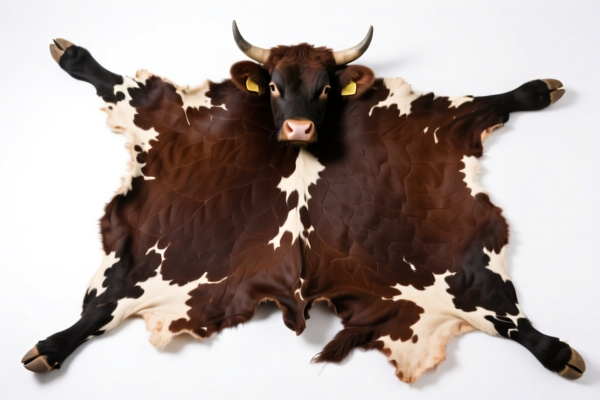
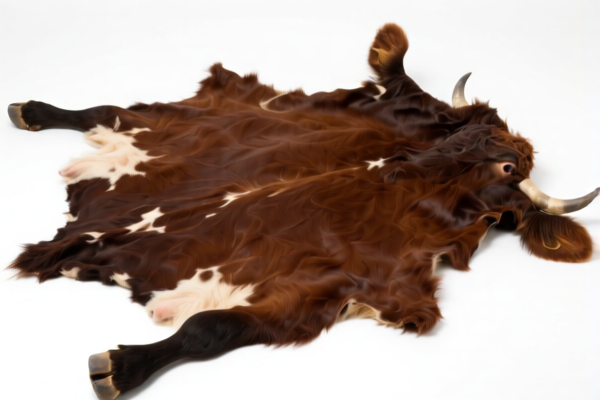
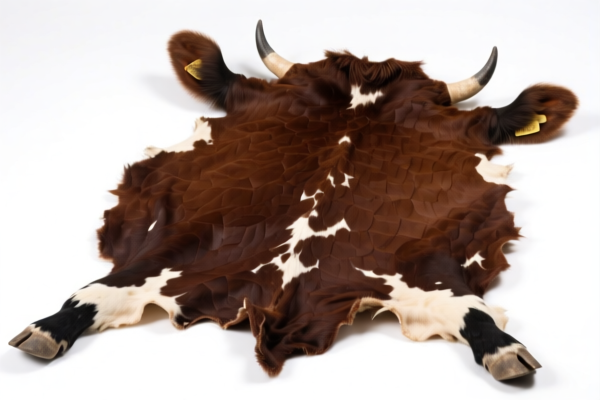
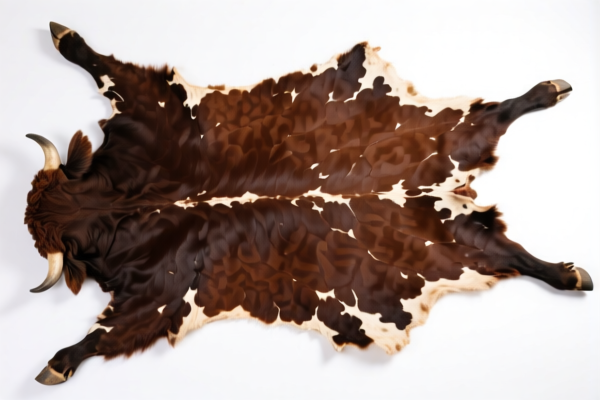
AI Analysis
🐂 Fresh Raw Bovine Hides for Leather Goods (生牛皮/水牛皮)
🌐 HS Code Classification & Customs Clearance Guide | 2026 Tax Regulations | Professional Clearance Strategy
📌 1. Product Definition & Classification: Do You Really Understand "Raw Hides"?
Raw bovine hides are the primary raw material for the global leather industry. In international trade, they are strictly categorized by species (Bovine/Cattle vs. Buffalo) and preservation state (Wet-Salted vs. Green/Fresh). Proper classification is critical because errors can lead to severe penalties, delays, or incorrect duty calculations.
⚠️ Key Distinction Points:
- Species Matters: "Bovine" typically refers to cattle/cows (4101.20,4101.90), while Buffalo is classified separately (4101.50).
- Preservation State Matters:
- Wet-Salted (鲜盐生): Treated with salt immediately to preserve. Lower base duty.
- Green/Fresh (生水): Unsalted or lightly treated. Higher base duty due to faster spoilage risk and different processing requirements.
- Unprocessed (未鞣制): Must NOT be tanned or curried; if processed, it falls under Chapter 41 Chapter 42.
📦 2. HS Code Classification Details (2026 Latest Tariff Book)
Based on the provided data, here are the five specific HS Codes for raw bovine/buffalo hides, their summaries, and tax details.
| HS Code | Summary & Description | Preservation State | Base Duty | Additional Duties | Total Tax Rate |
|---|---|---|---|---|---|
| 4101.20.35.00 | Raw Water Buffalo Hide. Material: Water Buffalo. State: Green/Unsalted. Fits characteristics of un-tanned raw hide. | Green/Fresh (生水) | 2.4% | Add. 7.5% + Section 301: 10% | 19.9% |
| 4101.50.35.00 | Raw Water Buffalo Hide. Material: Buffalo. Form: Un-tanned, only preserved. | Preserved/Un-tanned (未经鞣制仅保存处理) | 2.4% | Add. 7.5% + Section 301: 10% | 19.9% |
| 4101.90.10.20 | Fresh Wet-Salted Cowhide. Material: Cow. Form: Wet-Salted. Fits un-pre-tanned characteristics. | Wet-Salted (鲜盐生) | 0.0% | Add. 7.5% + Section 301: 10% | 17.5% |
| 4101.90.10.10 | Fresh Wet-Salted Cowhide. Material: Cow. Form: Wet-Salted. Fits preservation definition. | Wet-Salted (鲜盐生) | 0.0% | Add. 7.5% + Section 301: 10% | 17.5% |
| 4101.20.10.10 | Raw Bovine Hide for Leather Art. Material: Untanned Bovine Raw Hide. Primary leather form. | Green/Fresh (生皮) | 0.0% | Add. 7.5% + Section 301: 10% | 17.5% |
🔍 Critical Note:
- Codes ending in.10(4101.20.10.10, 4101.90.10.10/20) generally have a 0% Base Duty but still incur additional tariffs.
- Codes ending in.35(4101.20.35.00, 4101.50.35.00) have a 2.4% Base Duty.
- Section 301 (122 Clause): The "122条款关税 10%" refers to U.S. Trade Act Section 301 tariffs on Chinese goods. This is non-negotiable for goods originating from China.
💰 3. 2026 Tariff Rate Breakdown (Including Add-on Taxes & Policy Surcharges)
✅ Applicable Country: USA (US)
✅ Origin: China (CN) (Inferred from "122条款/Section 301" presence)
✅ Effective Date: Current regulations (Post-2025)
🎯 1. Wet-Salted Cowhide (4101.90.10.10 / 4101.90.10.20)
| Item | Detail |
|---|---|
| Base Duty (MFN) | 0.0% |
| Additional Duty (USITC/Reciprocal) | +7.5% |
| Section 301 Duty (122 Clause) | +10% |
| Total Tax Rate | 17.5% |
| Tax Calculation | CIF Value × 17.5% |
| De Minimis Exemption | ❌ NO (Deny De Minimis for Section 301 goods) |
| Legal Reference Path | USITC:4101.90.10 → Footnote: Additional 7.5% → IEEPA/Section 301: 10% |
📌 Explanation:
- Wet-salted hides enjoy a 0% base duty due to their standardized preservation method.
- However, the 7.5% additional duty (likely reciprocal or specific trade policy) and 10% Section 301 tariff apply, resulting in a total 17.5%.
🎯 2. Raw/Green Water Buffalo Hide (4101.20.35.00 / 4101.50.35.00)
| Item | Detail |
|---|---|
| Base Duty (MFN) | 2.4% |
| Additional Duty (USITC/Reciprocal) | +7.5% |
| Section 301 Duty (122 Clause) | +10% |
| Total Tax Rate | 19.9% |
| Tax Calculation | CIF Value × 19.9% |
| De Minimis Exemption | ❌ NO |
| Legal Reference Path | USITC:4101.20/4101.50 → Footnote: Additional 7.5% → IEEPA/Section 301: 10% |
📌 Explanation:
- Green/Fresh buffalo hides have a 2.4% base duty.
- With the same 7.5% + 10% add-ons, the total tax is 19.9%.
- Why higher? Raw green hides are less stable than wet-salted ones, often subject to stricter phytosanitary and base duties.
🎯 3. Raw Bovine Hide for Art (4101.20.10.10)
| Item | Detail |
|---|---|
| Base Duty (MFN) | 0.0% |
| Additional Duty (USITC/Reciprocal) | +7.5% |
| Section 301 Duty (122 Clause) | +10% |
| Total Tax Rate | 17.5% |
| Tax Calculation | CIF Value × 17.5% |
| De Minimis Exemption | ❌ NO |
| Legal Reference Path | USITC:4101.20 → Footnote: Additional 7.5% → IEEPA/Section 301: 10% |
📌 Note:
- Despite being "raw," this specific subheading has a 0% base duty.
- Total rate is 17.5%, same as wet-salted cowhide.
🛠️ 4. Customs Clearance Practical Advice (Anti-Pitfall Guide)
✅ 1. Required Documentation Checklist (Non-Negotiable)
| Document | Must Provide? | Notes |
|---|---|---|
| ✅ Commercial Invoice | ✔️ | Must clearly state: "Raw Bovine Hide," "Wet-Salted" or "Green," Weight, Value. |
| ✅ Packing List | ✔️ | Detail weight per bundle, number of hides, and preservation method. |
| ✅ Phytosanitary Certificate | ✔️ | CRITICAL: Raw hides are high-risk for BSE (Mad Cow Disease) and parasites. Must come from approved facilities. |
| ✅ Veterinary Health Certificate | ✔️ | Proof of health from origin country. |
| ✅ Product Description | ✔️ | Specific: "Un-tanned, Wet-Salted, Bovine Hide, Origin: China." |
| ✅ Origin Certificate (if applicable) | ❌ | Not for preferential treatment (Section 301 applies), but may help in other contexts. |
✅ 2. Declaration Tips (Key Mantra)
🔥 "Species Clear, State Precise, Salted vs. Green, Duty Differs!"
| Scenario | Correct Declaration | Wrong Action |
|---|---|---|
| Wet-Salted Cowhide | 4101.90.10.10 or 4101.90.10.20 |
Misclassify as "Green" → 19.9% instead of 17.5% |
| Green Water Buffalo | 4101.20.35.00 |
Misclassify as "Cowhide" → Incorrect base duty |
| Tanned/Processed Leather | NOT Chapter 41 | Declaring as "Raw Hide" → Smuggling/Fraud Risk! |
| Small Samples | Check De Minimis | ❌ No De Minimis for Section 301 goods! |
🚨 Warning:
- "Raw" vs. "Tanned": If the hide has been dyed, tanned, or curried, it is NO LONGER a raw hide. It falls under Chapter 41 (Processed Leather) or Chapter 42 (Articles of Leather). Declaring processed leather as raw hide is customs fraud. - Section 301: All goods from China are subject to the 10% additional tariff. No loopholes for "artistic" or "small" shipments unless explicitly exempted (rare for hides).
✅ 3. Special Cases
| Scenario | Handling Advice |
|---|---|
| OEM/Contract Manufacturing | Provide contract and specifications. Still subject to Section 301 if origin is China. |
| Mixed Shipments (Bovine + Buffalo) | Declare separately. Do not mix 4101.20 and 4101.50 in one line item. |
| High-Value Art Hides | Ensure 4101.20.10.10 is used if specifically for leather art. Misclassification can lead to audits. |
| Spolied/Defective Hides | If condition is poor, declare as "Rejection Quality." May still incur duties, but value basis may change. |
🌍 5. Global Customs Clearance Comparison (2026 Latest)
| Country/Region | Recommended HS Code | Base Duty | Additional Tax | Total Rate | Remarks |
|---|---|---|---|---|---|
| 🇺🇸 USA | 4101.90.10.10 |
0.0% | +7.5% + 10% (Sec 301) | 17.5% | Strict phytosanitary checks. |
| 🇨🇳 China (Import) | 4101.90.10.10 |
Varies | None | ~13% | Check latest Chinese tariff book. |
| 🇪🇺 EU | 4101.10 / 4101.20 |
0-12% | None | ~0-12% | No Section 301. Strict BSE rules. |
| 🇬🇧 UK | 4101.20.10 |
0-12% | None | ~0-12% | Post-Brexit rules apply. |
📌 Conclusion:
- USA has the highest complexity due to Section 301 (10%) and Reciprocal (7.5%) duties.
- EU/UK focus on Phytosanitary & BSE Compliance rather than high tariffs.
- China may have different base rates; verify local tariff book.
📌 6. Common Mistakes & Pitfall Guide (Lessons Learned)
❌ Mistake 1: Declaring "Tanned Leather" as "Raw Hide"
👉 Consequence: Customs seizure, heavy fines, potential criminal charges for fraud.
❌ Mistake 2: Ignoring "Preservation State" (Wet-Salted vs. Green)
👉 Consequence: Wrong HS Code → Incorrect Duty (17.5% vs 19.9%) → Underpayment Penalty.
❌ Mistake 3: Assuming De Minimis Applies to Small Shipments
👉 Consequence: Section 301 goods (China-origin) DO NOT qualify for de minimis. Full duty applies.
❌ Mistake 4: Missing Phytosanitary Certificate
👉 Consequence:货物滞留/退运 (Hold/Return). Raw hides require strict health proof.
✅ Correct Practice:
"Raw Bovine Hides, Wet-Salted, Un-tanned, Origin: China, Weight: 500kg, HS Code: 4101.90.10.10"
🎯 7. Conclusion: Professional Classification, Safe Clearance, Cost Control!
🎯 Remember the Mantra:
🔹 "Wet-Salted is 17.5%, Green Buffalo is 19.9%, Section 301 is 10%, De Minimis is DENIED!"
🔹 "HS Code Determines Duty, Phyto Cert Prevents Return, Accurate Declaring Saves Money!"
📌 Pro Tip:
If your hides are originating from Vietnam, Mexico, or Thailand, you MAY be eligible to avoid the Section 301 (10%) tariff.
However, Base Duty (0% or 2.4%) and Additional Duty (7.5%) may still apply.
Recommend: Apply for Advance Ruling and provide Certificate of Origin to optimize costs.
📣 Immediate Action:
📞 Contact a Licensed Customs Broker + Provide Product Photos + Apply for HS Code Advance Ruling
🚀 Ensure Phytosanitary Certificate is issued before shipment!
💡 Let your raw hides, clear customs smoothly, reduce costs, and maximize profit!
✨ Professional Customs Clearance Starts with Precise Classification!
💼 Your Every Dollar of Cost Deserves Precise Calculation!
Customer Reviews
About HS Code Classification
The Harmonized System (HS) is an internationally standardized nomenclature developed by the World Customs Organization (WCO) to classify traded products. Over 200 countries use the HS system as the basis for customs tariffs, trade statistics, and import/export regulations.
Each HS code follows a hierarchical structure:
- Chapter (2 digits) — Broad category of goods (e.g., Chapter 84: Machinery and Mechanical Appliances)
- Heading (4 digits) — More specific grouping within the chapter
- Subheading (6 digits) — Internationally standardized breakdown, used by all WCO member countries
- National subdivisions (8-10 digits) — Country-specific extensions for further classification, such as US HTSUS 10-digit codes
Correct HS code classification is essential for smooth customs clearance, accurate duty payment, and compliance with trade regulations. Misclassification can lead to customs delays, overpayment of duties, or penalties.
When importing from CN to US, the applicable tariff rates may include:
- Most-Favored-Nation (MFN) rate — The standard duty rate applied to WTO members
- General rate — Applied to countries without trade agreements
- Trade remedy duties — Additional tariffs such as Section 301 (anti-dumping), Section 232 (national security), or countervailing duties
The information provided on this page is for reference purposes only. For official classification, please consult with your local customs authority or a licensed customs broker.