Fridge
CN → US| HS Code | Tariff Rate | Origin | Destination | Doc |
|---|---|---|---|---|
| 8419899520 | 39.2% | CN | US | Official Doc |
| 8418100085 | 35.0% | CN | US | Official Doc |
| 8418210010 | 35.0% | CN | US | Official Doc |
| 8418100010 | 35.0% | CN | US | Official Doc |
| 8418100090 | 35.0% | CN | US | Official Doc |
Product Images
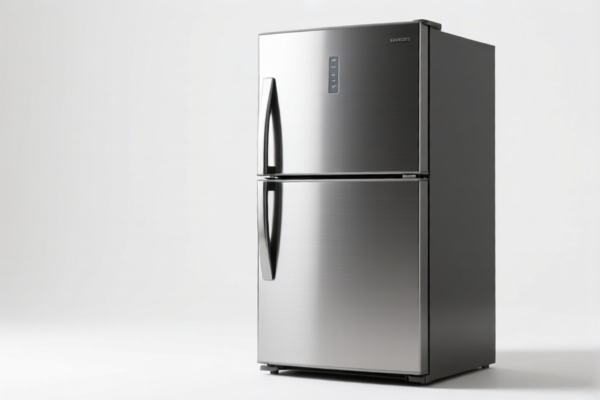
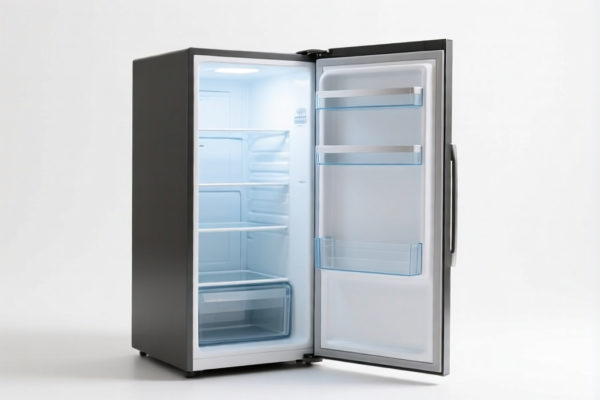
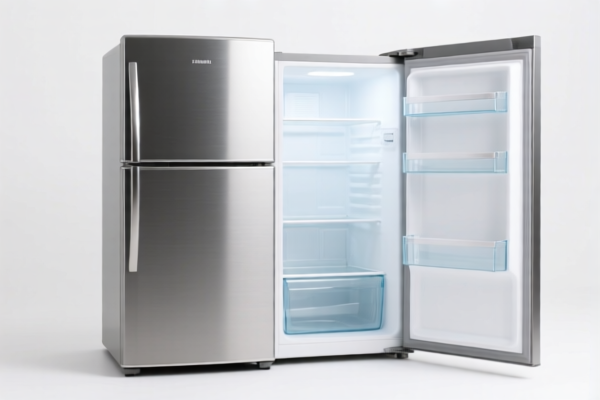
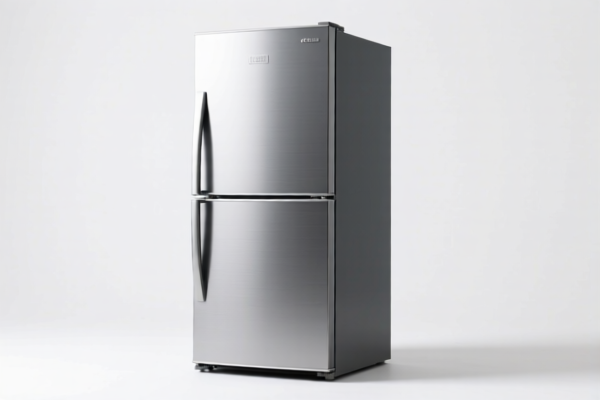
AI Analysis
🧊 Fridges (Refrigerators & Freezers)
🌐 HS Code Reference & Customs Clearance Guide | 2026 Latest Tariff Analysis | Professional Strategy for Cold Chain Equipment
📌 I. Product Definition & Classification: Do You Truly Understand "Fridges"?
A "Fridge" in international trade is not a single unified category. It is broadly classified based on function (cooling vs. freezing), capacity, and mechanical structure. The complexity lies in distinguishing between complete domestic units, commercial cooling appliances, and specific sub-capacity segments.
Domestic Refrigerators/Freezers (HS Chapter 8418): Complete, self-contained electric appliances for household or similar use, integrating compressors, condensers, and insulation. Food/Beverage Cooling Equipment (HS Chapter 8419): Mechanical devices specifically designed for the cooling of food or beverages, often used in commercial or semi-industrial settings, or distinct from standard household units.
⚠️ Critical Distinction Points:
- If the device is a complete, standalone household unit (with compressor, thermostat, shelves) → Generally 8418.10 or 8418.21.
- If the device is a commercial-grade cooling unit or a specific "mechanical plant" for food/beverage cooling that doesn't fit the standard domestic definition → 8419.89.
- Capacity Matters: Units with a refrigerating capacity below 184 liters may fall under specific sub-headings (e.g., 8418.21) compared to larger models.
📦 II. HS Code Classification Details (2026 Latest Tariff Authority Alignment)
Based on the provided dataset, here are the precise classifications for Fridge-related products. Note that while all relate to "cooling," the specific HS Code determines the base tariff rate.
| HS Code | Product Description | Key Characteristics | Base Tariff |
|---|---|---|---|
8419.89.95.20 |
Cooling Equipment for Food & Beverages | Mechanical apparatus; completed unit; categorized broadly as cooling equipment rather than standard domestic fridge. | 4.2% |
8418.10.00.85 |
Refrigerator / Electric Fridge | Compressor-type; complete household unit; fits the general definition of a refrigerator. | 0.0% |
8418.21.00.10 |
Small Refrigerator | Capacity < 184 Liters; small household appliance; specific volume restriction applies. | 0.0% |
8418.10.00.10 |
Small Refrigerator / Freezer Cabinet | Household refrigerating appliance; combined refrigerator/freezer unit. | 0.0% |
8418.10.00.90 |
Refrigerator & Freezer Machine | Combined refrigerating/freezing equipment; complete unit definition. | 0.0% |
🔍 Key Observation:
-8419.89.95.20is the only item with a 4.2% Base Tariff. It is often used for commercial-grade or specific "food/beverage cooling" devices that do not strictly fall under the household "refrigerator" headings (8418).
- All 8418 entries have a 0.0% Base Tariff, but they are subject to the same high additional tariffs as the 8419 item.
💰 III. 2026 Latest Tariff Rate Breakdown (Including Surtaxes & Policy Add-ons)
✅ Applicable Country: United States (US)
✅ Origin: China (CN)
✅ Effective Date: Current ongoing trade measures (Section 301 & Section 122)
All listed HS Codes for Fridge products are subject to a Total Tax Rate of 35.0% or 39.2% depending on the base rate. Here is the detailed breakdown of the tax components.
🎯 1. Standard Domestic Fridges (HS Codes: 8418.10.00.85, 8418.21.00.10, 8418.10.00.10, 8418.10.00.90)
These codes represent the vast majority of household refrigerators and freezers.
| Component | Rate | Legal Basis / Description |
|---|---|---|
| Base Tariff | 0.0% | Standard Most Favored Nation (MFN) rate for these subheadings. |
| Section 301 Surtax | +25.0% | Additional duty imposed on Chinese goods under USTR Section 301 investigations. |
| Section 122 Surtax | +10.0% | Note: The data specifies "122 Clause Tariff 10%". This likely refers to a specific trade enforcement or administrative duty often cited in recent datasets alongside Section 301. |
| Total Tax Rate | 35.0% | 0.0% + 25.0% + 10.0% |
| Tax Calculation | CIF Value × 35.0% | Applied to the Cost, Insurance, and Freight value. |
| De Minimis Eligibility | ❌ No | Section 301 goods are not eligible for the $800 de minimis exemption. |
📌 Explanation:
- Although the base tariff is free (0%), the 35% total burden is significant.
- The 25% is the standard Section 301 rate for Chapter 84 machinery/appliances.
- The 10% "Section 122" or additional duty increases the cost further, making accurate classification critical.
🎯 2. Food & Beverage Cooling Equipment (HS Code: 8419.89.95.20)
This code is used for specific cooling devices that may be commercial or distinct from standard domestic fridges.
| Component | Rate | Legal Basis / Description |
|---|---|---|
| Base Tariff | 4.2% | Standard MFN rate for this specific subheading. |
| Section 301 Surtax | +25.0% | Additional duty under USTR Section 301. |
| Section 122 Surtax | +10.0% | Additional duty applied to this category. |
| Total Tax Rate | 39.2% | 4.2% + 25.0% + 10.0% |
| Tax Calculation | CIF Value × 39.2% | Applied to the Cost, Insurance, and Freight value. |
| De Minimis Eligibility | ❌ No | Not eligible for de minimis due to Section 301 status. |
📌 Explanation:
- This category is 4.2% more expensive in total tax than standard household fridges (39.2% vs. 35.0%) because it starts with a 4.2% base tariff.
- Misclassifying a commercial cooling unit as a household fridge (8418) could lead to underpayment of base duties, resulting in penalties.
🛠️ IV. Customs Clearance Practical Advice (Combat Pitfalls)
✅ 1. Documentation Checklist (Mandatory)
| Document | Required? | Details |
|---|---|---|
| ✅ Product Specification Sheet | ✔️ | Must include refrigerating capacity (liters), type (compressor/thermoelectric), and voltage. |
| ✅ Circuit Diagram / Schematic | ✔️ | To prove it is a complete electrical appliance (8418/8419) and not a mere part. |
| ✅ Product Photos (Labeled) | ✔️ | Show the unit fully assembled, including doors, shelves, and control panels. |
| ✅ Commercial Invoice | ✔️ | Clearly state "Electric Refrigerator" or "Cooling Equipment for Food/Beverage" and HS Code. |
| ✅ Packing List | ✔️ | Itemize accessories (power cord, shelves) to ensure they are not declared separately. |
| ✅ FCC Certification | ✔️ | Required for all electronic appliances emitting radio frequency or using electronic controls. |
✅ 2. Declaration Strategies (Key Rules)
🔥 Mantra: "Complete Unit, Full Description, Capacity Stated, Avoid Splitting!"
| Scenario | Correct Declaration | Incorrect Practice | Consequence |
|---|---|---|---|
| Household Fridge (>184L) | 8418.10.00.85 or .90 |
Misdeclare as "Cooling Machine" (8419) | May face higher base duty (4.2%) or audit for misclassification. |
| Small Fridge (<184L) | 8418.21.00.10 |
Omit capacity in description | Risk of misclassification; customs may assign default higher-rate code. |
| Commercial Cooler | 8419.89.95.20 |
Declare as "Household Fridge" | Underpayment of Base Duty (4.2% vs 0%) → Penalties + Back Taxes. |
| Disassembled Fridge | Ship as Whole | Declare parts separately (Compressor + Door) | Parts may face higher duties or be deemed incomplete assembly. |
✅ 3. Special Case Handling
| Situation | Recommendation |
|---|---|
| OEM/White Label Fridges | Ensure the invoice matches the manufacturer's technical sheet. "White label" does not change the HS code. |
| Smart Fridges with Touchscreens | Still classified under 8418 (Electrical Refrigerating Appliances). Do not classify as "Data Processing Machines" (8543). |
| Wine Coolers | If designed for household use, often fall under 8418. If specialized for preservation with precise temp control, may be 8419. Check technical specs carefully. |
| Portable/Compressor-less Coolers | If thermoelectric, still generally 8418. If just a box with ice, no HS code for "cooling" applies. |
🌍 V. Global Market Context (2026 Comparison)
| Market | Recommended HS Code (Household) | Total Tax Burden (China Origin) | Key Certification |
|---|---|---|---|
| 🇺🇸 USA | 8418.10.xxxx |
35.0% (Base 0% + 35% Surtax) | FCC, Energy Star (Voluntary) |
| 🇪🇺 EU | 8418.21 / 8418.69 |
~0% - 4% (Most Free) | CE, ErP Labeling |
| 🇨🇳 China | 8418.10 |
~5% - 8% | CCC Mark |
| 🇯🇵 Japan | 8418.21 / 8418.29 |
~0% - 2.5% | PSE Mark |
📌 Conclusion:
- The US market is uniquely punitive for Chinese refrigerators due to the 35% total tax rate.
- While the base tariff is low (0%), the Section 301 (25%) and Section 122 (10%) surtaxes dominate the cost structure.
- EU and Japan offer significantly lower barriers, making them attractive alternative markets for Chinese fridge manufacturers.
📌 VI. Common Errors & Pitfall Avoidance (Lessons Learned)
❌ Error 1: Declaring a Commercial Cold Room as a Household Fridge (8418)
👉 Result: Base tariff underpaid (0% vs 4.2%). Penalty + Back Taxes.
❌ Error 2: Ignoring Section 122/301 Status in Costing
👉 Result: Profit margin erased. Buyers expect 35% duty; if not included in DDP price, disputes arise.
❌ Error 3: Failing to Specify Capacity (<184L vs >184L)
👉 Result: Customs may reject 8418.21 (Small) and force 8418.10 (Other), causing delays.
❌ Error 4: Shipping Accessories Separately (e.g., extra shelves, doors)
👉 Result: Parts may be taxed differently or flagged for incomplete shipment.
✅ Correct Practice:
"Electric Household Refrigerator, 500L, Compressor Type, Frost Free, Model XYZ, FCC Certified, HS: 8418.10.00.85"
🎯 VII. Conclusion: Precision in Classification Saves Money!
🎯 Remember the Rules:
🔹 "Household Fridge = 8418 (0% Base), Commercial Cooler = 8419 (4.2% Base)"
🔹 "Total Tax is ~35-39% for China Origin. Do NOT expect De Minimis."
🔹 "Capacity Matters: <184L has specific subheadings."
📌 Pro Tip:
If your supply chain involves transshipment via Vietnam or Mexico, ensure Substantial Transformation occurs to avoid "China Origin" labeling for Section 301 purposes. However, simple assembly in third countries may still be scrutinized under UFLPA and Section 301 rules of origin.
📣 Immediate Action Required:
📞 Verify your BOM (Bill of Materials): Is it a complete appliance?
📞 Check Capacity: Is it <184L?
📞 Calculate Landed Cost: Include 35.0% (for 8418) or 39.2% (for 8419) in your pricing model.
🚀 Avoid Customs Holds: Declare with full technical specifications!
✨ Professional Clearance Starts with Accurate Classification!
💼 Every percentage point of tax is a point of profit!
Customer Reviews
About HS Code Classification
The Harmonized System (HS) is an internationally standardized nomenclature developed by the World Customs Organization (WCO) to classify traded products. Over 200 countries use the HS system as the basis for customs tariffs, trade statistics, and import/export regulations.
Each HS code follows a hierarchical structure:
- Chapter (2 digits) — Broad category of goods (e.g., Chapter 84: Machinery and Mechanical Appliances)
- Heading (4 digits) — More specific grouping within the chapter
- Subheading (6 digits) — Internationally standardized breakdown, used by all WCO member countries
- National subdivisions (8-10 digits) — Country-specific extensions for further classification, such as US HTSUS 10-digit codes
Correct HS code classification is essential for smooth customs clearance, accurate duty payment, and compliance with trade regulations. Misclassification can lead to customs delays, overpayment of duties, or penalties.
When importing from CN to US, the applicable tariff rates may include:
- Most-Favored-Nation (MFN) rate — The standard duty rate applied to WTO members
- General rate — Applied to countries without trade agreements
- Trade remedy duties — Additional tariffs such as Section 301 (anti-dumping), Section 232 (national security), or countervailing duties
The information provided on this page is for reference purposes only. For official classification, please consult with your local customs authority or a licensed customs broker.