Front Window Sunshade
CN → US| HS Code | Tariff Rate | Origin | Destination | Doc |
|---|---|---|---|---|
| 6307909891 | 24.5% | CN | US | Official Doc |
| 6307909887 | 24.5% | CN | US | Official Doc |
| 3926909989 | 22.8% | CN | US | Official Doc |
| 3926904800 | 13.4% | CN | US | Official Doc |
| 8708220000 | 0.0% | CN | US | Official Doc |
| 8708295160 | 0.0% | CN | US | Official Doc |
Product Images
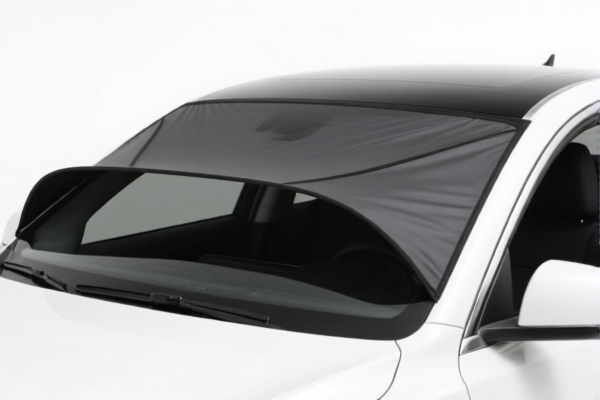
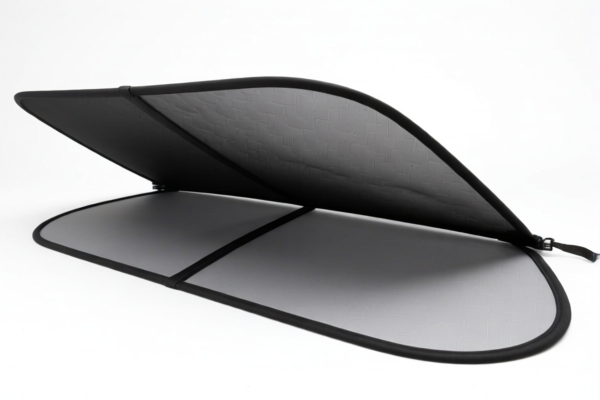
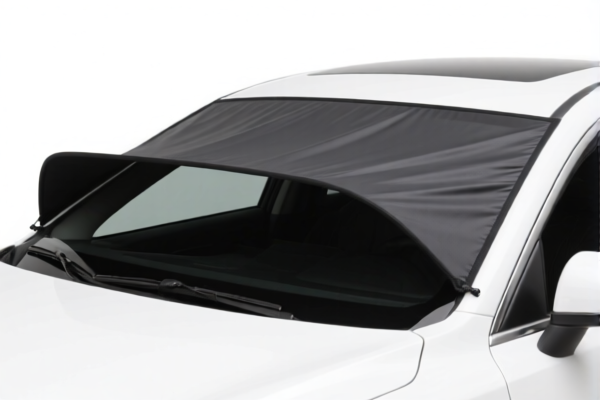
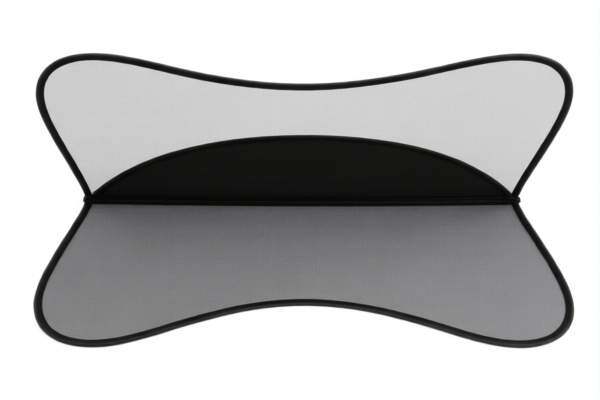
AI Analysis
🚗 Front Window Sunshade (Automotive Accessories)
🌐 HS Code Reference & Customs Clearance Guide | 2024/2025 Tax Rules | Strategic Duty Optimization
📌 I. Product Definition & Classification: What Exactly Is a "Front Window Sunshade"?
A Front Window Sunshade is an accessory installed on the windshield or front side windows of a motor vehicle to block sunlight, reduce interior heat, and protect the dashboard from UV damage. In international trade, the classification depends heavily on the material composition and primary function.
Two Main Categories: 1. Plastic/Non-Textile Materials: Rigid plastic folds, accordion-style plastics, or composite materials. 2. Textile/Fabric Materials: Cloth, mesh, or reflective fabric shades (often with plastic frames).
⚠️ Critical Distinction for Customs:
- If the product is primarily plastic (e.g., foldable plastic sheeting) → It falls under Chapter 39 (Plastics).
- If the product is primarily fabric/textile but lacks a specific textile heading, it may fall under Chapter 63 (Other Made-Up Articles).
- Do NOT classify as "Parts of Motor Vehicles" (Chapter 87) unless it is permanently integrated or essential for the vehicle's operation (e.g., defroster elements). Portable sunshades are accessories, not parts.
📦 II. HS Code Classification Details (Based on Provided Data)
Based on the provided dataset, here are the relevant HS codes for sunshades, primarily categorized under Plastics or Other Made-Up Articles.
| HS Code | Product Description | Material/Type | Applicable Scenario |
|---|---|---|---|
3926.90.99.89 |
Other articles of plastics and articles of other materials of headings 3901 to 3914: Other: Other Other | Plastic/Composite | Most common foldable, accordion-style, or rigid plastic sunshades. Reflective plastic laminates. |
6307.90.98.91 |
Other made up articles, including dress patterns: Other: Other: Other Other: Other | Fabric/Textile (Generic) | Fabric sunshades, mesh shades, or those made of man-made fibers that don't fit specific textile categories. |
6307.90.98.87 |
Other made up articles, including dress patterns: Other: Other: Other Other: Furniture movers' pads of man-made fibers | Man-Made Fiber Pads | Note: This code specifically mentions "Furniture movers' pads." Use with caution. Only use if the product is explicitly a pad of man-made fibers and not a general shade. Generally, 6307.90.98.91 is safer for general textile shades. |
🔍 Key Insight:
- Most plastic sunshades will be classified under3926.90.99.89.
- Most fabric/cloth sunshades will be classified under6307.90.98.91.
- Do NOT use8708.22.00.00(Windshields/Glass) or8708.29.51.60(Body Parts) for portable sunshades. These are for fixed vehicle components, not aftermarket accessories.
💰 III. 2024/2025 Tariff Rate Breakdown (USA Market)
✅ Applicable Country: United States (US)
✅ Origin: China (CN)
✅ Impact: Section 301 Tariffs + IEEPA Surcharges
🎯 1. 3926.90.99.89 —— Plastic Sunshades (Most Common)
| Item | Content |
|---|---|
| Base Duty Rate | 5.3% |
| Section 301 Surcharge | +7.5% (Standard for many plastic articles from China) |
| Total Tax Rate | 12.8% |
| Tax Calculation | CIF Value × 12.8% |
| De Minimis Exemption | ❌ Not Eligible (For imports >$800 from China, full duties apply. For <800, check current IEEPA rules, but generally, plastics are scrutinized.) |
| Legal Basis Path | USITC:3926.90.99.89 → Section 301: Footnote 1 to Chapter 39 |
📌 Explanation:
- Plastic sunshades are considered "other articles of plastics."
- The 12.8% total duty is relatively moderate compared to electronics, but still significant for low-margin accessories.
- Ensure the product is declared as "Plastic Sunshade" and not "Textile" to avoid misclassification penalties.
🎯 2. 6307.90.98.91 —— Fabric/Textile Sunshades
| Item | Content |
|---|---|
| Base Duty Rate | 7.0% |
| Section 301 Surcharge | +7.5% |
| Total Tax Rate | 14.5% |
| Tax Calculation | CIF Value × 14.5% |
| De Minimis Exemption | ❌ Not Eligible (Same as above) |
| Legal Basis Path | USITC:6307.90.98.91 → Section 301: Footnote 1 to Chapter 63 |
📌 Explanation:
- Textile-based sunshades face a slightly higher base duty (7.0% vs 5.3%).
- The 14.5% total rate applies.
- If the sunshade has a plastic frame, customs may still classify it under Chapter 39 if the plastic is the essential character.
🚫 Incorrect Classification Warning: Automotive Parts
| HS Code | Why NOT to Use |
|---|---|
8708.22.00.00 |
This is for windshield glass or fixed windows. Sunshades are removable accessories. |
8708.29.51.60 |
This is for body parts (steel/aluminum/copper). Sunshades are not structural parts. Tax: 27.5% (2.5% base + 25% Section 301). |
⚠️ Penalty Risk: Misclassifying a $10 plastic sunshade as an automotive part (
8708.29.51.60) could result in a 27.5% duty instead of 12.8%, plus potential audits for misdeclaration.
🛠️ IV. Customs Clearance Practical Advice (Real-World Pitfall Guide)
✅ 1. Required Documentation Checklist (Non-Negotiable)
| Document | Mandatory? | Notes |
|---|---|---|
| ✅ Commercial Invoice | ✔️ | Must clearly state "Front Window Sunshade," Material (Plastic/Fabric), and HS Code. |
| ✅ Packing List | ✔️ | Include gross/net weight, dimensions, and number of pieces. |
| ✅ Product Photos | ✔️ | Show the product in use (folded and open) to prove it's a shade, not a part of the vehicle. |
| ✅ Material Composition Statement | ✔️ | Specify % of plastic vs. fabric. Critical for distinguishing between 3926 and 6307. |
| ✅ FCC/CE Certificates | ❌ | Not required for passive shades, but good for brand credibility. |
✅ 2. Declaration Tips (Key Mantra)
🔥 "Material Defines Code, Accessory Not Part, Avoid Auto Parts Trap!"
| Scenario | Correct Declaration | Incorrect Declaration | Consequence |
|---|---|---|---|
| Plastic Foldable Shade | HS: 3926.90.99.89 Desc: "Plastic Front Window Sunshade, Foldable" |
"Car Accessory" or "Window Part" | Risk of misclassification audit. |
| Fabric Mesh Shade | HS: 6307.90.98.91 Desc: "Fabric Car Sunshade, Mesh" |
"Textile Product" (too vague) | May be delayed for further classification. |
| Shade with Plastic Frame | HS: 3926.90.99.89 | 8708.29.51.60 |
27.5% Duty vs 12.8% Duty = Overpayment! |
✅ 3. Special Case Handling
| Situation | Handling Advice |
|---|---|
| Mixed Material (Plastic + Fabric) | If plastic is the essential character (e.g., plastic frame with thin fabric), declare under 3926.90.99.89. |
| OEM Custom Shades | Provide customer design specs to prove it's a finished accessory, not a raw material. |
| Small Package (<$800) | Check current Section 301 exemptions. As of 2024, most plastic/textile goods from China are not exempt under de minimis, but verify latest USCBP rulings. |
🌍 V. Global Market Comparison (2024/2025)
| Country/Region | Recommended HS Code | Total Duty (China Origin) | Key Requirements |
|---|---|---|---|
| 🇺🇸 USA | 3926.90.99.89 |
12.8% | Accurate material declaration. Section 301 applies. |
| 🇪🇺 EU | 3926.90.99 |
~4.0% - 6.5% | CE marking not required for passive shades, but RoHS may apply if electronic components are present. |
| 🇨🇦 Canada | 3926.90.99 |
~5.0% + 5% GST | MFN rate applies. No Section 301 equivalent. |
| 🇦🇺 Australia | 3926.90.99 |
~5.0% | GST applies. |
| 🇯🇵 Japan | 3926.90.99 |
~0% - 3% | Very low duty. Focus on labeling requirements. |
📌 Conclusion:
- USA has the highest effective duty for plastic sunshades due to Section 301 tariffs.
- EU and Asia offer lower duty rates, but non-tariff barriers (certifications) may apply.
📌 VI. Common Errors & Pitfalls (Lessons Learned)
❌ Error 1: Classifying sunshades as "Parts of Motor Vehicles" (8708)
👉 Consequence: Duty jumps to 27.5% (2.5% + 25%) or 0% but high scrutiny. Misdeclaration leads to penalties.
❌ Error 2: Using generic description "Car Accessory"
👉 Consequence: Customs will reclassify based on material, potentially applying higher duties or delaying release for inspection.
❌ Error 3: Ignoring Material Composition
👉 Consequence: If you declare a plastic shade as textile (6307), you may underpay duty (14.5% vs 12.8% is close, but if plastic is >50%, it must be 3926). If you declare textile as plastic, you may overpay. Accuracy is key.
❌ Error 4: Assuming De Minimis Applies
👉 Consequence: Recent USCBP policies have tightened de minimis exemptions for Chinese-origin goods. Always check current IEEPA rules.
✅ Correct Declaration Example:
"Automotive Front Window Sunshade, Made of Foldable Plastic Film, Model XYZ, Color Black, HS Code 3926.90.99.89"
🎯 VII. Conclusion: Smart Classification Saves Money!
🎯 Remember the Mantra:
🔹 "Plastic Shade = 3926 (12.8%)
🔹 "Fabric Shade = 6307 (14.5%)
🔹 "Never Use Auto Parts Code for Accessories!"
📌 Pro Tip:
If your sunshade is eco-friendly (recycled plastic), investigate if it qualifies for any green tariff incentives in specific markets (e.g., EU Green Deal benefits).
📣 Immediate Action:
📞 Verify Material Composition before shipment.
📄 Use Precise Descriptions in commercial invoices.
🚀 Optimize Duty by Choosing the Correct HS Code to avoid unexpected costs!
✨ Professional Customs Clearance Starts with Accurate Classification!
💼 Every Percent Saved is Profit Gained!
Customer Reviews
About HS Code Classification
The Harmonized System (HS) is an internationally standardized nomenclature developed by the World Customs Organization (WCO) to classify traded products. Over 200 countries use the HS system as the basis for customs tariffs, trade statistics, and import/export regulations.
Each HS code follows a hierarchical structure:
- Chapter (2 digits) — Broad category of goods (e.g., Chapter 84: Machinery and Mechanical Appliances)
- Heading (4 digits) — More specific grouping within the chapter
- Subheading (6 digits) — Internationally standardized breakdown, used by all WCO member countries
- National subdivisions (8-10 digits) — Country-specific extensions for further classification, such as US HTSUS 10-digit codes
Correct HS code classification is essential for smooth customs clearance, accurate duty payment, and compliance with trade regulations. Misclassification can lead to customs delays, overpayment of duties, or penalties.
When importing from CN to US, the applicable tariff rates may include:
- Most-Favored-Nation (MFN) rate — The standard duty rate applied to WTO members
- General rate — Applied to countries without trade agreements
- Trade remedy duties — Additional tariffs such as Section 301 (anti-dumping), Section 232 (national security), or countervailing duties
The information provided on this page is for reference purposes only. For official classification, please consult with your local customs authority or a licensed customs broker.