Frost Cleaning Kit
CN → USProduct Images
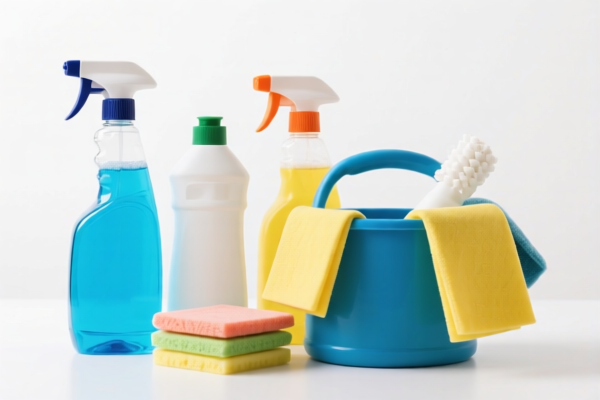

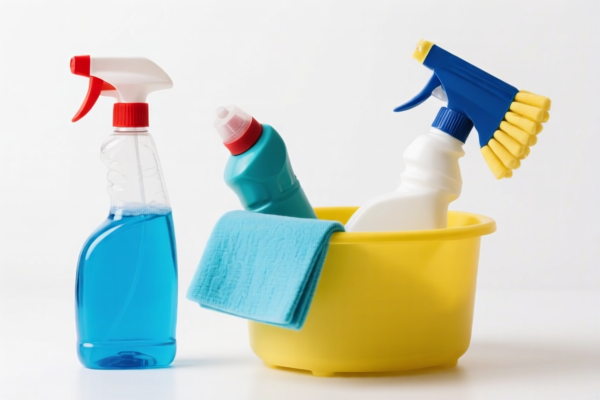
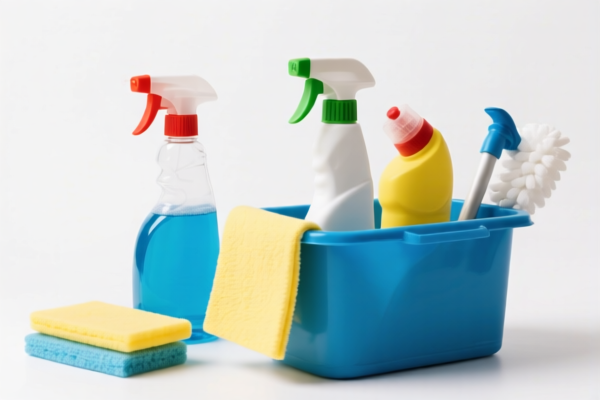
AI Analysis
🧊 Frost Cleaning Kit (Automotive/Radiant Heating Defrosting Tools)
🌐 HS Code Reference & Customs Clearance Guide | 2026 Latest Tariff Analysis | Professional Clearance Strategy
📌 I. Product Definition & Classification: Do You Really Understand "Frost Cleaning Kits"?
A Frost Cleaning Kit (often marketed as "Car Ice Scraper Kits," "Defroster Brush Sets," or "Snow Removal Tools") typically consists of a combination of plastic or metal blades, brushes, and sometimes ice melt sprays designed to remove frost, ice, and snow from vehicle windshields, windows, and radiators.
In international trade, these items are rarely classified under a single code. They are usually split based on material composition and function:
1. Plastic/Mixed Material Scrapers & Brushes:
If the kit is primarily composed of plastic handles, rubber squeegees, and synthetic bristles, it falls under Plastic Articles or Brushes.
2. Metal Ice Chisels/Scraper Heads:
If the kit contains sharp metal blades or ice axes, it falls under Tools of Iron or Steel.
3. Chemical Components (if included):
If the kit includes de-icing sprays or fluid, those may be classified separately under Chemical Products.
⚠️ Key Distinction:
- If the item is a complete kit packaged together for retail sale, customs may require separate HS codes for each component if they are distinct articles, OR a single code for the "set" if one item defines the essential character (usually the scraper/brush).
- Most Common Classification: Plastic ice scrapers/brushes are often grouped under Plastic Household Articles or Brushes.
📦 II. HS Code Classification Details (2026 Latest Tariff Authority Comparison)
| HS Code | Product Description | Application Scenario | Material/Feature |
|---|---|---|---|
3926.90.99.95 |
Other articles of plastics (Household articles) | Plastic ice scrapers, plastic brushes, mixed plastic kits | ✅ Plastic dominant |
9603.29.80.00 |
Other brushes (making up into hands or handles) | Brushes with plastic/rubber handles for cleaning windows | ✅ Brush + Handle |
8205.59.00.00 |
Other hand tools (of base metal) | Metal ice chisels, metal scraper blades included in the kit | ✅ Metal blade |
3307.90.99.90 |
Other prepared toilet/kosmetic/prep. products | De-icing spray fluid (if sold as part of the kit) | ✅ Chemical |
9503.00.00.00 |
Toys (if marketed as a toy set for children) | Small, safe, plastic toy ice scrapers for kids | ❌ Not for real use |
🔍 Key Reminder:
- Composite Kits: If the kit contains both a plastic scraper and a brush, it is usually classified under the heading that gives it its essential character. For most automotive frost kits, this is3926.90.99.95(Plastic articles) or9603.29.80.00(Brushes).
- Metal Blades: Any sharp metal component may trigger stricter safety regulations and could shift classification to8205.
- Avoid Misclassification: Do not classify as "Automotive Parts" (8708) unless it is a mechanical device installed on the vehicle. Frost scrapers are general household/automotive accessory tools, not vehicle parts.
💰 III. 2026 Latest Tariff Rate Breakdown (Including Surtaxes & Policy Add-ons)
✅ Applicable Country: United States (US)
✅ Country of Origin: China (CN)
✅ Effective Date: November 10, 2025 onwards (for subsequent imports)
🎯 1. 3926.90.99.95 —— Other Articles of Plastics (Most Common for Kits)
| Item | Content |
|---|---|
| Base Tariff Rate | 3.4% (ad valorem) |
| USITC Surtax (Section 301) | +7.5% (Footnote 9903.88.01 applies to many plastic goods from China) |
| IEEPA Surtax | +10% (Additional tariff on Chinese products under IEEPA) |
| Total Tariff Rate | ~20.9% |
| Tax Calculation | CIF Value × 20.9% |
| De Minimis Eligibility | ❌ Not Eligible (Section 321 exemptions often excluded for high-surcharge items) |
| Legal Basis Path | IEEPA:9903.01.24 → USITC:3926.90.99.95 → FOOTNOTE:9903.88.01 |
📌 Explanation:
- The 7.5% Section 301 surtax is critical here. Many plastic consumer goods from China face this additional duty.
- The 10% IEEPA surtax is a broad-based additional tariff.
- Total ~20.9% is significantly higher than the base 3.4%. This must be factored into landed cost calculations.
🎯 2. 9603.29.80.00 —— Other Brushes
| Item | Content |
|---|---|
| Base Tariff Rate | 3.4% |
| USITC Surtax (Section 301) | +7.5% (Often applies to brushes made in China) |
| IEEPA Surtax | +10% |
| Total Tariff Rate | ~20.9% |
| Tax Calculation | CIF Value × 20.9% |
| De Minimis Eligibility | ❌ Not Eligible |
| Legal Basis Path | IEEPA:9903.01.24 → USITC:9603.29.80.00 → FOOTNOTE:9903.88.01 |
📌 Note:
- If the kit is dominated by the brush component (e.g., large windshield brush), it may fall here.
- Rates are identical to plastic articles in many cases due to similar surtax applications.
🎯 3. 8205.59.00.00 —— Other Hand Tools (Metal)
| Item | Content |
|---|---|
| Base Tariff Rate | 3.4% |
| USITC Surtax (Section 301) | +25% (Some metal tools face higher 301 rates) |
| IEEPA Surtax | +10% |
| Total Tariff Rate | ~38.4% |
| Tax Calculation | CIF Value × 38.4% |
| De Minimis Eligibility | ❌ Not Eligible |
📌 Warning:
- If the customs officer identifies a metal ice chisel as the essential character, the tariff could jump to 38.4%.
- Strategy: Ensure the product description emphasizes "plastic scraper/brush" and minimizes the visibility of metal parts if possible, or bundle them in a way that plastic is dominant.
🛠️ IV. Customs Clearance Practical Advice (Avoid Pitfalls Guide)
✅ 1. Required Documentation Checklist
| Document | Must Provide | Explanation |
|---|---|---|
| ✅ Product Specifications | ✔️ | List materials (e.g., "PP Plastic Handle, Bristle Brush, ABS Blade") |
| ✅ Photos (Packaged & Unpacked) | ✔️ | Show all components clearly to prove it's a "kit" |
| ✅ Commercial Invoice | ✔️ | Clearly state "Frost Cleaning Kit" or "Ice Scraper Set" |
| ✅ HS Code Ruling | ✔️ | If available, provide prior ruling to speed up clearance |
| ✅ Declaration of Material Composition | ✔️ | Specify % of plastic vs. metal vs. rubber |
✅ 2. Declaration Tips (Key Mantras)
🔥 “Plastic Dominant, Declare 3926; Metal Visible, Watch 8205; Don’t Split, Show Kit!”
| Scenario | Correct Declaration | Wrong Practice |
|---|---|---|
| Plastic scraper + brush set | 3926.90.99.95 |
Classify as auto parts (8708) → Rejection |
| Kit with metal chisel | 8205.59.00.00 or 3926 (if plastic dominates) |
Declare only as "Brush" if metal is significant → Risk |
| Chemical spray included | Declare separately as 3307.90.99.90 |
Mix chemical into plastic code → Safety violation |
| Toy for kids | 9503.00.00.00 |
Adult tool declared as toy → Safety seizure |
✅ 3. Special Handling
| Situation | Advice |
|---|---|
| OEM Branded Kits | Provide brand authorization to avoid IP issues |
| Mixed Materials | Clearly state "Plastic dominant" to aim for lower surtax if possible |
| Sharp Metal Parts | Ensure proper packaging to avoid injury claims; declare as "Non-cutting" if applicable |
| Chemical Liquids | Must provide MSDS (Material Safety Data Sheet) for customs and airline/shipping compliance |
🌍 V. Global Market Comparison (2026 Latest)
| Country/Region | Recommended HS Code | Tariff Rate (China Origin) | Certification Required | Notes |
|---|---|---|---|---|
| 🇺🇸 USA | 3926.90.99.95 |
~20.9% (Plastic) | None specific | High surtax on plastic/metal tools |
| 🇨🇳 China | 3926.90.99.95 |
0-5% | None | Low import duty |
| 🇪🇺 EU | 3926.90.97 |
0-4% | CE (if electrical, but these are manual) | No major surtax |
| 🇨🇦 Canada | 3926.90.99 |
0-5% | None | Favorable rates under CUSMA |
| 🇦🇺 Australia | 3926.90.99 |
5% | None | Standard GST applies |
📌 Conclusion:
- USA is the most challenging market due to Section 301 + IEEPA surtaxes (~20.9%+).
- EU and Canada offer much more favorable tariff environments.
- If shipping to the US, ensure accurate HS coding to avoid penalties and unexpected costs.
📌 VI. Common Mistakes & Pitfalls (Lessons Learned)
❌ Mistake 1: Classifying as "Automotive Part" (8708.99)
👉 Consequence: Rejection. Frost scrapers are accessories/tools, not vehicle parts.
👉 Result: Delays, fines, or forced reclassification with back taxes.
❌ Mistake 2: Ignoring Metal Components
👉 Consequence: If a metal chisel is present, customs may classify under 8205 (Tools), increasing tariff to 38.4%.
👉 Result: Unexpected high duty costs.
❌ Mistake 3: Mixing Chemical Sprays with Tools
👉 Consequence: Chemicals require MSDS and separate classification (3307).
👉 Result: If not declared separately, the entire shipment may be held for hazardous material review.
✅ Correct Practice:
"Plastic Ice Scraper and Brush Kit for Automotive Use, Model XYZ, Plastic Handle, Bristle Brush, ABS Blade"
🎯 VII. Conclusion: Professional Declaration, Cost Control!
🎯 Remember the Mantra:
🔹 "Plastic is 20.9%, Metal is 38.4%, Don’t Claim as Parts!"
🔹 "Check for Metal Blades, Declare Chemicals Separately, Keep it Clean!"
📌 Pro Tip:
If you are shipping to the US, consider supply chain diversification (e.g., sourcing from Vietnam or Mexico) to potentially qualify for lower surtax rates or de minimis exemptions (if applicable and compliant).
For high-value shipments, apply for an Advance Ruling to lock in the HS Code and tariff rate.
📣 Immediate Action:
📞 Consult a licensed customs broker + Provide product photos + Verify material composition
🚀 Ensure smooth clearance, avoid delays, and optimize your landed costs!
✨ Professional Clearance Starts with Accurate Classification!
💼 Every Dollar Saved on Tariffs is Profit Gained!
Customer Reviews
About HS Code Classification
The Harmonized System (HS) is an internationally standardized nomenclature developed by the World Customs Organization (WCO) to classify traded products. Over 200 countries use the HS system as the basis for customs tariffs, trade statistics, and import/export regulations.
Each HS code follows a hierarchical structure:
- Chapter (2 digits) — Broad category of goods (e.g., Chapter 84: Machinery and Mechanical Appliances)
- Heading (4 digits) — More specific grouping within the chapter
- Subheading (6 digits) — Internationally standardized breakdown, used by all WCO member countries
- National subdivisions (8-10 digits) — Country-specific extensions for further classification, such as US HTSUS 10-digit codes
Correct HS code classification is essential for smooth customs clearance, accurate duty payment, and compliance with trade regulations. Misclassification can lead to customs delays, overpayment of duties, or penalties.
When importing from CN to US, the applicable tariff rates may include:
- Most-Favored-Nation (MFN) rate — The standard duty rate applied to WTO members
- General rate — Applied to countries without trade agreements
- Trade remedy duties — Additional tariffs such as Section 301 (anti-dumping), Section 232 (national security), or countervailing duties
The information provided on this page is for reference purposes only. For official classification, please consult with your local customs authority or a licensed customs broker.