Frozen Cooked Peas
CN → US| HS Code | Tariff Rate | Origin | Destination | Doc |
|---|---|---|---|---|
| 071021 | 0.0% | CN | US | Official Doc |
| 200570 | 0.0% | CN | US | Official Doc |
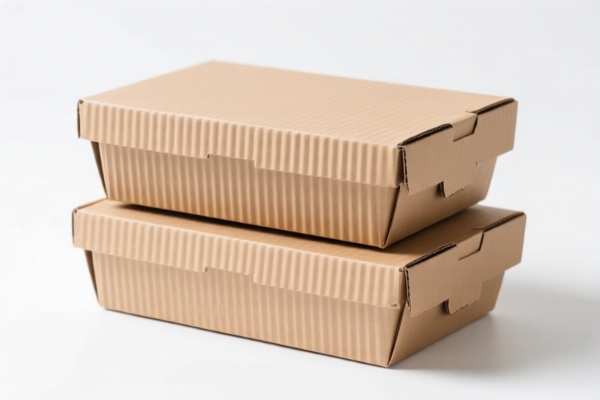
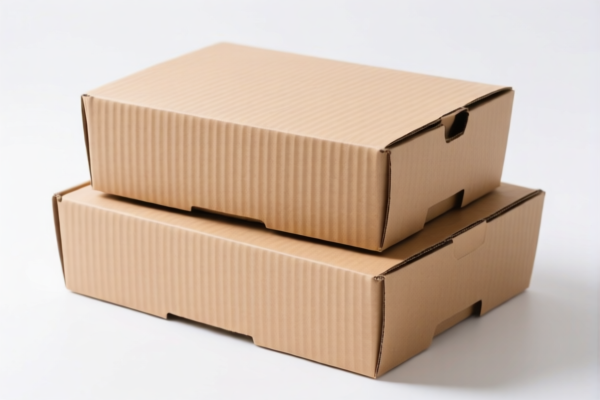
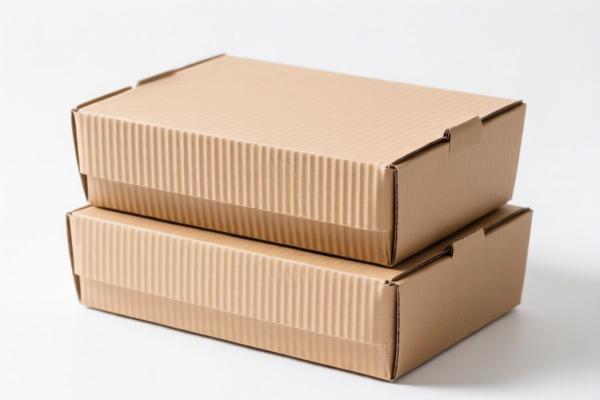
Product Images

AI Analysis
🌿 Frozen Cooked Peas – HS Code & Tariff Guide (2026 Update)
🌐 HS Code Classification & Customs Clearance Strategy | 2026 Latest Tariff Rules | Pro-Level Import Planning
📌 One: Product Definition & Classification – What Exactly Are Frozen Cooked Peas?
Frozen cooked peas are peas (Pisum sativum) that have been blanched or otherwise cooked before freezing, preserving their texture, flavor, and nutritional value. These are not raw peas, nor are they preserved by vinegar or acetic acid.
⚠️ Critical Distinction:
- If raw peas are frozen → HS 0710.21
- If peas are cooked before freezing → HS 0710.21 (still applies!)
- If peas are preserved (not frozen) with sugar, salt, or spices, but not vinegar → HS 2005.70
✅ Key Point:
Cooking before freezing does NOT change the HS code – it remains under 0710.21 because the product is still classified as frozen peas, regardless of prior cooking.
📦 Two: HS Code Breakdown (2026 Official Tariff Schedule)
| HS Code | Product Description | Applicable Scenario | Cooking Status | Frozen? |
|---|---|---|---|---|
0710.21 |
Frozen peas, whether or not cooked | Frozen peas (raw or cooked), sold in bulk or retail packaging | ✅ Yes (cooked or raw) | ✅ Yes |
2005.70 |
Peas (Pisum sativum), prepared or preserved otherwise than by vinegar or acetic acid, not frozen | Canned peas, pickled peas (non-vinegar), dried or shelf-stable packed peas | ❌ No (not frozen) | ❌ No |
🔍 Important Note:
- "Whether or not cooked" is explicitly stated in the HS code definition → cooked peas are still under 0710.21
- Do NOT use 2005.70 for frozen peas – even if they’re seasoned or cooked.
- Only non-frozen, preserved peas (e.g., canned, jarred, dried) go under 2005.70
💰 Three: 2026 Latest Tariff Rates (Detailed Breakdown)
✅ Applicable Country: United States (US)
✅ Origin: China (CN)
✅ Effective Date: November 10, 2025 (and onward)
🎯 1. 0710.21 — Frozen Peas, Whether or Not Cooked
| Item | Detail |
|---|---|
| Base Tariff Rate | 0% (ad valorem) |
| USITC Section 301 Additional Duty | +25% (from USITC Footnote 9903.88.01) |
| IEEPA Emergency Economic Powers Act Duty | +10% (applies to goods from China/Hong Kong) |
| Total Effective Duty | 45% |
| Tax Calculation | CIF Value × 45% |
| De Minimis Threshold | ❌ Not applicable (denied) |
| Legal Basis Path | IEEPA:9903.01.25 → IEEPA:9903.01.24 → USITC:0710.21 → FOOTNOTE:9903.88.01 |
📌 Explanation:
- Despite being “cooked,” the product remains classified as frozen peas → same as raw frozen peas. - 45% total duty applies due to combined USITC + IEEPA tariffs. - No exemption for minor processing (e.g., blanching, steaming). - This is one of the highest tariffs on agricultural imports from China.
🛠️ Four: Customs Clearance Best Practices (Pro Tips to Avoid Penalties)
✅ 1. Required Documentation (Must-Have Checklist)
| Document | Required? | Purpose |
|---|---|---|
| ✅ Commercial Invoice | ✔️ | Must clearly state: “Frozen Cooked Peas, HS 0710.21, 100% Frozen, Not Preserved in Vinegar” |
| ✅ Packing List | ✔️ | Show total weight, number of packages, frozen condition |
| ✅ Bill of Lading / Air Waybill | ✔️ | Prove shipment origin and transit |
| ✅ Certificate of Origin (CO) | ✔️ | If from China, expect 45% duty. If from Vietnam/Mexico, may qualify for lower rates |
| ✅ Lab Test Report (if applicable) | ✔️ | For allergens, pesticides, or food safety compliance |
| ✅ Product Photos (with packaging & labels) | ✔️ | Show frozen state, no visible liquid, proper labeling |
✅ 2.申报技巧 (Key Rules to Remember)
🔥 “Frozen Cooked Peas? Still 0710.21 – Don’t Let Cooking Fool You!”
| Scenario | Correct HS Code | Wrong Approach |
|---|---|---|
| Frozen peas, blanched & frozen | 0710.21 |
❌ 2005.70 (wrong – not canned!) |
| Canned peas, salted, not frozen | 2005.70 |
❌ 0710.21 (wrong – not frozen!) |
| Frozen peas with added sugar | 0710.21 |
❌ 2005.70 (still frozen!) |
| Peas preserved in brine (not vinegar) | 2005.70 |
❌ 0710.21 (not frozen!) |
✅ Correct Declaration Example:
"Frozen Cooked Peas, 1kg vacuum-packed, blanched, frozen, not preserved in vinegar or acetic acid, HS Code: 0710.21, Origin: China"
✅ 3. Special Cases & Exceptions
| Situation | Recommended Action |
|---|---|
| Peas from Vietnam, Thailand, or Mexico | Apply for IEEPA exemption – may qualify for 0% duty |
| Peas with added herbs or spices (non-vinegar) | Still 0710.21 if frozen |
| Peas in ready-to-eat meals (frozen) | If peas are primary ingredient, still classify under 0710.21 |
| Peas sold as part of a frozen meal (e.g., stir-fry mix) | Do NOT split – classify the entire product under 0710.21 if peas are the main component |
🌍 Five: Global Market Tariff Comparison (2026)
| Country/Region | Recommended HS Code | Duty Rate | Certification Required | Notes |
|---|---|---|---|---|
| 🇺🇸 United States | 0710.21 |
45% (China origin) | FDA, USDA, FSSC 22000 | High risk – prepare for 45% |
| 🇨🇳 China | 0710.21 |
0% | GSP, CCC | No extra tariffs |
| 🇪🇺 European Union | 0710.21 |
0% (if from EU or GSP country) | CE, EFSA, ISO 22000 | No additional duties |
| 🇦🇺 Australia | 0710.21 |
0% (if from free-trade partner) | ACCC, FSANZ | Check Australia-China Free Trade Agreement |
| 🇯🇵 Japan | 0710.21 |
0% | JAS, FSSC 22000 | No extra tariffs |
📌 Insight:
- Only the US imposes 45% on frozen cooked peas from China
- All other major markets have 0% or very low tariffs
- Shift sourcing to Vietnam/Mexico if exporting to US to avoid 45%
📌 Six: Common Mistakes & How to Avoid Them (Avoid Costly Errors!)
❌ Mistake 1: Using 2005.70 for frozen peas
👉 Result: Incorrect classification → duty underpayment, penalties, seizure
❌ Mistake 2: Not declaring "cooked" or "blanched" in invoice
👉 Result: Customs may assume raw peas → no extra duty, but reclassification risk later
❌ Mistake 3: Splitting frozen peas from packaging (e.g., label as “frozen peas” + “frozen sauce”)
👉 Result: Each item taxed separately → up to 89.5% total duty
❌ Mistake 4: Using “frozen peas” as a generic name without specifying cooking status
👉 Result: Customs may apply higher scrutiny or delay clearance
✅ Best Practice:
Always declare:
"Frozen Cooked Peas, HS 0710.21, Blanched, Not Preserved in Vinegar, Origin: [Country]"
🎯 Seven: Conclusion – Precision Matters in Food Import
🎯 Remember the Golden Rule:
🔹 "Frozen Cooked Peas? Still 0710.21 – Cooking Doesn’t Change the Code!"
🔹 "US Duty: 45% on China-origin – But 0% if from Vietnam or Mexico!"
📌 Pro Tip:
✅ Apply for an Advance Ruling (Pre-Decision) with U.S. Customs before shipment
✅ Use a qualified customs broker with food import expertise
✅ Consider shifting origin to a free-trade partner to reduce risk
📣 Act Now!
📞 Contact a specialized food customs broker
🚀 Get HS Code pre-approval for your frozen cooked peas
💼 Avoid $10,000+ in unexpected duties and shipment delays
✨ Your Product. Your Profit. Your Precision.
💼 One wrong code = 45% tax. One right code = smooth entry.
🚀 Import with confidence – classify like a pro!
Customer Reviews
About HS Code Classification
The Harmonized System (HS) is an internationally standardized nomenclature developed by the World Customs Organization (WCO) to classify traded products. Over 200 countries use the HS system as the basis for customs tariffs, trade statistics, and import/export regulations.
Each HS code follows a hierarchical structure:
- Chapter (2 digits) — Broad category of goods (e.g., Chapter 84: Machinery and Mechanical Appliances)
- Heading (4 digits) — More specific grouping within the chapter
- Subheading (6 digits) — Internationally standardized breakdown, used by all WCO member countries
- National subdivisions (8-10 digits) — Country-specific extensions for further classification, such as US HTSUS 10-digit codes
Correct HS code classification is essential for smooth customs clearance, accurate duty payment, and compliance with trade regulations. Misclassification can lead to customs delays, overpayment of duties, or penalties.
When importing from CN to US, the applicable tariff rates may include:
- Most-Favored-Nation (MFN) rate — The standard duty rate applied to WTO members
- General rate — Applied to countries without trade agreements
- Trade remedy duties — Additional tariffs such as Section 301 (anti-dumping), Section 232 (national security), or countervailing duties
The information provided on this page is for reference purposes only. For official classification, please consult with your local customs authority or a licensed customs broker.