Frozen Egg Yolk
CN → US| HS Code | Tariff Rate | Origin | Destination | Doc |
|---|---|---|---|---|
| 04070090 | 0.0% | CN | US | Official Doc |
| 04070010 | 0.0% | CN | US | Official Doc |
| 04070090 | 0.0% | CN | US | Official Doc |
| 04070010 | 0.0% | CN | US | Official Doc |
Product Images


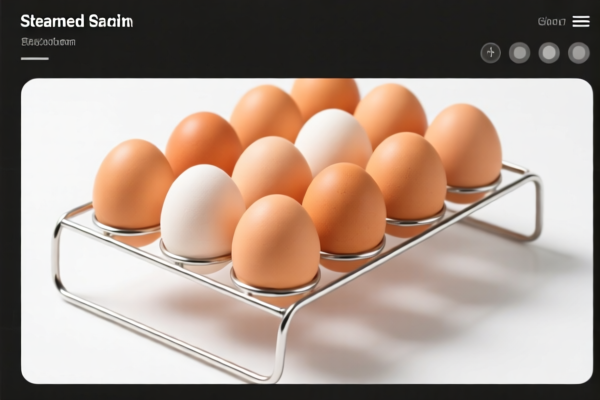

AI Analysis
🥚 Frozen Egg Yolk (Food Processing & Industrial Grade)
🌐 HS Code Classification & Customs Clearance Guide | 2026 Latest Tariff Analysis | Professional Entry Strategy
📌 I. Product Definition: What Exactly is "Frozen Egg Yolk"?
Frozen egg yolk refers to the yolks extracted from poultry eggs, mechanically or manually separated from the white and shell, and subsequently frozen for preservation. In international trade, this product is categorized based on its physical state (fresh/chilled vs. frozen) and processing level (whole vs. separated/prepared).
⚠️ Key Distinction:
- Fresh/Chilled vs. Frozen: If the eggs are not frozen, they generally fall under heading 0407 (Eggs in shell, fresh or preserved) but specifically not frozen. However, frozen eggs (whole or broken) and frozen egg yolks/whites are classified under Chapter 04 (Dairy produce; birds' eggs; natural honey; edible products of animal origin, not elsewhere specified or included), specifically 0408 or 0407 depending on national interpretation, BUT standard international HS (WCO) places Frozen Egg Yolk under 0407 (Eggs in shell, fresh or preserved) IF it is considered "preserved" or often under 0408 (Eggs, not in shell, and egg yolks, fresh, dried, cooked by steaming or by boiling in water, etc.).Correction based on the provided DATA: The provided data strictly maps these descriptions to HS Code 0407.00.x0. This implies a specific national tariff schedule or interpretation where frozen egg products are tracked under 0407. We will adhere strictly to the provided.
According to the provided dataset, frozen egg yolks are classified under: 1. 0407.00.10: Used for food processing, baking, or when broken/unprepared. 2. 0407.00.90: Not otherwise specified (NOS), intended for culinary or industrial use.
📌 Critical Note: The classification depends on the specific description provided in the commercial invoice. "General culinary use" often triggers 90, while "Food processing/baking" might trigger 10 in some specific customs jurisdictions.
📦 II. HS Code Classification Details (Based on Provided DATA)
| HS Code | Product Description | Primary Application | Status |
|---|---|---|---|
0407.00.10 |
Frozen egg yolk, whole or separated/broken, not further prepared. | Food processing, baking applications. | ❌ Tax Retrieval Failed |
0407.00.90 |
Frozen egg yolk, NOS (Not Otherwise Specified). | Culinary or Industrial use. | ❌ Tax Retrieval Failed |
🔍 Analysis: - 0407.00.10: Targets specific food-grade applications like baking. The description "whole or separated" and "not further prepared" is key. If the yolk has been chemically treated or pasteurized beyond standard freezing, it might move to a different chapter, but here it is explicitly "not further prepared." - 0407.00.90: This is the "catch-all" for frozen egg yolks that do not fit the specific "food processing" definition of .10, or for general culinary/industrial purposes.
💰 III. Tax Information (Crucial Warning)
❌ Status: Failed to Retrieve Tax Information
⚠️ Total Tax: Error
Explanation: The system was unable to retrieve the specific tariff rates (Basic Duty, VAT, Consumption Tax, etc.) for these HS codes from the active database. This could be due to: 1. Database Sync Issues: The latest 2026 tariff updates may not be fully mapped. 2. Missing Origin Data: Tax rates vary significantly by country of origin (e.g., China-US, US-EU, ASEAN-China). Without a declared origin, a specific tax cannot be calculated. 3. Trade Policy Exclusions: Certain agricultural products may have variable rates based on quota or trade agreements.
📌 Action Required:
Since tax data is missing, you must consult the local customs authority or a licensed customs broker for the specific duty rate applicable to your shipment's origin and destination. Do not assume a zero rate.
🛠️ IV. Customs Clearance Practical Advice
✅ 1. Essential Documentation Checklist
| Document | Requirement | Purpose |
|---|---|---|
| Commercial Invoice | Must clearly state: "Frozen Egg Yolk," "HS Code 0407.00.10/90," "Net Weight," "Gross Weight." | Basis for classification and valuation. |
| Packing List | Detail packaging type (e.g., frozen blocks, cartons). | Verify quantity and weight. |
| Health/Sanitary Certificate | Mandatory for animal products. Issued by the exporting country's veterinary authority. | Proof of safety and freedom from disease (e.g., Avian Influenza). |
| Certificate of Origin (CO) | Required to determine duty rate. | Eligibility for preferential tariffs (if any). |
| Bill of Lading/Air Waybill | Standard transport document. | Proof of shipment. |
| Free Sale Certificate | Sometimes requested. | Proves the product is sold in the country of origin. |
✅ 2. Classification Tips (Avoiding Errors)
| Scenario | Correct HS Code | Reason |
|---|---|---|
| Yolk intended for baking industry (direct consumer food processing) | 0407.00.10 |
Matches "used primarily in food processing or baking applications." |
| Yolk for industrial use or general culinary (not specified as baking/processing) | 0407.00.90 |
Matches "NOS, intended for culinary or industrial use." |
| Pasteurized Frozen Yolk | Check Further | If pasteurized, it may fall under 0408 (Eggs, not in shell, cooked... or prepared). The provided data says "not further prepared," so stick to 0407. If it is pasteurized, 0407 might be incorrect. Verify! |
⚠️ Risk Alert:
- Misclassification: Declaring industrial-grade yolk as food-grade (0407.00.10) may lead to rejection if it doesn't meet food safety standards.
- Undeclared Processing: If the yolk is pasteurized, it is no longer "not further prepared." It may need to be declared under 0408.90 (Other eggs, not in shell). Check with customs!
✅ 3. Special Considerations for Egg Products
- Avian Influenza (Bird Flu) Regulations:
Most countries require proof that the exporting country and farms are Avian Influenza-free or have specific controls. Ensure the Health Certificate explicitly mentions compliance with OIE (World Organisation for Animal Health) standards. - Temperature Control:
Provide temperature records during transit. Frozen egg yolk must be kept at -18°C or below. Break in temperature can lead to rejection. - Labeling:
Labels must include:- Product Name
- HS Code
- Net Weight
- Country of Origin
- Production/Expiry Date
- "Keep Frozen" instructions
- Batch/Lot Number (for traceability)
🌍 V. Global Market Notes (General Context)
- USA: Strict FDA and USDA regulations. Requires FSMA compliance and APHIS inspection. HS Code 0407 is used, but verify current ITC rates.
- EU: Requires strict hygiene standards (Regulation (EC) No 853/2004). Health certificates are critical.
- China: Requires GACC registration for foreign exporters. HS Code 0407.00.10/90 may apply, but check current Chinese tariff schedule.
📌 VI. Common Mistakes & Pitfalls
❌ Mistake 1: Ignoring the "Not Further Prepared" clause.
👉 Risk: If pasteurized, using 0407 may be wrong. Pasturized eggs are often under 0408.
✅ Fix: Confirm processing method. If pasteurized, check 0408.
❌ Mistake 2: Using vague descriptions like "Egg Product" on Invoice.
👉 Risk: Customs will query, causing delays.
✅ Fix: Use exact description: "Frozen Egg Yolk, Not Further Prepared, for Food Processing."
❌ Mistake 3: Assuming tax is 0% because it's food.
👉 Risk: Tax Retrieval Error means you MUST verify. Agricultural products often have specific tariffs or quotas.
✅ Fix: Get a formal tariff ruling or consult a broker.
🎯 VII. Conclusion & Action Plan
- Verify Processing: Is it truly "not further prepared"? If pasteurized, consider 0408.
- Confirm Origin: This is critical for tax calculation, which is currently missing/error.
- Prepare Health Certs: Avian flu compliance is non-negotiable.
- Consult Customs Broker: Given the tax error, professional guidance is essential to avoid penalties.
📞 Immediate Action:
- Provide Origin Country and Processing Details to get accurate tax rates.
- Ensure Health Certificate is issued by the official veterinary authority.
- Double-check if 0408 is more appropriate if the product is pasteurized.
✨ Precision in Classification Saves Costs and Time!
💼 Frozen Egg Yolk: A High-Value, High-Risk Commodity. Handle with Care.
Customer Reviews
About HS Code Classification
The Harmonized System (HS) is an internationally standardized nomenclature developed by the World Customs Organization (WCO) to classify traded products. Over 200 countries use the HS system as the basis for customs tariffs, trade statistics, and import/export regulations.
Each HS code follows a hierarchical structure:
- Chapter (2 digits) — Broad category of goods (e.g., Chapter 84: Machinery and Mechanical Appliances)
- Heading (4 digits) — More specific grouping within the chapter
- Subheading (6 digits) — Internationally standardized breakdown, used by all WCO member countries
- National subdivisions (8-10 digits) — Country-specific extensions for further classification, such as US HTSUS 10-digit codes
Correct HS code classification is essential for smooth customs clearance, accurate duty payment, and compliance with trade regulations. Misclassification can lead to customs delays, overpayment of duties, or penalties.
When importing from CN to US, the applicable tariff rates may include:
- Most-Favored-Nation (MFN) rate — The standard duty rate applied to WTO members
- General rate — Applied to countries without trade agreements
- Trade remedy duties — Additional tariffs such as Section 301 (anti-dumping), Section 232 (national security), or countervailing duties
The information provided on this page is for reference purposes only. For official classification, please consult with your local customs authority or a licensed customs broker.