Fruit Basket
CN → US| HS Code | Tariff Rate | Origin | Destination | Doc |
|---|---|---|---|---|
| 7323999080 | 88.4% | CN | US | Official Doc |
| 4602110900 | 45.0% | CN | US | Official Doc |
| 3923900080 | 38.0% | CN | US | Official Doc |
| 4602110700 | 35.0% | CN | US | Official Doc |
| 3923109000 | 38.0% | CN | US | Official Doc |
| 7323999030 | 88.4% | CN | US | Official Doc |
Product Images
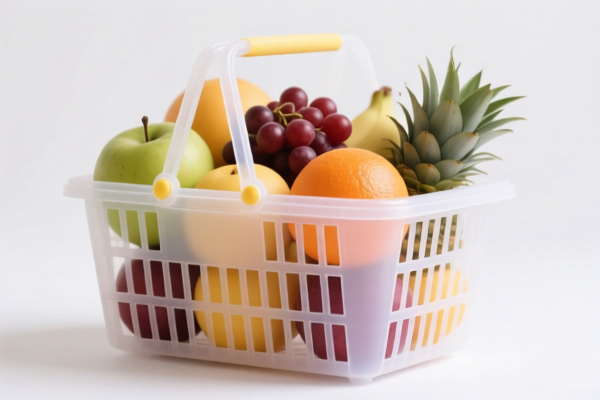
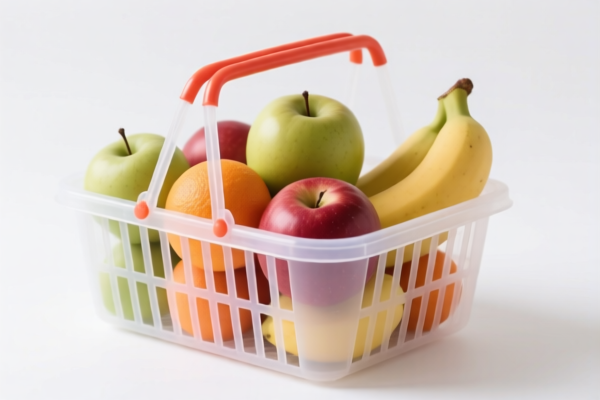
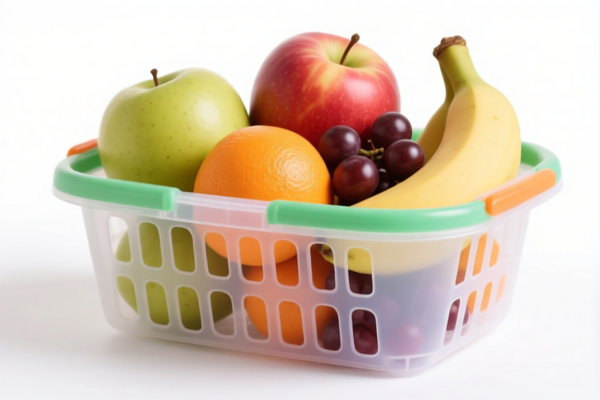
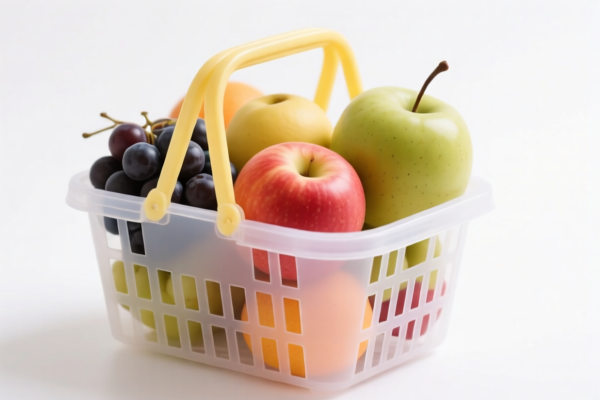
AI Analysis
🧺 Fruit Basket (Fruit Baskets for Home & Dining)
🌐 HS Code Reference & Customs Clearance Guide | 2026 Latest Tariff Analysis | Professional Clearance Strategy
📌 I. Product Definition & Classification: What Exactly Is a "Fruit Basket"?
A "Fruit Basket" is a general term for containers used to hold, display, or transport fruit. In international trade, the HS Code classification depends entirely on the MATERIAL it is made from. There is no single HS code for "fruit basket"; misclassification due to ignoring material composition leads to massive tax discrepancies.
Key Material Distinctions: 1. Metal (Iron/Steel): Durable, heavy, often used in kitchens or commercial settings. 2. Vegetable Fibers (Bamboo/Wicker/Straw): Natural, lightweight, traditional woven style. 3. Plastic: Modern, lightweight, often used for packaging or disposable serving.
⚠️ Critical Distinction:
- If made of Iron or Steel → It is considered "Tableware/Kitchenware" (Section 73).
- If made of Bamboo/Wicker → It is considered "Wrought Work of Vegetable Plaiting Materials" (Section 46).
- If made of Plastic → It is considered "Articles of Plastics for Packaging" (Section 39).
📦 II. HS Code Classification Details (2026 Latest Tariff Authority Comparison)
| HS Code | Product Description | Material | Key Feature | Applicable Scenario |
|---|---|---|---|---|
7323.99.90.80 |
Fruit basket of iron or steel | Iron/Steel | Kitchen/Dining item | Heavy-duty metal baskets, steel mesh baskets |
7323.99.90.30 |
Fruit basket of iron or steel | Iron/Steel | Kitchen/Tableware | Similar to above, specific sub-category for tableware |
4602.11.09.00 |
Other articles of bamboo or other vegetable plaiting materials | Bamboo/Plant Fiber | Woven/Natural | Bamboo baskets, generic vegetable fiber baskets |
4602.11.07.00 |
Articles of bamboo, willow, or other vegetable plaiting materials | Bamboo/Willow | Specific Weave | Bamboo or Willow woven baskets |
3923.90.00.80 |
Plastic articles for the conveyance or packing of goods | Plastic | Packaging/Storage | Plastic fruit baskets, storage bins |
3923.10.90.00 |
Boxes, cases, crates and similar articles, of plastics | Plastic | Box/Crate Type | Rigid plastic boxes or crates for fruit |
🔍 Key Reminder:
- Metal baskets are taxed significantly higher due to specific trade measures (see below).
- Bamboo/Willow baskets have lower base tariffs (0% for some codes) but still face punitive tariffs.
- Plastic baskets are grouped under packaging goods, not tableware, leading to different tariff structures.
💰 III. 2026 Latest Tariff Rate Breakdown (Including Additional Taxes & Policy Add-ons)
✅ Applicable Country: United States (US)
✅ Origin: China (CN)
✅ Effective Time: Current trade policy applies (including Section 301 & Section 232 measures)
🎯 1. 7323.99.90.80 & 7323.99.90.30 —— Iron or Steel Fruit Baskets
| Item | Content |
|---|---|
| Base Tariff | 3.4% (ad valorem) |
| Section 301 Tariff (Retaliatory) | +25.0% |
| Section 232 Tariff (Steel/Aluminum) | +50.0% |
| Total Tariff Rate | 88.4% |
| Tax Calculation | CIF Value × 88.4% |
| De Minimis Exemption | ❌ Not Eligible (High tariff items excluded) |
| Legal Basis Path | USITC:7323.99.90 → Section 301: 25% + Section 232: 50% |
📌 Explanation:
- This is the highest tax bracket in the list.
- The 50% Section 232 tariff applies to steel/aluminum products for national security reasons.
- The 25% Section 301 tariff is the standard retaliatory tariff on Chinese goods.
- Combined Total: 88.4%. This makes metal fruit baskets extremely costly to import into the US from China.
🎯 2. 4602.11.09.00 —— Other Vegetable Fiber Fruit Baskets
| Item | Content |
|---|---|
| Base Tariff | 10.0% |
| Section 301 Tariff | +25.0% |
| Total Tariff Rate | 45.0% |
| Tax Calculation | CIF Value × 45.0% |
| De Minimis Exemption | ❌ Not Eligible |
| Legal Basis Path | USITC:4602.11.09 → Section 301: 25% |
📌 Note:
- While the base tariff (10%) is higher than some plastics, the total remains lower than metal baskets.
- This applies to generic bamboo or plant fiber baskets not specifically classified as willow/bamboo woven items.
🎯 3. 3923.90.00.80 & 3923.10.90.00 —— Plastic Fruit Baskets
| Item | Content |
|---|---|
| Base Tariff | 3.0% |
| Section 301 Tariff | +25.0% |
| Total Tariff Rate | 38.0% |
| Tax Calculation | CIF Value × 38.0% |
| De Minimis Exemption | ❌ Not Eligible |
| Legal Basis Path | USITC:3923 → Section 301: 25% |
📌 Note:
- Plastic baskets fall under packaging articles.
- Base tariff is low (3%), resulting in a moderate total rate of 38%.
🎯 4. 4602.11.07.00 —— Bamboo/Willow Woven Fruit Baskets
| Item | Content |
|---|---|
| Base Tariff | 0.0% |
| Section 301 Tariff | +25.0% |
| Total Tariff Rate | 35.0% |
| Tax Calculation | CIF Value × 35.0% |
| De Minimis Exemption | ❌ Not Eligible |
| Legal Basis Path | USITC:4602.11.07 → Section 301: 25% |
📌 Note:
- This is the lowest tariff option in the dataset.
- Because the base tariff is 0%, only the 25% Section 301 tariff applies.
- Best for cost optimization if the product allows for bamboo/willow material.
🛠️ IV. Customs Clearance Practical Advice (Real-World Pitfall Guide)
✅ 1. Preparation Checklist (Mandatory Documents)
| Document | Required | Explanation |
|---|---|---|
| ✅ Product Specifications | ✔️ | Must clearly state material (e.g., "100% Bamboo," "Stainless Steel"). |
| ✅ Material Composition Certificate | ✔️ | Crucial for distinguishing between 7323 (Steel) and 4602 (Bamboo). |
| ✅ Product Photos | ✔️ | Show weave pattern (for bamboo) or welding points (for steel). |
| ✅ Commercial Invoice | ✔️ | Item description must match HS code intent (e.g., "Bamboo Woven Basket" vs. "Steel Basket"). |
| ✅ Packing List | ✔️ | Weight and dimensions to verify CIF value accuracy. |
✅ 2. Declaration Tips (Key Mnemonic)
🔥 "Material First, Code Second; Steel is Expensive, Bamboo is Cheaper!"
| Scenario | Correct Declaration | Incorrect Action | Consequence |
|---|---|---|---|
| Steel Basket | HS 7323.99.90.80 |
Declare as "Plastic Basket" | Smuggling/Fraud Risk; Heavy fines |
| Steel Basket | HS 7323.99.90.80 |
Declare as "Bamboo Basket" | Audit Trigger; 88.4% tax vs 35% tax discrepancy |
| Bamboo Basket | HS 4602.11.07.00 |
Declare as "Steel Basket" | Overpaying Tax; Lose 53.4% cost advantage |
| Plastic Basket | HS 3923.90.00.80 |
Declare as "Wooden Basket" | Classification Error; Delay in clearance |
💡 Strategy:
- If you can switch material from Steel to Bamboo/Willow, you save 53.4% in tariffs (from 88.4% to 35.0%).
- If you switch from Steel to Plastic, you save 50.4% (from 88.4% to 38.0%).
✅ 3. Special Handling Cases
| Case | Handling Advice |
|---|---|
| Mixed Material Basket (e.g., Steel Frame + Bamboo Liner) | Declared as the material that gives it its essential character. Usually, the frame determines the code (7323). Check with customs for ruling. |
| Set with Fruit | If sold as a "Gift Set" including fruit, the basket may be classified with the fruit or as a set. However, fruit has different rules (usually 0-5%). The basket part still attracts high tariffs if metal. Separate invoices recommended. |
| Origin Shifting | If manufactured in Vietnam or Thailand (and meets substantial transformation rules), Section 301 tariffs (25%) may be waived. Section 232 (50% for steel) may still apply depending on steel origin. |
🌍 V. Global Market Clearance Comparison (2026 Latest)
| Country/Region | Recommended HS Code (Steel) | Tariff (China Origin) | Notes |
|---|---|---|---|
| 🇺🇸 USA | 7323.99.90.80 |
88.4% | Highest cost due to Sec 232 + Sec 301 |
| 🇨🇳 China | 7323.99.90.80 |
~3.4% | Low import tax; No punitive tariffs |
| 🇪🇺 EU | 7323.99.90 |
~6.0-9.0% | No Section 301/232 equivalents, but anti-dumping may apply for specific steel products |
| 🇬🇧 UK | 7323.99.90 |
~6.0-9.0% | Post-Brexit tariffs similar to EU |
| 🇨🇦 Canada | 7323.99.90 |
~6.0% | CUSMA benefits if originating from North America |
📌 Conclusion:
- USA is the most expensive market for steel fruit baskets due to dual punitive tariffs.
- Bamboo/Willow baskets remain competitive in the US (35% total) compared to steel (88.4%).
- Consider supply chain diversification (e.g., sourcing bamboo from Southeast Asia) to mitigate US trade risks.
📌 VI. Common Mistakes & Pitfall Guide (Lessons Learned)
❌ Mistake 1: Declaring a Steel Basket as Plastic to avoid Section 232 tax.
👉 Consequence: Customs audit, seizure of goods, and penalties. Steel is easily identified by weight and magnetic properties.
❌ Mistake 2: Using generic description "Kitchen Utensil" without specifying material.
👉 Consequence: Customs holds the shipment, requiring re-declaration and possibly paying estimated high tariffs upfront.
❌ Mistake 3: Assuming "Gift Set" exempts the basket from tariffs.
👉 Consequence: The basket is still subject to its own tariff rate. The fruit inside might be tax-free or low-tax, but the metal basket is still 88.4%.
❌ Mistake 4: Ignoring the Section 232 Steel Tariff for metal baskets.
👉 Consequence: Budgeting error. The 50% tariff is separate from the 25% Section 301 tariff. Total 88.4% can destroy profit margins.
✅ Correct Action:
"Stainless Steel Fruit Basket, Mesh Design, for Kitchen Use, HS 7323.99.90.80, Origin China"
(Be precise, allow for high tariff budgeting, or switch material)
🎯 VII. Conclusion: Smart Classification, Cost Optimization!
🎯 Remember the Mantra:
🔹 "Steel is 88%, Bamboo is 35%, Plastic is 38%. Material Choice Determines Profit!"
🔹 "Don't let Section 232 eat your margin; consider Bamboo or Willows for the US market!"
📌 Pro Tip:
If you are importing Steel Fruit Baskets into the US, calculate if switching to Bamboo/Willow (
4602.11.07.00) is feasible for your design. The 53.4% tariff saving is significant.
For Plastic Baskets, ensure the description emphasizes "Packaging" or "Storage" to align with3923, not tableware.
📣 Immediate Action:
📞 Consult a customs broker for an Advance Ruling if you are unsure about mixed materials.
🚀 Optimize your supply chain: Choose bamboo for US exports to reduce tariff burden.
✨ Professional Clearance Starts with Accurate Classification!
💼 Every Percentage Point of Tariff Saves Money!
Customer Reviews
About HS Code Classification
The Harmonized System (HS) is an internationally standardized nomenclature developed by the World Customs Organization (WCO) to classify traded products. Over 200 countries use the HS system as the basis for customs tariffs, trade statistics, and import/export regulations.
Each HS code follows a hierarchical structure:
- Chapter (2 digits) — Broad category of goods (e.g., Chapter 84: Machinery and Mechanical Appliances)
- Heading (4 digits) — More specific grouping within the chapter
- Subheading (6 digits) — Internationally standardized breakdown, used by all WCO member countries
- National subdivisions (8-10 digits) — Country-specific extensions for further classification, such as US HTSUS 10-digit codes
Correct HS code classification is essential for smooth customs clearance, accurate duty payment, and compliance with trade regulations. Misclassification can lead to customs delays, overpayment of duties, or penalties.
When importing from CN to US, the applicable tariff rates may include:
- Most-Favored-Nation (MFN) rate — The standard duty rate applied to WTO members
- General rate — Applied to countries without trade agreements
- Trade remedy duties — Additional tariffs such as Section 301 (anti-dumping), Section 232 (national security), or countervailing duties
The information provided on this page is for reference purposes only. For official classification, please consult with your local customs authority or a licensed customs broker.