Fryer
CN → US| HS Code | Tariff Rate | Origin | Destination | Doc |
|---|---|---|---|---|
| 8438800000 | 35.0% | CN | US | Official Doc |
| 8516604074 | 35.0% | CN | US | Official Doc |
| 8516604070 | 35.0% | CN | US | Official Doc |
Product Images
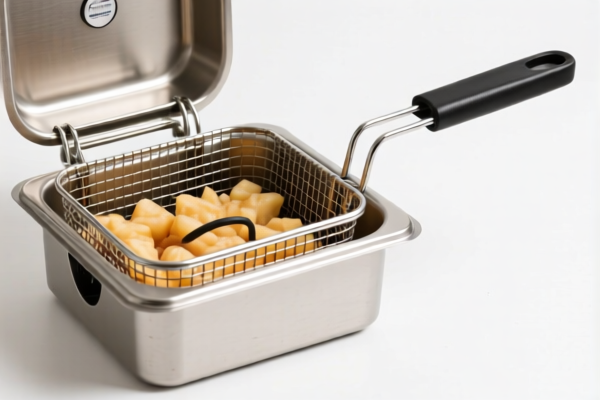
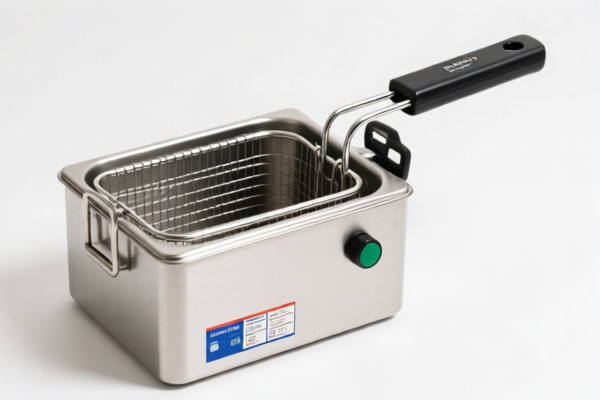
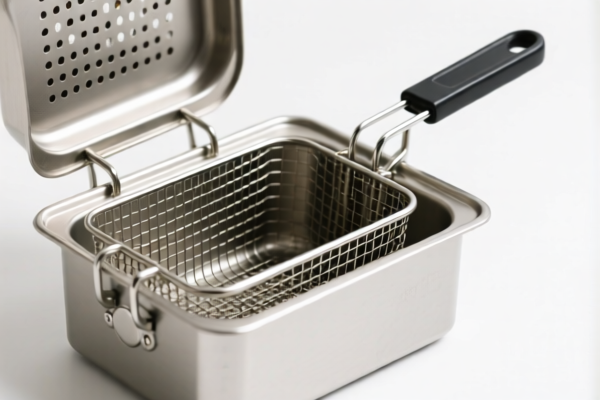
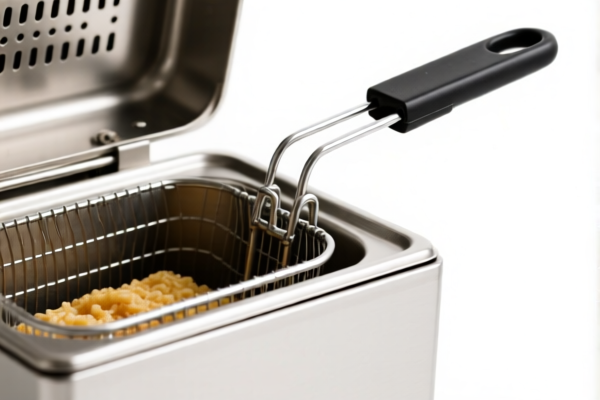
AI Analysis
🍟 Air Fryers: HS Code Classification & Customs Clearance Guide | 2026 Tax Update
🌐 HS Code Reference & Clearance Strategy | 2026 Latest Tariff Analysis | Professional-Level Entry Tactics
📌 I. Product Definition & Classification: Do You Really Understand "Air Fryers"?
An Air Fryer is a countertop convection oven that cooks by circulating hot air around the food. In international trade, classification depends heavily on whether it is viewed as a food preparation machine or an electric heating appliance.
Two Main Classification Paths: 1. Food Preparation Machinery: Viewed as equipment for preparing food, similar to mixers or slicers. 2. Electric Kitchen Appliances: Viewed as an electric cooking device, similar to ovens or grills.
⚠️ Key Distinction Point:
- If classified under Chapter 84 (Machinery for preparing food), it falls under "Other machinery for preparing food."
- If classified under Chapter 85 (Electric household appliances), it falls under "Electric cooking appliances, hot plates, grills, and toasters."
📦 II. HS Code Classification Details (2026 Latest Tariff Authority对照)
| HS Code | Product Description | Classification Logic | Tax Rate (US/CN Origin) |
|---|---|---|---|
8438.80.00.00 |
Machinery for preparing food (Other) | Classified as machinery for food/beverage preparation. Fits the description of industrial or household food prep equipment. | 35.0% |
8516.60.40.74 |
Electric heating cooking appliances (Other ovens) | Classified as electric heating equipment. Functionally belongs to "other ovens." Shape fits non-portable home electric heaters. | 35.0% |
8516.60.40.70 |
Electric heating cooking appliances (Portable/Small) | Classified as electric heating cooking appliances. Use is consistent with stoves, burners, and ovens. Fits the form factor of portable/small home appliances. | 35.0% |
🔍 Important Note:
- Both Chapter 84 and Chapter 85 classifications currently result in the same total tax rate of 35% for US imports from China. - The distinction is critical for customs documentation consistency and regulatory compliance (e.g., FDA vs. UL/ETL standards).
💰 III. 2026 Latest Tariff Rate Detailed Explanation (Including Surcharge)
✅ Applicable Country: United States (US)
✅ Country of Origin: China (CN)
✅ Effective Date: Current (Post-2025 adjustments)
🎯 1. 8438.80.00.00 —— Machinery for Preparing Food (Other)
| Item | Content |
|---|---|
| Base Duty Rate | 0.0% (Ad valorem) |
| Section 301 Surcharge | +25.0% |
| Section 122 Surcharge | +10.0% |
| Total Tax Rate | 35.0% |
| Tax Calculation | CIF Value × 35% |
| De Minimis Exemption | ❌ Not Eligible (Due to Section 301 & 122) |
| Legal Basis Path | HTSUS:8438.80.00.00 → Section 301: Footnote 9903.88.01 → Section 122: IEEPA:9903.01.24 |
📌 Explanation:
- "Section 301: 25%": Additional tariff imposed under US Trade Law Section 301 on Chinese imports. - "Section 122: 10%": Additional tariff under the International Emergency Economic Powers Act (IEEPA), specifically targeting certain Chinese goods. - Total 35%: This is a high tariff rate. Accurate declaration is crucial to avoid penalties.
🎯 2. 8516.60.40.74 —— Electric Heating Cooking Appliances (Other Ovens)
| Item | Content |
|---|---|
| Base Duty Rate | 0.0% (Ad valorem) |
| Section 301 Surcharge | +25.0% |
| Section 122 Surcharge | +10.0% |
| Total Tax Rate | 35.0% |
| Tax Calculation | CIF Value × 35% |
| De Minimis Exemption | ❌ Not Eligible |
| Legal Basis Path | HTSUS:8516.60.40.74 → Section 301: Footnote 9903.88.01 → Section 122: IEEPA:9903.01.24 |
📌 Note:
- Classification as an "oven" or "electric heating appliance" incurs the same surcharges. - Even if marketed as a "kitchen gadget," customs may classify it under Ch. 85 if it primarily uses electric heating elements.
🎯 3. 8516.60.40.70 —— Electric Heating Cooking Appliances (Portable/Small)
| Item | Content |
|---|---|
| Base Duty Rate | 0.0% (Ad valorem) |
| Section 301 Surcharge | +25.0% |
| Section 122 Surcharge | +10.0% |
| Total Tax Rate | 35.0% |
| Tax Calculation | CIF Value × 35% |
| De Minimis Exemption | ❌ Not Eligible |
| Legal Basis Path | HTSUS:8516.60.40.70 → Section 301: Footnote 9903.88.01 → Section 122: IEEPA:9903.01.24 |
📌 Note:
- This sub-code is for portable or small electric cooking appliances. - If the air fryer is compact and clearly marketed as a small home appliance, this code is often preferred over8516.60.40.74. - Same 35% total tax.
🛠️ IV. Customs Clearance Practical Advice (Real-World Pitfall Avoidance)
✅ 1. Required Documents Checklist (None Can Be Omitted)
| Document | Mandatory | Description |
|---|---|---|
| ✅ Product Specification Sheet | ✔️ | Includes dimensions, wattage, voltage, capacity, material |
| ✅ Circuit Diagram / Structure Diagram | ✔️ | Used to prove it is an electric heating appliance (Ch. 85) or mechanical (Ch. 84) |
| ✅ Product Photos (with Nameplate) | ✔️ | Clear view of model, brand, input/output parameters |
| ✅ Third-Party Test Report | ✔️ | UL/ETL (US Safety Standard), FCC (EMC), FDA (if applicable for food contact) |
| ✅ Commercial Invoice | ✔️ | Must clearly state: "Electric Air Fryer" or "Food Preparation Machine" |
| ✅ Packing List | ✔️ | Detail items included (basket, manual, etc.) to avoid "missing parts" flags |
✅ 2. Declaration Tips (Key Mantra)
🔥 "Match Function, Cite Standard, Declare Accurately, Avoid Delay!"
| Scenario | Correct Declaration | Wrong Practice |
|---|---|---|
| Air Fryer with heating element & fan | 8516.60.40.70 or 8516.60.40.74 |
Declaring as "Kitchen Gadget" under Ch. 82 |
| Air Fryer (Mechanical emphasis) | 8438.80.00.00 |
Declaring as "Oven" without heating specs |
| Air Fryer + Accessories | Declare as Unit | Splitting into "basket" + "heater" → Higher scrutiny |
| OEM Branded Air Fryer | Provide Authorization Letter | Using generic name → Potential trademark issue |
✅ 3. Special Case Handling
| Situation | Handling Advice |
|---|---|
| FDA Compliance | Air fryers with food-contact parts must comply with FDA regulations. Ensure materials are food-grade. |
| UL/ETL Certification | Mandatory for US market. Without it, customs may detain the goods for safety compliance. |
| OEM/ODM | Provide client authorization and design drawings to prove ownership and origin. |
| Mixed Containers | If air fryers are mixed with other Ch. 84/85 goods, ensure each item is clearly listed in the invoice. |
🌍 V. Global Market Clearance Comparison (2026 Latest)
| Country/Region | Recommended HS Code | Duty Rate | Certification | Notes |
|---|---|---|---|---|
| 🇺🇸 USA | 8516.60.40.70 or 8438.80.00.00 |
35% (CN Origin) | UL/ETL + FCC | High tax due to Sections 301 & 122 |
| 🇨🇳 China | 8516.60.40.70 |
5-8% | CCC + CQC | No Section 301/122 |
| 🇪🇺 EU | 8516.60.40 |
0-2% (if CE) | CE + RoHS | No additional surcharges |
| 🇬🇧 UK | 8516.60.40 |
0-2% | UKCA + RoHS | Post-Brexit standards apply |
| 🇯🇵 Japan | 8516.60.40 |
0% | PSE | No surcharges |
📌 Conclusion:
- The US is the most challenging market for air fryers due to the 35% total tariff. - Certifications (UL/FDA) are critical for US entry. - For other markets, ensure CE/UKCA/PSE compliance to avoid delays.
📌 VI. Common Errors & Pitfall Avoidance (Lessons Learned)
❌ Error 1: Declaring Air Fryer as "Kitchen Tool" under Ch. 82 (Cutlery)
👉 Consequence: Misclassification → Penalties + Back Taxes!
❌ Error 2: Omitting UL/ETL Certification in US Declaration
👉 Consequence: Detention at customs for safety compliance checks.
❌ Error 3: Not specifying "Electric Heating" in Description
👉 Consequence: Customs may classify under wrong code → Delay + Additional Inspection.
❌ Error 4: Splitting Air Fryer into "Basket" + "Heater"
👉 Consequence: Over-complex declaration → Higher risk of rejection.
✅ Correct Practice:
"Electric Air Fryer, 5.5L, 1500W, 120V, with UL Certification, Model XYZ, Food-Grade Basket"
🎯 VII. Conclusion: Professional Declaration, Cost Control, Efficiency
🎯 Remember the Mantra:
🔹 "Electric Heating → Ch. 85, Food Prep → Ch. 84, Both 35% in US!"
🔹 "UL/FDA is a must for USA, Certs clear, customs clears!"
📌 Pro Tip:
- If your air fryer is manufactured in Vietnam, Mexico, or Thailand, you may avoid Section 301/122 tariffs.
- Consider supply chain diversification to reduce duty costs.
- Apply for Advance Ruling from US Customs if you are unsure about classification.
📣 Immediate Action:
📞 Contact a professional customs broker + Provide product specs + Ensure UL/FDA/Certifications are valid.
🚀 Let your air fryers clear customs smoothly, boost profits, and expand globally!
✨ Professional Customs Clearance Starts with Accurate Classification!
💼 Every cent of your cost deserves precise calculation!
Customer Reviews
About HS Code Classification
The Harmonized System (HS) is an internationally standardized nomenclature developed by the World Customs Organization (WCO) to classify traded products. Over 200 countries use the HS system as the basis for customs tariffs, trade statistics, and import/export regulations.
Each HS code follows a hierarchical structure:
- Chapter (2 digits) — Broad category of goods (e.g., Chapter 84: Machinery and Mechanical Appliances)
- Heading (4 digits) — More specific grouping within the chapter
- Subheading (6 digits) — Internationally standardized breakdown, used by all WCO member countries
- National subdivisions (8-10 digits) — Country-specific extensions for further classification, such as US HTSUS 10-digit codes
Correct HS code classification is essential for smooth customs clearance, accurate duty payment, and compliance with trade regulations. Misclassification can lead to customs delays, overpayment of duties, or penalties.
When importing from CN to US, the applicable tariff rates may include:
- Most-Favored-Nation (MFN) rate — The standard duty rate applied to WTO members
- General rate — Applied to countries without trade agreements
- Trade remedy duties — Additional tariffs such as Section 301 (anti-dumping), Section 232 (national security), or countervailing duties
The information provided on this page is for reference purposes only. For official classification, please consult with your local customs authority or a licensed customs broker.