Frying Basket
CN → US| HS Code | Tariff Rate | Origin | Destination | Doc |
|---|---|---|---|---|
| 3924104000 | 13.4% | CN | US | Official Doc |
| 7323930080 | 62.0% | CN | US | Official Doc |
| 7323999080 | 88.4% | CN | US | Official Doc |
| 7418100053 | 70.5% | CN | US | Official Doc |
| 7418100023 | 70.5% | CN | US | Official Doc |
Product Images
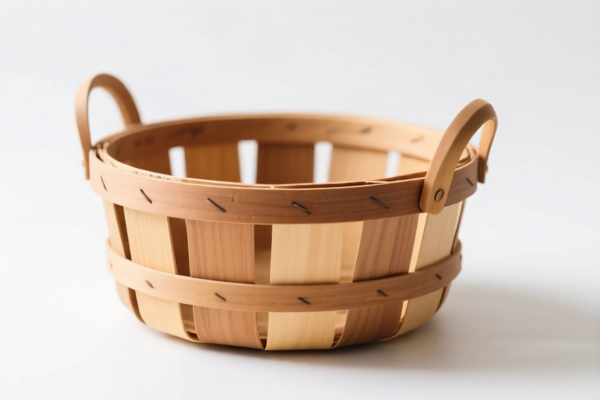


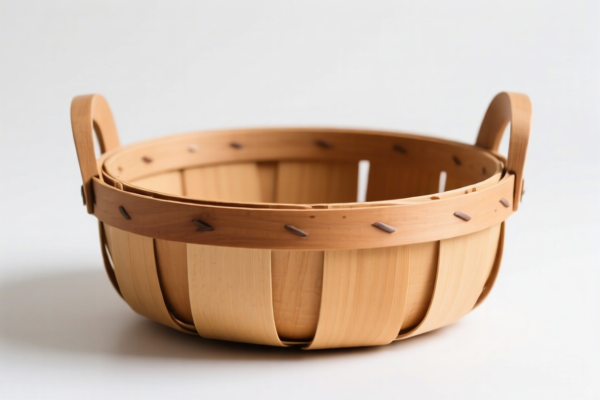
AI Analysis
🍟 Frying Baskets (Air Fryer & Deep Fryer Accessories)
🌐 HS Code Reference & Customs Clearance Guide | 2026 Latest Tariff Analysis | Professional Level Clearance Strategy
📌 I. Product Definition & Classification: What exactly is a "Frying Basket"?
Frying baskets are essential kitchen accessories used for air fryers and deep fryers. In international trade, they are classified strictly by material. The material determines the HS Code, and consequently, the massive disparity in tariff rates.
Key Distinction:
- Plastic (Heat-Resistant): Usually classified under plastic tableware/kitchenware.
- Metal (Stainless Steel, Iron, Steel, Copper): Classified under metal kitchenware/cooking utensils.
⚠️ Critical Warning:
- Do NOT mix material descriptions. A "stainless steel basket" declared as "plastic" will lead to severe penalties.
- Copper and Steel products are subject to additional punitive tariffs (Section 301 & Section 232 effects), leading to total tax rates exceeding 60-80%.
📦 II. HS Code Classification Details (2026 Latest Tariff Authority Comparison)
| HS Code | Product Description | Material | Category |
|---|---|---|---|
3924.10.40.00 |
Plastic frying baskets, other | Plastic | Plastic Tableware/Cookware |
7323.93.00.80 |
Stainless steel frying baskets, other | Stainless Steel | Steel/Tableware |
7323.99.90.80 |
Iron/Steel frying baskets, other | Iron/Steel | Iron/Steel Tableware |
7418.10.00.53 |
Copper or copper alloy frying baskets | Copper/Alloy | Copper Cookware |
7418.10.00.23 |
Copper or Brass frying baskets, other | Copper/Brass | Copper Cookware |
💰 III. 2026 Latest Tariff Rate Detailed Breakdown (Including Additional Taxes)
✅ Applicable Country: United States (US)
✅ Origin: China (CN)
✅ Effective Date: Current Trade War Tariffs Apply (Section 301 & IEEPA)
🎯 1. 3924.10.40.00 —— Plastic Frying Baskets (Lowest Risk)
| Item | Detail |
|---|---|
| Basic Duty | 3.4% |
| Additional Duty (Section 301) | 10% (Specific to this subheading under 122 Clause) |
| Section 232 (Steel/Al/Cu) | ❌ Not Applicable |
| Total Tax Rate | 13.4% |
| Tax Calculation | CIF Value × 13.4% |
| De Minimis Eligibility | ❌ No (De minimis does not apply to Section 301/122 goods) |
| Legal Basis | 122 Clause Tariff 10% + Basic Tariff |
📌 Explanation:
- This is the most cost-effective classification for frying baskets.
- Plastic materials are exempt from the heavy "Steel, Aluminum, Copper" punitive tariffs.
- Total tax is significantly lower compared to metal alternatives.
🎯 2. 7323.93.00.80 —— Stainless Steel Frying Baskets
| Item | Detail |
|---|---|
| Basic Duty | 2.0% |
| Additional Duty (Section 301) | 10% (122 Clause) |
| Section 232 (Steel) | +50% (Punitive Tariff for Steel Products) |
| Total Tax Rate | 62.0% |
| Tax Calculation | CIF Value × 62.0% |
| De Minimis Eligibility | ❌ No |
| Legal Basis | IEEPA:9903.01.24 → USITC:7323.93.00.80 → FOOTNOTE:Steel/Al/Cu 50% |
📌 Explanation:
- Although the basic duty is low (2.0%), the 50% Section 232 tariff for steel products makes this highly expensive.
- Combined with the 10% Section 301/122 tariff, the total burden is 62%.
🎯 3. 7323.99.90.80 —— Iron or Steel Frying Baskets
| Item | Detail |
|---|---|
| Basic Duty | 3.4% |
| Additional Duty (Section 301) | 25% (General Section 301 for other steel goods) |
| 122 Clause Tariff | 10% |
| Section 232 (Steel) | +50% (Punitive Tariff for Steel Products) |
| Total Tax Rate | 88.4% |
| Tax Calculation | CIF Value × 88.4% |
| De Minimis Eligibility | ❌ No |
| Legal Basis | IEEPA:9903.01.24 → USITC:7323.99.90.80 → FOOTNOTE:Steel/Al/Cu 50% |
📌 Explanation:
- This is the highest tax bracket.
- "Other steel products" often attract a higher Section 301 rate (25% vs 10%).
- Adding the 50% Section 232 steel tariff and 10% 122 clause results in an 88.4% total tax rate.
- Importing iron/steel baskets from China to the US is extremely costly.
🎯 4. 7418.10.00.53 & 7418.10.00.23 —— Copper or Copper Alloy Frying Baskets
| Item | Detail |
|---|---|
| Basic Duty | 3.0% |
| Additional Duty (Section 301) | 10% (122 Clause) |
| Section 232 (Copper) | +50% (Punitive Tariff for Copper Products) |
| Total Tax Rate | 70.5% |
| Tax Calculation | CIF Value × 70.5% |
| De Minimis Eligibility | ❌ No |
| Legal Basis | IEEPA:9903.01.24 → USITC:7418.10.00.53/23 → FOOTNOTE:Steel/Al/Cu 50% |
📌 Explanation:
- Copper products are also subject to the 50% Section 232 punitive tariff.
- Total tax rate is 70.5%, which is significantly higher than plastic but lower than general steel/iron.
- Commonly used for high-end decorative or traditional cooking ware.
🛠️ IV. Customs Clearance Practical Advice (Battle-Tested Pitfall Avoidance)
✅ 1. Material Declaration is Key (Do Not Ambiguity!)
| Scenario | Correct Declaration | Wrong Declaration | Consequence |
|---|---|---|---|
| Plastic Basket | "Heat-Resistant Plastic Frying Basket" | "Metal Basket" | Misclassification Penalty + Back Taxes |
| Stainless Steel | "Stainless Steel Frying Basket" | "Plastic Basket" | 62% Tariff applied retroactively |
| Copper Basket | "Copper Alloy Frying Basket" | "Iron Basket" | 70.5% Tariff instead of 88.4% (Savings possible if correct) |
🔥 Golden Rule:
"Material Defines Tax. Plastic is 13.4%, Steel is 62-88%, Copper is 70.5%."
✅ 2. Special Handling for "Composite" Materials
| Situation | Handling Advice |
|---|---|
| Plastic Handle + Metal Basket | If the metal basket is the primary material/function, it may still be classified under 7323 or 7418. Check the "essential character" rule. |
| Non-Stick Coating (Teflon) | If the basket is steel with PTFE coating, it is still classified as Steel (7323). The coating does not change the HS Code to plastic. |
| Packaged Set (Basket + Fryer) | Declare as a Set. The set’s classification follows the component that gives it its essential character. Usually, if it's sold as an accessory, declare the basket separately. |
✅ 3. Documentation Requirements (Must-Have)
| Document | Requirement | Purpose |
|---|---|---|
| ✅ Commercial Invoice | Must explicitly state Material Composition (e.g., "100% Stainless Steel 304") | To determine correct HS Code and applicable Section 232 tariffs. |
| ✅ Product Photos | Clear view of material, markings, and structure | To prove it is not a plastic item misdeclared as metal (or vice versa). |
| ✅ FCC/CE Certificates | If the basket is sold with an air fryer (electrical appliance) | Compliance for the electronic device; not strictly for the basket, but often required for the whole shipment. |
| ✅ FDA Compliance Statement | For food-contact materials (Plastic & Metal) | Proof that materials are food-safe. Required for 3924 and 7323/7418 categories. |
🌍 V. Global Market Comparison (2026 Latest)
| Country/Region | Recommended HS Code | Est. Total Tax (China Origin) | Notes |
|---|---|---|---|
| 🇺🇸 USA | 3924.10.40.00 (Plastic) |
13.4% | Cheapest entry point. |
| 🇺🇸 USA | 7323.99.90.80 (Iron) |
88.4% | Extremely high. Consider alternative sourcing. |
| 🇪🇺 EU | 7323.99.90 (Iron) |
~15-18% | No Section 232. Much more competitive than US. |
| 🇬🇧 UK | 7323.99.90 (Iron) |
~15-18% | Post-Brexit tariffs similar to EU. |
| 🇨🇦 Canada | 7323.99.90 (Iron) |
~5-15% | CUSMA benefits may apply if originating. |
📌 Conclusion:
- USA is the most hostile market for metal frying baskets due to Section 232 (Steel/Copper 50%) + Section 301 (10-25%).
- Plastic baskets (3924.10.40.00) are the only viable option for high-volume, low-cost imports into the US from China.
- For metal baskets, consider sourcing from Vietnam, Thailand, or Mexico to avoid US-China punitive tariffs (verify Rules of Origin carefully).
📌 VI. Common Errors & Pitfalls (Lessons Learned)
❌ Error 1: Declaring a stainless steel basket as "Kitchen Utensil" without material specification.
👉 Result: Customs assigns worst-case scenario or requests clarification → Delay + Storage Fees.
❌ Error 2: Assuming "Non-Stick" means "Plastic" classification for coated metal baskets.
👉 Result: Incorrect HS Code 3924 used → 62% tax due later + Penalties.
❌ Error 3: Ignoring Section 232 for Copper/Steel.
👉 Result: Budgeting for 5% tax, but paying 55-60% actual tax → Profit Margin Destroyed.
✅ Correct Practice:
"Declare Material Precisely: 'Stainless Steel 304 Frying Basket, Non-Stick Coated, For Air Fryer Use.'"
🎯 VII. Conclusion: Strategic Sourcing & Cost Control
🎯 Remember the Rule:
🔹 "Plastic: 13.4% | Stainless Steel: 62% | Iron: 88.4% | Copper: 70.5%"
🔹 "Material is Tax. Tax is Profit. Choose Plastic for USA, or Source Metal from Non-China Origins."
📌 Pro Tip:
If you must import metal frying baskets, consider:
1. Sourcing from Vietnam/Thailand/Mexico with proper Proof of Origin to avoid Section 232/301.
2. Pre-arranging an Advance Ruling from US CBP to confirm the exact HS Code and tariff liability before shipment.
3. Switching Product Line to plastic-coated or heat-resistant polymer baskets for the US market to maximize margin.
📣 Immediate Action:
📞 Audit your Bill of Materials.
📝 Confirm Material % with Supplier.
🚀 Select the correct HS Code (3924vs7323/7418) based on material.Don't let an 88.4% tariff eat your profits!
✨ Professional Customs Clearance Starts with Accurate Classification!
💼 Every Percentage Point of Tariff is Pure Profit Lost!
Customer Reviews
About HS Code Classification
The Harmonized System (HS) is an internationally standardized nomenclature developed by the World Customs Organization (WCO) to classify traded products. Over 200 countries use the HS system as the basis for customs tariffs, trade statistics, and import/export regulations.
Each HS code follows a hierarchical structure:
- Chapter (2 digits) — Broad category of goods (e.g., Chapter 84: Machinery and Mechanical Appliances)
- Heading (4 digits) — More specific grouping within the chapter
- Subheading (6 digits) — Internationally standardized breakdown, used by all WCO member countries
- National subdivisions (8-10 digits) — Country-specific extensions for further classification, such as US HTSUS 10-digit codes
Correct HS code classification is essential for smooth customs clearance, accurate duty payment, and compliance with trade regulations. Misclassification can lead to customs delays, overpayment of duties, or penalties.
When importing from CN to US, the applicable tariff rates may include:
- Most-Favored-Nation (MFN) rate — The standard duty rate applied to WTO members
- General rate — Applied to countries without trade agreements
- Trade remedy duties — Additional tariffs such as Section 301 (anti-dumping), Section 232 (national security), or countervailing duties
The information provided on this page is for reference purposes only. For official classification, please consult with your local customs authority or a licensed customs broker.