Fuel Anti stick Agent
CN → US| HS Code | Tariff Rate | Origin | Destination | Doc |
|---|---|---|---|---|
| 3815905000 | 40.0% | CN | US | Official Doc |
| 3815903000 | 35.0% | CN | US | Official Doc |
Product Images
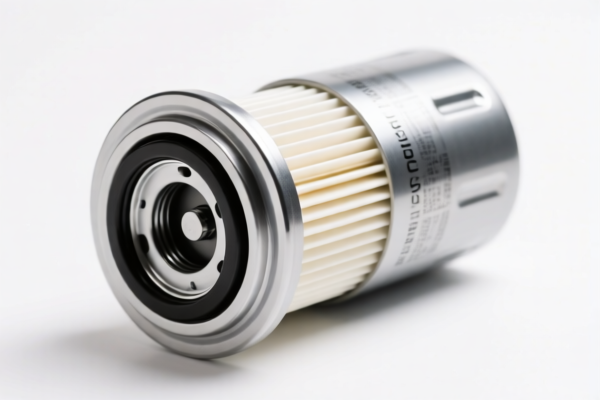
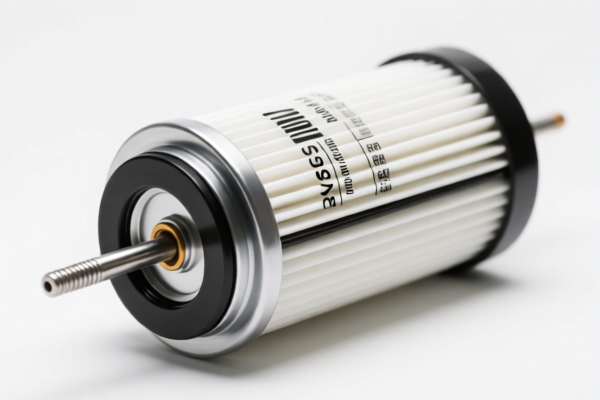
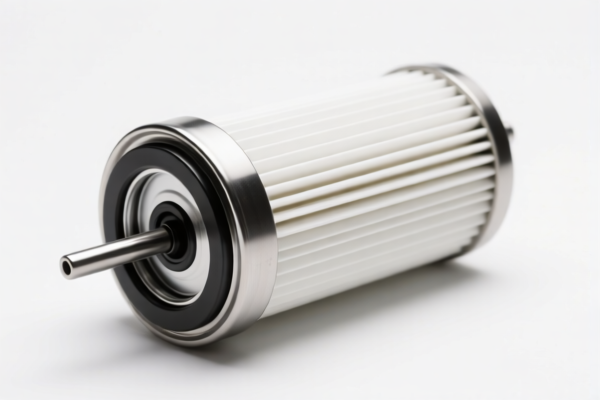

AI Analysis
🔥 Fuel Anti-Stick Agent (Fuel Additive)
🌐 HS Code Reference & Customs Clearance Guide | 2026 Latest Tariff Analysis | Professional Clearance Strategy
📌 1. Product Definition & Classification: Do You Really Understand "Fuel Anti-Stick Agent"?
Fuel Anti-Stick Agent is a specialized chemical additive used in internal combustion engines (typically diesel or heavy-duty engines) to prevent the accumulation of carbon deposits, sludge, and varnish on fuel injectors, pistons, and valves. It ensures smooth fuel flow, prevents "sticking" of moving parts in the fuel system, and maintains engine performance.
In international trade, these products fall under Chapter 38: Miscellaneous Chemical Products, specifically under heading 3815: Reaction initiators, reaction accelerators and catalytic preparations.
⚠️ Key Distinction:
- If the product is mostly inorganic (e.g., certain metal-based detergents) → It may be classified under 3815.90.30.00.
- If the product is organic-based (e.g., polyether amines, aromatic amines, or other organic catalysts/preparations) → It is classified under 3815.90.50.00.
- Note: Most commercial fuel anti-stick agents are organic preparations, making 3815.90.50.00 the more common classification.
📦 2. HS Code Classification Details (2026 Latest Tariff Authority Comparison)
| HS Code | Product Description | Applicable Scenario | Composition Type |
|---|---|---|---|
3815.90.30.00 |
Reaction initiators, accelerators, and catalytic preparations: Other: Consisting wholly of inorganic substances: Other | Inorganic catalysts, metal oxides, or inorganic detergents used in fuel systems | ✅ Inorganic |
3815.90.50.00 |
Reaction initiators, accelerators, and catalytic preparations: Other: Other | Organic-based fuel additives, polyether amines, detergent packages, anti-stick agents | ✅ Organic |
🔍 Key Reminder:
- Most fuel anti-stick agents are organic (based on polyether amines or similar organic compounds). Therefore,3815.90.50.00is the most likely correct classification.
- If the product is purely inorganic (rare for anti-stick agents, more common for specific inorganic catalysts), then3815.90.30.00applies.
- Do not confuse with 3402 (surface-active agents) or 2710 (fuels) — these are incorrect for catalytic/preparation additives.
💰 3. 2026 Latest Tariff Rate Details (Including Surtax, Policy Surcharges)
✅ Applicable Country: United States (US)
✅ Country of Origin: China (CN)
✅ Effective Date: From November 10, 2025 (including subsequent imports)
🎯 1. 3815.90.50.00 —— Organic Fuel Anti-Stick Agents (Most Common)
| Item | Content |
|---|---|
| Basic Tariff Rate | 5.0% (ad valorem) |
| Section 301 Surtax | +25.0% (from USITC Footnote 9903.88.01) |
| Total Tax Rate | 30.0% |
| Tax Calculation | CIF Value × 30.0% |
| De Minimis Exemption Eligible? | ❌ No (deny_de_minimis) |
| Legal Basis Path | IEEPA:9903.01.25 → IEEPA:9903.01.24 → USITC:3815.90.50.00 → FOOTNOTE:9903.88.01 |
📌 Explanation:
- The 25% surtax is imposed under the Section 301 of the Trade Act of 1974, targeting Chinese-origin goods in this HS code;
- The 5% basic tariff is the standard MFN (Most Favored Nation) rate for this category;
- Total 30% is a significant cost factor that must be factored into pricing and supply chain decisions.
🎯 2. 3815.90.30.00 —— Inorganic Fuel Anti-Stick Agents (Rare)
| Item | Content |
|---|---|
| Basic Tariff Rate | 0.0% (ad valorem) |
| Section 301 Surtax | 0.0% |
| Total Tax Rate | 0.0% |
| Tax Calculation | CIF Value × 0.0% |
| De Minimis Exemption Eligible? | ✅ Yes (may qualify under de minimis if value is low, but subject to other regulations) |
| Legal Basis Path | USITC:3815.90.30.00 |
📌 Note:
- Inorganic fuel additives are rare in the anti-stick category; most are organic.
- If your product is truly 100% inorganic, it benefits from 0% total tax, but you must provide chemical composition proof to customs.
🛠️ 4. Customs Clearance Practical Advice (Real-World Pitfall Avoidance Guide)
✅ 1. Required Documentation Checklist (None Missing)
| Document | Must Provide | Description |
|---|---|---|
| ✅ Product Specification Sheet | ✔️ | Includes chemical composition, active ingredients, concentration, CAS numbers |
| ✅ MSDS/SDS (Material Safety Data Sheet) | ✔️ | Required for chemical products; shows hazard classification |
| ✅ Product Photos (with Label) | ✔️ | Clear image of bottle, label, ingredient list, and usage instructions |
| ✅ Commercial Invoice | ✔️ | Must specify "Fuel Anti-Stick Agent" or "Fuel Additive" and HS Code |
| ✅ Packing List | ✔️ | Details net/gross weight, quantity, and packaging type |
| ✅ Certificate of Origin (CO) | ✔️ | If non-China origin, may apply for preferential tariff |
| ✅ Chemical Composition Declaration | ✔️ | Critical to distinguish between organic (3815.90.50.00) and inorganic (3815.90.30.00) |
✅ 2. Declaration Tips (Key Mnemonic)
🔥 "Organic = 30%, Inorganic = 0%, Composition Proof is Key!"
| Scenario | Correct Declaration Method | Wrong Practice |
|---|---|---|
| Organic fuel additive (most common) | 3815.90.50.00 |
Misclassified as 3402 → Higher risk of audit |
| Inorganic fuel additive (rare) | 3815.90.30.00 |
Misclassified as 3815.90.50.00 → 30% tax instead of 0% |
| Mixed organic/inorganic | 3815.90.50.00 |
Assume 0% tax → Audit risk |
| Fuel itself (not additive) | 2710.xx |
Misclassified as 3815 → Wrong chapter |
✅ 3. Special Circumstance Handling
| Scenario | Handling Advice |
|---|---|
| OEM Custom Formulations | Provide client order + formula sheet; avoid being classified as "unknown chemical" |
| Multi-Functional Additive (Anti-Stick + Detergent) | Still classified under 3815 if catalytic/preparation function is primary; provide evidence |
| Small Quantity Samples | If value < $800, may qualify for de minimis only if classified under 3815.90.30.00 (0%); 3815.90.50.00 is not eligible |
| Mixed Containers (Fuel + Additive) | Declare separately; do not bundle fuel (2710) with additive (3815) |
🌍 5. Global Main Market Customs Comparison (2026 Latest)
| Country/Region | Recommended HS Code | Tariff Rate | Certification Requirements | Notes |
|---|---|---|---|---|
| 🇺🇸 United States | 3815.90.50.00 |
30% (China origin) | SDS, EPA Registration (if applicable) | 30% total tax |
| 🇨🇳 China | 3815.90.50.00 |
5% | No extra surtax | Lower cost for domestic sales |
| 🇪🇺 European Union | 3815.90.90 |
0% | REACH Registration | No anti-dumping/surtax |
| 🇦🇺 Australia | 3815.90.90 |
5% | AICIS Registration | No surtax |
| 🇯🇵 Japan | 3815.90.90 |
0% | FSC Approval | No surtax |
📌 Conclusion:
- The US is the only major market imposing high surtaxes (30%) on Chinese-origin fuel anti-stick agents;
- China, EU, Australia, and Japan have significantly lower or zero tariffs;
- Supply chain diversification (e.g., manufacturing in Vietnam or Thailand) may help avoid US surtaxes.
📌 6. Common Errors & Pitfall Guide (Blood & Tears Lessons)
❌ Mistake 1: Classifying organic fuel anti-stick agents under 3815.90.30.00 (0%) without proof of inorganic composition
👉 Consequence: Customs audit, back taxes + penalties, shipment delay
❌ Mistake 2: Declaring as "Fuel" (2710) instead of "Additive" (3815)
👉 Consequence: Wrong chapter, potential fraud allegations, seizure
❌ Mistake 3: No SDS/MSDS provided
👉 Consequence: Blocked at US customs; chemical products require SDS for safety assessment
❌ Mistake 4: Assuming de minimis exemption for 3815.90.50.00
👉 Consequence: De minimis does NOT apply to this HS code under IEEPA/301 rules; full 30% tax applies even for small shipments
✅ Correct Practice:
"Fuel Anti-Stick Agent, Organic-Based, Polyether Amine Composition, 500ml Bottle, For Diesel Engines, SDS Attached, HS Code 3815.90.50.00"
🎯 7. Conclusion: Professional Declaration, Save Time, Reduce Costs!
🎯 Remember Mnemonic:
🔹 "Organic = 30%, Inorganic = 0%, Composition Proof is Key!"
🔹 "HS Code Determines Tax, 30% Difference, Wrong Declaration Costs Thousands!"
📌 Pro Tip:
If your fuel anti-stick agent is originating from Vietnam, Mexico, Thailand, or Malaysia, you may be eligible for IEEPA/301 exemptions, reducing the tariff to 0%~5%.
Recommend Applying for Advance Ruling before shipment to avoid customs disputes.
📣 Immediate Action:
📞 Contact a professional customs broker + Provide Product Label + Apply for HS Code Advance Ruling
🚀 Ensure smooth clearance, efficient export, and maximized profit!
✨ Professional Clearance Starts with Accurate Classification!
💼 Every Cent of Your Cost Deserves Precise Calculation!
Customer Reviews
About HS Code Classification
The Harmonized System (HS) is an internationally standardized nomenclature developed by the World Customs Organization (WCO) to classify traded products. Over 200 countries use the HS system as the basis for customs tariffs, trade statistics, and import/export regulations.
Each HS code follows a hierarchical structure:
- Chapter (2 digits) — Broad category of goods (e.g., Chapter 84: Machinery and Mechanical Appliances)
- Heading (4 digits) — More specific grouping within the chapter
- Subheading (6 digits) — Internationally standardized breakdown, used by all WCO member countries
- National subdivisions (8-10 digits) — Country-specific extensions for further classification, such as US HTSUS 10-digit codes
Correct HS code classification is essential for smooth customs clearance, accurate duty payment, and compliance with trade regulations. Misclassification can lead to customs delays, overpayment of duties, or penalties.
When importing from CN to US, the applicable tariff rates may include:
- Most-Favored-Nation (MFN) rate — The standard duty rate applied to WTO members
- General rate — Applied to countries without trade agreements
- Trade remedy duties — Additional tariffs such as Section 301 (anti-dumping), Section 232 (national security), or countervailing duties
The information provided on this page is for reference purposes only. For official classification, please consult with your local customs authority or a licensed customs broker.