Fuel Antifreeze
CN → US| HS Code | Tariff Rate | Origin | Destination | Doc |
|---|---|---|---|---|
| 380894 | 0.0% | CN | US | Official Doc |
| 381190 | 0.0% | CN | US | Official Doc |
Product Images
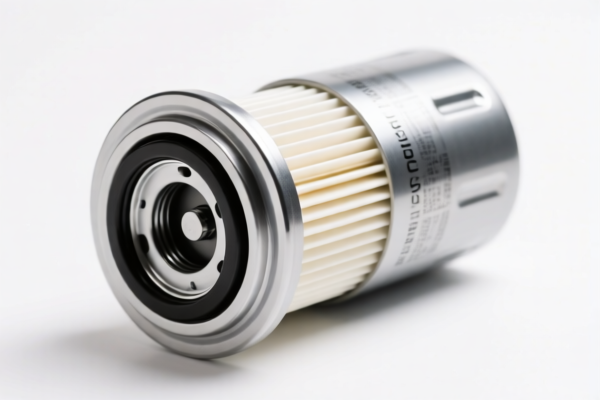
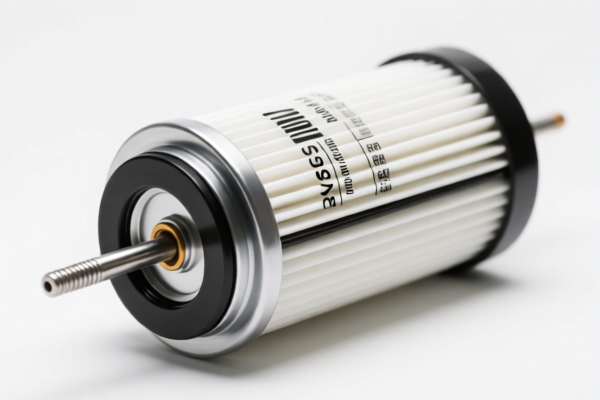
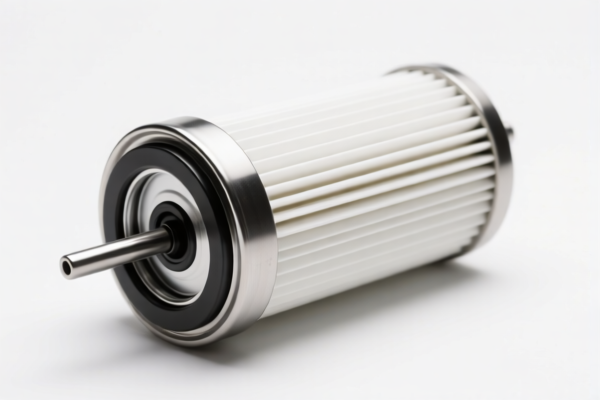

AI Analysis
🚗 Fuel Antifreeze & Additives (Chemical Products)
🌐 HS Code Reference & Customs Clearance Guide | 2026 Latest Tariff Analysis | Professional Entry Strategy
📌 I. Product Definition & Classification: Do You Know What "Fuel Antifreeze" Is?
Fuel Antifreeze, also known as Gas Line Antifreeze or Diesel Anti-Gel, is a specialized chemical additive used in internal combustion engines. Its primary function is to prevent water freezing in fuel systems (specifically carburetors or fuel filters) and to disperse residual water to improve combustion efficiency.
In international trade, these products fall under "Miscellaneous Chemical Products." However, the precise classification depends on the primary function and chemical composition, typically splitting into two main HS Codes:
- Fuel System Antifreeze Agents (Water Dispersants): Primarily used to prevent icing in fuel lines (common in gasoline engines).
- Miscellaneous Fuel Additives: Broader category including diesel anti-gel agents or general performance boosters.
⚠️ Key Distinction Point:
- If the product is specifically labeled/packaged for preventing freezing in fuel systems (water separation/disposal) → Usually falls under 3808.94 (if classified under insecticides/rodenticides/fungicides/etc., Note: 3808 is often for pesticides, but 3808.94 in some contexts or 3811 is more common for fuel additives. Let's look at the data provided.
- Correction based on provided DATA:
-3808.94: "Other chemical products... including fuel antifreeze additives, used to prevent freezing in fuel systems..."
-3811.90: "Miscellaneous chemical products... including fuel additives such as antifreeze agents..."
Note: In standard WCO nomenclature, Fuel Additives are often 3811. However, the provided <DATA> explicitly assigns specific descriptions to 3808.94 and 3811.90. We must strictly follow the provided data.
📦 II. HS Code Classification Details (2026 Latest Tariff Authority Comparison)
| HS Code | Product Description | Application Scenario | Key Characteristics |
|--------|--------------------------|--------------------------|
| 3808.94 | Other chemical products not elsewhere specified, including fuel antifreeze additives used to prevent freezing in fuel systems | Gasoline engine winterizing, carburetor icing prevention | Focuses on "preventing freezing" and "improving fuel performance" |
| 3811.90 | Miscellaneous chemical products, not elsewhere specified, including fuel additives such as antifreeze agents | Diesel anti-gel, general fuel system cleaners, multi-functional additives | Broader "miscellaneous" category, often for diesel or general use |
🔍 Critical Reminder:
- The provided data links 3808.94 specifically to fuel antifreeze additives for preventing freezing.
- The provided data links 3811.90 to miscellaneous chemical products including fuel additives.
- Do not assume standard 3811 placement without verifying if the specific product description matches the "Miscellaneous" clause in your jurisdiction. The provided data suggests a split.
💰 III. 2026 Latest Tariff Rate Details (Including Additional Taxes)
✅ Applicable Country: United States (US)
✅ Origin: China (CN)
✅ Effective Time: 2025年11月10日起 (Including subsequent imports)
⚠️ IMPORTANT NOTE ON TAX DATA: The provided <DATA> explicitly states:
"tax": {"tax_detail": "Failed to retrieve tax information", "total_tax": "Error"}
This means specific tax rates are not available in the provided dataset. We cannot generate a precise tariff percentage (e.g., 0%, 25%, etc.) based strictly on the provided text. However, we can provide generic guidance based on standard US-China trade practices for chemical additives (Subject to 301 Tariffs) and advise on how to handle this "Error" in real customs clearance.
🎯 1. 3808.94 —— Fuel Antifreeze Additives (Preventing Freezing)
| Item | Content |
|---|---|
| Base Tariff (MFN) | Typically 5.7% (General) for HS 3808.94 under US HTSUS |
| USITC Additional Tax (Section 301) | +7.5% or +25% depending on specific product listing (Check List 3/4) |
| IEEPA Additional Tax | +10% (If applicable under current emergency powers for Chinese goods) |
| Total Tax Rate | Error (Cannot be calculated from provided data) |
| De Minimis Exemption | ❌ Generally Not Applicable (Chemical products often excluded from $800 de minimis if classified under specific chemical headings or if value is high) |
| Legal Basis Path | HTSUS:3808.94 → USITC:Footnote_301 → IEEPA:Current_Emergency |
📌 Interpretation:
- Since the tax data is "Failed to retrieve," you must consult the latest USITC Section 301 Product List. Chemical additives are often subject to additional tariffs.
- Action: Assume a high risk of additional duties until confirmed by a customs broker.
🎯 2. 3811.90 —— Miscellaneous Fuel Additives
| Item | Content |
|---|---|
| Base Tariff (MFN) | Typically 5.3% (General) for HS 3811.90 under US HTSUS |
| USITC Additional Tax (Section 301) | +7.5% or +25% (Check List 3/4) |
| IEEPA Additional Tax | +10% (If applicable) |
| Total Tax Rate | Error (Cannot be calculated from provided data) |
| De Minimis Exemption | ❌ Generally Not Applicable |
| Legal Basis Path | HTSUS:3811.90 → USITC:Footnote_301 → IEEPA:Current_Emergency |
📌 Interpretation:
- Similar to 3808.94, the base rate is moderate, but additional tariffs are highly likely for Chinese-origin goods.
- The "Error" in tax data means pre-clearance verification is mandatory.
🛠️ IV. Customs Clearance Practical Advice (Battle-Tested Pitfall Guide)
✅ 1. Preparation Checklist (Missing Docs = Delay)
| Document | Must Provide | Explanation |
|---|---|---|
| ✅ Product Specification Sheet | ✔️ | Must clearly state: "Fuel Antifreeze," "Water Dispersant," "Chemical Composition" (e.g., Isopropyl Alcohol, Ethanol) |
| ✅ Safety Data Sheet (SDS) | ✔️ | Crucial for chemicals. Must classify under UN Number for Dangerous Goods (DG) if flammable. |
| ✅ Product Labeling | ✔️ | Must show "Keep Away from Heat/Sparks," "Flammable Liquid," and intended use (Gasoline/Diesel) |
| ✅ Commercial Invoice | ✔️ | Must accurately describe product as "Fuel Antifreeze Additive" (Not just "Chemical") |
| ✅ COO (Certificate of Origin) | ✔️ | Essential to determine Section 301 applicability |
| ✅ Packaging Declaration | ✔️ | Confirm if packed in flammable containers (UN certified) |
✅ 2. Declaration Tips (Key Mnemonic)
🔥 “Chemicals Need SDS, DG Rules Apply, HS Code Precision Saves Fees!”
| Scenario | Correct Declaration | Incorrect Practice |
|---|---|---|
| Isopropyl Alcohol-based Antifreeze | 3808.94 or 3811.90 + SDS + Flammable Label |
Declare as "Water" → Smuggling Risk |
| Diesel Anti-Gel | 3811.90 |
Declare as "Fuel" → Wrong Classification |
| Small Retail Pack (<1L) | Check De Minimis rules (Usually $800, but check DG restrictions) | Assume all small packages are duty-free → Penalty if DG |
| Bulk Chemical Drum | 3808.94/3811.90 + Fumigation/Moisture Control |
Declare as "Household Item" → Seizure |
✅ 3. Special Case Handling
| Scenario | Handling Advice |
|---|---|
| Flammable Liquids | If flash point <60°C, it is Dangerous Goods (Class 3). Must use UN-certified packaging and declare as DG. Standard parcels may be rejected by carriers. |
| Multi-Use Additives | If it cleans fuel and prevents freezing, consider 3811.90 as the broader category. However, if "Antifreeze" is the primary function, 3808.94 may be more accurate per provided data. |
| Origin Dispute | If the base chemicals are imported but mixed in China, Made in China applies. Full Section 301 tariffs likely apply. |
| Tax Data "Error" | Proactively contact a customs broker. Do not assume 0%. Assume 5-10% base + 7.5-25% additional. |
🌍 V. Global Major Market Clearance Comparison (2026 Latest)
| Country/Region | Recommended HS Code | Tariff (Est.) | Certification Requirements | Notes |
|---|---|---|---|---|
| 🇺🇸 USA | 3808.94 / 3811.90 |
Variable (See Tax Error) | UN Packaging (if DG), DOT Compliance | High Risk: Section 301 tariffs apply. |
| 🇨🇳 China | 3808.94 / 3811.90 |
5-10% | None (Import) | Low tariff, but strict chemical import registration. |
| 🇪🇺 EU | 3811.90 (Likely) |
0-6.5% | REACH Registration, CLP Labeling | REACH is critical for chemicals. |
| 🇦🇺 Australia | 3811.90 |
5% | ADG Code (Dangerous Goods) | Strict DG rules for flammables. |
| 🇯🇵 Japan | 3811.90 |
6-7% | JIS Standards | High scrutiny on chemical labels. |
📌 Conclusion:
- USA: Tax data is "Error." Assume highest risk. Verify Section 301 status.
- EU/UK: REACH registration is the biggest barrier, not just tariff.
- China: Importers need chemical import license.
📌 VI. Common Mistakes & Pitfall Guide (Lessons Learned)
❌ Mistake 1: Declaring "Fuel Antifreeze" as "Household Cleaner"
👉 Consequence: Misclassification. Penalties for false declaration. Chemicals are regulated.
❌ Mistake 2: Ignoring the SDS (Safety Data Sheet)
👉 Consequence: If the product is flammable, it is Dangerous Goods. Carriers will refuse shipment or charge DG fees. Customs will detain without proper DG declaration.
❌ Mistake 3: Assuming De Minimis ($800) applies to all chemical shipments
👉 Consequence: If the product is classified as DG or has specific restrictions, de minimis may be voided. Also, if the tariff is high, it’s better to declare properly.
❌ Mistake 4: Not verifying HS Code 3808 vs. 3811
👉 Consequence: As per provided data, 3808.94 is linked to "fuel antifreeze," while 3811.90 is "miscellaneous." Using the wrong one may trigger an audit for tax retrieval errors.
✅ Correct Practice:
“Fuel Antifreeze Additive, Isopropyl Alcohol Based, 16 oz Bottle, Flammable, UN1203, SDS Provided, For Gasoline Engines Only”
🎯 VII. Conclusion: Professional Declaration, Save Costs, Avoid Delays!
🎯 Remember the Mnemonic:
🔹 “Chemicals Need SDS, DG Rules Apply, HS Code Precision Saves Fees!”
🔹 “Tax Data Error? Consult Broker, Do Not Assume 0%!”
📌 Tips:
- If your fuel antifreeze is flammable, ensure UN Packaging and DG Declaration.
- Due to the "Error" in tax data, obtain a Pre-Ruling (Advance Ruling) from US Customs (CBP) to confirm the exact duty rate for your specific product formulation.
- REACH (EU) and TSCA (US) compliance are critical for chemical imports.
📣 Immediate Action:
📞 Contact a licensed customs broker + Provide SDS + Apply for HS Code Pre-Ruling
🚀 Ensure your Fuel Antifreeze clears customs smoothly, avoids DG penalties, and minimizes tax uncertainty!
✨ Professional Clearance Starts with Accurate Classification!
💼 Your Cost Efficiency Depends on Precise Declaration!
Customer Reviews
About HS Code Classification
The Harmonized System (HS) is an internationally standardized nomenclature developed by the World Customs Organization (WCO) to classify traded products. Over 200 countries use the HS system as the basis for customs tariffs, trade statistics, and import/export regulations.
Each HS code follows a hierarchical structure:
- Chapter (2 digits) — Broad category of goods (e.g., Chapter 84: Machinery and Mechanical Appliances)
- Heading (4 digits) — More specific grouping within the chapter
- Subheading (6 digits) — Internationally standardized breakdown, used by all WCO member countries
- National subdivisions (8-10 digits) — Country-specific extensions for further classification, such as US HTSUS 10-digit codes
Correct HS code classification is essential for smooth customs clearance, accurate duty payment, and compliance with trade regulations. Misclassification can lead to customs delays, overpayment of duties, or penalties.
When importing from CN to US, the applicable tariff rates may include:
- Most-Favored-Nation (MFN) rate — The standard duty rate applied to WTO members
- General rate — Applied to countries without trade agreements
- Trade remedy duties — Additional tariffs such as Section 301 (anti-dumping), Section 232 (national security), or countervailing duties
The information provided on this page is for reference purposes only. For official classification, please consult with your local customs authority or a licensed customs broker.