Fuel Tank Paper Gasket
CN → US| HS Code | Tariff Rate | Origin | Destination | Doc |
|---|---|---|---|---|
| 8484900000 | 37.5% | CN | US | Official Doc |
| 3919905060 | 40.8% | CN | US | Official Doc |
| 3919102055 | 40.8% | CN | US | Official Doc |
| 4821102000 | 35.0% | CN | US | Official Doc |
| 4821902000 | 35.0% | CN | US | Official Doc |
Product Images



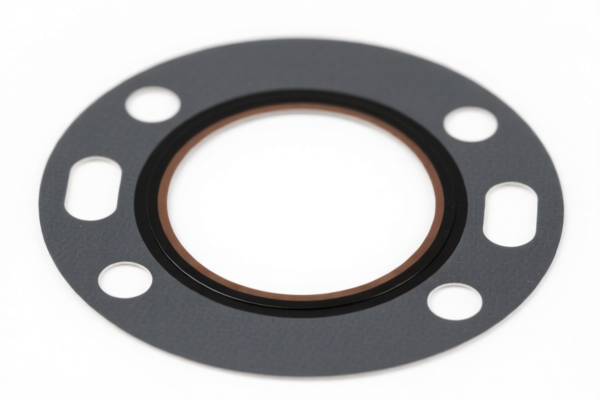
AI Analysis
🏗️ Fuel Tank Paper Gasket: The Hidden Cost of "Simple" Seals
🌐 HS Code Reference & Clearance Guide | 2026 Tariff Deep Dive | Professional Compliance Strategy
📌 One Product, Multiple Classifications: Why "It's Just a Gasket" is a Dangerous Assumption
A "Fuel Tank Paper Gasket" sounds simple, but in the eyes of U.S. Customs and Border Protection (CBP) and international trade law, its classification depends entirely on its physical form, material structure, and functional design. Misclassifying this item can lead to severe underpayment of duties (resulting in massive retroactive taxes) or, worse, detention for non-compliance with "Section 301" and "IEEPA" sanctions.
⚠️ Key Distinction Point:
- Is it a structural sealing ring (cut to shape) or a printed label/sticker (adhesive information tag)?
- If it seals the tank → Gasket (Chapter 84)
- If it identifies the tank (e.g., fuel type, warnings) and sticks to it → Label/Sticker (Chapter 48 or 39)
📦 II. HS Code Classification Matrix (2026 Latest Authorized Data)
Based on the provided dataset, here are the only valid HS Codes for this product description, differentiated by physical nature:
| HS Code | Product Description | Material/Shape Key | Tax Profile |
|---|---|---|---|
8484.90.00.00 |
Paper Gaskets: Sealing rings/joints, non-metallic | Form: Flat gasket shape Function: Sealing Conflict: No material conflict reported |
37.5% (Base 2.5% + 301+10%) |
4821.10.20.00 |
Fuel Tank Sticker (Paper/Film Label): Identification tag | Form: Printed label/tag Function: Identification/Warning Conflict: No material conflict |
35.0% (Base 0% + 301+10%) |
4821.90.20.00 |
Fuel Tank Sticker (Paper/Cardboard): Label form | Form: Paper/Cardboard label Function: Identification Conflict: No material conflict |
35.0% (Base 0% + 301+10%) |
3919.90.50.60 |
Fuel Tank Sticker (Plastic Self-Adhesive): Flat shape | Form: Plastic, self-adhesive Function: Identification Conflict: No material conflict |
40.8% (Base 5.8% + 301+10%) |
3919.10.20.55 |
Fuel Tank Sticker (Plastic Self-Adhesive Tape/Film) | Form: Plastic roll/film tape Function: Identification Conflict: No material conflict |
40.8% (Base 5.8% + 301+10%) |
🔍 Critical Clarification:
- If the item is a pure paper seal used to prevent fuel leakage between tank parts, it falls under8484.90.00.00.
- If the item is a paper or plastic tag stuck to the outside of the tank to display information (like "Gasoline Only"), it falls under4821.x.x.x.xor3919.x.x.x.x.
- Do not mix these categories. A "gasket" that is actually a "label" declared as a "gasket" may be rejected for being a mislabeled consumer product label, which can carry different regulatory requirements (e.g., FDA/FTC visibility standards).
💰 III. Detailed Tariff Analysis & Legal Basis (2026 US Imports from China)
✅ Applicable Jurisdiction: United States (US)
✅ Origin: China (CN)
✅ Effective Date: Post-November 10, 2025 (Current Regime)
🎯 1. 8484.90.00.00 – Paper Gaskets (Sealing Components)
| Item | Detail |
|---|---|
| Base Tariff | 2.5% (Standard Most Favored Nation rate) |
| Section 301 Tariff | +25.0% (List 3/4 items) |
| IEEPA Tariff | +10.0% (China-specific additional duty) |
| Total Effective Rate | 37.5% |
| Calculation | CIF Value × 37.5% |
| De Minimis Eligibility | ❌ Denied (deny_de_minimis) |
| Legal Path | USITC:8484.90.00.00 → Footnote: 301 List 3 → IEEPA: 9903.01.25 |
📌 Explanation:
- Gaskets (even paper ones) are considered industrial components. They do not qualify for the "Section 301 Exclusions" commonly available for certain textiles or consumer goods.
- The 37.5% total duty is significant for low-value items. Ensure your profit margins can absorb this.
🎯 2. 4821.10.20.00 & 4821.90.20.00 – Paper Labels/Stickers
| Item | Detail |
|---|---|
| Base Tariff | 0.0% (Often duty-free for basic paper labels) |
| Section 301 Tariff | +25.0% |
| IEEPA Tariff | +10.0% |
| Total Effective Rate | 35.0% |
| Calculation | CIF Value × 35.0% |
| De Minimis Eligibility | ❌ Denied |
| Legal Path | USITC:4821.x.x.x.x → Footnote: 301 List 3 → IEEPA: 9903.01.24 |
📌 Note:
- Even though the base tariff is 0%, the added taxes bring the total to 35%. This is 2.5% cheaper than the gasket classification!
- Strategy: If the item can be legally described as a "Label" (informational) rather than a "Gasket" (functional sealing), you may save costs. However, you must be truthful. If it seals fuel, it is a gasket. If it just sticks to the tank for info, it is a label.
🎯 3. 3919.90.50.60 & 3919.10.20.55 – Plastic Self-Adhesive Stickers/Tapes
| Item | Detail |
|---|---|
| Base Tariff | 5.8% |
| Section 301 Tariff | +25.0% |
| IEEPA Tariff | +10.0% |
| Total Effective Rate | 40.8% |
| Calculation | CIF Value × 40.8% |
| De Minimis Eligibility | ❌ Denied |
| Legal Path | USITC:3919.x.x.x.x → Footnote: 301 List 3 → IEEPA: 9903.01.24 |
📌 Warning:
- Plastic stickers are more expensive than paper gaskets due to the higher base tariff.
- Only use these codes if the product is definitively a plastic adhesive sticker and not a paper-based seal.
🛠️ IV. Clearance实操 Suggestions (Practical Compliance Guide)
✅ 1. Documentation Checklist (Mandatory)
| Document | Required? | Why? |
|---|---|---|
| ✅ Product Specification Sheet | ✔️ | Must clearly state: Material (Paper vs. Plastic), Function (Sealing vs. Labeling), Dimensions. |
| ✅ Photos (Labeled) | ✔️ | Show the item installed in the fuel tank context. Is it between two metal plates (gasket) or on the outer surface (label)? |
| ✅ Commercial Invoice | ✔️ | Must explicitly state: "Paper Gasket for Fuel Tank Sealing" OR "Fuel Identification Sticker, Paper, Adhesive". Vague terms like "Part" are forbidden. |
| ✅ Certificate of Origin (CO) | ✔️ | To prove Chinese origin and apply correct Section 301/IEEPA rates. |
| ✅ Packing List | ✔️ | List quantities separately if mixing gaskets and labels in one shipment. |
✅ 2. Classification Strategy & Naming Conventions
🔥 Golden Rule: "Function Dictates Form. Form Dictates HS."
| Scenario | Correct HS Code | Recommended Commercial Name | Risk Level |
|---|---|---|---|
| Paper ring used to seal fuel leakage | 8484.90.00.00 |
"Paper Fuel Tank Gasket" | 🟢 Low (if truthfully declared) |
| Paper tag with "Diesel Only" text, glued to tank | 4821.10.20.00 |
"Fuel Type Identification Label, Paper" | 🟢 Low |
| Plastic sticker warning of "Flammable" | 3919.90.50.60 |
"Plastic Adhesive Warning Sticker" | 🟢 Low |
| Ambiguous: "Tank Part" | ❌ DO NOT USE | — | 🔴 High (CBP will reclassify, causing delays/penalties) |
✅ 3. Common Pitfalls & How to Avoid Them
❌ Pitfall 1: Calling a Label a "Gasket"
👉 Result: CBP may assess the 37.5% gasket rate, or worse, flag it for missing regulatory labeling info (e.g., FTCA requirements for flammable warnings).
👉 Fix: Use precise terms: "Label" vs. "Gasket."
❌ Pitfall 2: Ignoring the "Material Conflict"
👉 Result: The data says "No material conflict," but if your paper gasket has a rubber coating or metal insert, it may move to Chapter 39 or 73.
👉 Fix: Ensure the product is pure paper as described. If composite, re-evaluate.
❌ Pitfall 3: Assuming De Minimis Applies
👉 Result: Trying to ship small quantities via USPS/UPS to avoid taxes.
👉 Fix: All these HS Codes are subject to deny_de_minimis. Section 301 and IEEPA tariffs apply to all shipments, regardless of value. Plan for 35-41% duty costs from Day 1.
🌍 V. Global Market Comparison (2026)
| Market | HS Code Alignment | Est. Duty (China Origin) | Key Regulation |
|---|---|---|---|
| 🇺🇸 USA | 8484.90.00.00 / 4821.10.20.00 |
35.0% – 37.5% | Section 301 + IEEPA |
| 🇨🇳 China | 8484.90.00.00 / 4821.10.20.00 |
~0% - 5% (Export/Import neutral) | Standard VAT |
| 🇪🇺 EU | 8484.90.00 / 4821.10 |
~5.5% - 6.5% | No Section 301 equivalent, but Carbon Border Tax may apply later |
| 🇯🇵 Japan | 8484.90.00 / 4821.10 |
~5.0% - 6.0% | No additional political tariffs |
📌 Conclusion:
The US market is uniquely punitive for these items. The 35-40% duty burden is a direct result of geopolitical trade policies. For non-US markets, these items are standard low-tariff goods.
📌 VI. Final Recommendation
- Identify Function First: Is it sealing (
8484) or labeling (4821/3919)? - Be Precise in Naming: Never use generic terms like "Sticker" or "Gasket" without qualifying material and use.
- Budget for Duty: Assume 35-41% of the product value is tax. Do not underestimate.
- Avoid De Minimis: Do not attempt to bypass duties via low-value shipments; the system flags these specific HS codes automatically.
🎯 Pro Tip:
"If you are unsure if your 'paper part' is a gasket or a label, provide a photo to your customs broker. A $50 pre-clearance consultation can save you thousands in potential penalties and retroactive duties."
✨ Compliance is Profit. Precision is Power.
📩 Contact your trade compliance team for an Advance Ruling if the product is new.
Customer Reviews
About HS Code Classification
The Harmonized System (HS) is an internationally standardized nomenclature developed by the World Customs Organization (WCO) to classify traded products. Over 200 countries use the HS system as the basis for customs tariffs, trade statistics, and import/export regulations.
Each HS code follows a hierarchical structure:
- Chapter (2 digits) — Broad category of goods (e.g., Chapter 84: Machinery and Mechanical Appliances)
- Heading (4 digits) — More specific grouping within the chapter
- Subheading (6 digits) — Internationally standardized breakdown, used by all WCO member countries
- National subdivisions (8-10 digits) — Country-specific extensions for further classification, such as US HTSUS 10-digit codes
Correct HS code classification is essential for smooth customs clearance, accurate duty payment, and compliance with trade regulations. Misclassification can lead to customs delays, overpayment of duties, or penalties.
When importing from CN to US, the applicable tariff rates may include:
- Most-Favored-Nation (MFN) rate — The standard duty rate applied to WTO members
- General rate — Applied to countries without trade agreements
- Trade remedy duties — Additional tariffs such as Section 301 (anti-dumping), Section 232 (national security), or countervailing duties
The information provided on this page is for reference purposes only. For official classification, please consult with your local customs authority or a licensed customs broker.