Full Grain Bovine Leather Semi Finished
CN → US| HS Code | Tariff Rate | Origin | Destination | Doc |
|---|---|---|---|---|
| 4104115070 | 13.3% | CN | US | Official Doc |
| 4104115040 | 13.3% | CN | US | Official Doc |
| 4107122000 | 37.4% | CN | US | Official Doc |
| 4107927090 | 15.0% | CN | US | Official Doc |
| 4107113000 | 13.6% | CN | US | Official Doc |
Product Images
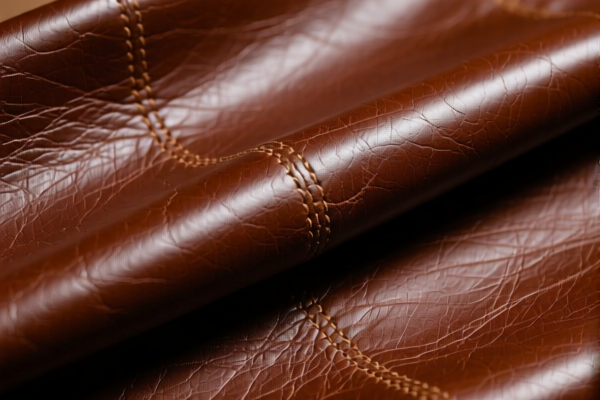

AI Analysis
🐂 Full Grain Bovine Leather Semi Finished (Cowhide Semi-Finished)
🌐 HS Code Reference & Customs Clearance Guide | 2026 Latest Tariff Analysis | Professional Clearance Strategy
📌 I. Product Definition & Classification: What is "Full Grain Bovine Leather Semi Finished"?
Full Grain Bovine Leather Semi-Finished refers to cowhide that has undergone tanning but has not yet been finished for final consumer use (e.g., shoes, bags, upholstery). "Semi-finished" implies it may still require further processing such as coloring, waxing, or coating.
In international trade, the classification of bovine leather depends heavily on two critical factors: 1. Processing State: Is it merely tanned (semifinished) or further processed (finished)? 2. Surface Treatment: Has the grain surface been split, corrected, or kept natural? 3. Origin: For US imports, the 301 Section and Section 122 tariffs vary significantly based on whether the leather is "split" or "full grain."
⚠️ Key Distinction Point:
- Section 4104: Covers Crust Leather (semi-finished, unbolted) or Finished Leather (baked, colored, coated).
- Section 4107: Covers Crust Leather (semi-finished, bolted/rolled).
- Section 4107 vs 4104: If the leather is "semi-finished" and typically traded in bolts/rolls, it often falls under 4107. If it is "finished" or "split" in specific ways, it may fall under 4104.
- Split Leather: Leather that has been split into layers (grain layer + flesh layer) often incurs higher duties if classified under certain subheadings.
📦 II. HS Code Classification Details (Based on Provided Data)
The provided data highlights a critical divergence in tariff treatment for "Full Grain Bovine Leather Semi Finished" depending on the specific HS Code assigned. Note that while the summary text in the data says "牛皮半成品其他粒面分割" (Bovine Leather Semi-Finished Other Grain Split), the classification logic below explains why different codes are used.
| HS Code | Product Description (Summary from Data) | Total Tax Rate | Key Characteristics & Duty Breakdown |
|---|---|---|---|
4104.11.50.70 |
Bovine Leather Semi-Finished Other Grain Split | 13.3% | • Base: 3.3% • Section 301: 0% • Section 122: 10% ⚠️ Lowest Duty Option |
4104.11.50.40 |
Bovine Leather Semi-Finished Other Grain Split | 13.3% | • Base: 3.3% • Section 301: 0% • Section 122: 10% ⚠️ Lowest Duty Option |
4107.12.20.00 |
Bovine Leather Semi-Finished Other Grain Split | 37.4% | • Base: 2.4% • Section 301: 25% • Section 122: 10% ⚠️ Highest Duty Option |
4107.92.70.90 |
Bovine Leather Semi-Finished Other Grain Split | 15.0% | • Base: 5.0% • Section 301: 0% • Section 122: 10% ⚠️ Medium Duty Option |
🔍 Critical Analysis:
-4104.11.50.40/70(13.3%): These codes represent a significant duty advantage. They carry 0% Section 301 tax, only 10% Section 122 tax, and a low base rate (3.3%). This suggests these HS codes are classified in a way that exempts them from the high 25% Section 301 tariff often applied to other leather categories. -4107.12.20.00(37.4%): This code incurs the full 25% Section 301 tariff, making it 24.1% more expensive than the4104options. This highlights the extreme sensitivity of leather classification to minor product descriptions. -4107.92.70.90(15.0%): A middle-ground option. It avoids Section 301 (0%) but has a higher base rate (5.0%) and the standard 10% Section 122.
💰 III. 2026 Latest Tariff Rate Details (With Added Taxes & Policy Surcharges)
✅ Applicable Country: United States (US)
✅ Origin: China (CN)
✅ Effective Time: Current tariffs apply (Section 122 is a recent addition, Section 301 remains in effect for specific subheadings).
🎯 1. 4104.11.50.40 & 4104.11.50.70 —— Bovine Leather Semi-Finished (Optimized Rate)
| Item | Detail |
|---|---|
| Base Duty | 3.3% (Ad Valorem) |
| Section 301 Duty | 0% (Exempted for these specific subheadings) |
| Section 122 Duty | 10% (Additional tariff on Chinese-origin goods) |
| Total Duty Rate | 13.3% |
| Calculation | CIF Value × 13.3% |
| De Minimis Eligibility | ❌ No (Leather goods generally do not qualify for de minimis exemption under current rules, especially with high tariffs) |
| Legal Basis | USITC:4104.11.50.40/70 → Section 122: 10% |
📌 Explanation:
- These codes are likely classified under "Crust Leather" or specific "Semi-Finished" categories that have been carved out of the broader Section 301 list.
- Section 122 is a new 10% tariff imposed by the US administration on certain goods from China, affecting nearly all Chinese imports unless specifically exempted.
- Total 13.3% is considered very competitive for leather imports.
🎯 2. 4107.12.20.00 —— Bovine Leather Semi-Finished (High Duty)
| Item | Detail |
|---|---|
| Base Duty | 2.4% |
| Section 301 Duty | +25% (Standard 301 tariff) |
| Section 122 Duty | +10% |
| Total Duty Rate | 37.4% |
| Calculation | CIF Value × 37.4% |
| De Minimis Eligibility | ❌ No |
| Legal Basis | USITC:4107.12.20.00 → Section 301: 25% → Section 122: 10% |
📌 Explanation:
- This code attracts the full brunt of US trade restrictions.
- The 25% Section 301 tariff is applied because this specific subheading is not exempted.
- Total 37.4% significantly impacts profit margins. Avoid this code if a4104alternative exists.
🎯 3. 4107.92.70.90 —— Bovine Leather Semi-Finished (Other)
| Item | Detail |
|---|---|
| Base Duty | 5.0% |
| Section 301 Duty | 0% (Exempted for these specific subheadings) |
| Section 122 Duty | +10% |
| Total Duty Rate | 15.0% |
| Calculation | CIF Value × 15.0% |
| De Minimis Eligibility | ❌ No |
| Legal Basis | USITC:4107.92.70.90 → Section 122: 10% |
📌 Explanation:
- Similar to the4104codes, this code avoids Section 301.
- However, the base duty is higher (5.0%) compared to the4104codes (3.3%), resulting in a 15.0% total rate vs 13.3%.
- It is a viable alternative if the product cannot be classified under4104.11.
🛠️ IV. Customs Clearance Practical Advice (Avoiding Pitfalls)
✅ 1. Required Documentation Checklist
| Document | Must Provide | Explanation |
|---|---|---|
| ✅ Product Specification | ✔️ | Detail: Type of leather (bovine), state (semi-finished/crust), surface treatment (grain split/corrected), thickness, weight. |
| ✅ Tanning Process Description | ✔️ | Specify if it is "crust" (tanned but not colored/coated) or "finished" (colored/coated). This affects the 4104 vs 4107 classification. |
| ✅ Product Photos | ✔️ | Clear images showing the grain side and flesh side. Crucial for proving it is "full grain" and not corrected grain or split leather if aiming for lower duties. |
| ✅ Commercial Invoice | ✔️ | Must explicitly state "Full Grain Bovine Leather Semi-Finished" and the correct HS Code. |
| ✅ Packing List | ✔️ | Detail weight per roll/bolt. |
| ✅ Certificate of Origin | ✔️ | Essential for proving Chinese origin to apply Section 122 correctly (and potentially seek exclusions if any exist). |
✅ 2. Declaration Tips (Key Mnemonic)
🔥 "Grain Split? Check 4104! Bolted Roll? Check 4107! No 301? Save 25%!"
| Scenario | Correct Declaration | Risk |
|---|---|---|
| Semi-finished, grain side split/corrected | Aim for 4104.11.50.40/70 |
✅ Low Duty (13.3%) |
| Semi-finished, in bolts/rolls | May fall under 4107.12.20.00 |
❌ High Duty (37.4%) |
| Semi-finished, other/unclassified | 4107.92.70.90 |
⚠️ Medium Duty (15.0%) |
| Finished Leather (Colored/Coated) | Likely 4106.21 or 4106.31 |
❌ Not in provided data, but typically higher base duty |
📌 Note: The provided data all say "Other Grain Split" (其他粒面分割). This suggests that if the leather is split (i.e., the grain layer is separated or processed in a specific way), it might be forced into these categories. However, the Section 301 exemption in
4104makes it far superior.
✅ 3. Special Case Handling
| Situation | Handling Advice |
|---|---|
| OEM/Custom Leather | Provide detailed specs to prove it is "semi-finished" (crust) and not "finished." Finished leather may have different tariffs. |
| Split vs. Full Grain | If the leather is not split, but the data forces "Grain Split" classification, consult a customs broker. Misclassification can lead to penalties. |
| Section 122 Exclusions | Check if the specific product type qualifies for any Section 122 exclusions. If not, budget for the 10% surcharge. |
| Valuation | Ensure CIF value is accurate. Customs may scrutinize leather values due to high tariffs. |
🌍 V. Global Market Comparison (2026 Latest)
| Country/Region | Recommended HS Code | Duty Rate (China Origin) | Certification Requirements | Notes |
|---|---|---|---|---|
| 🇺🇸 USA | 4104.11.50.40/70 |
13.3% | None specific, but COO required | Best Option: Avoids Section 301. |
| 🇨🇳 China | 4104.11.50.40 |
3.3% | None | Low import duty. |
| 🇪🇺 EU | 4104.11.50 |
5.7% | REACH Compliance | No Section 301/122. |
| 🇦🇺 Australia | 4104.11.50 |
5.0% | None | Free Trade Agreement may apply. |
| 🇯🇵 Japan | 4104.11.50 |
4.2% | None | Free Trade Agreement may apply. |
📌 Conclusion:
- USA is the most complex market due to Section 301 and Section 122.
- Correct HS Code selection is critical. Moving from4107.12.20.00(37.4%) to4104.11.50.40(13.3%) saves 24.1% in duties.
- EU, AU, JP have lower and more stable tariffs without the punitive US tariffs.
📌 VI. Common Mistakes & Pitfalls (Lessons Learned)
❌ Mistake 1: Classifying all "Bovine Leather Semi-Finished" under 4107.12.20.00
👉 Consequence: Pay 37.4% duty instead of 13.3%.
💡 Fix: Check if the product fits 4104.11.50.40 or 4104.11.50.70 (which have 0% Section 301).
❌ Mistake 2: Ignoring Section 122
👉 Consequence: Unexpected 10% surcharge at customs.
💡 Fix: Always factor in the 10% Section 122 tariff for Chinese goods.
❌ Mistake 3: Misidentifying "Semi-Finished"
👉 Consequence: If classified as "Finished Leather" (e.g., 4106.21), duties may be higher or lower, but incorrect declaration leads to penalties.
💡 Fix: Clearly define "Semi-Finished" as "Crust" (tanned, unbolted) or "Semi-Finished" (bolted, unbolted) in documentation.
❌ Mistake 4: Assuming "Full Grain" means lower duty
👉 Consequence: "Full Grain" is a quality description, not a tariff code. Duty depends on HS Code, not grain type.
💡 Fix: Focus on the HS Code structure (4104 vs 4107) and Section 301 exemption status.
✅ Correct Approach:
"Full Grain Bovine Leather, Semi-Finished (Crust), Bolted, Chinese Origin, HS Code 4104.11.50.40, Total Duty 13.3% (3.3% Base + 10% Sec 122)"
🎯 VII. Conclusion: Professional Declaration, Cost Savings!
🎯 Remember the Key Takeaways:
🔹 "4104 vs 4107: A 24% Difference!"
🔹 "Section 122 is 10%: Factor it in!"
🔹 "No Section 301 in 4104.11.50: Save Big!"
📌 Pro Tip:
If your leather is sourced from Vietnam, India, or Brazil, Section 301 and Section 122 do not apply. Duties will be based solely on the base rate (e.g., 3.3% or 2.4%).
Consider supply chain diversification if US tariffs remain high.
📣 Immediate Action:
📞 Contact a Customs Broker + Provide Product Specs + Confirm HS Code Pre-Ruling
🚀 Minimize Duty Costs, Ensure Smooth Customs Clearance, Maximize Profits!
✨ Professional Customs Clearance Starts with Accurate Classification!
💼 Every Percent of Duty Saved is Pure Profit!
Customer Reviews
About HS Code Classification
The Harmonized System (HS) is an internationally standardized nomenclature developed by the World Customs Organization (WCO) to classify traded products. Over 200 countries use the HS system as the basis for customs tariffs, trade statistics, and import/export regulations.
Each HS code follows a hierarchical structure:
- Chapter (2 digits) — Broad category of goods (e.g., Chapter 84: Machinery and Mechanical Appliances)
- Heading (4 digits) — More specific grouping within the chapter
- Subheading (6 digits) — Internationally standardized breakdown, used by all WCO member countries
- National subdivisions (8-10 digits) — Country-specific extensions for further classification, such as US HTSUS 10-digit codes
Correct HS code classification is essential for smooth customs clearance, accurate duty payment, and compliance with trade regulations. Misclassification can lead to customs delays, overpayment of duties, or penalties.
When importing from CN to US, the applicable tariff rates may include:
- Most-Favored-Nation (MFN) rate — The standard duty rate applied to WTO members
- General rate — Applied to countries without trade agreements
- Trade remedy duties — Additional tariffs such as Section 301 (anti-dumping), Section 232 (national security), or countervailing duties
The information provided on this page is for reference purposes only. For official classification, please consult with your local customs authority or a licensed customs broker.