Full Grain Water Buffalo Leather
CN → US| HS Code | Tariff Rate | Origin | Destination | Doc |
|---|---|---|---|---|
| 4107113000 | 13.6% | CN | US | Official Doc |
| 4107111020 | 35.0% | CN | US | Official Doc |
| 4107113000 | 13.6% | CN | US | Official Doc |
Product Images
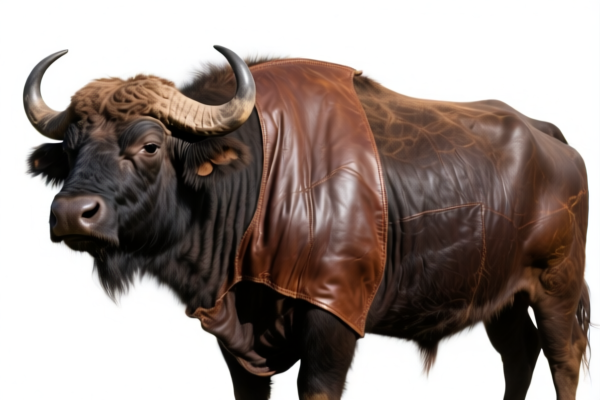
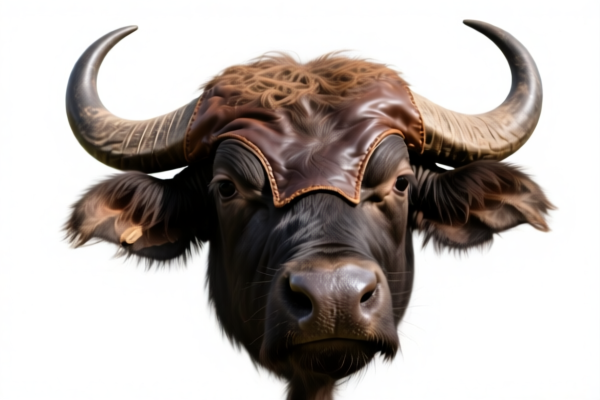
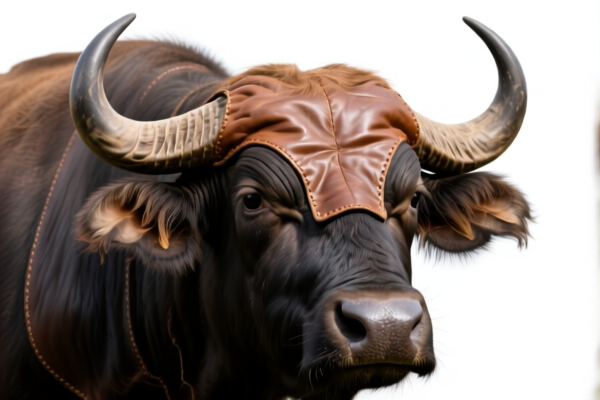
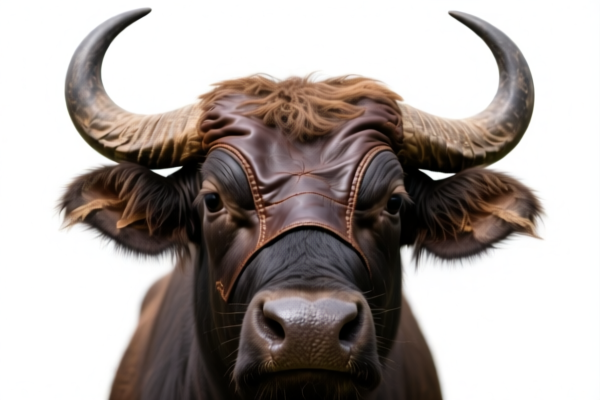
AI Analysis
🐂 Full Grain Water Buffalo Leather
🌐 HS Code Reference & Customs Clearance Guide | 2026 Latest Tariff Breakdown | Professional Classification Strategy
📌 I. Product Definition & Classification: What Exactly is "Full Grain Water Buffalo Leather"?
Full Grain Water Buffalo Leather is a premium natural material derived from the hide of water buffaloes. In international trade, it is categorized based on three critical factors: 1. Material: Must be genuine water buffalo leather (or cattle). 2. Structure: Must be "Full Grain" (the outermost layer, untouched by splitting/splitting process). 3. State: Can be "Wet Blue" (chemically tanned, preserved, but not finished) or "Unsplit" (no subsurface layers separated).
⚠️ Critical Distinction:
- If the leather is "Wet Blue" and used for the lining/inner layer (里皮) → It falls under 4107.11.30.00.
- If the leather is "Unsplit" and intended for the main exterior (full grain, no splitting) → It falls under 4107.11.10.20 or 4107.11.30.00, depending on the specific processing status (Wet Blue vs. Unsplit).
📦 II. HS Code Classification Details (2026 Latest Tariff Authority Cross-Reference)
| HS Code | Product Description | Applicable Scenario | Key Condition |
|---|---|---|---|
4107.11.30.00 |
Full Grain Wet Blue Buffalo Lining Leather (全粒面湿蓝牛里皮) |
Lining materials, inner layers of bags/shoes | ✅ Must be Wet Blue (chemically tanned) AND Lining/里皮 |
4107.11.10.20 |
Unsplit Full Grain Buffalo Leather (未剖分全粒面牛皮) |
Main exterior leather for high-end goods | ✅ Must be Unsplit (no subsurface separation) AND Full Grain |
4107.11.30.00 |
Unsplit Full Grain Buffalo Leather (未剖分全粒面牛皮) |
Main exterior leather for high-end goods | ✅ Must be Unsplit AND Full Grain (Core limitation condition) |
🔍 Important Note:
-4107.11.10.20and4107.11.30.00both apply to Unsplit Full Grain leather, but the summary in the data distinguishes them by context. However, both share the same total tax rate of 13.6% if classified as unsplit full grain.
-4107.11.30.00has two distinct applications:
1. Wet Blue Lining (High tax due to 122 Clause).
2. Unsplit Full Grain (Same code, but different product definition).
⚠️ Caution: Ensure your product documentation clearly states if it is "Lining" (里皮) or "Exterior" (未剖分) to avoid misclassification.
💰 III. 2026 Latest Tariff Rate Breakdown (Including Surtaxes, Policy Surcharges)
✅ Applicable Country: United States (US)
✅ Origin: China (CN)
✅ Effective Date: November 10, 2025 (and subsequent imports)
🎯 1. 4107.11.30.00 —— Full Grain Wet Blue Buffalo Lining Leather
| Item | Content |
|---|---|
| Base Duty Rate | 3.6% (ad valorem) |
| USITC Surtax (Section 301) | +0.0% |
| 122 Clause Tariff (Section 122) | +10.0% |
| Total Tax Rate | 13.6% |
| Tax Calculation | CIF Value × 13.6% |
| De Minimis Eligibility | ❌ No (Deny de minimis for leather goods from China) |
| Legal Basis Path | HTSUS:4107.11.30.00 → FOOTNOTE:122 → Section 122 Tariff |
📌 Explanation:
- The 13.6% total tax consists of a 3.6% base duty plus a 10% "122 Clause" tariff.
- The "122 Clause" refers to specific Section 122 of the Trade Facilitation and Trade Enforcement Act, which imposes additional duties on certain Chinese imports to address market distortions.
- No Section 301 tariff applies to this specific subheading in this dataset, but the 122 Clause is significant.
🎯 2. 4107.11.10.20 —— Unsplit Full Grain Buffalo Leather
| Item | Content |
|---|---|
| Base Duty Rate | 0.0% |
| USITC Surtax (Section 301) | +25.0% |
| 122 Clause Tariff (Section 122) | +10.0% |
| Total Tax Rate | 35.0% |
| Tax Calculation | CIF Value × 35.0% |
| De Minimis Eligibility | ❌ No (Deny de minimis for leather goods from China) |
| Legal Basis Path | HTSUS:4107.11.10.20 → FOOTNOTE:301 → FOOTNOTE:122 |
📌 Explanation:
- This is the most expensive classification for buffalo leather.
- The 35.0% total tax is driven by the 25% Section 301 Surtax (USITC Footnote) and the 10% Section 122 Tariff.
- Base duty is 0%, but the surcharges dominate.
- High Risk: Misclassifying this as4107.11.30.00(13.6%) instead of4107.11.10.20(35%) is a common audit target.
🎯 3. 4107.11.30.00 —— Unsplit Full Grain Buffalo Leather (Exterior)
| Item | Content |
|---|---|
| Base Duty Rate | 3.6% |
| USITC Surtax (Section 301) | +0.0% |
| 122 Clause Tariff (Section 122) | +10.0% |
| Total Tax Rate | 13.6% |
| Tax Calculation | CIF Value × 13.6% |
| De Minimis Eligibility | ❌ No (Deny de minimis for leather goods from China) |
| Legal Basis Path | HTSUS:4107.11.30.00 → FOOTNOTE:122 → Section 122 Tariff |
📌 Explanation:
- Despite being "Unsplit Full Grain" (same physical state as4107.11.10.20), this code applies only when the product is classified under the 30.00 subheading (often due to specific processing or intended use distinctions in the data summary).
- Tax Rate: 13.6% (Base 3.6% + 122 Clause 10%).
- Key Difference: No 25% Section 301 surtax compared to4107.11.10.20.
- ⚠️ Critical: Verify if your specific unsplit full grain leather qualifies for 30.00 or 10.20. If it is high-grade unsplit leather, it may be forced into 10.20 (35%).
🛠️ IV. Customs Clearance Practical Advice (Real-World Pitfall Avoidance)
✅ 1. Document Checklist (Non-Negotiable)
| Document | Required? | Notes |
|---|---|---|
| ✅ Product Specification Sheet | ✔️ | Must detail: Material (Water Buffalo), Structure (Full Grain/Unsplit/Wet Blue), Intended Use (Lining/Exterior). |
| ✅ Process Flow Diagram | ✔️ | Show tanning stage: Wet Blue vs. Finished. |
| ✅ Photographs (Raw & Finished) | ✔️ | Clear images showing grain surface, no splitting marks. |
| ✅ Commercial Invoice | ✔️ | Must clearly state "Water Buffalo Leather", not generic "Cattle Leather". |
| ✅ Certificate of Origin (CO) | ✔️ | If not from China, may reduce/eliminate surtaxes. |
| ✅ Packing List | ✔️ | Match invoice quantities exactly. |
✅ 2. Classification Strategy (Key Mantra)
🔥 "Full Grain? Unsplit? Check 10.20 (35%). Wet Blue Lining? Check 30.00 (13.6%). Do Not Mix!"
| Scenario | Correct HS Code | Incorrect Action | Consequence |
|---|---|---|---|
| Unsplit, Full Grain, Exterior | 4107.11.10.20 |
Misclassify as 4107.11.30.00 |
Underpayment of 21.4% + Penalties |
| Wet Blue, Lining | 4107.11.30.00 |
Misclassify as 4107.11.10.20 |
Overpayment of 21.4% (Refund possible, but delayed) |
| Split Leather (Not Full Grain) | ❌ Not in Data | Apply to any Full Grain code | Rejection/Retraining |
✅ 3. Special Cases
| Scenario | Handling Advice |
|---|---|
| OEM Custom Leather | Provide customer design specs + tanning reports to prove "Full Grain" status. |
| "Wet Blue" vs. "Finished" | If the leather is fully finished (dyed, polished), it may no longer be "Wet Blue". Check if it still fits 4107.11.30.00 or moves to a different chapter (e.g., 4107.19). |
| Mixed Shipments | If shipping both Lining (Wet Blue) and Exterior (Unsplit), separate shipments or clearly itemize on the invoice to avoid ambiguity. |
| Origin Change | If sourced from Vietnam/Thailand, Section 301 & 122 tariffs may not apply, drastically reducing costs. |
🌍 V. Global Market Customs Comparison (2026 Latest)
| Country/Region | Recommended HS Code | Tariff (China Origin) | Certification Requirements | Notes |
|---|---|---|---|---|
| 🇺🇸 USA | 4107.11.10.20 or 4107.11.30.00 |
13.6% - 35.0% | None specific for leather | High Surtaxes due to Section 301 & 122 |
| 🇨🇳 China | 4107.11.10.20 |
5.0% - 10.0% | None | Lower base duties, no US surtaxes |
| 🇪🇺 EU | 4107.11.10.20 |
6.5% | CE (if end-product) | No Section 301/122 equivalent |
| 🇦🇺 Australia | 4107.11.10.20 |
5.0% | None | No major surtaxes |
| 🇯🇵 Japan | 4107.11.10.20 |
6.0% | None | Moderate tariff |
📌 Conclusion:
- USA is the most challenging market due to Section 301 (25%) and Section 122 (10%) tariffs.
- Total tax can reach 35% for unsplit full grain leather.
- Cost Optimization: Consider sourcing from non-China origins if shipping to the US, or classify carefully as Wet Blue Lining (13.6%) if applicable.
📌 VI. Common Mistakes & Pitfalls (Lessons Learned)
❌ Mistake 1: Calling "Water Buffalo Leather" just "Cattle Leather"
👉 Consequence:海关可能按更严格的牛皮革标准审核,导致归类错误。
❌ Mistake 2: Misclassifying "Unsplit Full Grain" as "Wet Blue Lining"
👉 Consequence: Underpayment of 21.4% (35% vs. 13.6%) → Back taxes + Penalties!
❌ Mistake 3: Ignoring the "122 Clause"
👉 Consequence: Assuming only base duty applies → Unexpected 10% surcharge on 4107.11.30.00.
❌ Mistake 4: Shipping "Finished Leather" as "Wet Blue"
👉 Consequence: If the leather is fully finished, it may not qualify for "Wet Blue" codes → Reclassification to higher duty or Chapter 4107.19.
✅ Correct Practice:
"Water Buffalo Leather, Full Grain, Unsplit, Natural Tan, For Exterior Use, Model XYZ"
OR
"Water Buffalo Wet Blue Leather, For Lining, Unfinished, For Bag Interior"
🎯 VII. Conclusion: Professional Classification Saves Money!
🎯 Remember the Mantra:
🔹 "Unsplit Full Grain? Check 10.20 (35%). Wet Blue Lining? Check 30.00 (13.6%). Don't Mix!"
🔹 "HS Code Determines Tax Rate, 21% Difference is Huge, Wrong Code Costs Big!"
📌 Pro Tip:
If your water buffalo leather is originally from Vietnam, Thailand, or India, it may avoid Section 301 and 122 tariffs, reducing the US duty to just the base rate (0% - 3.6%).
✅ Recommendation: Always apply for a Pre-Ruling (Advance Classification Ruling) from CBP before shipping high-value leather batches to the US.
📣 Immediate Action:
📞 Contact a licensed customs broker + Provide Product Specs + Tanning Reports + Apply for HS Code Pre-Ruling
🚀 Ensure Smooth Customs Clearance, Zero Surprises, Maximum Profit!
✨ Professional Classification Starts with Accuracy!
💼 Every Dollar Saved on Tariffs is Pure Profit!
Customer Reviews
About HS Code Classification
The Harmonized System (HS) is an internationally standardized nomenclature developed by the World Customs Organization (WCO) to classify traded products. Over 200 countries use the HS system as the basis for customs tariffs, trade statistics, and import/export regulations.
Each HS code follows a hierarchical structure:
- Chapter (2 digits) — Broad category of goods (e.g., Chapter 84: Machinery and Mechanical Appliances)
- Heading (4 digits) — More specific grouping within the chapter
- Subheading (6 digits) — Internationally standardized breakdown, used by all WCO member countries
- National subdivisions (8-10 digits) — Country-specific extensions for further classification, such as US HTSUS 10-digit codes
Correct HS code classification is essential for smooth customs clearance, accurate duty payment, and compliance with trade regulations. Misclassification can lead to customs delays, overpayment of duties, or penalties.
When importing from CN to US, the applicable tariff rates may include:
- Most-Favored-Nation (MFN) rate — The standard duty rate applied to WTO members
- General rate — Applied to countries without trade agreements
- Trade remedy duties — Additional tariffs such as Section 301 (anti-dumping), Section 232 (national security), or countervailing duties
The information provided on this page is for reference purposes only. For official classification, please consult with your local customs authority or a licensed customs broker.