Full Threaded Rod
CN → US| HS Code | Tariff Rate | Origin | Destination | Doc |
|---|---|---|---|---|
| 7315900000 | 87.9% | CN | US | Official Doc |
| 7315190000 | 85.0% | CN | US | Official Doc |
| 7326908688 | 87.9% | CN | US | Official Doc |
| 7326908605 | 87.9% | CN | US | Official Doc |
| 7318155056 | 85.0% | CN | US | Official Doc |
| 7318155051 | 85.0% | CN | US | Official Doc |
Product Images
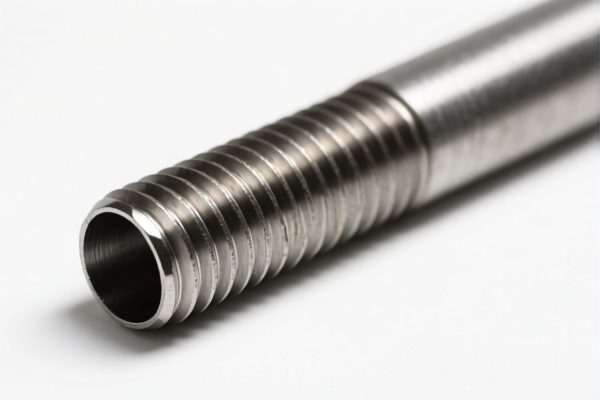
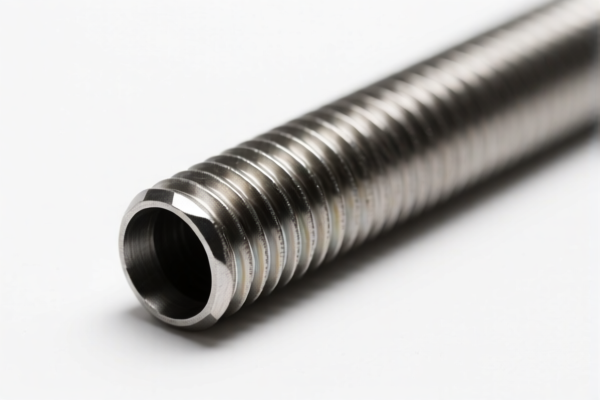
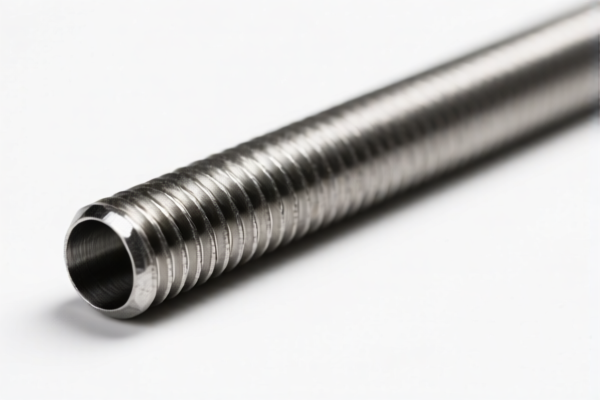
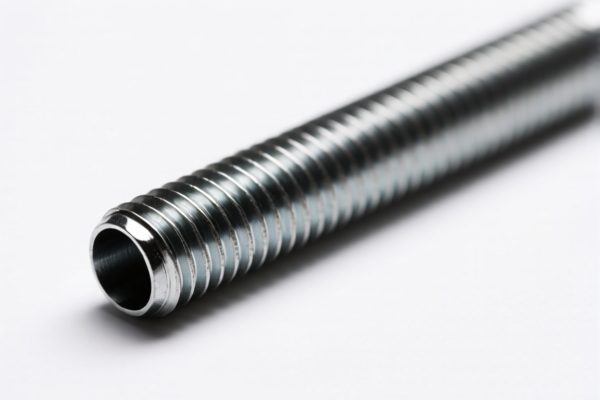
AI Analysis
🔩 Full Threaded Rod (Continuously Threaded Rod)
🌐 HS Code Reference & Customs Clearance Guide | 2026 Latest Tariff Analysis | Iron & Steel Products
📌 I. Product Definition: What is a "Full Threaded Rod"?
Full Threaded Rod, also known as Continuously Threaded Rod or All-Thread, is a standard fastener consisting of a steel rod with threads running the entire length, rather than just a portion of it. It is used in construction, machinery, and structural support to connect various components.
In international trade, the classification depends heavily on the material composition (plain carbon steel vs. alloy steel) and the specific application. Unlike bolts with heads, threaded rods are often paired with nuts and washers on both ends.
⚠️ Key Classification Distinction:
- Plastic/Carbon Steel (Standard): Usually falls under 7318.15.50.56.
- Alloy Steel (High Strength): Falls under 7318.15.50.51.
- Misclassification Risk: Do not confuse with "Chain Parts" (7315.19.00.00) or "General Steel Articles" (7326.90.86.88) unless the product specifically serves a mechanical link function rather than a fastening function.
📦 II. HS Code Classification Details (2026 Tariff Data)
Based on the provided , the product is classified into two primary HS Codes depending on the steel alloy. Both are part of the broader category of "Screws, bolts, nuts... of iron or steel."
| HS Code | Product Description | Material Type | Application Context |
|---|---|---|---|
7318.15.50.56 |
Screws, bolts, nuts...: Studs Other: Continuously threaded rod: Other | Non-Alloy / Carbon Steel | Standard construction, general industry, non-critical structural fixes. |
7318.15.50.51 |
Screws, bolts, nuts...: Studs Other: Continuously threaded rod: Of alloy steel | Alloy Steel | High-strength applications, automotive, heavy machinery, high-stress environments. |
🔍 Critical Note on Other Codes in :
While7315.90.00.00(Chain parts) and7326.90.86.88(Other articles) appear in the data, Full Threaded Rods are NOT chains nor generic "other articles."
- Do NOT use7315.19.00.00: This is for articulated link chain parts. A threaded rod is not a chain part.
- Do NOT use7326.90.86.05: This is for "Rods for electrical grounding." Only use this if the rod is specifically certified/coated for electrical grounding purposes.
- Do NOT use7326.90.86.88: This is a catch-all for "Other." If it is a threaded rod, it MUST go to7318.15...for accuracy.
💰 III. 2026 Tariff Rate Breakdown (Detailed Tax Clause Explanation)
✅ Applicable Country: United States (US)
✅ Origin: China (CN)
✅ Effective Date: Current trade war tariffs apply.
🎯 1. 7318.15.50.56 — Continuously Threaded Rod (Other/Carbon Steel)
| Item | Detail |
|---|---|
| Base Tariff (MFN) | 0.0% (Ad Valorem) |
| Section 301 Tariff (USITC) | +25.0% (List 4A) |
| Steel/Aluminum/Copper Surcharge | +50% (Specific surcharge for steel products) |
| Total Tariff Rate | 75.0% |
| Tax Calculation | CIF Value × 75% |
| De Minimis Exemption | ❌ NOT Eligible |
| Legal Basis | USITC:7318.15.50.56 → Section 301 Footnote → Steel Surcharge Rule |
📌 Explanation:
- The Base Rate is 0%, which might seem attractive, but it is heavily offset by trade remedies.
- The 25% Section 301 tariff applies to most Chinese steel fasteners.
- The 50% Steel Surcharge is a specific additional levy on steel imports from certain origins (likely targeting China/Russia depending on current executive orders).
- Total Cost Impact: For every $10,000 of goods, you pay $7,500 in taxes. This is a massive cost burden.
🎯 2. 7318.15.50.51 — Continuously Threaded Rod (Of Alloy Steel)
| Item | Detail |
|---|---|
| Base Tariff (MFN) | 0.0% (Ad Valorem) |
| Section 301 Tariff (USITC) | +25.0% (List 4A) |
| Steel/Aluminum/Copper Surcharge | +50% (Specific surcharge for steel products) |
| Total Tariff Rate | 75.0% |
| Tax Calculation | CIF Value × 75% |
| De Minimis Exemption | ❌ NOT Eligible |
| Legal Basis | USITC:7318.15.50.51 → Section 301 Footnote → Steel Surcharge Rule |
📌 Note:
- Despite being "Alloy Steel" (often higher quality), the tariff structure is identical to carbon steel rods in this dataset.
- Why? The trade barriers target the category of steel fasteners/rods from China, regardless of alloy composition.
🛠️ IV. Customs Clearance Practical Advice (Avoid Pitfalls)
✅ 1. Documentation Checklist (Non-Negotiable)
| Document | Requirement | Why It Matters |
|---|---|---|
| Commercial Invoice | Must clearly state "Continuously Threaded Rod" or "All-Thread". Avoid vague terms like "Steel Bar." | Prevents reclassification to "Other Steel Articles" (7326) which may have different scrutiny or penalties. |
| Product Specification | Include: Diameter, Length, Thread Pitch, Material Grade (e.g., Grade 2, Grade 5, Grade 8, A36, 4140 Alloy). | Critical to distinguish between 7318.15.50.56 (Other) and 7318.15.50.51 (Alloy). Mislabeling alloy as "other" can lead to fraud allegations. |
| Material Test Report | Mill Test Certificate (MTC) proving Alloy vs. Carbon Steel. | Customs may demand proof that it is/isn't alloy steel to verify the HS code. |
| Country of Origin | Clearly marked as China (if applicable). | Determines applicability of 301 and Steel Surcharge. |
✅ 2. Common Misclassification Errors
| Error | Consequence | Correct Action |
|---|---|---|
Declaring as "Chain Part" (7315.19.00.00) |
75% Tax (25% + 50%). Wait, the tax is the same! BUT, it’s still wrong because it’s not a chain. Risk of seizure for false declaration. | Stop. Threaded rods are fasteners, not chain parts. Use 7318.15.... |
Declaring as "Grounding Rod" (7326.90.86.05) |
77.9% Tax (2.9% base + 25% + 50%). Higher tax! And requires specific certification. | Only use if it’s a certified electrical grounding rod. Otherwise, stick to 7318. |
Declaring as "General Steel Article" (7326.90.86.88) |
77.9% Tax (2.9% base + 25% + 50%). Higher tax! Plus, it’s the wrong legal path. | Always use the specific fastener code 7318.15... for threaded rods. |
⚠️ Why is the tax different for 7326?
The base tariff for 7326 is 2.9%, whereas for 7318 it is 0%.
- 7318: 0% + 25% + 50% = 75%
- 7326: 2.9% + 25% + 50% = 77.9%
Using the wrong code can increase your tax by nearly 3% unnecessarily.
✅ 3. Strategic Cost-Saving Tips
- Verify Alloy Status: If your rod is Carbon Steel (e.g., Grade 2), use
7318.15.50.56. If it’s Alloy Steel (e.g., Grade 5/8, 4140), use7318.15.50.51. Both are 75%, but accuracy prevents audits. - Avoid "Grounding" Claims: Do not describe the rod as "for electrical use" unless it has specific copper plating or certifications. Otherwise, it falls under
7326, which has a higher base tax (2.9% vs 0%). - 供应链规避 (Supply Chain Mitigation): Given the 75% total tariff, importing this product from China to the US is economically unviable for low-margin goods.
- Option A: Source from Mexico/Canada (USMCA) – likely 0% duty.
- Option B: Source from Vietnam/India (if rules of origin are met).
- Option C: Absorb the cost if the margin is extremely high.
🌍 V. Global Market Comparison (2026)
| Market | HS Code | Base Rate | Additional Tariffs (China) | Total Rate | Notes |
|---|---|---|---|---|---|
| 🇺🇸 USA | 7318.15.50.56 / .51 |
0% | 301 (25%) + Steel Surcharge (50%) | 75% | Extremely high barrier. |
| 🇨🇳 China (Importing) | 7318.15 |
Varies | N/A | ~6-10% | No 301 tariffs. |
| 🇪🇺 EU | 7318.15 |
0-6% | No specific 301. Anti-dumping may apply. | ~6% | Check for anti-dumping duties on Chinese fasteners. |
| 🇬🇧 UK | 7318.15 |
0-6% | N/A | ~6% | Post-Brexit tariffs apply. |
📌 Conclusion:
The US market is blocked for Chinese Full Threaded Rods due to the 75% effective tariff.
Recommendation: If you are importing into the US, you must source from a non-China country to remain competitive.
📌 VI. Common Mistakes & Pitfalls (Blood & Tears Lessons)
❌ Mistake 1: Calling it "Bolt" without a head.
👉 Result: Customs may reject it or misclassify it. Use "Threaded Rod" or "Stud" in description.
❌ Mistake 2: Confusing "Alloy Steel" with "Stainless Steel".
👉 Result: Stainless steel has different HS codes (7318.15.00.00 broadly). If you declare Alloy as Stainless, you face fraud penalties. If you declare Stainless as Alloy, you may pay wrong taxes. Check the Mill Cert!
❌ Mistake 3: Ignoring the Steel Surcharge.
👉 Result: Many traders see "0% Base" and think it’s cheap. They forget the 50% Steel Surcharge.
Total 75% is the reality. Budget accordingly!
❌ Mistake 4: Using "Chain Part" code to avoid scrutiny.
👉 Result: High risk of customs audit. The product does not fit the physical definition of a chain part.
✅ Correct Declaration Example:
"Continuously Threaded Rod, Carbon Steel, Grade 2, 1/2 inch Diameter, 4 feet Length, Not for Electrical Grounding, Country of Origin: China"
🎯 VII. Conclusion: Professional Declaration, Survival Strategy
🎯 Key Takeaway:
🔹 "Base 0%, But Add 75%: That's the Rule for Chinese Steel Rods."
🔹 "Alloy or Carbon, Tax is Same: 75% Total."
🔹 "Don't Call it Chain: Use 'Threaded Rod', Avoid 'Grounding' unless true."
📌 Pro Tip:
If your product is Stainless Steel, the HS code is likely 7318.15.00.00 (not listed in detail above, but generally different). Stainless steel often has lower additional tariffs than carbon/steel alloy. Check if you can switch to Stainless Steel grades if they are exempt from the specific steel surcharge in your current trade context.
📣 Immediate Action:
📞 Contact your Customs Broker with the Mill Test Certificate (MTC).
🚀 Calculate landed cost with 75% tax. If it breaks your margin, relocate supply chain to Mexico or Vietnam.
✨ Precision in Declaration = Survival in 2026!
Customer Reviews
About HS Code Classification
The Harmonized System (HS) is an internationally standardized nomenclature developed by the World Customs Organization (WCO) to classify traded products. Over 200 countries use the HS system as the basis for customs tariffs, trade statistics, and import/export regulations.
Each HS code follows a hierarchical structure:
- Chapter (2 digits) — Broad category of goods (e.g., Chapter 84: Machinery and Mechanical Appliances)
- Heading (4 digits) — More specific grouping within the chapter
- Subheading (6 digits) — Internationally standardized breakdown, used by all WCO member countries
- National subdivisions (8-10 digits) — Country-specific extensions for further classification, such as US HTSUS 10-digit codes
Correct HS code classification is essential for smooth customs clearance, accurate duty payment, and compliance with trade regulations. Misclassification can lead to customs delays, overpayment of duties, or penalties.
When importing from CN to US, the applicable tariff rates may include:
- Most-Favored-Nation (MFN) rate — The standard duty rate applied to WTO members
- General rate — Applied to countries without trade agreements
- Trade remedy duties — Additional tariffs such as Section 301 (anti-dumping), Section 232 (national security), or countervailing duties
The information provided on this page is for reference purposes only. For official classification, please consult with your local customs authority or a licensed customs broker.