Full grain cowhide semi finished leather
CN → US| HS Code | Tariff Rate | Origin | Destination | Doc |
|---|---|---|---|---|
| 4104115070 | 13.3% | CN | US | Official Doc |
| 4104115040 | 13.3% | CN | US | Official Doc |
| 4107122000 | 37.4% | CN | US | Official Doc |
| 4107927090 | 15.0% | CN | US | Official Doc |
| 4107111020 | 35.0% | CN | US | Official Doc |
| 4107113000 | 13.6% | CN | US | Official Doc |
Product Images
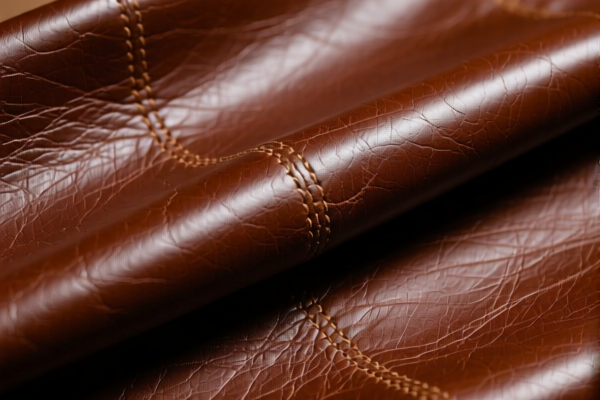
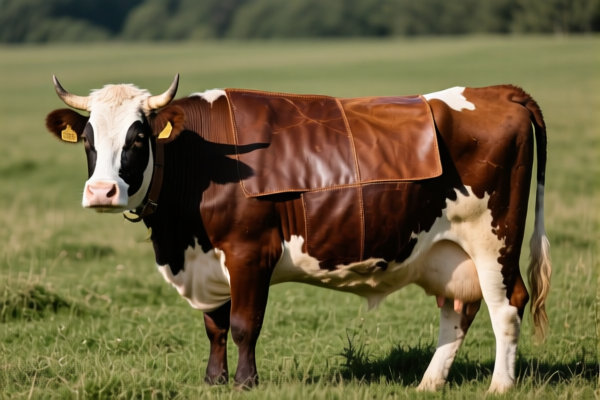
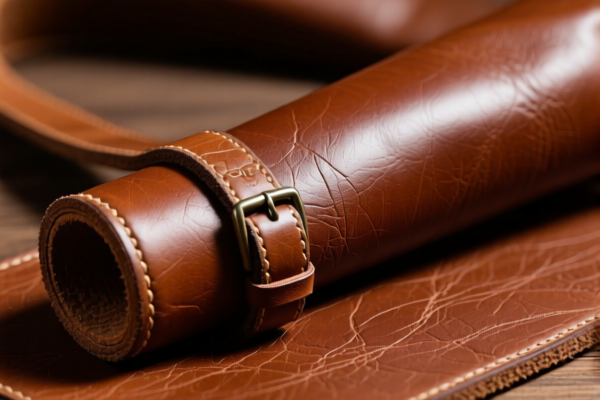
AI Analysis
🐄 Full Grain Cowhide Semi-Finished Leather (Unsplit)
📦 HS Code Reference & Customs Clearance Guide | 2026 Latest Tariff Analysis | Professional-Level Compliance Strategy
🌐 Product Definition: What is "Full Grain Semi-Finished Cowhide"?
In international trade, "Full Grain Cowhide Semi-Finished Leather" refers to raw hides that have undergone preliminary tanning (usually "Wet Blue" or "Wet White") but have NOT been split, buffed, or corrected to hide their natural grain surface.
⚠️ Critical Distinction in Customs Classification: * Full Grain (Unsplit): The entire thickness of the hide is retained. The surface is natural. → Generally lower base tariffs, but subject to Section 301/122 if from China. * Split/Cropper: The hide is cut horizontally into layers. The top layer is "Top Grain," the bottom layers are "Split." → Often different HS codes. * Corrected Grain: The surface is sanded/buffed to remove imperfections. → Different HS codes (e.g., 4107.92).
🔑 Key Identification Point for Customs: * If the leather retains its natural grain surface and is not split → Look at 4107.11 or 4107.12 series. * If the leather is split (even if partially) → Look at 4104.11 series. * If the leather is surface-corrected (sanded/buffed) → Look at 4107.92 series.
📦 II. HS Code Classification Details (2026 Tariff Authority Mapping)
Based on the provided data, here are the precise HS Codes for Cowhide Semi-Finished Leather and their tax implications.
| HS Code | Product Description | State/Condition | Base Tariff | Section 301 (25%) | Section 122 (10%) | Total Effective Tax Rate |
|---|---|---|---|---|---|---|
4107.11.10.20 |
Unsplit Full Grain Cowhide (未剖分全粒面牛皮) |
Natural grain, unsplit | 0.0% | ✅ 25.0% | ✅ 10.0% | 35.0% |
4107.12.20.00 |
Cowhide Semi-Finished, Split Grain, Non-Patterned (牛皮半成品,粒面分割,非花式类别) |
Split grain, standard use | 2.4% | ✅ 25.0% | ✅ 10.0% | 37.4% |
4104.11.50.70 |
Cowhide Semi-Finished, Grain Split, Wet Blue (牛皮半成品,粒面分割,湿蓝状态) |
Wet Blue, split grain | 3.3% | ❌ 0.0% | ✅ 10.0% | 13.3% |
4104.11.50.40 |
Cowhide Semi-Finished, Grain Split, Cropper State (牛皮半成品,粒面分割,劈层状态) |
Split/Cropper, dry/wet | 3.3% | ❌ 0.0% | ✅ 10.0% | 13.3% |
4107.92.70.90 |
Cowhide Semi-Finished, Surface Split, Other Uses (牛皮半成品,面层劈层,其他用途) |
Corrected/Split surface | 5.0% | ❌ 0.0% | ✅ 10.0% | 15.0% |
🔍 Key Insight: * "Full Grain" (Unsplit) items (
4107.11) carry the 25% Section 301 tariff because they are considered higher-value finished/semi-finished goods. * "Split/Cropper" (4104.11) items often avoid the 25% Section 301 tariff, resulting in a much lower effective rate (13.3%). * "Corrected Grain" (4107.92) also avoids the 25% tariff, landing at 15.0%.
💰 III. 2026 Latest Tariff Rate Breakdown (Including Additional Taxes)
✅ Applicable Country: United States (US)
✅ Origin: China (CN)
✅ Effective Date: November 10, 2025 (and subsequent imports)
🎯 1. 4107.11.10.20 — Unsplit Full Grain Cowhide (The "Premium" Classification)
| Item | Detail |
|---|---|
| Base Tariff | 0.0% (Free) |
| Section 301 Tariff | +25.0% (USITC Footnote for Chinese Leather) |
| Section 122 Tariff | +10.0% (IEEPA: Additional duty on Chinese goods) |
| Total Tax Rate | 35.0% |
| Calculation | CIF Value × 35% |
| De Minimis Exemption? | ❌ NO (Denied) |
| Legal Path | IEEPA:9903.01.25 → USITC:4107.11.10.20 |
📌 Explanation:
This code applies when the hide is NOT split. It retains the entire thickness and natural grain. * Despite a 0% base rate, the 25% Section 301 tariff applies because it is a high-value leather good. * Total burden: 35%.* This is the highest rate among the listed codes.
🎯 2. 4107.12.20.00 — Split Grain, Non-Patterned
| Item | Detail |
|---|---|
| Base Tariff | 2.4% |
| Section 301 Tariff | +25.0% |
| Section 122 Tariff | +10.0% |
| Total Tax Rate | 37.4% |
| Calculation | CIF Value × 37.4% |
| De Minimis Exemption? | ❌ NO |
| Legal Path | IEEPA:9903.01.25 → USITC:4107.12.20.00 |
📌 Explanation:
This is for split grain leather that is NOT classified as "Wet Blue" or "Cropper" under 4104.11. * It incurs both the 25% Section 301 and 10% Section 122 tariffs. * Total burden: 37.4%. This is the highest effective rate* in the dataset.
🎯 3. 4104.11.50.70 & 4104.11.50.40 — Split/Cropper State (The "Cost-Saving" Classification)
| Item | Detail |
|---|---|
| Base Tariff | 3.3% |
| Section 301 Tariff | 0.0% (Exempted for this subheading) |
| Section 122 Tariff | +10.0% |
| Total Tax Rate | 13.3% |
| Calculation | CIF Value × 13.3% |
| De Minimis Exemption? | ❌ NO |
| Legal Path | IEEPA:9903.01.25 → USITC:4104.11.50.xx |
📌 Explanation:
Crucial Distinction: These codes apply when the leather is split (cut into layers) or in a "Wet Blue" or "Cropper" state. * No 25% Section 301 Tariff! This results in a massive saving. * Total burden: Only 13.3%. * Strategy: If your product can be classified as "Wet Blue" or "Cropper" (split state), the tax burden is less than half* of the full grain category.
🎯 4. 4107.92.70.90 — Surface Split/Corrected (Other Uses)
| Item | Detail |
|---|---|
| Base Tariff | 5.0% |
| Section 301 Tariff | 0.0% |
| Section 122 Tariff | +10.0% |
| Total Tax Rate | 15.0% |
| Calculation | CIF Value × 15.0% |
| De Minimis Exemption? | ❌ NO |
| Legal Path | IEEPA:9903.01.25 → USITC:4107.92.70.90 |
📌 Explanation:
This applies to cowhide that has been surface-split or corrected (e.g., buffed grain) and is for "other uses." * It avoids the 25% Section 301 tariff. * Total burden: 15.0%.*
🛠️ IV. Customs Clearance Practical Advice (Pitfall Avoidance Guide)
✅ 1. Documentation Checklist (Non-Negotiable)
| Document | Required? | Notes |
|---|---|---|
| ✅ Product Specification Sheet | ✔️ | Must clearly state: "Cowhide," "Semi-Finished," "Grain Condition" (Full/Split), "State" (Wet Blue/Dry/Cropper). |
| ✅ Photos of Cross-Section | ✔️ | Critical! Must show if the hide is split or unsplit. Customs will verify grain surface and thickness. |
| ✅ Certificate of Origin (CO) | ✔️ | To confirm Chinese origin (triggers Section 122). |
| ✅ Commercial Invoice | ✔️ | Must match HS Code description exactly. Avoid vague terms like "Leather." |
| ✅ Packing List | ✔️ | Include gross/net weight, quantity, and material composition. |
| ✅ Third-Party Lab Report | ✔️ | Optional but recommended to prove "Wet Blue" or "Split" status if disputed. |
✅ 2. Declaration Strategy (Key Mantras)
🔥 "Grain Intact? 35%! Split/Cropper? 13%! Corrected? 15%! Declare Precisely!"
| Scenario | Correct HS Code | Mistake to Avoid |
|---|---|---|
| Unsplit, Natural Grain | 4107.11.10.20 |
Misdeclaring as "Split" to avoid 25% tariff → High Risk of Audit & Penalties. |
| Wet Blue, Split Grain | 4104.11.50.70 |
Misdeclaring as "Full Grain" → Overpaying 21.7% in taxes. |
| Cropper/Dry Split | 4104.11.50.40 |
Misdeclaring as "Full Grain" → Overpaying 21.7% in taxes. |
| Buffed/Corrected Surface | 4107.92.70.90 |
Misdeclaring as "Full Grain" → Overpaying 20% in taxes. |
✅ 3. Special Cases & Handling
| Situation | Recommendation |
|---|---|
| "Full Grain" vs. "Top Grain" | "Full Grain" = Unsplit. "Top Grain" = First split. Ensure your declaration matches the physical reality. |
| "Wet Blue" State | Must be clearly labeled "Wet Blue" in the invoice. If dried, it may fall under different subcodes. |
| Mixed Shipments | If a shipment contains both full grain and split leather, declare separately. Do not lump them under one code. |
| Origin Labeling | Must explicitly state "Product of China" to trigger the correct Section 122 tariff (10%). |
🌍 V. Global Market Comparison (2026 Update)
| Country/Region | Recommended HS Code | Tariff (China Origin) | Key Certifications | Notes |
|---|---|---|---|---|
| 🇺🇸 USA | 4107.11.10.20 (Full Grain) |
35.0% | No specific, but CO required | Highest burden due to 25% + 10% tariffs. |
| 🇺🇸 USA | 4104.11.50.70 (Split/Wet Blue) |
13.3% | No specific, but CO required | Best value strategy if product allows. |
| 🇪🇺 EU | 4107.11 (Full Grain) |
~4.0% | REACH, LFGB | No Section 301/122 equivalent. |
| 🇨🇳 China | 4107.11 |
~5.0% | None | No additional tariffs. |
📌 Conclusion:
USA is the most challenging market for Chinese leather due to Section 301 (25%) and Section 122 (10%) tariffs. * Classification Accuracy is Key: Misclassifying "Split" leather as "Full Grain" can cost you 21.7% more in taxes. * Strategy:* If your leather can be classified as "Wet Blue" or "Cropper" (4104.11), you save significantly. If it is truly "Full Grain Unsplit" (4107.11), budget for 35% tax.
📌 VI. Common Errors & Pitfalls (Lessons Learned)
❌ Error 1: Calling all "Cowhide" the same HS Code
👉 Consequence: If you declare "Full Grain" but ship "Split" leather → Underpayment of tax → Penalties & Back Taxes.
❌ Error 2: Ignoring the "State" (Wet Blue vs. Dry)
👉 Consequence: 4104.11.50.70 (Wet Blue) and 4104.11.50.40 (Cropper) have different codes. Mixing them up can cause ** Customs Holds.**
❌ Error 3: Not disclosing Section 122 Applicability
👉 Consequence: If you don't declare "Product of China" correctly, you may be flagged for Section 122 evasion (10% penalty).
✅ Correct Practice:
"Cowhide Semi-Finished Leather, Unsplit, Full Grain, Wet Blue, Model X, Origin China, CIF Value $10,000"
🎯 VII. Conclusion: Precision Classification Saves Money!
🎯 Remember the Mantra:
🔹 "Full Grain? 35%! Split/Wet Blue? 13%! Corrected? 15%! Check Your Grain!"
🔹 "HS Code Determines Your Cost. A 22% Difference Can Make or Break Your Margin!"
📌 Pro Tip:
If you have mixed shipments (some full grain, some split), declare them separately. Do not attempt to "hide" split leather under full grain codes. Use Advance Rulings if uncertain about your product's classification.
📣 Immediate Action:
📞 Contact Your Customs Broker + Provide Product Photos + Verify HS Code
🚀 Ensure Your Leather Clears US Customs Smoothly, Without Surprise Taxes!
✨ Professional Clearance Starts with Accurate Classification!
💼 Every Dollar in Tariffs is a Dollar of Lost Profit. Classify Correctly!
Customer Reviews
About HS Code Classification
The Harmonized System (HS) is an internationally standardized nomenclature developed by the World Customs Organization (WCO) to classify traded products. Over 200 countries use the HS system as the basis for customs tariffs, trade statistics, and import/export regulations.
Each HS code follows a hierarchical structure:
- Chapter (2 digits) — Broad category of goods (e.g., Chapter 84: Machinery and Mechanical Appliances)
- Heading (4 digits) — More specific grouping within the chapter
- Subheading (6 digits) — Internationally standardized breakdown, used by all WCO member countries
- National subdivisions (8-10 digits) — Country-specific extensions for further classification, such as US HTSUS 10-digit codes
Correct HS code classification is essential for smooth customs clearance, accurate duty payment, and compliance with trade regulations. Misclassification can lead to customs delays, overpayment of duties, or penalties.
When importing from CN to US, the applicable tariff rates may include:
- Most-Favored-Nation (MFN) rate — The standard duty rate applied to WTO members
- General rate — Applied to countries without trade agreements
- Trade remedy duties — Additional tariffs such as Section 301 (anti-dumping), Section 232 (national security), or countervailing duties
The information provided on this page is for reference purposes only. For official classification, please consult with your local customs authority or a licensed customs broker.