Full grain dry cowhide for automotive interior
CN → US| HS Code | Tariff Rate | Origin | Destination | Doc |
|---|---|---|---|---|
| 4113903000 | 38.3% | CN | US | Official Doc |
| 4115100000 | 35.0% | CN | US | Official Doc |
| 4113906000 | 36.6% | CN | US | Official Doc |
| 4107191040 | 35.0% | CN | US | Official Doc |
| 4107111040 | 35.0% | CN | US | Official Doc |
| 9401991010 | 17.5% | CN | US | Official Doc |
Product Images

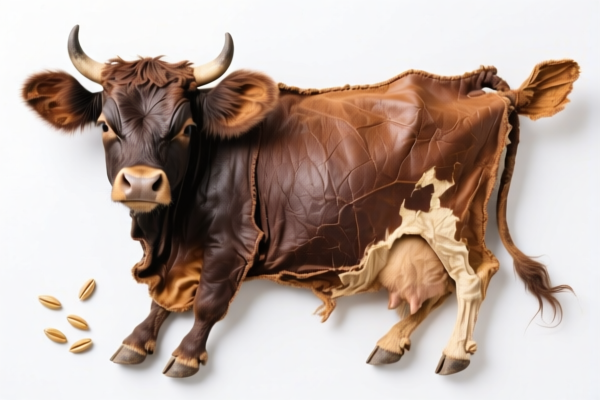
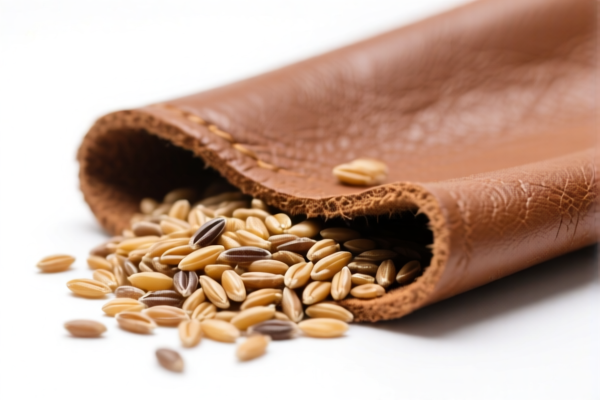
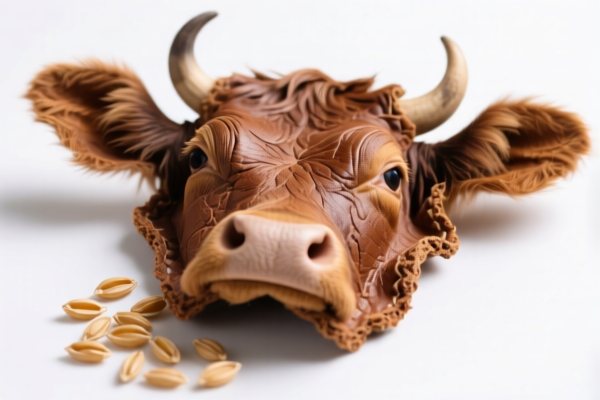
AI Analysis
🚗 Full Grain Dry Cowhide for Automotive Interior
🌐 HS Code Reference & Customs Clearance Guide | 2026 Latest Tariff Analysis | Professional Clearance Strategy
📌 I. Product Definition & Classification: Do You Truly Understand "Full Grain Dry Cowhide"?
Full grain dry cowhide, particularly when designated for automotive interiors, is a high-value leather product characterized by its natural surface integrity (full grain) and lack of moisture during processing (dry). In international trade, its classification hinges on its final use and physical form.
If the leather is specifically prepared for use as car seat covers, dashboard wrappings, or door panel linings, it falls under a distinct category compared to general-purpose leathers used for bags or shoes.
⚠️ Key Distinction:
- If the leather is merely "tanned cowhide" without specified automotive use → It may fall under general leather headings (e.g., 4107 or 4113);
- If explicitly declared and designed for automotive interior applications (seats, steering wheels, etc.) → It is classified under 9401.99.10.10.
📦 II. HS Code Classification Details (2026 Latest Tariff Authority Cross-Reference)
| HS Code | Product Description | Application Scenario | Key Identification Feature |
|---|---|---|---|
9401.99.10.10 |
Real leather automotive interior parts | Car seat covers, dashboard veneers, door armrests | ✅ Specifically for automotive interiors; ✅ Real leather material |
4113.90.30.00 |
Cowhide full grain lining | Other animal leathers, further processed | ❌ Not for auto interior; ❌ General lining use |
4115.10.00.00 |
Cowhide full grain lining | Composite leather base form | ❌ Composite structure; ❌ Not pure automotive grade |
4113.90.60.00 |
Cowhide full grain lining | Patterned/embossed leather characteristics | ❌ Decorative pattern; ❌ General fashion use |
4107.19.10.40 |
Cowhide full grain lining | Lining leather use limitation | ❌ Specific lining designation; ❌ Not structural/auto use |
4107.11.10.40 |
Cowhide full grain lining | Lining leather material & use elements | ❌ General lining; ❌ Non-automotive |
🔍 Critical Reminder:
- Automotive Interior Use is Key: If the cowhide is intended for car seats, dashboards, or interior trim, it MUST be classified under9401.99.10.10to avoid misclassification penalties.
- General Lining vs. Automotive: Codes like4107and4113typically refer to leathers used as linings for shoes, bags, or apparel, NOT for vehicle interiors. Misdeclaring auto leather as "lining" can trigger audits.
💰 III. 2026 Latest Tariff Rate Breakdown (Including Additional Taxes & Policy Surcharges)
✅ Applicable Country: United States (US)
✅ Country of Origin: China (CN)
✅ Effective Date: November 10, 2025 onwards (including subsequent imports)
🎯 1. 9401.99.10.10 —— Real Leather Automotive Interior Parts
| Item | Content |
|---|---|
| Base Tariff Rate | 0% (ad valorem) |
| USITC Surcharge | +7.5% (from USITC Footnote related to auto parts/interiors) |
| IEEPA Surcharge | +10% (for China/Hong Kong products, effective Nov 10, 2025) |
| Total Tariff Rate | 17.5% |
| Tax Calculation | CIF Value × 17.5% |
| De Minimis Exemption Available? | ❌ No (deny_de_minimis) |
| Legal Basis Path | IEEPA:9903.01.25 → IEEPA:9903.01.24 → USITC:9401.99.10.10 → FOOTNOTE:AutoInterior |
📌 Explanation:
- "IEEPA 10%": The International Emergency Economic Powers Act surcharge applies to Chinese-origin goods;
- "USITC 7.5%": A specific additional duty for automotive interior components made of real leather;
- Total 17.5%: This is significantly lower than general leather import rates (which can reach 35%-38%), making correct classification crucial for cost savings.
🚫 2. Misclassification Risk: If Declared as General Lining Leather (e.g., 4113.90.30.00, 4115.10.00.00, etc.)
If customs determines the leather is not for automotive interiors but for general use, the following high tariffs apply:
| HS Code | Base | USITC | IEEPA | Total Rate | Risk |
|---|---|---|---|---|---|
4113.90.30.00 |
3.3% | 25.0% | 10% | 38.3% | ❌ Overpayment |
4115.10.00.00 |
0.0% | 25.0% | 10% | 35.0% | ❌ Overpayment |
4113.90.60.00 |
1.6% | 25.0% | 10% | 36.6% | ❌ Overpayment |
4107.19.10.40 |
0.0% | 25.0% | 10% | 35.0% | ❌ Overpayment |
4107.11.10.40 |
0.0% | 25.0% | 10% | 35.0% | ❌ Overpayment |
📌 Warning:
- Misclassification Penalty: If you declare automotive leather as4113or4107, you will pay 17.5%-3.3% HIGHER tariffs than necessary, AND risk customs audits for false declaration.
- Correct Declaration Saves 17.5%-33.3%: By correctly identifying the product as9401.99.10.10, you benefit from the 0% base rate.
🛠️ IV. Customs Clearance Practical Advice (Real-World Pitfall Avoidance Guide)
✅ 1. Required Documentation Checklist (All Mandatory)
| Document | Must Provide | Notes |
|---|---|---|
| ✅ Product Specification Sheet | ✔️ | Must state: "Full Grain Cowhide," "Dry Process," "Intended Use: Automotive Interior" |
| ✅ Certificate of Destination | ✔️ | Explicitly confirm automotive application |
| ✅ Product Photos (Clear) | ✔️ | Show grain pattern, thickness, and any automotive-specific treatments (e.g., fire-retardant) |
| ✅ Commercial Invoice | ✔️ | Must explicitly state "For Automotive Interior Use (e.g., Seat Covers, Dashboards)" |
| ✅ Packing List | ✔️ | Match invoice description exactly |
| ✅ Third-Party Test Report | ✔️ | Auto-grade tests: Abrasion resistance, UV resistance, Flammability (FMVSS 302) |
✅ 2. Declaration Tips (Key Mantras)
🔥 "Auto Interior, Not Lining; HS 9401 Saves Money!"
| Scenario | Correct Declaration | Incorrect Practice |
|---|---|---|
| Leather for car seats | 9401.99.10.10 |
Declare as "Cowhide Leather" → Risk 4113 |
| Leather for handbags | 4113.90.30.00 |
Declare as "Auto Leather" → False Declaration |
| Mixed shipment (Auto + Bag) | Split HS Codes | Mixed declaration → Audit & Delay |
| Unspecified "Leather Rolls" | Provide End-Use Proof | Vague description → Customs holds for inspection |
✅ 3. Special Case Handling
| Situation | Handling Advice |
|---|---|
| OEM Custom Leather for Car Brands | Provide OEM contract + design specs to prove automotive use |
| Leather with Fire-Retardant Treatment | Highlight "FMVSS 302 Compliant" on invoice → Strengthens "Auto Interior" claim |
| Samples for Auto Parts Manufacturer | Declare as "Pre-production samples for automotive interior" → Same HS code |
| Re-exported Leather (Not US Origin) | If originally from China but re-exported, still subject to IEEPA if Chinese origin remains |
🌍 V. Global Market Clearance Comparison (2026 Latest)
| Country/Region | Recommended HS Code | Tariff (CN Origin) | Certification Requirement | Notes |
|---|---|---|---|---|
| 🇺🇸 USA | 9401.99.10.10 |
17.5% | No specific auto leather cert required for customs, but product must meet FMVSS | Best rate for auto interior |
| 🇨🇳 China | 4107.19.10.40 / 9401 |
5%-13% | CCC (if applicable) | Domestic import rates vary |
| 🇪🇺 EU | 4107.21 / 4113 |
6.5%-4% | REACH, RoHS | No IEEPA surcharge |
| 🇬🇧 UK | 4107.21 |
6.5% | UKCA | Post-Brexit rules |
| 🇦🇺 Australia | 4107.21 |
5% | No surcharge | Lower than US |
📌 Conclusion:
- USA is the most complex market due to IEEPA + USITC surcharges;
- Correct classification as9401.99.10.10saves up to 20.8% in tariffs compared to misclassified general leather;
- Other markets (EU, UK, AU) do not apply IEEPA surcharges, so tariff differences are smaller.
📌 VI. Common Mistakes & Pitfall Guide (Blood-Taught Lessons)
❌ Mistake 1: Declaring "Full Grain Cowhide" without specifying "Automotive Interior"
👉 Consequence: Customs may assign generic HS code (4113), leading to 35%-38% tariffs instead of 17.5% → Overpayment + Audit Risk.
❌ Mistake 2: Mixing "Auto Interior Leather" with "Shoe Leather" in one shipment
👉 Consequence: Must split HS codes; if not, entire shipment held → Delay + Storage Fees.
❌ Mistake 3: Using "Lining Leather" to describe auto leather
👉 Consequence: False declaration → Penalties + Potential Ban.
❌ Mistake 4: Not providing fire-retardant test reports
👉 Consequence: Customs doubts "automotive use" → Request for additional proof → Delay.
✅ Correct Practice:
"Full Grain Dry Cowhide, Tanned, Unfinished, Specifically Processed for Automotive Interior Use (Seat Covers/Dashboards), Non-Flammable, Model XYZ, Compliant with FMVSS 302"
🎯 VII. Conclusion: Professional Declaration, Time & Cost Savings!
🎯 Remember the Mantra:
🔹 "Auto Interior, HS 9401, 17.5% Total!"
🔹 "General Leather, HS 4113, 35%-38% Pain!"
🔹 "Specify End-Use, Save Millions, Avoid Pain!"
📌 Pro Tip:
If your leather is originating from Vietnam, Mexico, or Thailand, you may apply for IEEPA exemption, reducing the total tariff to 0%-7.5%.
Recommend Advance Ruling from US Customs (CBP) to lock in the 9401.99.10.10 classification.
📣 Take Action Now:
📞 Contact Professional Broker + Provide Product Photos + Apply for CBP Advance Ruling
🚀 Ensure your full grain cowhide clears smoothly, saves costs, and maximizes profit!
✨ Professional Clearance, Starts with Accurate Classification!
💼 Every Cent of Your Cost Deserves Precise Calculation!
Customer Reviews
About HS Code Classification
The Harmonized System (HS) is an internationally standardized nomenclature developed by the World Customs Organization (WCO) to classify traded products. Over 200 countries use the HS system as the basis for customs tariffs, trade statistics, and import/export regulations.
Each HS code follows a hierarchical structure:
- Chapter (2 digits) — Broad category of goods (e.g., Chapter 84: Machinery and Mechanical Appliances)
- Heading (4 digits) — More specific grouping within the chapter
- Subheading (6 digits) — Internationally standardized breakdown, used by all WCO member countries
- National subdivisions (8-10 digits) — Country-specific extensions for further classification, such as US HTSUS 10-digit codes
Correct HS code classification is essential for smooth customs clearance, accurate duty payment, and compliance with trade regulations. Misclassification can lead to customs delays, overpayment of duties, or penalties.
When importing from CN to US, the applicable tariff rates may include:
- Most-Favored-Nation (MFN) rate — The standard duty rate applied to WTO members
- General rate — Applied to countries without trade agreements
- Trade remedy duties — Additional tariffs such as Section 301 (anti-dumping), Section 232 (national security), or countervailing duties
The information provided on this page is for reference purposes only. For official classification, please consult with your local customs authority or a licensed customs broker.