Fur Cuffs
CN → US| HS Code | Tariff Rate | Origin | Destination | Doc |
|---|---|---|---|---|
| 4303100030 | 39.0% | CN | US | Official Doc |
| 4303100060 | 39.0% | CN | US | Official Doc |
Product Images
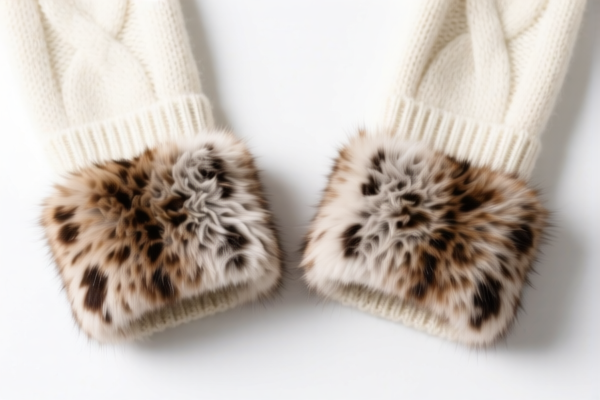
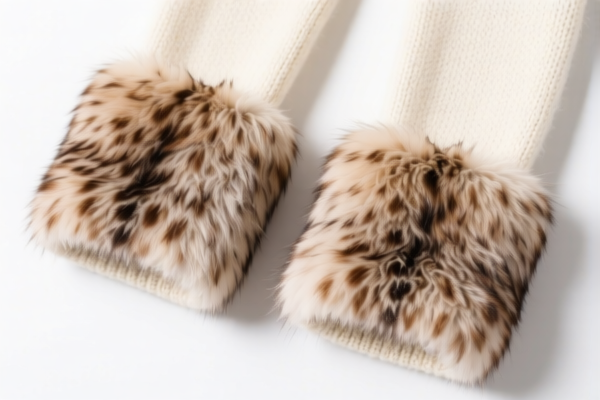
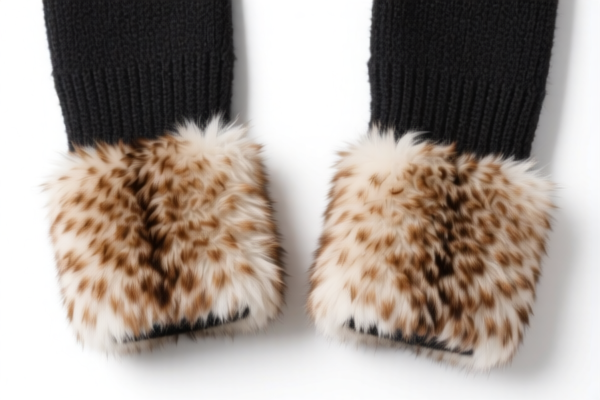
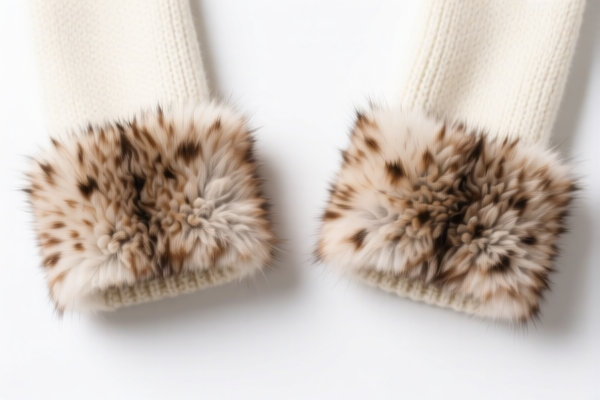
AI Analysis
🧥 Fur Cuffs (Mink & Other Fur Apparel Accessories)
🌐 HS Code Reference & Customs Clearance Guide | 2026 Latest Tariff Analysis | Professional Clearance Strategy
📌 I. Product Definition and Classification: What Exactly Are "Fur Cuffs"?
Fur cuffs are clothing accessories made from furskin, designed to be worn on the wrists or arms. In international trade, they are classified under Chapter 43 (Furskins and Furs) specifically as "Articles of apparel and clothing accessories."
The classification depends heavily on the type of fur used:
Mink Fur Cuffs: Made from mink fur. These are high-value luxury items.
Other Fur Cuffs: Made from fox, rabbit, sheared fur, or other animal skins. These are grouped under "Other."
⚠️ Key Distinction:
- If the cuff is made of Mink, it falls under 4303.10.00.30.
- If the cuff is made of any other fur (fox, rabbit, etc.), it falls under 4303.10.00.60.
- Note: Both categories have the exact same tax rate in the provided data, but accurate description is crucial for customs verification.
📦 II. HS Code Classification Details (2026 Latest Tariff Authority Comparison)
| HS Code | Product Description | Applicable Scenario | Fur Type |
|---|---|---|---|
4303.10.00.30 |
Articles of apparel and clothing accessories Of mink | Luxury mink fur wrist cuffs, mink arm warmers | ✅ Mink |
4303.10.00.60 |
Articles of apparel and clothing accessories Other | Cuffs made of fox, rabbit, goat, sheared fur, etc. | ❌ Not Mink |
🔍 Important Reminder:
- Both codes fall under the broader heading 4303 (Articles of apparel, clothing accessories and other articles of furskin).
- The sub-heading 4303.10 specifically refers to "Articles of apparel and clothing accessories".
- Do not confuse these with 4304 (Imitation fur), which has different tax implications. Ensure your product is genuine furskin.
💰 III. 2026 Latest Tariff Rate Details (Detailed Tax Breakdown)
✅ Applicable Country: United States (US)
✅ Origin: China (CN) (Based on the provided tax details which include "Additional Tariff 25%", typical of US-China trade context)
✅ Effective Date: Current applicable rates as per provided data
🎯 1. 4303.10.00.30 —— Fur Cuffs (Mink)
| Item | Content |
|---|---|
| Base Tariff Rate | 4.0% (ad valorem) |
| Additional Tariff (Section 301) | +25.0% |
| Total Tax Rate | 29.0% |
| Tax Calculation | CIF Value × 29.0% |
| De Minimis Eligibility | ❌ No (Furskins are generally excluded from Section 321 de minimis exemption for high-value items or specific prohibited lists; check current CBP rulings for small shipments, but high risk). |
| Legal Basis Path | HTSUS: 4303.10.00.30 → Section 301 Footnote 9903.88.01 (if applicable to general apparel/fur) |
📌 Explanation:
- The 4.0% base rate is the standard Most Favored Nation (MFN) tariff for fur articles.
- The 25.0% additional tariff is a significant burden, typically imposed under Section 301 of the Trade Act of 1974 against Chinese goods.
- Total Liability: You will pay 29% on the declared value (Cost + Insurance + Freight).
🎯 2. 4303.10.00.60 —— Fur Cuffs (Other)
| Item | Content |
|---|---|
| Base Tariff Rate | 4.0% (ad valorem) |
| Additional Tariff (Section 301) | +25.0% |
| Total Tax Rate | 29.0% |
| Tax Calculation | CIF Value × 29.0% |
| De Minimis Eligibility | ❌ No |
| Legal Basis Path | HTSUS: 4303.10.00.60 → Section 301 Footnote 9903.88.01 |
📌 Note:
- The tax structure is identical to mink cuffs.
- Whether it is fox, rabbit, or synthetic-mimic (if genuine fur), the total duty remains 29%.
- No tax advantage exists between Mink and "Other" fur in this specific data set.
🛠️ IV. Customs Clearance Practical Advice (实战避坑指南)
✅ 1. Required Documentation Checklist (Non-negotiable)
| Document | Required | Explanation |
|---|---|---|
| ✅ Commercial Invoice | ✔️ | Must clearly state "Fur Cuffs" and specify Fur Type (e.g., "Mink Fur Cuff" vs. "Rabbit Fur Cuff"). |
| ✅ Packing List | ✔️ | Detailed weight and piece count. |
| ✅ Product Photos | ✔️ | Clear images showing texture, label, and construction. Helps CBP verify it is genuine fur, not synthetic. |
| ✅ CITES Permits (If applicable) | ✔️ | If the fur comes from endangered species (e.g., certain wild minks or exotic furs), CITES documentation is mandatory. Common farmed mink/fox usually does not require CITES, but verify origin. |
| ✅ Country of Origin Certificate | ✔️ | Required to prove origin (e.g., China) to apply the correct Section 301 tariffs. |
✅ 2. Declaration Tips (Key Mantra)
🔥 "Declare Material, Declare Type, Avoid Synthetic Claims!"
| Scenario | Correct Declaration | Incorrect Practice |
|---|---|---|
| Mink Fur Cuffs | 4303.10.00.30 - "Mink Fur Apparel Accessory" |
Mislabel as "Textile Cuff" → Higher penalty or seizure |
| Rabbit/Fox Cuffs | 4303.10.00.60 - "Other Fur Apparel Accessory" |
Mislabel as "Faux Fur" (if genuine) → Potential fraud |
| Synthetic/Faux Fur Cuffs | DO NOT USE 4303 | Use 6217 or 6117 (Clothing accessories, knitted/crocheted or made up). |
⚠️ Critical Warning:
- If the cuffs are FAUX FUR (Synthetic), they DO NOT belong in HS Code 4303.
- Faux fur cuffs should be classified under 6117.90.90 (Other made up clothing accessories) or 6217.90 (Other made up clothing accessories), which typically have lower or zero tariffs and are NOT subject to the 25% Section 301 tax (depending on current trade war lists).
- Misdeclaring faux fur as genuine fur to pay higher taxes is rare; the risk is misdeclaring genuine fur as faux to avoid tariffs, which is fraud.
✅ 3. Special Cases & Solutions
| Case | Handling Advice |
|---|---|
| Endangered Species | If fur is from CITES-listed species (e.g., some wild minks), you must have CITES Export/Import Permits. Without them, goods will be seized. |
| Mixed Materials | If cuff has fabric lining + fur exterior, it is still classified as Fur Article (4303) because fur is the essential character. |
| Small Samples | While Section 321 ($800) de minimis exists, fur articles are often scrutinized. Even under $800, if deemed commercial samples, duties may apply. Check current CBP exemptions for furskins. |
🌍 V. Global Market Clearance Comparison (2026 Latest)
| Country/Region | Recommended HS Code | Tariff Rate | Certification Requirements | Notes |
|---|---|---|---|---|
| 🇺🇸 USA | 4303.10.00.30/60 |
29.0% (4% Base + 25% Additional) | No specific cert, but CITES if endangered | High tariff due to Section 301 |
| 🇪🇺 EU | 4303.10 |
Varies (often 5-10%) | EU Regulation 338/97 (CITES compliance) | Strict wildlife trade laws |
| 🇨🇳 China | 4303.10 |
4.0% | N/A | No additional tariffs for import into China |
| 🇬🇧 UK | 4303.10 |
Varies | Post-Brexit Wildlife Trade Licenses | Similar to EU rules |
📌 Conclusion:
- The US market imposes a 29% total tariff on genuine fur cuffs from China.
- EU/UK focus more on wildlife compliance (CITES) than high tariffs, but penalties for non-compliance are severe.
- Faux fur is a strategic alternative to avoid both high tariffs and wildlife regulations.
📌 VI. Common Mistakes & Pitfalls (Blood Lessons)
❌ Mistake 1: Declaring "Faux Fur" when it is "Real Mink"
👉 Consequence: Customs penalty, seizure, and potential criminal charges for smuggling/fraud.
❌ Mistake 2: Not specifying "Mink" vs. "Other"
👉 Consequence: Even though the tax rate is the same, incorrect description leads to inspection delays and potential classification disputes.
❌ Mistake 3: Ignoring CITES for exotic furs
👉 Consequence: Seizure and destruction of goods if CITES permits are missing for protected species.
❌ Mistake 4: Assuming all fur items are tax-exempt under de minimis
👉 Consequence: Furskins are high-risk for CBP; shipments under $800 may still be audited and taxed.
✅ Correct Action:
"Mink Fur Cuffs, Handmade, Genuine Mink Fur, Country of Origin: China, Model: XYZ, Certified Genuine Fur (Non-CITES if applicable)"
🎯 VII. Conclusion: Professional Declaration, Save Time and Money!
🎯 Remember the Mantra:
🔹 "Real Fur = 4303 = 29% Duty (US)"
🔹 "Faux Fur = 6117/6217 = Lower Duty (Check List)"
🔹 "CITES = Mandatory for Exotic Species"
🔹 "De Minimis = Risky for Furs"
📌 Tips:
- If you are importing Faux Fur, ensure your supplier labels it correctly as "100% Acrylic/Polyester" or "Faux Fur" and uses HS Code 6117.90.90 or 6217.90.90. This can significantly reduce your tax burden.
- For Genuine Mink, budget for the 29% tariff. Consider sourcing from countries with FTAs (Free Trade Agreements) with the US (e.g., Canada, Mexico) if applicable, to reduce or eliminate the Section 301 tariff.
📣 Immediate Action:
📞 Contact a licensed customs broker to verify CITES status of your fur source.
🚀 Apply for an Advance Ruling from CBP if your shipment value is significant.
💼 Your profit margin depends on accurate classification!
✨ Professional clearance starts with precise classification!
💼 Every dollar saved on tariffs is pure profit!
Customer Reviews
About HS Code Classification
The Harmonized System (HS) is an internationally standardized nomenclature developed by the World Customs Organization (WCO) to classify traded products. Over 200 countries use the HS system as the basis for customs tariffs, trade statistics, and import/export regulations.
Each HS code follows a hierarchical structure:
- Chapter (2 digits) — Broad category of goods (e.g., Chapter 84: Machinery and Mechanical Appliances)
- Heading (4 digits) — More specific grouping within the chapter
- Subheading (6 digits) — Internationally standardized breakdown, used by all WCO member countries
- National subdivisions (8-10 digits) — Country-specific extensions for further classification, such as US HTSUS 10-digit codes
Correct HS code classification is essential for smooth customs clearance, accurate duty payment, and compliance with trade regulations. Misclassification can lead to customs delays, overpayment of duties, or penalties.
When importing from CN to US, the applicable tariff rates may include:
- Most-Favored-Nation (MFN) rate — The standard duty rate applied to WTO members
- General rate — Applied to countries without trade agreements
- Trade remedy duties — Additional tariffs such as Section 301 (anti-dumping), Section 232 (national security), or countervailing duties
The information provided on this page is for reference purposes only. For official classification, please consult with your local customs authority or a licensed customs broker.