Fur Fashion Accessories
CN → US| HS Code | Tariff Rate | Origin | Destination | Doc |
|---|---|---|---|---|
| 6217109520 | 32.1% | CN | US | Official Doc |
| 6217108500 | 24.6% | CN | US | Official Doc |
| 4303100060 | 39.0% | CN | US | Official Doc |
| 4303900000 | 35.0% | CN | US | Official Doc |
| 6117809520 | 24.6% | CN | US | Official Doc |
| 6117101000 | 27.1% | CN | US | Official Doc |
Product Images
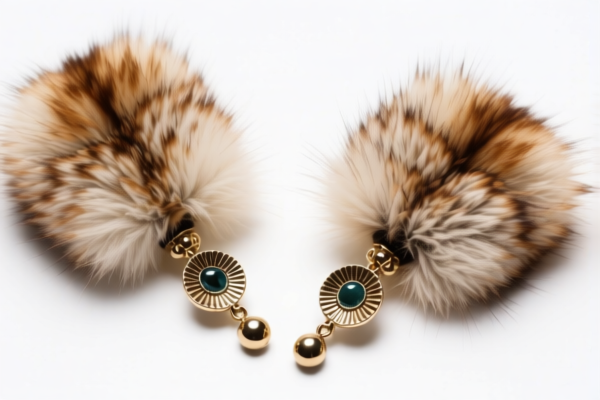

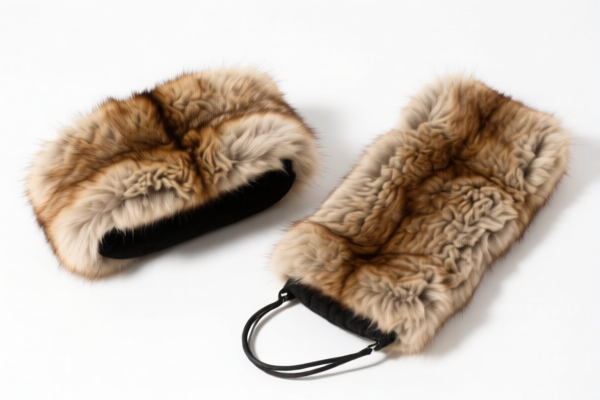
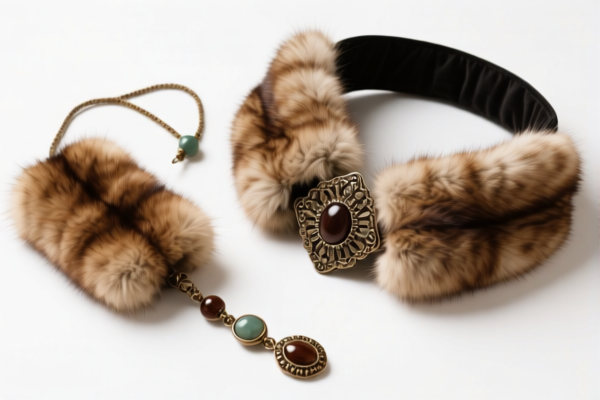
AI Analysis
🧣🧤 Fur Fashion Accessories: The Ultimate HS Code & Taxation Guide (2026 Edition)
🌐 Global Trade Decoder | Expert Classification & Duty Strategy | Zero Risk Clearance
📌 One: What Exactly Are "Fur Fashion Accessories"?
"Fur Fashion Accessories" are non-apparel items crafted from fur skins (natural or synthetic), designed to complement outfits without being garments themselves. In international trade, these are strictly categorized into two distinct groups based on material composition and specific function:
- Group A: Fur Skin Articles: Items made entirely or primarily of fur skins (e.g., fur cuffs, fur collars, fur trims). These fall under Chapter 43.
- Group B: Textile/Crocheted Fur Accessories: Items made of wool, fine animal hair, or other textiles that resemble fur or are used as fur accessories (e.g., wool mufflers, knitted headbands, ponytail holders). These fall under Chapter 61 (Knitted) or Chapter 62 (Woven/Other).
⚠️ CRITICAL DISTINCTION:
- Real Fur/Skin (Chapter 43) → Subject to high additional tariffs (25%) in many markets.
- Wool/Fine Animal Hair (Chapter 61/62) → Often Tariff Free (0%), avoiding the "Additional Duty."
- Synthetic/Other Fur → Check specific sub-headings; may fall under Chapter 61/62 with different rates.
📦 Two: HS Code Classification Matrix (2026 Data)
Based on the provided trade data for Fur Fashion Accessories.
| HS Code | Product Description | Material Composition | Tax Rate (Base + Additional) | Total Duty |
|---|---|---|---|---|
| 4303.10.00.60 | Apparel & Accessories of Furskin | Real Fur / Furskin | 4.0% (Base) + 25.0% (Additional) | 29.0% |
| 4303.90.00.00 | Other Articles of Furskin | Real Fur / Furskin (Non-standard) | 0.0% (Base) + 25.0% (Additional) | 25.0% |
| 6217.10.95.20 | Other Made-up Accessories | Wool or Fine Animal Hair | 0.0% (Base) + 0.0% (Additional) | 0.0% |
| 6217.10.85.00 | Headbands / Ponytail Holders | Wool or Fine Animal Hair | 14.6% (Base) + 0.0% (Additional) | 14.6% |
| 6117.80.95.20 | Knitted/Crocheted Accessories | Wool or Fine Animal Hair | 0.0% (Base) + 0.0% (Additional) | 0.0% |
| 6117.10.10.00 | Shawls / Scarves / Veils | Wool or Fine Animal Hair | 0.0% (Base) + 0.0% (Additional) | 0.0% |
🔍 Deep Dive Analysis:
1. The "Furskin" Trap (4303 Series): If your product is made of real fur skin, it is almost certainly subject to the 25% Additional Duty, regardless of whether it's an article of apparel or just an accessory. The base tax varies (0% or 4%), but the "Additional" tax is the killer.
2. The "Wool/Fine Hair" Goldmine (61xx/62xx Series): If the product is made of wool or fine animal hair (knitted or woven) and not classified as "furskin," you can achieve 0% Total Duty (for shawls, scarves, and general accessories) or a manageable 14.6% (for headbands).
3. Specific Items: Headbands and ponytail holders (6217.10.85.00) have a higher base duty (14.6%) but no additional duty, making them safer than general fur skin accessories.
💰 Three: Tax Rate Breakdown & Policy Implications
🎯 Scenario A: Real Fur Skin Accessories (HS 4303)
| Item | Content |
|---|---|
| Base Tariff | 0.0% or 4.0% (depending on specific sub-type) |
| Additional Duty | +25.0% (Heavy penalty on fur/skin goods) |
| Total Effective Rate | 25.0% – 29.0% |
| Policy Reason | Often linked to protection of domestic textile/fur industries or environmental restrictions. |
| Impact | High Cost. Even if base is 0%, the 25% surcharge makes this category expensive for importers. |
📌 Interpretation:
If you import a fur muffler made of real animal skin, it falls under 4303.90.00.00. Despite the 0% base tax, you pay 25% total.
If you import a fur collar on a coat, it might fall under 4303.10.00.60, costing 29%.
🎯 Scenario B: Wool/Fine Hair Accessories (HS 61xx/62xx)
| Item | Content |
|---|---|
| Base Tariff | 0.0% or 14.6% |
| Additional Duty | 0.0% (No surcharge) |
| Total Effective Rate | 0.0% – 14.6% |
| Policy Reason | These are often classified as general textile accessories, benefiting from lower tariff schedules. |
| Impact | Low Cost. Ideal for high-volume, low-margin fashion accessories. |
📌 Interpretation:
- Wool Scarf (6117.10.10.00): 0% Total Duty.
- Knitted Fur-like Hat (6117.80.95.20): 0% Total Duty.
- Wool Headband (6217.10.85.00): 14.6% Total Duty (No surcharge).
🛠️ Four: Clearance Strategy & Practical Tips
✅ 1. Material Verification (The Most Critical Step)
- Action: Before shipping, perform a fiber composition test or obtain a certificate of origin/material from the factory.
- Why: Misdeclaring "Wool" as "Furskin" (or vice versa) leads to severe penalties.
- Real Fur = 25-29% Tax.
- Wool/Fine Hair = 0-14.6% Tax.
- Tip: If the product looks like fur but is made of high-quality synthetic or wool, ensure the label and description explicitly state "Wool" or "Fine Animal Hair" to qualify for 6117/6217 codes.
✅ 2. Declaration Strategy (Avoiding "Furskin" Traps)
🔥 Golden Rule: "If it's not skin, don't call it skin."
| Product Type | Correct Classification | Risk of Misclassification |
|---|---|---|
| Real Fur Scarf/Collar | 4303.10.00.60 or 4303.90.00.00 |
High Risk (29% Tax). Must be declared accurately; no avoidance possible. |
| Wool "Faux Fur" Scarf | 6117.10.10.00 |
Low Risk (0% Tax). Ensure it's not 100% skin. |
| Knitted Wool Headband | 6117.80.95.20 |
Low Risk (0% Tax). |
| Woven Wool Headband | 6217.10.85.00 |
Medium Risk (14.6% Tax). Note: Still better than 25% fur tax. |
✅ 3. Required Documentation for Customs
| Document | Requirement | Purpose |
|---|---|---|
| Commercial Invoice | Must specify Material Composition (e.g., "100% Wool" vs "Real Rabbit Fur"). | Determines HS Code. |
| Material Certificate | Lab report proving fiber type. | Proves eligibility for 0% Additional Duty. |
| Packing List | Separate fur accessories from other goods if possible. | Avoids confusion in inspection. |
| Product Photos | High-res images of texture. | Helps customs officers verify if it's skin or knit. |
🌍 Five: Market Comparison & Strategic Advice
| Strategy | Outcome | Recommendation |
|---|---|---|
| Importing Real Fur Accessories | High Cost (25-29%) | Only viable for luxury brands with high margins. Ensure compliance with CITES (if endangered species). |
| Switching to Wool/Fine Hair | Low Cost (0-14.6%) | Highly Recommended. Use "Faux Fur" made of wool/fine hair to leverage 0% duty rates. |
| Avoiding "Furskin" Labeling | Tax Savings | If the product is synthetic or wool, never use the word "Fur" in the English description if it's not actual skin. Use "Wool Blend," "Textile Accessory." |
📌 Six: Common Pitfalls & "Do Not Do" List
❌ Pitfall 1: Calling Wool "Fur"
👉 Consequence: If you import wool headbands but label them "Fur Headbands," Customs may force them into 4303 codes, charging you 25% more than necessary.
👉 Fix: Be precise. Use "Wool Headband" or "Textile Accessory."
❌ Pitfall 2: Mixing Real Fur with Textile
👉 Consequence: If a scarf is 50% Fur Skin and 50% Wool, Customs may classify it under the Fur Skin code (4303) due to the primary material rule, triggering the 25% tax.
👉 Fix: Avoid blending real fur with textiles unless the fur is the dominant material by weight and you accept the high tax.
❌ Pitfall 3: Ignoring "Fine Animal Hair"
👉 Consequence: Missing the 0% duty opportunity for "Fine Animal Hair" accessories (HS 6117/6217).
👉 Fix: Research if your "luxury fur" alternative is actually fine animal hair (e.g., Cashmere, Alpaca), which qualifies for lower rates.
🎯 Seven: Conclusion & Action Plan
🎯 Key Takeaway:
The difference between paying 29% and 0% lies entirely in the Material Definition.
- Real Fur Skin = 25% Additional Duty (Bad for cost).
- Wool/Fine Animal Hair = 0% Additional Duty (Excellent for cost).
✅ Action Plan:
1. Audit your current inventory: Are any items made of real fur skin?
2. Re-classify: If possible, switch suppliers for "Faux Fur" made of Wool or Fine Animal Hair to target HS codes 6117.10.10.00 or 6117.80.95.20.
3. Update Descriptions: Ensure commercial invoices clearly state "Wool" or "Textile" for non-fur items to avoid automatic 25% surcharges.
4. Verify Compliance: Check if your "Fur" items are CITES compliant to avoid seizure.
📌 Pro Tip:
"Fur" is a dangerous word in international trade. If it's not strictly "Furskin," rename it "Wool Accessory" or "Textile Scarf" to unlock the 0% tax gate.
📣 Final Advice:
🚀 Don't let the 25% surcharge eat your margins.
🚀 Switch to wool/fine hair accessories for maximum profit.
🚀 Clearance starts with the right HS Code!
✨ Precision in Classification = Savings in Customs.
💼 Your Accessories, Your Strategy, Your Success!
Customer Reviews
About HS Code Classification
The Harmonized System (HS) is an internationally standardized nomenclature developed by the World Customs Organization (WCO) to classify traded products. Over 200 countries use the HS system as the basis for customs tariffs, trade statistics, and import/export regulations.
Each HS code follows a hierarchical structure:
- Chapter (2 digits) — Broad category of goods (e.g., Chapter 84: Machinery and Mechanical Appliances)
- Heading (4 digits) — More specific grouping within the chapter
- Subheading (6 digits) — Internationally standardized breakdown, used by all WCO member countries
- National subdivisions (8-10 digits) — Country-specific extensions for further classification, such as US HTSUS 10-digit codes
Correct HS code classification is essential for smooth customs clearance, accurate duty payment, and compliance with trade regulations. Misclassification can lead to customs delays, overpayment of duties, or penalties.
When importing from CN to US, the applicable tariff rates may include:
- Most-Favored-Nation (MFN) rate — The standard duty rate applied to WTO members
- General rate — Applied to countries without trade agreements
- Trade remedy duties — Additional tariffs such as Section 301 (anti-dumping), Section 232 (national security), or countervailing duties
The information provided on this page is for reference purposes only. For official classification, please consult with your local customs authority or a licensed customs broker.