Fur Lamb Skin
CN → US| HS Code | Tariff Rate | Origin | Destination | Doc |
|---|---|---|---|---|
| 4301300000 | 10.0% | CN | US | Official Doc |
| 4301900000 | 10.0% | CN | US | Official Doc |
| 4102103000 | 12.0% | CN | US | Official Doc |
| 4102293000 | 19.5% | CN | US | Official Doc |
Product Images
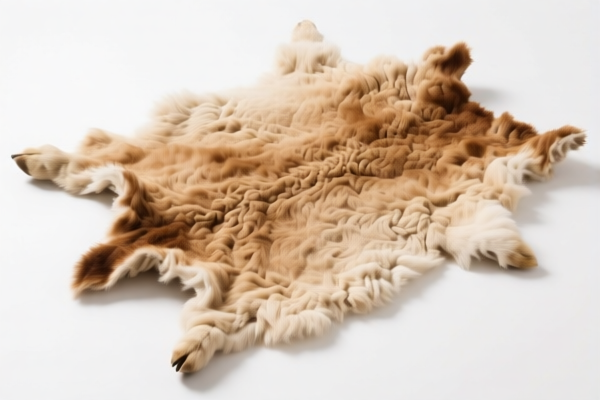
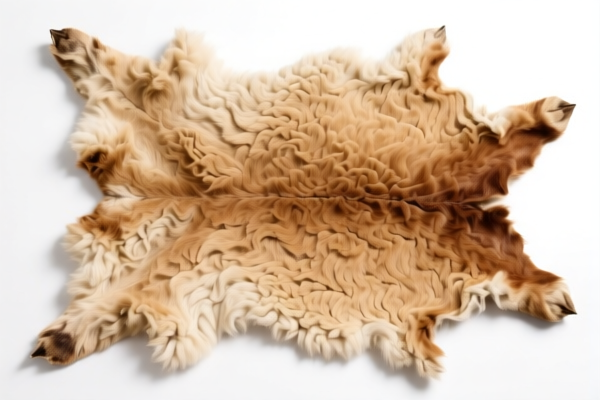
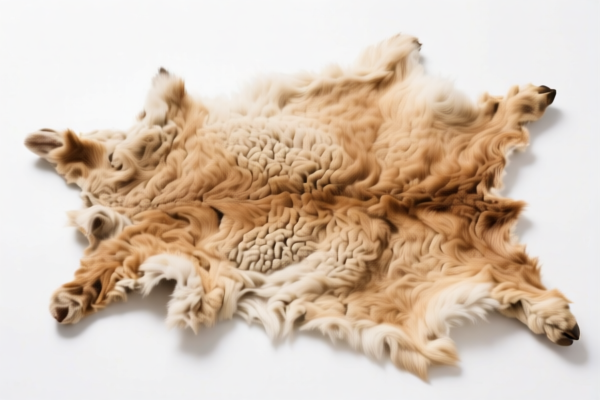
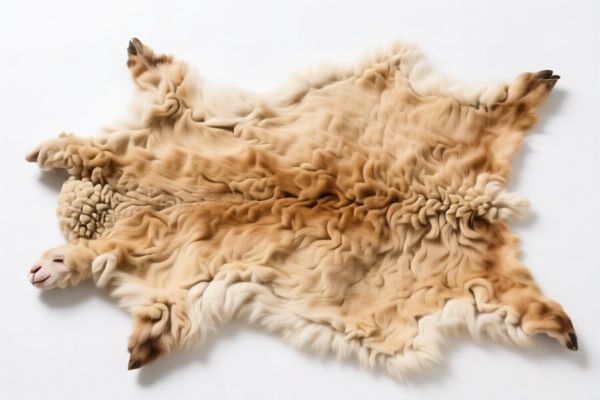
AI Analysis
🐑 Fur Lamb Skin (Sheepskins & Lambskins)
🌐 HS Code Reference & Clearance Guide | 2024/2025 Latest Tariff Analysis | Professional Custom Clearance Strategy
📌 I. Product Definition & Classification: Do You Understand "Lamb Skin"?
Fur Lamb Skin refers to the raw skins of sheep or lambs, including those with or without wool (fur), that have not yet been tanned. In international trade, this category is strictly divided based on the preservation state (raw/rawhide vs. tanned) and the presence of wool.
For the purpose of this guide, we focus on the Raw/Un-tanned stage, as indicated by the provided data.
⚠️ Key Distinction Point:
- Raw/Un-tanned (Chrome-free): If the skin is merely salted, dried, or limed but not chemically tanned, it falls under Chapter 41 or 43 (Raw hides/skins).
- Tanned: If processed with chemicals to prevent decomposition, it falls under different subheadings (not covered in this specific set).
- Wool On vs. Off: Whether the wool is attached significantly affects the HS Code classification (e.g., 4102 vs. 4301).
📦 II. HS Code Classification Details (Based on Provided Data)
| HS Code | Product Description | Tax Detail Breakdown | Total Tax Rate |
|---|---|---|---|
| 4102.10.30.00 | Sheepskins or lambskins, raw, not tanned (General/Undried) | Base: 2.0% Add-on: 0.0% Section 301 (122条款): 10% |
12.0% |
| 4102.29.30.00 | Sheepskins or lambskins, raw, not tanned (Other/Specific Subtype) | Base: 2.0% Add-on: 7.5% Section 301 (122条款): 10% |
19.5% |
| 4301.30.00.00 | Raw pelts of lambskins or sheepskins (with wool/fur attached) | Base: 0.0% Add-on: 0.0% Section 301 (122条款): 10% |
10.0% |
| 4301.90.00.00 | Other raw furskins and pieces thereof | Base: 0.0% Add-on: 0.0% Section 301 (122条款): 10% |
10.0% |
| 4102.10.30.00 | Raw skins of sheep/lambs (Fallback/General Category) | Base: 2.0% Add-on: 0.0% Section 301 (122条款): 10% |
12.0% |
🔍 Key Insight:
- 4301 Series: Typically applies to skins with wool/fur intact and often considered "furskins." They benefit from 0% Base Tariff but are still hit by the 10% Section 301 surcharge.
- 4102 Series: Applies to raw hides/skins. The tax burden is higher (12% - 19.5%) due to higher base tariffs and potential "Add-on" duties (e.g., 7.5% in 4102.29.30.00).
- Section 301 (122 Clause): A flat 10% surcharge applies to ALL items in the provided data, regardless of the base rate. This is likely a US-China trade policy measure.
💰 III. 2024/2025 Latest Tariff Rate Breakdown
✅ Applicable Region: Based on the "122条款" (Section 301) reference, this analysis assumes Import into the USA from China.
✅ Product Type: Raw Fur/Lamb Skins
✅ Effective Date: Current trade policies (Subject to change)
🎯 1. 4301.30.00.00 & 4301.90.00.00 —— Raw Pelts/Furskins (Lowest Tax)
| Item | Content |
|---|---|
| Base Duty Rate | 0% |
| Add-on Duty | 0% |
| Section 301 Duty (122 Clause) | +10% |
| Total Effective Rate | 10.0% |
| Calculation Basis | CIF Value × 10% |
| De Minimis Exemption | ❌ Not Applicable (Raw agricultural/animal products usually excluded from de minimis) |
| Legal Basis | HTSUS 4301.30/4301.90 + USTR Section 301 List 4A |
📌 Explanation:
- These codes benefit from zero base duty, making them the most tax-efficient for raw pelts.
- However, the 10% Section 301 surcharge is unavoidable for Chinese-origin goods.
- Strategic Advantage: Lower than the 12%-19.5% range for other raw skins.
🎯 2. 4102.10.30.00 —— General Raw Sheepskins/Lambskins (Moderate Tax)
| Item | Content |
|---|---|
| Base Duty Rate | 2.0% |
| Add-on Duty | 0.0% |
| Section 301 Duty (122 Clause) | +10% |
| Total Effective Rate | 12.0% |
| Calculation Basis | CIF Value × 12% |
| De Minimis Exemption | ❌ Not Applicable |
| Legal Basis | HTSUS 4102.10 + USTR Section 301 List 4A |
📌 Explanation:
- Suitable for raw skins without wool or those classified under general sheepskin headings.
- Slightly higher than the 4301 series due to the 2% base duty.
🎯 3. 4102.29.30.00 —— Specific Raw Sheepskins/Lambskins (Highest Tax)
| Item | Content |
|---|---|
| Base Duty Rate | 2.0% |
| Add-on Duty | +7.5% |
| Section 301 Duty (122 Clause) | +10% |
| Total Effective Rate | 19.5% |
| Calculation Basis | CIF Value × 19.5% |
| De Minimis Exemption | ❌ Not Applicable |
| Legal Basis | HTSUS 4102.29 + USTR Section 301 List 4A |
📌 Explanation:
- This is the most expensive category in the provided data.
- The 7.5% Add-on Duty significantly increases the cost.
- Warning: Misclassification here can lead to overpayment or customs penalties if the goods actually fit 4102.10 or 4301.
🛠️ IV. Clearance Practical Advice (Avoid Pitfalls)
✅ 1. Documentation Checklist (Must-Have)
| Document | Mandatory | Notes |
|---|---|---|
| ✅ Commercial Invoice | ✔️ | Must clearly state "Raw Sheepskin/Lambskin" and "Not Tanned." |
| ✅ Packing List | ✔️ | Include quantity, weight (net/gross), and number of pelts. |
| ✅ Certificate of Origin | ✔️ | Essential for proving origin (China) and applying Section 301 rates. |
| ✅ Biological/Health Certificate | ✔️ | Proof of disease-free status (e.g., BSE, Foot-and-Mouth Disease free). |
| ✅ Product Photos | ✔️ | Show wool/fur presence or absence to support HS Code classification. |
| ✅ Customs Declaration | ✔️ | Accurate HS Code selection is critical. |
✅ 2. Classification Strategy (Key Rules)
🔥 "Wool On = 4301, Wool Off/General = 4102, Watch the 10% Surcharge!"
| Scenario | Recommended HS Code | Total Tax | Reason |
|---|---|---|---|
| Lamb skin WITH wool/fur attached | 4301.30.00.00 |
10.0% | Classified as "furskin," base duty is 0%. |
| Lamb skin WITHOUT wool, general | 4102.10.30.00 |
12.0% | Classified as "raw hide," base duty 2%. |
| Lamb skin, specific subtype | 4102.29.30.00 |
19.5% | Apply only if product matches this specific subheading. |
| Other raw furskins | 4301.90.00.00 |
10.0% | Fallback for other fur types, base duty 0%. |
📌 Critical Note:
- Ensure the wool/fur status is clearly documented. If wool is present, 4301 is usually preferred for lower base duty.
- The 10% Section 301 duty applies to all these codes if originating from China.
✅ 3. Special Handling Tips
| Situation | Recommendation |
|---|---|
| Salting vs. Drying | Declare preservation method clearly. Raw skins must be salted or dried. |
| Damaged Pelts | If pelts are torn or stained, declare as "defective" to potentially negotiate lower value-based duties. |
| Mixed Shipments | If a shipment contains both tanned and raw skins, separate them. Tanned skins have different duties and may avoid raw skin biosecurity checks. |
| Origin Marking | Ensure all pelts are marked "Made in China" to avoid origin fraud penalties. |
🌍 V. Global Market Comparison (2024/2025)
| Country/Region | Recommended HS Code | Base Duty | Add-on/Surcharge | Total Est. Rate | Notes |
|---|---|---|---|---|---|
| 🇺🇸 USA | 4301.30.00.00 |
0% | +10% (Sec 301) | 10% | Lowest rate for raw pelts. |
| 🇺🇸 USA | 4102.10.30.00 |
2% | +10% (Sec 301) | 12% | For general raw skins. |
| 🇨🇳 China | 4301.30.00.00 |
0% | 0% | 0% | No surcharge for imports to China. |
| 🇪🇺 EU | 4301.10 |
4% | 0% | 4% | Different HS structure; check EU TARIC. |
| 🇬🇧 UK | 4301.10 |
4% | 0% | 4% | Post-Brexit trade terms. |
📌 Conclusion:
- The USA has the most complex tariff structure due to Section 301.
- For Chinese exporters, the 10% surcharge is a fixed cost.
- EU/UK rates are generally lower for raw furskins but may have stricter animal welfare documentation requirements.
📌 VI. Common Mistakes & Pitfalls (Lessons Learned)
❌ Mistake 1: Classifying raw wool-on skins as "textile materials"
👉 Consequence: Misclassification → Penalties + Back Duties.
✅ Fix: Use 4301 for raw pelts with wool.
❌ Mistake 2: Ignoring the 10% Section 301 surcharge
👉 Consequence: Underpaid duties → Clearance delays + Interest.
✅ Fix: Always add 10% to CIF value for US-bound Chinese goods.
❌ Mistake 3: Failing to provide Health Certificates
👉 Consequence: Goods held at port for inspection → Storage fees + Delay.
✅ Fix: Obtain pre-shipment health certificates from local animal health authorities.
❌ Mistake 4: Confusing Raw vs. Tanned
👉 Consequence: Raw skins may be subject to biosecurity checks; tanned skins are treated as manufactured goods.
✅ Fix: Clearly specify "Raw/Un-tanned" in the commercial invoice.
🎯 VII. Conclusion: Professional Declaration, Efficient Clearance
🎯 Key Takeaway:
🔹 "Wool On → 4301 (10%); Wool Off → 4102 (12-19.5%); Always add 10% Sec 301."
🔹 "HS Code determines your cost. 10.0% vs 19.5% is a huge difference!"
📌 Pro Tip:
If your raw skins are exported to the US, consider value engineering:
- Can the product be classified under 4301.30 (10%) instead of 4102.29 (19.5%) by preserving wool?
- If so, keep the wool intact during initial processing to qualify for the lower tax rate.
📣 Immediate Action:
📞 Contact your customs broker with product photos and HS Code pre-classification.
🚀 Ensure all health certificates are ready before shipment to avoid port delays.
✨ Professional clearance starts with accurate classification!
💼 Every percentage point saved is pure profit!
Customer Reviews
About HS Code Classification
The Harmonized System (HS) is an internationally standardized nomenclature developed by the World Customs Organization (WCO) to classify traded products. Over 200 countries use the HS system as the basis for customs tariffs, trade statistics, and import/export regulations.
Each HS code follows a hierarchical structure:
- Chapter (2 digits) — Broad category of goods (e.g., Chapter 84: Machinery and Mechanical Appliances)
- Heading (4 digits) — More specific grouping within the chapter
- Subheading (6 digits) — Internationally standardized breakdown, used by all WCO member countries
- National subdivisions (8-10 digits) — Country-specific extensions for further classification, such as US HTSUS 10-digit codes
Correct HS code classification is essential for smooth customs clearance, accurate duty payment, and compliance with trade regulations. Misclassification can lead to customs delays, overpayment of duties, or penalties.
When importing from CN to US, the applicable tariff rates may include:
- Most-Favored-Nation (MFN) rate — The standard duty rate applied to WTO members
- General rate — Applied to countries without trade agreements
- Trade remedy duties — Additional tariffs such as Section 301 (anti-dumping), Section 232 (national security), or countervailing duties
The information provided on this page is for reference purposes only. For official classification, please consult with your local customs authority or a licensed customs broker.