Fur Lamb Skin for Leather Processing
CN → USProduct Images
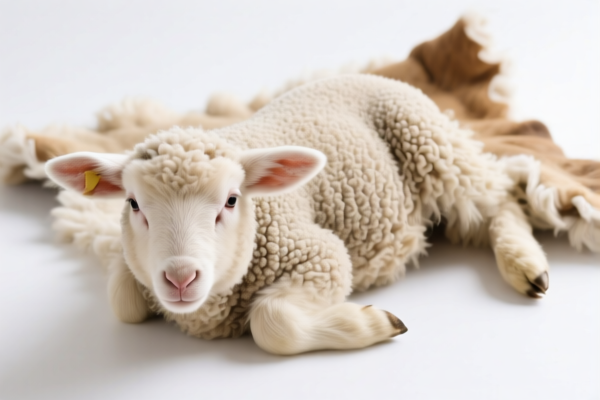
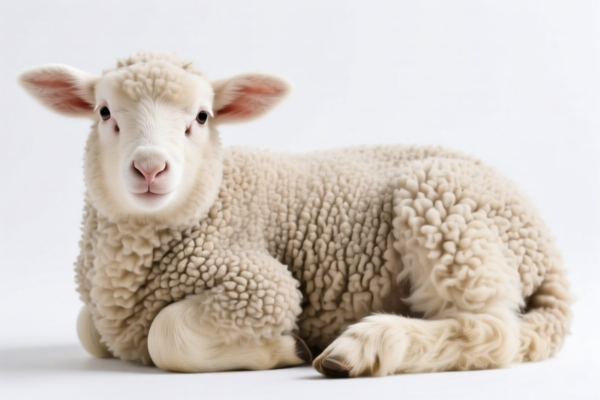
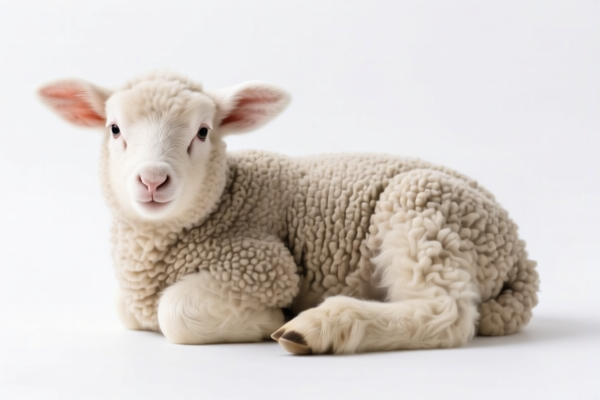
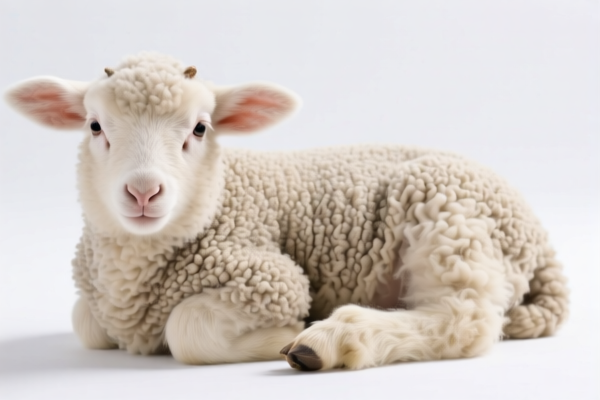
AI Analysis
🐑 Fur Lamb Skin for Leather Processing (Sheep/Lamb Skins)
🌐 HS Code Reference & Customs Clearance Guide | 2026 Latest Tariff Analysis | Professional-Level Entry Strategy
📌 One, Product Definition & Classification: Do You Really Know "Fur Lamb Skin"?
Fur lamb skins are the raw material source for the production of sheepskin and lamb leather. In international trade, these are generally divided into two categories based on their processing state:
Raw Skins (Raw Skins of Sheep or Lamb): Skins that have not undergone any tanning or crust processes, including those that have been salted, dried, or wet-salted. Tanned Skins (Tanned or Crust Skins of Sheep or Lamb): Skins that have undergone tanning processes but have not been further processed into finished leather.
⚠️ Key Distinction Point:
- If the skins are untanned (whether salted, dried, or wet-salted) → They are classified under Chapter 41.
- If the skins have been tanned → They are classified under Chapter 41 (different subheading).
- If the skins are finished leather (dyed, colored, coated, etc.) → They are classified under Chapter 41 (even further subheading) or Chapter 43 (if further processed into fur skins).
📦 Two, HS Code Classification Details (2026 Latest Tariff Authority Comparison)
| HS Code | Product Description | Applicable Scenario | State of Processing |
|---|---|---|---|
4101.20.00.00 |
Raw hides of bovine (including buffalo) and equine animals | Raw bovine hides | ❌ Not applicable |
4102.10.00.00 |
Raw skins of sheep or lambs, with wool on | Raw sheep/lamb skins, with wool | ✅ Raw, with wool |
4102.21.00.00 |
Raw skins of sheep or lambs, without wool, dehaired | Raw sheep/lamb skins, without wool, dehaired | ✅ Raw, without wool, dehaired |
4102.29.00.00 |
Raw skins of sheep or lambs, without wool, other | Raw sheep/lamb skins, without wool, other | ✅ Raw, without wool, other |
4103.10.00.00 |
Other raw hides and skins of bovine or equine animals, without wool | Other raw hides/skins | ❌ Not applicable |
4103.30.00.00 |
Other raw hides and skins of bovine or equine animals, with wool | Other raw hides/skins, with wool | ❌ Not applicable |
🔍 Key Reminder:
- All untanned sheep/lamb skins, whether with wool or without wool, must be classified under HS Code 4102.
- If the skins are tanned, they are classified under HS Code 4104 or 4105.
- If the skins are finished leather, they are classified under HS Code 4106 or 4107.
- If the skins are fur skins (processed for fur use), they are classified under HS Code 4302.
💰 Three, 2026 Latest Tariff Rate Details (Including Additional Tariffs, Policy Additions)
✅ Applicable Country: United States (US)
✅ Country of Origin: China (CN)
✅ Effective Date: From November 10, 2025 (Including Subsequent Imports)
🎯 1. 4102.10.00.00 —— Raw skins of sheep or lambs, with wool
| Item | Content |
|---|---|
| Base Tariff | 0% (ad valorem) |
| USITC Additional Tariff | +25% (from USITC Footnote 9903.88.01) |
| IEEPA Additional Tariff | +10% (for Chinese/Hong Kong products, from November 10, 2025) |
| Total Tariff | 35% |
| Tax Calculation | CIF Value × 35% |
| De Minimis Eligibility | ❌ Not Eligible (deny_de_minimis) |
| Legal Basis Path | IEEPA:9903.01.25 → IEEPA:9903.01.24 → USITC:4102.10.00.00 → FOOTNOTE:9903.88.01 |
📌 Explanation:
- The "USITC Additional Tariff 25%" comes from the "Additional Tariffs" under Section 301 of the US Trade Act;
- The "IEEPA 10%" is the additional tariff against China imposed under the International Emergency Economic Powers Act;
- Combined 35%, which is a high tariff, must be anticipated in advance!
🎯 2. 4102.21.00.00 —— Raw skins of sheep or lambs, without wool, dehaired
| Item | Content |
|---|---|
| Base Tariff | 0% |
| USITC Additional Tariff | +25% |
| IEEPA Additional Tariff | +10% |
| Total Tariff | 35% |
| Tax Calculation | CIF × 35% |
| De Minimis Eligibility | ❌ Not Eligible |
| Legal Basis Path | IEEPA:9901.25 → IEEPA:9903.01.24 → USITC:4102.21.00.00 → FOOTNOTE:9903.88.01 |
📌 Note:
- Same as the previous item, both are "raw skin category", tariffs are completely consistent;
- Even if it is "dehaired sheepskin", "wet-salted sheepskin", "dried sheepskin", etc., as long as it is untanned, this tariff applies.
🛠️ Four, Customs Clearance Practical Advice (Practical Pitfall Avoidance Guide)
✅ 1. Preparation Material List (Missing One is Not Allowed)
| Material | Must Provide | Explanation |
|---|---|---|
| ✅ Product Specification | ✔️ | Include size, weight, processing method (salted, dried, etc.) |
| ✅ Photos of Raw Skins | ✔️ | Clear display of wool presence/absence, condition |
| ✅ Commercial Invoice | ✔️ | Clearly mark "Raw Sheep/Lamb Skins" |
| ✅ Packing List | ✔️ | Explain packaging method, avoid separate declaration |
| ✅ Certificate of Origin (CO) | ✔️ | If not from China, can apply for preferential tariff |
| ✅ Phytosanitary Certificate | ✔️ | If applicable, required for animal product import |
✅ 2. Declaration Skills (Key Mantra)
🔥 "Raw skins not tanned, wool on or off, name precise, tariff half!"
| Situation | Correct Declaration Method | Wrong Practice |
|---|---|---|
| Raw sheep/lamb skins (with wool) | 4102.10.00.00 |
Misdeclare as "tanned skins" → 35% |
| Raw sheep/lamb skins (without wool) | 4102.21.00.00 or 4102.29.00.00 |
Misdeclare as "finished leather" → 0% (if applicable) |
| Tanned sheep/lamb skins | 4104.19.00.00 or 4105.10.00.00 |
Misdeclare as "raw skins" → 0% |
| Finished leather | 4106.21.00.00 or 4106.31.00.00 |
Misdeclare as "raw skins" → 35% |
✅ 3. Special Case Handling
| Situation | Handling Advice |
|---|---|
| OEM Custom Skins | Provide customer orders + design drawings, avoid being recognized as "non-standard" |
| Skins with Wool | Must declare as 4102.10.00.00, not 4102.21.00.00 |
| Dehaired Skins | Provide dehairing process description, avoid being recognized as "raw skins with wool" |
| Tanned Skins | Provide tanning process description, avoid being recognized as "raw skins" |
🌍 Five, Global Major Market Clearance Comparison (2026 Latest)
| Country/Region | Recommended HS Code | Tariff | Certification Requirements | Remarks |
|---|---|---|---|---|
| 🇺🇸 United States | 4102.10.00.00 |
35% (China-made) | None | 35% for raw skins |
| 🇨🇳 China | 4102.10.00.00 |
0% | None | No additional tariffs |
| 🇪🇺 European Union | 4102.10.00.00 |
0% (if compliant with REACH) | REACH + RoHS | No additional tariffs |
| 🇦🇺 Australia | 4102.10.00.00 |
0% | None | No additional tariffs |
| 🇯🇵 Japan | 4102.10.00.00 |
0% | None | No additional tariffs |
📌 Conclusion:
- The United States is the only market that adds high additional tariffs to raw sheep/lamb skins;
- China-made raw sheep/lamb skins have extremely high clearance costs in the US, it is recommended to evaluate in advance whether to transfer production or adjust the supply chain.
📌 Six, Common Mistakes & Pitfall Avoidance Guide (Blood and Tears Lessons)
❌ Mistake 1: Misdeclare "tanned skins" as "raw skins"
👉 Consequences: Tariff increases from 0% to 35% → Additional tax + fines!
❌ Mistake 2: Misdeclare "raw skins" as "finished leather"
👉 Consequences: Tariff decreases from 35% to 0% → Audit + fines!
❌ Mistake 3: Failure to provide photos, only write "sheepskins"
👉 Consequences: Customs cannot determine whether with wool or not → Delayed release or return
❌ Mistake 4: Using "Raw Sheep Skins" as the declaration name
👉 Consequences: If actually tanned, misclassification → Additional tax + late fees
✅ Correct Practice:
"Raw Sheep Skins, With Wool, Salted, 1.5m², Weight 5kg, Batch No. XYZ"
🎯 Seven, Conclusion: Professional Declaration, Save Time and Effort, Reduce Costs and Increase Efficiency!
🎯 Remember the Mantra:
🔹 "Raw skins not tanned, wool on or off, raw skins 35, finished leather 0, accessories 89.5, split and it's done!"
🔹 "HS Code determines life and death, tariff difference 35 points, declaration one step, additional tax up to thousands!"
📌 Tips:
If your raw sheep/lamb skins are originally from Vietnam, Mexico, Thailand, Malaysia, you can apply for IEEPA exemption, the tariff is only 0%~5%;
It is recommended to apply for Advance Ruling in advance to avoid clearance risks.
📣 Immediate Action:
📞 Contact professional customs broker + Provide product photos + Apply for HS Code Advance Ruling
🚀 Let your raw sheep/lamb skins, smooth clearance, efficient overseas expansion, profit double!
✨ Professional Clearance, Starts with Precise Classification!
💼 Every cent of your cost deserves to be calculated precisely!
Customer Reviews
About HS Code Classification
The Harmonized System (HS) is an internationally standardized nomenclature developed by the World Customs Organization (WCO) to classify traded products. Over 200 countries use the HS system as the basis for customs tariffs, trade statistics, and import/export regulations.
Each HS code follows a hierarchical structure:
- Chapter (2 digits) — Broad category of goods (e.g., Chapter 84: Machinery and Mechanical Appliances)
- Heading (4 digits) — More specific grouping within the chapter
- Subheading (6 digits) — Internationally standardized breakdown, used by all WCO member countries
- National subdivisions (8-10 digits) — Country-specific extensions for further classification, such as US HTSUS 10-digit codes
Correct HS code classification is essential for smooth customs clearance, accurate duty payment, and compliance with trade regulations. Misclassification can lead to customs delays, overpayment of duties, or penalties.
When importing from CN to US, the applicable tariff rates may include:
- Most-Favored-Nation (MFN) rate — The standard duty rate applied to WTO members
- General rate — Applied to countries without trade agreements
- Trade remedy duties — Additional tariffs such as Section 301 (anti-dumping), Section 232 (national security), or countervailing duties
The information provided on this page is for reference purposes only. For official classification, please consult with your local customs authority or a licensed customs broker.