Furnace Door Sealing Strip
CN → US| HS Code | Tariff Rate | Origin | Destination | Doc |
|---|---|---|---|---|
| 4016931010 | 37.5% | CN | US | Official Doc |
| 4016935010 | 37.5% | CN | US | Official Doc |
| 3926904590 | 38.5% | CN | US | Official Doc |
| 3926904510 | 38.5% | CN | US | Official Doc |
Product Images
AI Analysis
🚪 Furnace Door Sealing Strip (Industrial/High-Temperature Gaskets)
🌐 HS Code Reference & Customs Clearance Guide | 2026 Latest Tariff Analysis | Professional Strategy for High-Temp Seals
📌 I. Product Definition: What is a "Furnace Door Sealing Strip"?
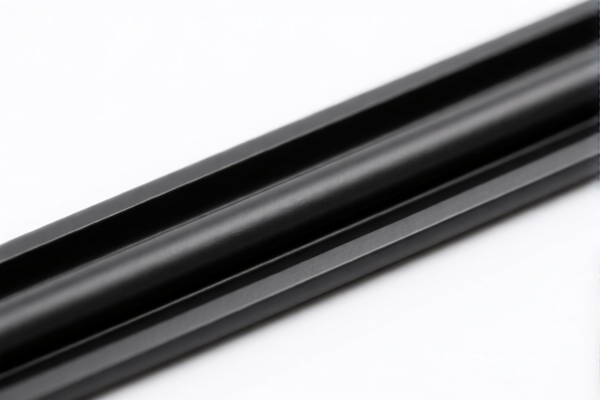
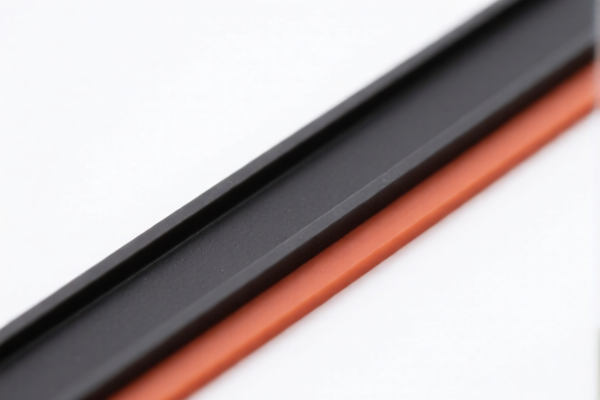
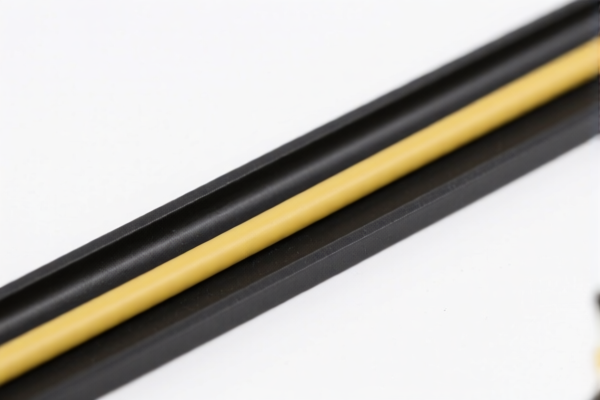
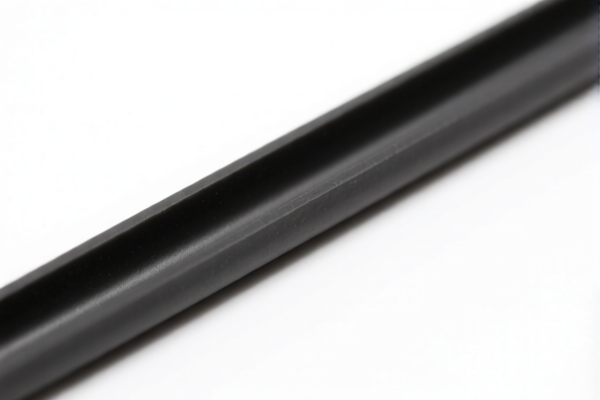
A Furnace Door Sealing Strip is a critical component used in industrial ovens, kilns, and heating systems to ensure thermal insulation and airtightness. Unlike standard household gaskets, these are often subjected to extreme temperatures and mechanical stress.
In international trade, the classification depends heavily on the material composition when not explicitly stated in the HS code description. If the material is unspecified, customs authorities may infer the material based on common industry standards: - Rubber-based: Common for moderate temperatures. - Plastic/Polymer-based: Common for lower-temperature insulation or specific chemical resistance. - Metal/Ceramic: (Not covered in the provided set, but worth noting for context).
⚠️ Key Classification Logic:
- If the material is Rubber → Tends toward Chapter 40 (Rubber and articles thereof).
- If the material is Plastic → Tends toward Chapter 39 (Plastics and articles thereof).
- Crucial Point: The function ("sealing") places it under "Gaskets, washers, and other seals," but the material dictates the specific HS Code.
📦 II. HS Code Classification Details (Based on Provided Data)
The following HS Codes are derived from the provided dataset, covering both Rubber and Plastic variations of sealing strips.
| HS Code | Product Description | Material Inference | Application Context |
|---|---|---|---|
4016.93.10.10 |
Sealing strips classified as rubber gaskets/seals | Rubber (Inferred) | High-temp industrial seals where rubber properties are dominant. |
4016.93.50.10 |
Sealing strips used for sealing, inferred as rubber | Rubber (Inferred) | General industrial sealing applications. |
3926.90.45.90 |
Gaskets, washers, and other seals made of plastic | Plastic (Inferred) | Lower-temp insulation, chemical-resistant seals, or plastic-based gaskets. |
3926.90.45.10 |
Sealing strips classified as plastic seals | Plastic/Rubber Hybrid (Inferred) | General plastic seal category; compatible with non-O-ring seals. |
🔍 Key Distinction:
- Chapter 40 (Codes ending in .10/.50): Applies to Rubber products. Rubber is often preferred for furnace seals due to its elasticity and heat resistance.
- Chapter 39 (Codes ending in .45): Applies to Plastic products. Used if the strip is made of PTFE, PVC, or other polymers.
- Note: The dataset infers material when not specified. You must verify the actual material of your product to choose the correct chapter.
💰 III. 2026 Tariff Rate Breakdown (Detailed Tax Analysis)
✅ Applicable Country: United States (US)
✅ Origin: China (CN)
✅ Effective Date: 2025 onwards (Includes Section 301 and IEEPA tariffs)
🎯 1. Rubber-Based Sealing Strips (4016.93.10.10 & 4016.93.50.10)
| Item | Detail |
|---|---|
| Base Duty Rate | 2.5% (Ad valorem) |
| Section 301 Tariff | +25.0% (Additional duty on Chinese goods) |
| Section 122 Tariff | +10.0% (Specific tariff clause for certain goods) |
| Total Effective Rate | 37.5% |
| Calculation Basis | CIF Value × 37.5% |
| De Minimis Exemption | ❌ Not Eligible (High duty rate prevents $800 de minimis exemption) |
| Legal Path | USITC:4016.93.xx.xx → Section 301: Footnote 9903.88.01 → Section 122: Specific Clause |
📌 Explanation:
- The 37.5% total rate is a heavy burden.
- Section 301 (25%) is the standard tariff on Chinese rubber goods.
- Section 122 (10%) is an additional layer imposed on specific categories.
- No de minimis: Values under $800 are not exempt because the total duty exceeds the threshold for exemption.
🎯 2. Plastic-Based Sealing Strips (3926.90.45.90 & 3926.90.45.10)
| Item | Detail |
|---|---|
| Base Duty Rate | 3.5% (Ad valorem) |
| Section 301 Tariff | +25.0% (Additional duty on Chinese goods) |
| Section 122 Tariff | +10.0% (Specific tariff clause for certain goods) |
| Total Effective Rate | 38.5% |
| Calculation Basis | CIF Value × 38.5% |
| De Minimis Exemption | ❌ Not Eligible |
| Legal Path | USITC:3926.90.xx.xx → Section 301: Footnote 9903.88.01 → Section 122: Specific Clause |
📌 Explanation:
- Plastic seals incur a slightly higher total rate (38.5%) than rubber seals (37.5%) due to a higher base duty (3.5% vs 2.5%).
- The Section 301 (25%) and Section 122 (10%) rates are identical across both material types in this dataset.
🛠️ IV. Customs Clearance Operational Advice (Practical Pitfall Guide)
✅ 1. Documentation Checklist (Mandatory)
| Document | Required? | Notes |
|---|---|---|
| ✅ Product Specifications | ✔️ | Must specify Material Composition (e.g., "Silicone Rubber," "PTFE," "Viton"). This is critical for HS Code selection. |
| ✅ HS Code Justification | ✔️ | Provide reasoning for Chapter 40 (Rubber) vs. Chapter 39 (Plastic). |
| ✅ Commercial Invoice | ✔️ | Clearly state "Furnace Door Sealing Strip" and unit price. |
| ✅ Packing List | ✔️ | Include dimensions and weight. |
| ✅ Material Safety Data Sheet (MSDS) | ✔️ | If the seal contains hazardous chemicals or specific polymers. |
| ✅ Third-Party Test Reports | ✔️ | Heat resistance tests, compression set tests (helps prove "industrial use" and material type). |
✅ 2. Declaration Strategy (Key Tips)
🔥 Golden Rule: "Specify Material, Declare Function, Avoid Ambiguity!"
| Scenario | Correct Declaration | Incorrect Declaration | Consequence |
|---|---|---|---|
| Rubber Seal | "Rubber Gasket for Furnace Door, HS 4016.93.10.10" | "Sealing Strip, Material Unknown" | Risk of misclassification → 38.5% rate + penalties |
| Plastic Seal | "Plastic Insulation Strip for Kiln, HS 3926.90.45.10" | "Industrial Gasket" | Customs may assign highest duty rate |
| Mixed Materials | Declare primary material; provide detailed BOM (Bill of Materials) | "Composite Seal" | High risk of audit and re-classification |
✅ 3. Special Considerations
| Situation | Advice |
|---|---|
| High-Temperature Resistance | If the seal is made of Ceramic or Metal, it does not fall under HS 4016 or 3926. Ensure your product is not misclassified if it's non-rubber/non-plastic. |
| OEM Custom Parts | Provide customer drawings showing material specifications. |
| Small Sample Shipments | Even for samples, the 37.5%-38.5% duty applies. Do not use de minimis unless the goods are genuinely exempt (which they are not). |
| Section 122 Tariff | Verify if your specific product type is subject to the 10% Section 122 tariff. The dataset includes it, so plan for it. |
🌍 V. Global Market Comparison (2026 Latest)
| Country/Region | Recommended HS Code | Total Duty Rate (China Origin) | Notes |
|---|---|---|---|
| 🇺🇸 USA | 4016.93.10.10 or 3926.90.45.10 |
37.5% - 38.5% | Includes Section 301 (25%) + Section 122 (10%) + Base Duty |
| 🇨🇳 China | 4016.93 or 3926.90 |
~5-10% | Import duty for domestic use |
| 🇪🇺 EU | 4016.93 or 3926.90 |
~3-5% | No Section 301 tariffs in EU |
| 🇦🇺 Australia | 4016.93 or 3926.90 |
~5% | GSP may apply for some origins |
| 🇯🇵 Japan | 4016.93 or 3926.90 |
~3-5% | FTAA may apply if origin is Japan |
📌 Conclusion:
- USA is the highest-cost market due to the combination of Section 301 and Section 122 tariffs.
- Duty avoidance strategy: Consider sourcing from non-China origins (e.g., Vietnam, Thailand) if possible, as Section 301 tariffs may not apply.
📌 VI. Common Mistakes & Pitfalls (Lessons Learned)
❌ Mistake 1: Declaring "Sealing Strip" without material specification.
👉 Result: Customs assigns the highest duty rate (38.5%) or initiates an audit.
✅ Fix: Always declare "Rubber Sealing Strip" or "Plastic Sealing Strip".
❌ Mistake 2: Assuming de minimis ($800 exemption) applies.
👉 Result: Package held at customs, duties + storage fees charged.
✅ Fix: Prepare for full duty payment. The rate (37.5%+) exceeds the exemption threshold.
❌ Mistake 3: Misidentifying Material.
👉 Result: If you declare "Plastic" but it's "Rubber," you may underpay duty, leading to penalties.
✅ Fix: Obtain material certificates from the manufacturer.
🎯 VII. Conclusion: Professional Declaration, Cost Optimization!
🎯 Remember the Rule:
🔹 "Material First, Function Second, Tariff Third!"
🔹 "Rubber: 37.5% | Plastic: 38.5% | No De Minimis!"
📌 Pro Tip:
If your furnace seals are ceramic-based or metal-based, they do not fall under the provided HS Codes. Ensure you have the correct HS Code for non-rubber/non-plastic materials to avoid overpaying or under-declaring.
📣 Immediate Action:
📞 Contact your customs broker with material specifications.
📝 Verify if Section 122 applies to your specific product sub-category.
🚀 Plan for 37.5-38.5% duty in your cost calculation.
✨ Accurate Classification Saves Money!
💼 Every percentage point counts in global trade.
Customer Reviews
About HS Code Classification
The Harmonized System (HS) is an internationally standardized nomenclature developed by the World Customs Organization (WCO) to classify traded products. Over 200 countries use the HS system as the basis for customs tariffs, trade statistics, and import/export regulations.
Each HS code follows a hierarchical structure:
- Chapter (2 digits) — Broad category of goods (e.g., Chapter 84: Machinery and Mechanical Appliances)
- Heading (4 digits) — More specific grouping within the chapter
- Subheading (6 digits) — Internationally standardized breakdown, used by all WCO member countries
- National subdivisions (8-10 digits) — Country-specific extensions for further classification, such as US HTSUS 10-digit codes
Correct HS code classification is essential for smooth customs clearance, accurate duty payment, and compliance with trade regulations. Misclassification can lead to customs delays, overpayment of duties, or penalties.
When importing from CN to US, the applicable tariff rates may include:
- Most-Favored-Nation (MFN) rate — The standard duty rate applied to WTO members
- General rate — Applied to countries without trade agreements
- Trade remedy duties — Additional tariffs such as Section 301 (anti-dumping), Section 232 (national security), or countervailing duties
The information provided on this page is for reference purposes only. For official classification, please consult with your local customs authority or a licensed customs broker.