Furniture Casters
CN → US| HS Code | Tariff Rate | Origin | Destination | Doc |
|---|---|---|---|---|
| 4016996050 | 37.5% | CN | US | Official Doc |
| 4016996010 | 37.5% | CN | US | Official Doc |
| 8302200000 | 90.7% | CN | US | Official Doc |
| 8302200000 | 90.7% | CN | US | Official Doc |
| 9401999070 | 0.0% | CN | US | Official Doc |
| 9401993580 | 35.0% | CN | US | Official Doc |
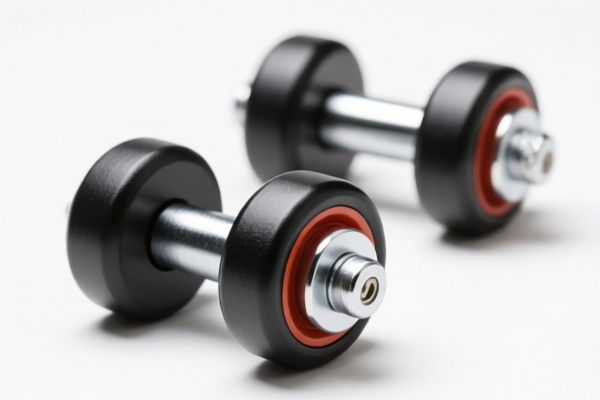
Product Images


AI Analysis
🚀 Furniture Casters (Furniture Wheels)
🌐 HS Code Reference & Customs Clearance Guide | 2026 Tariff Breakdown | Professional Strategy for Smooth Entry
📌 I. Product Definition & Classification: Do You Know What "Furniture Casters" Really Are?
Furniture Casters are wheels with mounting hardware designed for easy movement of furniture, cabinets, office chairs, industrial carts, and heavy equipment. They are typically made with: - Base metal (steel, aluminum, copper) for the mounting structure - Rubber or plastic for the wheel tread (for floor protection and noise reduction) - Bearings for smooth rotation
⚠️ Critical Classification Point:
- If the entire assembly (wheel + mounting base of base metal) → HS Code 8302.20.00.00
- If only the rubber/plastic wheel without base metal mounting → May fall under rubber/plastic categories (e.g., 4016.99)
- Do NOT misclassify as "seat parts" (9401) unless they are integrated components of a chair seat frame.
📦 II. HS Code Breakdown for Furniture Casters (2026 Tariff Reference)
| HS Code | Product Description | Applicable Scenario | Material Composition |
|---|---|---|---|
8302.20.00.00 |
Casters with mountings of base metal; Castors, and parts thereof | Furniture casters with steel/aluminum/copper base (most common) | ✅ Base metal + rubber/plastic wheel |
4016.99.60.50 |
Other articles of vulcanized rubber (other than hard rubber) | Rubber wheels only (no base metal mounting) | ❌ No base metal |
4016.99.60.10 |
Other mechanical articles for motor vehicles | Not applicable to furniture casters | ❌ N/A |
9401.99.35.80 |
Parts of seats (9401): Of rubber or plastics | Only if casters are integrated seat parts (e.g., chair base) | ⚠️ Context-dependent |
9401.99.90.70 |
Parts of seats: Other | Not applicable to standalone casters | ❌ N/A |
🔍 Key Warning:
- Most furniture casters (with metal base) MUST be classified under8302.20.00.00.
- Misclassification as rubber-only (4016) or seat parts (9401) leads to incorrect tax rates and customs penalties.
- Seat parts (9401) only apply if the casters are permanently attached to a chair seat frame (e.g., swivel chair base).
💰 III. 2026 Tariff Rate Breakdown (Including Surtax & Policy Surcharges)
✅ Applicable Country: United States (US)
✅ Country of Origin: China (CN)
✅ Effective Date: November 10, 2025 (including subsequent imports)
🎯 1. 8302.20.00.00 — Furniture Casters with Base Metal
| Item | Content |
|---|---|
| Base Tariff | 5.7% (ad valorem) |
| Section 301 Surtax | +25% (USITC Footnote 9903.88.01) |
| Steel/Aluminum/Copper Surtax | +50% (Special surtax for ferrous/non-ferrous metals) |
| Total Tariff | 80.7% |
| Tax Calculation | CIF Value × 80.7% |
| De Minimis Exemption | ❌ No (deny_de_minimis) |
| Legal Path | IEEPA:9903.01.25 → USITC:8302.20.00.00 → FOOTNOTE:9903.88.01 + Steel/Al/Cu surtax |
📌 Explanation:
- 5.7% is the standard MFN (Most Favored Nation) tariff for "base metal fittings".
- 25% is the Section 301 surcharge (USITC Footnote 9903.88.01).
- Additional 50% is imposed specifically on steel, aluminum, and copper products (US Tariff Code 9903.88.01).
- Total 80.7% is extremely high — requires strict supply chain planning!
🎯 2. 4016.99.60.50 — Rubber Casters (No Base Metal)
| Item | Content |
|---|---|
| Base Tariff | 2.5% |
| Section 301 Surtax | +25% |
| Total Tariff | 27.5% |
| Tax Calculation | CIF Value × 27.5% |
| De Minimis Exemption | ❌ No |
| Legal Path | IEEPA:9903.01.25 → USITC:4016.99.60.50 → FOOTNOTE:9903.88.01 |
📌 Note:
- Only applies if NO base metal mounting is present.
- Rare for furniture casters — most have metal bases.
🛠️ IV. Customs Clearance Practical Advice (Pitfall Avoidance Guide)
✅ 1. Documentation Checklist (Must-Have)
| Document | Required | Explanation |
|---|---|---|
| ✅ Product Specifications | ✔️ | Dimensions, wheel diameter, bearing type, load capacity |
| ✅ Material Composition Report | ✔️ | Explicitly state % of base metal (steel/aluminum/copper) |
| ✅ Product Photos | ✔️ | Clear images of the base metal mounting and wheel |
| ✅ Third-Party Test Report | ✔️ | ASTM, EN, ISO standards for load-bearing and durability |
| ✅ Commercial Invoice | ✔️ | Accurate description: "Furniture Casters with Base Metal" |
| ✅ Country of Origin Certificate | ✔️ | If non-China origin, apply for tariff exemptions |
| ✅ Packing List | ✔️ | Avoid splitting casters into "wheels + bases" — declare as complete assembly |
✅ 2. Declaration Strategy (Critical Tips)
🔥 Golden Rule:
"Metal Base = 8302.20.00.00 (80.7% Tax) | Rubber Only = 4016.99.60.50 (27.5% Tax)"
| Scenario | Correct Declaration | Wrong Practice |
|---|---|---|
| Casters with steel/aluminum base | 8302.20.00.00 |
Misdeclare as "rubber wheel" → 27.5% (but still face 80.7% penalty) |
| Castors without base metal | 4016.99.60.50 |
Misdeclare as "seat parts" → 25% (but risk 80.7% correction) |
| Seat-integrated casters (e.g., office chair base) | 9401.99.35.80 |
Misdeclare as "metal fittings" → 80.7% (incorrect) |
| Separate wheels + bases | Declare as complete unit | Split declaration → Each item taxed separately → Higher total tax |
✅ 3. Special Cases Handling
| Scenario | Recommendation |
|---|---|
| OEM Custom Casters | Provide client order + design drawings to confirm material composition |
| Castors with Plastic Base | Still 80.7% if base contains steel/aluminum/copper components |
| Castors for Medical Equipment | May qualify for "non-commercial" exemption, but需提供 proof |
| Castors for Military/Aviation | Apply for "special use" declaration — tax may be reduced |
🌍 V. Global Market Comparison (2026)
| Country/Region | Recommended HS Code | Tariff | Certification | Notes |
|---|---|---|---|---|
| 🇺🇸 USA | 8302.20.00.00 |
80.7% (China-made) | ASTM + UL | Highest tariff globally |
| 🇨🇳 China | 8302.20.00.00 |
5.7% | CCC + RoHS | No surtax |
| 🇪🇺 EU | 8302.20.00.00 |
0% (if CE) | CE + RoHS | No surtax |
| 🇦🇺 Australia | 8302.20.00.00 |
5% | RCM | No surtax |
| 🇯🇵 Japan | 8302.20.00.00 |
0% | PSE | No surtax |
📌 Conclusion:
- USA is the ONLY market with 80.7% tariff on metal-based furniture casters.
- China-made casters face extremely high entry costs — consider third-country manufacturing (e.g., Vietnam, Mexico) to avoid surtax.
📌 VI. Common Mistakes & Lessons Learned (Real Cases)
❌ Mistake 1: Declaring "Furniture Casters" as "Rubber Wheels" (4016) to save tax
👉 Result: Customs audit → 80.7% tax + 50% penalty → Total 130.7%!
❌ Mistake 2: Splitting casters into "wheels + bases" to avoid "base metal" classification
👉 Result: Both items taxed separately → Total tax > 100%
❌ Mistake 3: Using vague terms like "Chair Parts" without specifying material
👉 Result: Customs delays + reclassification → 80.7% tax + 60-day hold
❌ Mistake 4: Ignoring steel/aluminum/copper surtax
👉 Result: Unexpected 50% additional tax on top of 25% Section 301
✅ Correct Practice:
"Furniture Casters with Steel Base, Rubber Wheel, 4" Diameter, Load Capacity 100kg, Model XYZ, ASTM D1234 Compliant"
🎯 VII. Conclusion: Precision Classification = Cost Savings!
🎯 Remember:
🔹 "Metal Base = 80.7% | Rubber Only = 27.5% | Seat Parts = 25%"
🔹 "HS Code Decides Tax — A Wrong Code = 50% Extra Cost!"
📌 Pro Tip:
If your casters are originally from Vietnam, Mexico, Thailand, or Malaysia, you may qualify for IEEPA exemption — tax drops to 0%~5%.
Apply for Advance Ruling before shipment to avoid surprises!
📣 Take Action Now:
📞 Contact a licensed customs broker + provide product photos + file HS Code Pre-Ruling
🚀 Ensure your furniture casters pass customs smoothly, efficiently, and profitably!
✨ Professional Customs Clearance Starts with Accurate Classification!
💼 Every dollar of cost deserves precise calculation!
Customer Reviews
About HS Code Classification
The Harmonized System (HS) is an internationally standardized nomenclature developed by the World Customs Organization (WCO) to classify traded products. Over 200 countries use the HS system as the basis for customs tariffs, trade statistics, and import/export regulations.
Each HS code follows a hierarchical structure:
- Chapter (2 digits) — Broad category of goods (e.g., Chapter 84: Machinery and Mechanical Appliances)
- Heading (4 digits) — More specific grouping within the chapter
- Subheading (6 digits) — Internationally standardized breakdown, used by all WCO member countries
- National subdivisions (8-10 digits) — Country-specific extensions for further classification, such as US HTSUS 10-digit codes
Correct HS code classification is essential for smooth customs clearance, accurate duty payment, and compliance with trade regulations. Misclassification can lead to customs delays, overpayment of duties, or penalties.
When importing from CN to US, the applicable tariff rates may include:
- Most-Favored-Nation (MFN) rate — The standard duty rate applied to WTO members
- General rate — Applied to countries without trade agreements
- Trade remedy duties — Additional tariffs such as Section 301 (anti-dumping), Section 232 (national security), or countervailing duties
The information provided on this page is for reference purposes only. For official classification, please consult with your local customs authority or a licensed customs broker.