Furniture Edge Strip
CN → US| HS Code | Tariff Rate | Origin | Destination | Doc |
|---|---|---|---|---|
| 4421999400 | 35.0% | CN | US | Official Doc |
| 3926901000 | 20.9% | CN | US | Official Doc |
| 4421919400 | 35.0% | CN | US | Official Doc |
| 7326190080 | 87.9% | CN | US | Official Doc |
| 3926305000 | 22.8% | CN | US | Official Doc |
Product Images


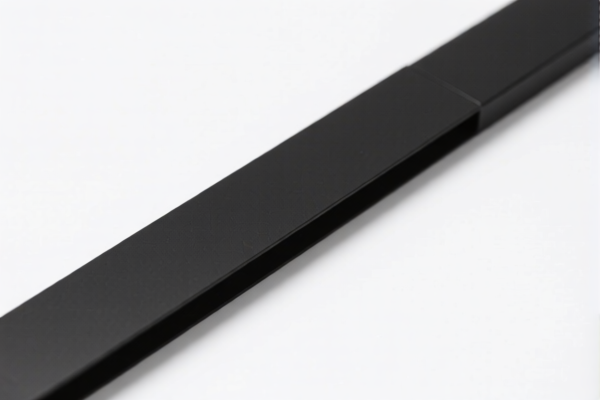
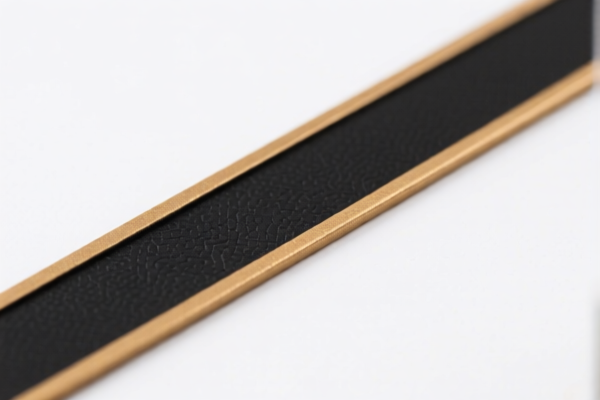
AI Analysis
🪵 Furniture Edge Strip (The "Silent Guardian" of Your Furniture)
🌐 HS Code Reference & Customs Clearance Guide | 2026 Latest Tariff Analysis | Professional Strategy for Wood, Steel & Plastic Variants
📌 One Product, Three Identities: Are You Declaring the Right Material?
Furniture Edge Strips are the thin strips applied to the exposed edges of board furniture (like particleboard or MDF) to protect the core material, improve aesthetics, and provide a smooth finish. However, in international trade, the material dictates the HS Code, and the material dictates the Tariff.
There is no single HS Code for "Edge Strip." You must identify the primary material to avoid severe customs penalties or delays.
📦 二、HS Code Classification Matrix (Based on Provided Data)
| HS Code | Material Inference | Product Description | Key Characteristics |
|---|---|---|---|
4421.99.94.00 |
🪵 WOOD | Other wood制品, specifically Edge Trims/Borders | Deduced as wood products based on furniture usage; fits the "edge trim" morphology. |
4421.91.94.00 |
🪵 WOOD | Glued Wood Veneers/Plies | Deduced as processed wooden parts, matching the morphological characteristics of edge-glued timber. |
7326.19.00.80 |
🔩 STEEL | Other articles of iron/steel | Deduced as Steel Furniture Edge Strips; falls under the "catch-all" category for other steel products. |
3926.30.50.00 |
🧱 PLASTIC | Other articles of plastics | Deduced as Plastic Furniture Connectors/Fittings; fits "plastic articles for furniture use." |
🔍 Critical Distinction:
- Wood vs. Wood-Processed:4421.99.94.00is for general wood edge trims, while4421.91.94.00is specifically for glued/processed wood layers (veneer-like structures). If your edge strip is a single solid wood piece, use94; if it is laminated/glued wood, use91.
- Steel vs. Plastic: Steel (73) is heavy and magnetic; Plastic (39) is lightweight and non-magnetic. Do not misdeclare steel as plastic to save duty—it triggers fraud alerts.
💰 三、2026 Tariff Rate Breakdown (Detailed Tax Clauses)
✅ Context: Based on the provided data, these rates reflect US Import Duties on Chinese Goods (assuming origin CN due to "122 Clause" and specific surtaxes).
✅ 生效时间: Current rates apply as per the data snapshot.
🎯 1. 4421.99.94.00 & 4421.91.94.00 (Wood Products)
| Item | Content |
|---|---|
| Base Tariff | 0.0% (MFN Rate) |
| Section 301 Surcharge | +25.0% (Additional Tariff) |
| Section 122 Surcharge | +10.0% (Retaliatory/Specific Trade Measure) |
| Total Tax Rate | 35.0% |
| Tax Calculation | CIF Value × 35% |
| De Minimis Exemption | ❌ Not Eligible |
| Legal Basis | Standard HTSUS + USITC Footnotes for Section 301 & Section 122 |
📌 Explanation:
- Wood products often enjoy low base tariffs to encourage raw material import, but Section 301 (25%) and Section 122 (10%) negate this advantage.
- Total 35% is a flat, high burden. There is no sliding scale.
🎯 2. 7326.19.00.80 (Steel Edge Strips)
| Item | Content |
|---|---|
| Base Tariff | 2.9% |
| Section 301 Surcharge | +25.0% (Additional Tariff) |
| Section 122 Surcharge | +10.0% |
| Steel/Aluminum/Copper Surcharge | +50.0% (Specific to Steel Products under Section 232/Related Acts) |
| Total Tax Rate | 87.9% |
| Tax Calculation | CIF Value × 87.9% |
| De Minimis Exemption | ❌ Not Eligible |
| Legal Basis | HTSUS 7326 + Section 232 (Steel) + Section 301 + Section 122 |
📌 Explanation:
- This is the highest risk category. Steel is subject to Section 232 (National Security) tariffs, which add a massive +50%.
- Combined with Section 301 (25%) and Section 122 (10%), the total duty is 87.9%.
- 💡 Cost Alert: A $10,000 shipment incurs $8,790 in duties. This often makes steel edge strips prohibitively expensive to import from China unless the value-added is extremely high.
🎯 3. 3926.30.50.00 (Plastic Furniture Fittings/Edge Strips)
| Item | Content |
|---|---|
| Base Tariff | 5.3% |
| Section 301 Surcharge | +7.5% (Lower tier for some plastic/chemical goods) |
| Section 122 Surcharge | +10.0% |
| Total Tax Rate | 22.8% |
| Tax Calculation | CIF Value × 22.8% |
| De Minimis Exemption | ❌ Not Eligible |
| Legal Basis | HTSUS 3926 + Section 301 (Partial) + Section 122 |
📌 Explanation:
- Plastic goods generally face lower Section 301 surcharges (7.5%) compared to steel or machinery.
- Total 22.8% is the most cost-effective option among the four.
- 💡 Strategy: If design allows, consider PP/ABS plastic edge bands instead of steel to save 65.1% in duties.
🛠️ 四、Customs Clearance Practical Advice (Pitfall Avoidance)
✅ 1. Material Declaration is Mandatory
| Material | Required Documentation | Key Labeling Tip |
|---|---|---|
| Wood | Fumigation Certificate (ISPM 15) if raw wood; Non-wood declaration if processed | Explicitly state: "100% Wood Edge Strip" or "Glued Wood Veneer Edge Trim" |
| Steel | Mill Test Certificate (MTC); Country of Origin Cert | Explicitly state: "Stainless Steel/Carbon Steel Edge Strip" |
| Plastic | SGS/Third-party Material Safety Report (RoHS/REACH) | Explicitly state: "PVC/ABS Plastic Edge Banding for Furniture" |
⚠️ Warning:
- Never declare "Furniture Accessory" generically. Customs will inspect the material. If they suspect steel but you declared plastic, you will face penalties + back-tariffs.
- Wood Products: Must prove they are processed (not raw logs) to qualify for4421. If raw, they may be blocked for pest control.
✅ 2. Strategic Selection (Cost Optimization)
| Scenario | Recommended Material | HS Code | Total Duty | Why? |
|---|---|---|---|---|
| High-End Luxury Furniture | Steel (Stainless/Matte Black) | 7326.19.00.80 |
87.9% | Aesthetic value outweighs duty cost. |
| Mass Market/Office Furniture | Plastic (PVC/ABS) | 3926.30.50.00 |
22.8% | Best ROI. Low duty, durable, easy to install. |
| Eco-Friendly/Traditional | Wood (Solid/Laminated) | 4421.99.94.00 |
35.0% | Mid-range cost. Ensure proper fumigation. |
💡 Pro Tip:
For high-volume imports, plastic edge strips (3926.30.50.00) offer the best margin protection due to the lowest total tax rate (22.8% vs 87.9% for steel).
✅ 3. Special Case Handling
| Situation | Advice |
|---|---|
| Mixed Material Packaging | If plastic edge strips are packed with steel clips, declare separately. Do not bundle into one line item. |
| Origin Fraud Risk | Customs verifies steel origin via MTC (Mill Test Certificate). Ensure the steel coil/purchase invoice matches the HS Code declaration. |
| Sample Imports | Even samples are subject to the 35%-87.9% duty if over De Minimis value limits. Do not assume small quantities are tax-free. |
🌍 五、Global Market Comparison (2026)
| Market | Recommended HS | Tariff Estimate | Note |
|---|---|---|---|
| 🇺🇸 USA | See above | 22.8% - 87.9% | Heavy Section 301/122/232 impact on Chinese goods. |
| 🇪🇺 EU | Varies by Mat. | 0% - 6% | Generally no retaliatory tariffs; VAT applies separately. |
| 🇨🇳 China (Import) | Varies by Mat. | 5% - 10% | Lower barriers; supports domestic manufacturing. |
| 🇬🇧 UK | Varies by Mat. | 0% - 6% | Post-Brexit tariffs similar to EU baseline. |
📌 Conclusion:
- The US market is the most expensive for Chinese-made edge strips due to layered tariffs.
- Plastic (3926.30.50.00) is the only viable option for price-sensitive US imports from China.
- For Steel, consider re-exporting from third countries (e.g., Vietnam, Mexico) if origin rules allow, to mitigate the 87.9% hit (though US rules of origin are strict).
📌 六、Common Mistakes & Pitfalls
❌ Mistake 1: Declaring Steel Edge Strips as "Plastic" to save duty.
👉 Result: Customs lab test confirms metal. Fine + Back Duties + Audit.
❌ Mistake 2: Mixing "Wood" and "Wood-Processed" in one HS Code.
👉 Result: Customs rejects 4421.91 (Glued) if it’s solid wood, or vice versa. Delay in Clearance.
❌ Mistake 3: Ignoring Section 122 (10%).
👉 Result: Under-budgeting. Always include the 10% Section 122 in your landed cost calculation.
✅ Correct Approach:
"Material-First Declaration"
- Plastic: "PVC Furniture Edge Band, 22mm Width, Self-Adhesive" →3926.30.50.00
- Steel: "Stainless Steel Edge Protector, Brushed Finish" →7326.19.00.80
- Wood: "Solid Oak Edge Trim, Sanded" →4421.99.94.00
🎯 七、Conclusion: Strategic Sourcing for Margin Protection
🎯 Remember the Golden Rule:
🔹 "Plastic is Cheap (22.8%), Steel is Costly (87.9%), Wood is Middle (35%)."
🔹 "Material is King. Declare accurately. Don't gamble with Customs."
📌 Action Item:
- Identify Material of your specific edge strip.
- Select the corresponding HS Code from the matrix above.
- Prepare Material Certificates (MTC for steel, Fumigation for wood, SGS for plastic).
- Calculate Landed Cost including the full tax rate (Base + 301 + 122 + 232).
✨ Professional Clearance Starts with Accurate Classification!
💼 Your Profit Margin Depends on the Right HS Code!
Customer Reviews
About HS Code Classification
The Harmonized System (HS) is an internationally standardized nomenclature developed by the World Customs Organization (WCO) to classify traded products. Over 200 countries use the HS system as the basis for customs tariffs, trade statistics, and import/export regulations.
Each HS code follows a hierarchical structure:
- Chapter (2 digits) — Broad category of goods (e.g., Chapter 84: Machinery and Mechanical Appliances)
- Heading (4 digits) — More specific grouping within the chapter
- Subheading (6 digits) — Internationally standardized breakdown, used by all WCO member countries
- National subdivisions (8-10 digits) — Country-specific extensions for further classification, such as US HTSUS 10-digit codes
Correct HS code classification is essential for smooth customs clearance, accurate duty payment, and compliance with trade regulations. Misclassification can lead to customs delays, overpayment of duties, or penalties.
When importing from CN to US, the applicable tariff rates may include:
- Most-Favored-Nation (MFN) rate — The standard duty rate applied to WTO members
- General rate — Applied to countries without trade agreements
- Trade remedy duties — Additional tariffs such as Section 301 (anti-dumping), Section 232 (national security), or countervailing duties
The information provided on this page is for reference purposes only. For official classification, please consult with your local customs authority or a licensed customs broker.