Furniture Grade Bovine Full Grain Leather
CN → US| HS Code | Tariff Rate | Origin | Destination | Doc |
|---|---|---|---|---|
| 4107115000 | 12.8% | CN | US | Official Doc |
| 4107915000 | 12.8% | CN | US | Official Doc |
Product Images
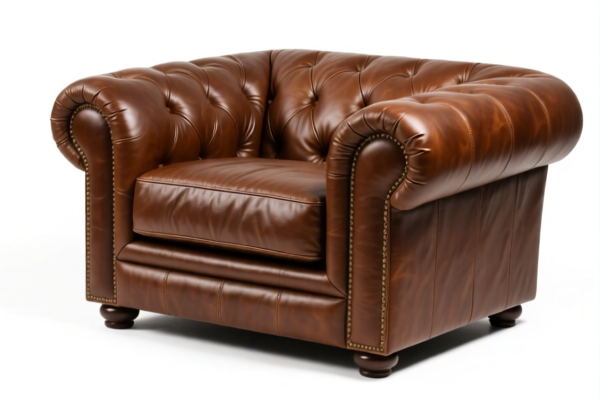
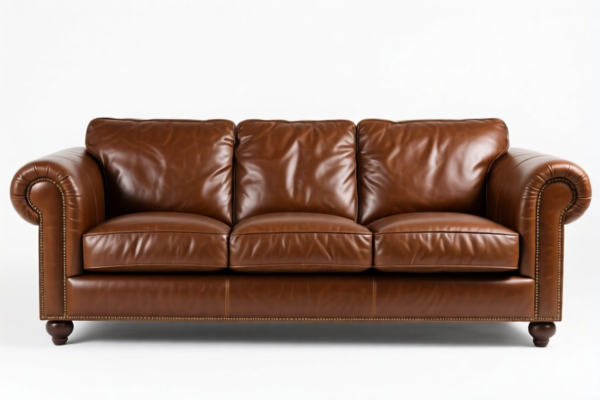
AI Analysis
🐂 Furniture Grade Bovine Full Grain Leather
🌐 HS Code Reference & Clearance Guide | 2026 Latest Tariff Analysis | Professional Customs Strategy
📌 I. Product Definition & Classification: What Exactly Is "Furniture Grade Bovine Full Grain Leather"?
Furniture-grade bovine full-grain leather represents the highest tier of natural leather, prized for its durability, breathability, and authentic texture. In international trade, it is categorized under Chapter 41 (Leather, furskins and other articles of leather) because it has undergone tanning or crust preparation but has not been further treated into specific finished goods like garments or footwear.
Key Characteristics: 1. Source: Bovine (cattle/buffalo) or equine animals. 2. Surface: Without hair on (bared). 3. Structure: Full Grain, Unsplit. This means the leather retains the original grain layer (the strongest part of the hide) and has not been separated into multiple layers (splitting). 4. End-Use: Specifically identified as Upholstery Leather, indicating its intended use for furniture (sofas, chairs, car seats) rather than apparel or accessories.
⚠️ Critical Distinction:
- If the leather has hair on → It falls under Chapter 41 but different subheadings (e.g., 4101/4102 for raw hides or 4114 for parchment-dressed).
- If the leather is split (layered) → It falls under different subheadings (e.g., 4107.19/4107.99 for split leather).
- If it is finished into shoes/gloves → It falls under Chapter 64 or 42 (Finished Articles).
- This product is Bared, Full Grain, Unsplit, and for Upholstery → Directly maps to Heading 4107.
📦 II. HS Code Classification Details (2026 Latest Tariff Authority Match)
Based on the provided data, there are two specific HS Codes depending on whether the shipment consists of whole hides/skins or other forms (like sides).
| HS Code | Product Description | Key Attributes | Scenario |
|---|---|---|---|
4107.11.50.00 |
Leather further prepared after tanning or crusting... Whole hides and skins: Full grains, unsplit: Other: Other: Upholstery leather | - Whole Hides/Skins: Typically larger, complete hides. - Full Grain: Top layer intact. - Unsplit: Not layered. - Bared: No hair. - Upholstery: For furniture. |
Large-scale furniture manufacturing using entire hides. |
4107.91.50.00 |
Leather further prepared after tanning or crusting... Other, including sides: Full grains, unsplit: Other: Other: Upholstery leather | - Sides/Other: Hides split into sides (left/right) or smaller portions. - Full Grain: Top layer intact. - Unsplit: Not layered. - Bared: No hair. - Upholstery: For furniture. |
Common in upholstery where hides are cut into sides to optimize usage. |
🔍 Important Note:
Both codes explicitly state "without hair on" and "full grains, unsplit". This excludes suede (split leather) and raw hides (with hair). The designation "Upholstery leather" is crucial for accurate classification in many jurisdictions.
💰 III. 2026 Latest Tariff Rate Breakdown
✅ Applicable Countries: United States (US)
✅ Origin: China (CN) (Note: If origin differs, rates may vary, but based on the provided data, these are the rates for the given context)
✅ Effective Time: Current (as per provided data)
🎯 1. 4107.11.50.00 — Upholstery Leather (Whole Hides/Skins)
| Item | Content |
|---|---|
| Basic Tariff Rate | 0.0% |
| Additional Tariff Rate | 0.0% |
| Total Tariff Rate | 0.0% |
| Tax Detail | Base Tariff: 0.0%, Additional Tariff: 0.0% |
| Calculation Method | CIF Value × 0.0% = $0 Duty |
| De Minimis Eligibility | N/A (Whole hides are usually high-value commercial shipments) |
📌 Explanation:
- Despite the high quality of "full-grain upholstery leather," the current tariff structure provides a 0% duty rate for this specific classification.
- This is a significant advantage for furniture manufacturers importing premium leather.
🎯 2. 4107.91.50.00 — Upholstery Leather (Sides/Other Forms)
| Item | Content |
|---|---|
| Basic Tariff Rate | 0.0% |
| Additional Tariff Rate | 0.0% |
| Total Tariff Rate | 0.0% |
| Tax Detail | Base Tariff: 0.0%, Additional Tariff: 0.0% |
| Calculation Method | CIF Value × 0.0% = $0 Duty |
| De Minimis Eligibility | N/A |
📌 Explanation:
- Identical to the whole hides code in terms of taxation.
- The 0% rate applies regardless of whether the leather is shipped as whole hides or sides, as long as it remains full-grain, unsplit, and for upholstery.
🛠️ IV. Customs Clearance Practical Advice (Battle-Tested Pitfall Guide)
✅ 1. Document Checklist (Non-Negotiable)
| Document | Required? | Explanation |
|---|---|---|
| ✅ Commercial Invoice | ✔️ | Must clearly state: "Full Grain Bovine Leather, Bared, Unsplit, For Upholstery." Avoid vague terms like "Genuine Leather." |
| ✅ Packing List | ✔️ | Detail number of hides/sides, weight, and dimensions. |
| ✅ Tanning Certificate | ✔️ | Proof of tanning process (chrome-free if eco-certified, or standard chrome tanning). |
| ✅ Photos of Goods | ✔️ | Show the grain surface (natural pores, wrinkles) to prove it is Full Grain and not corrected/split. |
| ✅ Declaration of Use | ✔️ | Explicitly state "Upholstery/Furniture Use" to justify the "Upholstery Leather" subheading. |
| ✅ HS Code Pre-Ruling | ✔️ | Recommended to confirm 4107.11.50.00 vs 4107.91.50.00 based on shipment structure. |
✅ 2. Classification Tips (Key Mantras)
🔥 "Full Grain, No Hair, Furniture Use = 0% Duty!"
| Scenario | Correct HS Code | Risk if Incorrect |
|---|---|---|
| Whole Hide, Full Grain, Bared | 4107.11.50.00 |
0.0% |
| Side Cut, Full Grain, Bared | 4107.91.50.00 |
0.0% |
| Split Leather (Suede-like) | ❌ Wrong Chapter | Higher duty, potential penalties |
| Raw Hide (With Hair) | ❌ Wrong Subheading | Different code, potential delays |
| Finished Sofa | ❌ Chapter 94 | Different code, 0% (but misdeclaration is risky) |
📌 Critical Warning:
- Do NOT classify as "Split Leather" if it is full-grain. Split leather has a lower market value and different tariff treatment.
- Do NOT classify as "Finished Leather Goods" (e.g., jackets) unless it is already sewn into a product. Unfinished leather goes to Chapter 41.
✅ 3. Special Cases
| Case | Handling Advice |
|---|---|
| Mixed Shipments (Full Grain + Split) | Must Separate! Full grain goes to 4107.11/91.50. Split leather goes to different codes (e.g., 4107.19/99). Misclassification leads to audits. |
| Leather with Embossing | If the grain is altered (embossed), still qualifies as full-grain if the original layer is intact. Provide photos. |
| Leather for Car Seats | If used for automotive upholstery, still classifies as "Upholstery Leather" under 4107.11/91.50 if not finished into parts. |
| Leather for Apparel | If intended for jackets/bags, it may still be 4107 but must be clearly declared. The "Upholstery" tag in the code is specific, so verify if your shipment is truly for furniture. |
🌍 V. Global Market Comparison (2026)
| Country/Region | Recommended HS Code | Tariff Rate | Notes |
|---|---|---|---|
| 🇺🇸 USA | 4107.11.50.00 / 4107.91.50.00 |
0.0% | Zero duty for this specific upholstery leather classification. |
| 🇨🇳 China | 4107.11.50.00 / 4107.91.50.00 |
Varies | Check latest Chinese tariff schedule for import duties. |
| 🇪🇺 EU | 4107 11 / 4107 91 |
Varies (often 0-4%) | May require REACH compliance for chemical treatment. |
| 🇬🇧 UK | 4107 11 / 4107 91 |
Varies | Post-Brexit tariff rules apply. |
| 🇨🇦 Canada | 4107.11.50.00 / 4107.91.50.00 |
0% (CUSMA) | Often zero duty for qualifying leather goods. |
📌 Conclusion:
- The USA offers a 0% tariff for this specific high-quality leather, making it highly competitive.
- Ensure the description matches the code exactly to maintain this benefit.
📌 VI. Common Mistakes & Pitfall Guide (Blood Lessons)
❌ Mistake 1: Classifying as "Split Leather"
👉 Consequence: Higher duty rates, potential penalties for misdeclaration.
Fix: Inspect the grain layer. If the natural top layer is present, it is Full Grain.
❌ Mistake 2: Using vague terms like "Genuine Leather"
👉 Consequence: Customs may ask for clarification, causing delays.
Fix: Use precise terms: "Full Grain Bovine Leather, Bared, Unsplit, For Upholstery."
❌ Mistake 3: Ignoring the "Without Hair On" requirement
👉 Consequence: If hair is present, it falls under different codes (e.g., 4101/4102).
Fix: Ensure the leather is properly bared and tanned.
✅ Correct Approach:
"Bovine Full Grain Leather, Bared, Unsplit, Tanned, For Upholstery Furniture, Grade A, CIF $X"
🎯 VII. Conclusion: Professional Declaration, Cost Savings, Efficiency!
🎯 Remember the Mantra:
🔹 "Full Grain, No Hair, Furniture Use = 0% Duty!"
🔹 "HS Code determines your cost. 0% is better than nothing. Declare accurately!"
📌 Tips:
- If your leather is treated with eco-friendly processes, mention it in the invoice to appeal to sustainable buyers, but keep the HS Code the same.
- Pre-Ruling: Consider applying for a binding tariff ruling if you are shipping large volumes regularly, to lock in the 0% rate.
📣 Immediate Action:
📞 Contact your customs broker + Provide photos of the leather grain + Confirm "Upholstery" use
🚀 Let your leather clear smoothly, save costs, and boost profits!
✨ Professional clearance starts with accurate classification!
💼 Every dollar saved in duties is pure profit!
Customer Reviews
About HS Code Classification
The Harmonized System (HS) is an internationally standardized nomenclature developed by the World Customs Organization (WCO) to classify traded products. Over 200 countries use the HS system as the basis for customs tariffs, trade statistics, and import/export regulations.
Each HS code follows a hierarchical structure:
- Chapter (2 digits) — Broad category of goods (e.g., Chapter 84: Machinery and Mechanical Appliances)
- Heading (4 digits) — More specific grouping within the chapter
- Subheading (6 digits) — Internationally standardized breakdown, used by all WCO member countries
- National subdivisions (8-10 digits) — Country-specific extensions for further classification, such as US HTSUS 10-digit codes
Correct HS code classification is essential for smooth customs clearance, accurate duty payment, and compliance with trade regulations. Misclassification can lead to customs delays, overpayment of duties, or penalties.
When importing from CN to US, the applicable tariff rates may include:
- Most-Favored-Nation (MFN) rate — The standard duty rate applied to WTO members
- General rate — Applied to countries without trade agreements
- Trade remedy duties — Additional tariffs such as Section 301 (anti-dumping), Section 232 (national security), or countervailing duties
The information provided on this page is for reference purposes only. For official classification, please consult with your local customs authority or a licensed customs broker.