Furniture Moving Slider
CN → US| HS Code | Tariff Rate | Origin | Destination | Doc |
|---|---|---|---|---|
| 3926305000 | 22.8% | CN | US | Official Doc |
| 3926909989 | 22.8% | CN | US | Official Doc |
| 8302423065 | 71.4% | CN | US | Official Doc |
| 4421999880 | 38.3% | CN | US | Official Doc |
| 4421919880 | 38.3% | CN | US | Official Doc |
Product Images
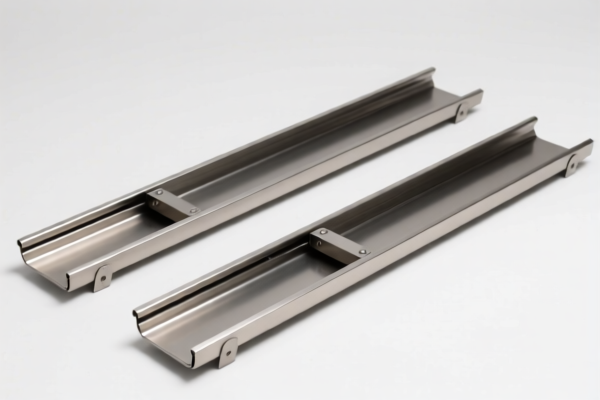
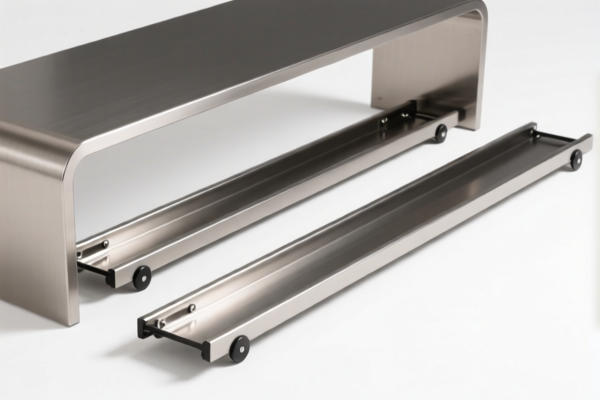
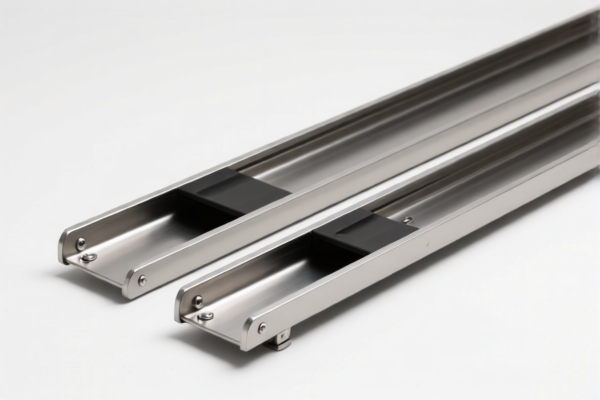
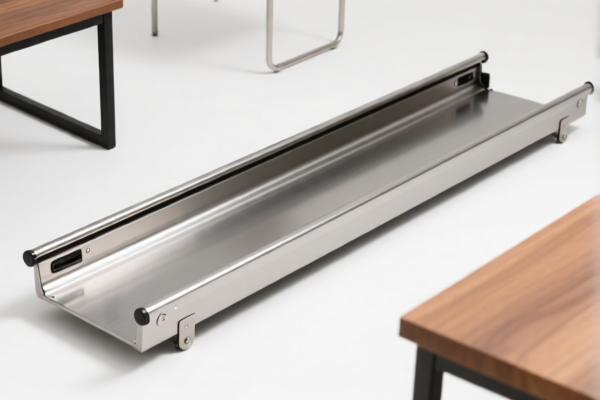
AI Analysis
🏠 Furniture Moving Slider (Pads/Shims)
🌐 HS Code Reference & Customs Clearance Guide | 2026 Latest Tariff Analysis | Professional Logistics Strategy
📌 I. Product Definition & Classification: What Exactly is a "Furniture Moving Slider"?
Furniture Moving Sliders are low-friction devices used to facilitate the sliding of heavy furniture across floors during relocation or reconfiguration. In international trade, classification depends entirely on the material composition and the specific form of the slider. They are generally categorized into three main types:
1. Plastic Sliders: Often circular, square, or triangular pads with a soft underside (felt/foam) or pure plastic.
2. Metal Sliders: Heavy-duty glides, often made of steel, aluminum, or zinc alloys, used for heavy cabinets or industrial furniture.
3. Wooden Sliders: Solid wood blocks or wedges, traditionally used for leveling or moving heavy wooden furniture.
⚠️ Critical Distinction Point:
- If the product is plastic, it falls under Chapter 39.
- If the product is metal, it falls under Chapter 83.
- If the product is wood, it falls under Chapter 44.
- Misclassification is high risk: A plastic part declared as metal will face massive duty spikes; a metal part declared as plastic will face inspection delays.
📦 II. HS Code Classification Details (2026 Latest Tariff Authority对照)
Based on the provided data, here are the five potential HS Codes depending on your product's material:
| HS Code | Product Description | Material Inference | Application Scenario |
|---|---|---|---|
3926.30.50.00 |
Furniture fittings | Plastic (Inferred) | Plastic sliders, caps, or connectors for furniture |
3926.90.99.89 |
Other articles of plastics | Plastic (General) | Sliders as parts/components; "Other" plastic articles |
8302.42.30.65 |
Base metal mountings & fittings | Metal (Steel/Aluminum/Zinc) | Metal glides, slides, or heavy-duty metal sliders |
4421.99.98.80 |
Other wood articles | Wood (Inferred) | Wooden sliders, wedges, or配套 wood parts |
4421.91.98.80 |
Other wooden articles | Wood (General) | Wooden furniture accessories; "Other" wood items |
🔍 Key Reminder:
- Plastic items are generally classified under 3926 (Fittings) or 3926 (Other).
- Metal items fall under 8302 (Base Metal Fittings).
- Wooden items fall under 4421 (Other Wood Articles).
- Do not mix materials: If your slider has a plastic top and a metal bottom, the essential character determines the code (often metal or plastic depending on which part is dominant).
💰 III. 2026 Latest Tariff Rate Breakdown (Including Surcharges & Policy Add-ons)
✅ Applicable Country: United States (US)
✅ Origin: China (CN) (Note: Rates assume Chinese origin based on the "122" and "Section 301" references in the data)
✅ Effective Time: 2025/2026 Import Cycle
🎯 1. Plastic Sliders (3926.30.50.00 & 3926.90.99.89)
| Item | Content |
|---|---|
| Base Tariff | 5.3% |
| Section 301 Surcharge | 7.5% |
| "122" Clause Tariff | 10% |
| Total Effective Rate | 22.8% |
| Tax Calculation | CIF Value × 22.8% |
| De Minimis Eligibility | ❌ No (Deny de minimis for these categories) |
| Legal Basis Path | Base Tariff + Section 301 + 122 Clause |
📌 Explanation:
- 5.3% is the standard MFN (Most Favored Nation) base rate.
- 7.5% is the Section 301 additional duty for Chinese goods.
- 10% is the specific "122 Clause" tariff (likely referring to specific retaliatory or strategic tariffs).
- Total 22.8% is significantly lower than metal or wood options but still substantial.
🎯 2. Metal Sliders (8302.42.30.65)
| Item | Content |
|---|---|
| Base Tariff | 3.9% |
| Section 301 Surcharge | 7.5% |
| "122" Clause Tariff | 10% |
| Steel/Aluminum/Copper Surcharge | 50% |
| Total Effective Rate | 71.4% |
| Tax Calculation | CIF Value × 71.4% |
| De Minimis Eligibility | ❌ No |
| Legal Basis Path | Base Tariff + Section 301 + 122 Clause + Steel/Alloy Surcharge |
📌 Explanation:
- This is the highest cost category.
- The 50% additional duty applies specifically to steel, aluminum, copper, and zinc products under specific trade acts.
- Even though the base rate is low (3.9%), the metal-specific surcharge makes this option prohibitively expensive for most consumers.
🎯 3. Wooden Sliders (4421.99.98.80 & 4421.91.98.80)
| Item | Content |
|---|---|
| Base Tariff | 3.3% |
| Section 301 Surcharge | 25.0% |
| "122" Clause Tariff | 10% |
| Total Effective Rate | 38.3% |
| Tax Calculation | CIF Value × 38.3% |
| De Minimis Eligibility | ❌ No |
| Legal Basis Path | Base Tariff + Section 301 + 122 Clause |
📌 Explanation:
- The 25.0% Section 301 surcharge for wood products is higher than the 7.5% for plastics.
- Total rate is 38.3%, which is a middle ground between plastic and metal.
- Note: Some wooden articles may have different Section 301 rates depending on specific HTS subheadings, but per the data, it is 25%.
🛠️ IV. Customs Clearance Practical Advice (Real-World Pitfall Avoidance)
✅ 1. Preparation Checklist (Mandatory Documents)
| Document | Required? | Description |
|---|---|---|
| ✅ Product Specification Sheet | ✔️ | Must clearly state Material (e.g., "Polypropylene," "Steel," "Oak Wood"), dimensions, and weight. |
| ✅ Material Composition Statement | ✔️ | Crucial for multi-material sliders. E.g., "Plastic top with foam underside." |
| ✅ Product Photos (Clear) | ✔️ | Show the cross-section if multi-layered. Highlight the contact surface. |
| ✅ Commercial Invoice | ✔️ | Describe as "Plastic Furniture Moving Pads" (NOT just "Furniture Parts"). |
| ✅ Packing List | ✔️ | Include net/gross weight per unit. |
| ✅ HS Code Pre-Ruling | ✔️ | Highly Recommended to avoid misclassification penalties. |
✅ 2. Declaration Tips (Key Mantra)
🔥 "Material Dictates Code, Description Avoids Audit!"
| Scenario | Correct Declaration | Wrong Practice |
|---|---|---|
| Plastic Sliders | "Plastic Furniture Moving Slides, Model XYZ" | "Furniture Accessories" (Too vague → 71.4% risk if deemed metal) |
| Metal Glides | "Steel Furniture Glides, 1 inch" | "Plastic Parts" (False declaration → Severe penalty) |
| Wooden Blocks | "Solid Wood Furniture Sliders" | "Wooden Packaging" (Wrong chapter → Delays) |
| Mixed Materials | Declare based on Essential Character | Split declaration without justification → Confiscation |
✅ 3. Special Case Handling
| Scenario | Handling Advice |
|---|---|
| Plastic + Foam/Felt | Generally classified as Plastic (3926) if plastic is the structural component. |
| Plastic + Metal Pin | If metal pin is minimal, still Plastic (3926). If metal is dominant, Metal (8302). |
| OEM Custom Shapes | Provide CAD drawings to prove they are "fittings" and not "general plastic articles." |
| Sets (Slider + Tools) | Declare the dominant item. If sliders are the main value, declare as sliders. |
🌍 V. Global Market Comparison (2026 Latest)
| Country/Region | Recommended HS Code | Tariff (China Origin) | Certification | Notes |
|---|---|---|---|---|
| 🇺🇸 USA | 3926.30.50.00 (Plastic) |
22.8% | None | Highest risk for Metal (71.4%) |
| 🇪🇺 EU | 3926.90 (Plastic) |
~5-7% | CE (if applicable) | No Section 301/122 |
| 🇨🇦 Canada | 3926.30 |
~5% | None | Similar to US but no 122 clause |
| 🇦🇺 Australia | 3926.30 |
5% | None | Standard MFN rates |
| 🇯🇵 Japan | 3926.30 |
3-5% | None | Low tariffs |
📌 Conclusion:
- USA is the most challenging market due to Section 301 and "122" clauses.
- Plastic sliders (22.8%) are the most cost-effective for the US market.
- Metal sliders (71.4%) are nearly impossible to import profitably from China to the US.
- Wooden sliders (38.3%) are a viable alternative if plastic supply is constrained.
📌 VI. Common Mistakes & Pitfall Guide (Lessons Learned)
❌ Mistake 1: Declaring "Furniture Sliders" without specifying material.
👉 Consequence: Customs may assign the worst-case scenario (Metal/Steel) → 71.4% duty + fines.
❌ Mistake 2: Using "Furniture Parts" as the description.
👉 Consequence: Audits for "Essential Character." If proven to be plastic, you may still face delays.
❌ Mistake 3: Ignoring the "122 Clause."
👉 Consequence: Underpaying duties by 10%. This leads to post-entry audits and penalties.
❌ Mistake 4: Mixing Plastic and Metal in one shipment without clear segregation.
👉 Consequence: One wrong HS Code can trigger a compliance review for the entire shipment.
✅ Correct Approach:
"Plastic Furniture Moving Slides, Round, 2-inch Diameter, Polypropylene Material, Non-Adhesive"
HS Code: 3926.30.50.00 | Rate: 22.8%
🎯 VII. Conclusion: Precision Classification Saves Profit!
🎯 Remember the Mantra:
🔹 "Plastic: 22.8%, Wood: 38.3%, Metal: 71.4%!"
🔹 "Declare Material, Not Just Function!"
🔹 "122 Clause Adds 10%, Don't Miss It!"
📌 Pro Tip:
If you are importing Plastic Sliders, ensure your supplier provides a Material Safety Data Sheet (MSDS) or Certification of Composition to prove it is indeed plastic (PP/PE/PVC) and not a composite with hidden metal components.
📣 Immediate Action:
📞 Consult a Customs Broker for Pre-Ruling on your specific design.
🚀 Optimize your supply chain by choosing Plastic or Wood over Metal to avoid the 71.4% tax burden.
✨ Professional Customs Clearance Starts with Accurate Classification!
💼 Every percentage point saved is pure profit!
Customer Reviews
About HS Code Classification
The Harmonized System (HS) is an internationally standardized nomenclature developed by the World Customs Organization (WCO) to classify traded products. Over 200 countries use the HS system as the basis for customs tariffs, trade statistics, and import/export regulations.
Each HS code follows a hierarchical structure:
- Chapter (2 digits) — Broad category of goods (e.g., Chapter 84: Machinery and Mechanical Appliances)
- Heading (4 digits) — More specific grouping within the chapter
- Subheading (6 digits) — Internationally standardized breakdown, used by all WCO member countries
- National subdivisions (8-10 digits) — Country-specific extensions for further classification, such as US HTSUS 10-digit codes
Correct HS code classification is essential for smooth customs clearance, accurate duty payment, and compliance with trade regulations. Misclassification can lead to customs delays, overpayment of duties, or penalties.
When importing from CN to US, the applicable tariff rates may include:
- Most-Favored-Nation (MFN) rate — The standard duty rate applied to WTO members
- General rate — Applied to countries without trade agreements
- Trade remedy duties — Additional tariffs such as Section 301 (anti-dumping), Section 232 (national security), or countervailing duties
The information provided on this page is for reference purposes only. For official classification, please consult with your local customs authority or a licensed customs broker.