Furniture Plastic Protective Film
CN → US| HS Code | Tariff Rate | Origin | Destination | Doc |
|---|---|---|---|---|
| 3920991000 | 41.0% | CN | US | Official Doc |
| 3920490000 | 40.8% | CN | US | Official Doc |
| 3926305000 | 22.8% | CN | US | Official Doc |
| 3926909989 | 22.8% | CN | US | Official Doc |
| 3920991000 | 41.0% | CN | US | Official Doc |
Product Images
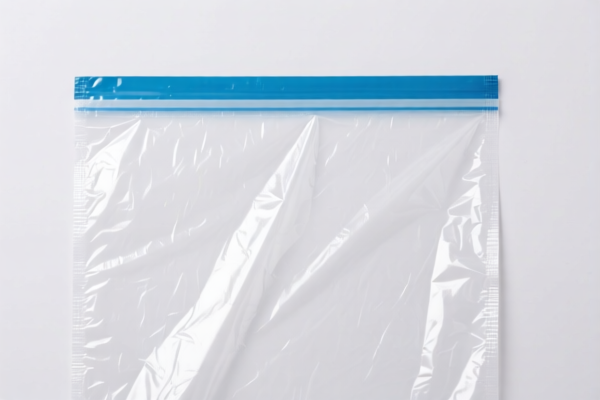
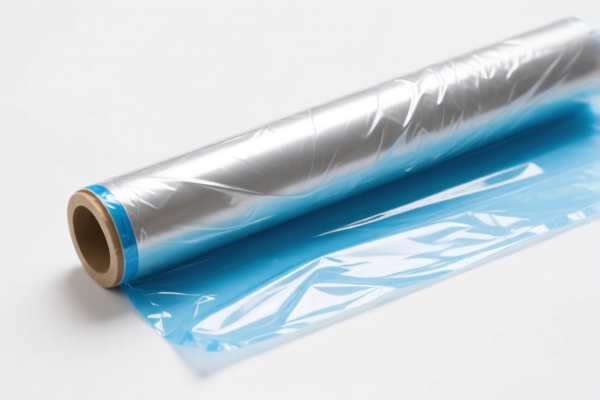
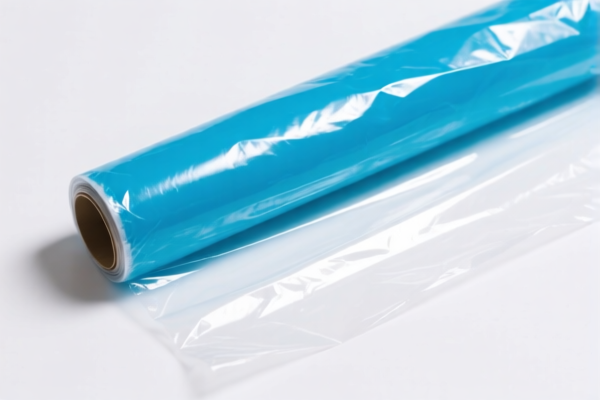
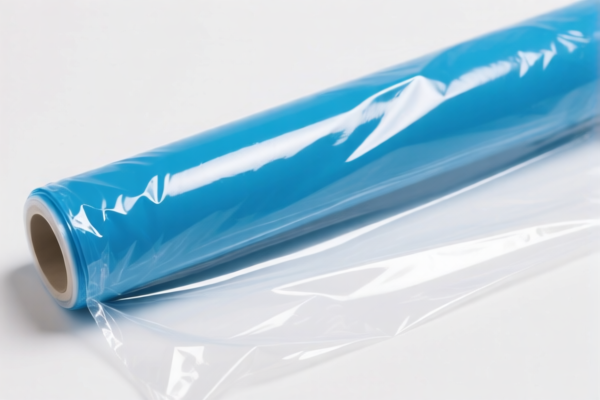
AI Analysis
📦 Furniture Plastic Protective Film (HS Code Classification & Clearance Guide 2026)
🌐 HS Code Reference & Customs Clearance Strategy | 2026 Latest Tariff Analysis | Professional Compliance Guide
📌 Part I: Product Definition & Classification: What is "Furniture Plastic Protective Film"?
"Furniture Plastic Protective Film" is a specialized packaging and protection material used to cover furniture surfaces (such as wooden cabinets, MDF boards, particle board, or upholstered items) during manufacturing, transportation, and storage. Its primary functions are to prevent scratches, dust accumulation, moisture damage, and chemical stains.
In international trade, this product is not classified as a finished furniture part but as a plastic product. However, the specific HS Code depends heavily on: 1. Material Composition: What type of plastic is it made of? (e.g., Polyethylene/PE, Polypropylene/PP, PVC). 2. Form/Shape: Is it a thin film, a rigid sheet, or a molded component? 3. Intended Use: Is it purely for protection, or is it a structural furniture part?
⚠️ Key Classification Distinction:
- If it is a thin, flexible film primarily made of polyethylene (PE) or similar polymers → It falls under Chapter 39: Plastics and Articles Thereof, specifically heading 3920 (Non-cellular plastics sheets, film, foil, and strip).
- If it is a rigid plastic piece molded to fit specific furniture contours (e.g., corner protectors) → It may fall under 3926.90 (Other articles of plastics).
- Crucial Note for US Imports: Due to recent trade policies (Section 301 and IEEPA), plastic films and articles face significant additional tariffs. Misclassification can lead to severe penalties or delayed clearance.
📦 Part II: HS Code Classification Details (2026 Latest Tariff Authority)
Based on the provided data, here are the potential HS Codes for "Furniture Plastic Protective Film," categorized by material and form.
| HS Code | Product Description | Application Scenario | Key Characteristics |
|---|---|---|---|
3920.10.00.00 |
Non-cellular plastic film of ethylene polymers (e.g., PE film) | Standard protective film for furniture surfaces | ✅ Thin, flexible, PE-based |
3920.99.10.00 |
Other plastic films/plates/strip (catch-all for non-PE) | PVC, PP, or mixed-material protective films | ✅ Thin, flexible, non-PE |
3926.30.50.00 |
Other articles of plastics for furniture fittings | Molded plastic corners, edge bands, or rigid protectors | ✅ Rigid/Molded, Furniture-specific |
3926.90.99.89 |
Other articles of plastics (catch-all) | Non-standard shapes, non-film, non-fitments | ✅ General plastic article |
🔍 重点提醒 (Key Reminders):
- Most Common Case: Furniture protective films are typically PE (Polyethylene) films. Therefore,3920.10.00.00is the most likely HS Code.
- Avoid Misclassification: Do not classify protective films as "packaging materials" under Chapter 48 (Paper) or Chapter 30 (Pharmaceuticals) unless they are specifically designed for pharmaceutical use.
- Catch-All Risk: If the film is not PE and not a standard sheet, it may fall under3920.99.10.00. If it is a rigid part, use3926.30.50.00or3926.90.99.89.
💰 Part III: 2026 Latest Tariff Rate Details (Including Additional Duties & Policies)
✅ Applicable Country: United States (US)
✅ Country of Origin: China (CN)
✅ Effective Date: From November 10, 2025 (for subsequent imports)
🎯 1. 3920.10.00.00 —— Non-cellular plastic film of ethylene polymers (PE Film)
| Item | Content |
|---|---|
| Base Tariff | 4.2% (ad valorem) |
| USITC Additional Duty | +25.0% (Section 301) |
| IEEPA Additional Duty | +10.0% (Against Chinese/HK products, from Nov 10, 2025) |
| Total Tariff Rate | 39.2% |
| Tax Calculation | CIF Value × 39.2% |
| De Minimis Eligibility | ❌ No (denied_de_minimis) |
| Legal Basis Path | IEEPA:9903.01.25 → IEEPA:9903.01.24 → USITC:3920.10.00.00 → FOOTNOTE:9903.88.01 |
📌 Explanation:
- The 25% USITC Additional Duty is imposed under the U.S. Trade Act of 1974, Section 301, targeting Chinese imports of plastic films.
- The 10% IEEPA Additional Duty is an extra layer of tariff under the International Emergency Economic Powers Act, effective from late 2025.
- Total 39.2% is a high tariff rate. Importers must plan accordingly.
🎯 2. 3920.99.10.00 —— Other plastic films (Non-PE, e.g., PVC/PP)
| Item | Content |
|---|---|
| Base Tariff | 6.0% (ad valorem) |
| USITC Additional Duty | +25.0% |
| IEEPA Additional Duty | +10.0% |
| Total Tariff Rate | 41.0% |
| Tax Calculation | CIF Value × 41.0% |
| De Minimis Eligibility | ❌ No |
| Legal Basis Path | IEEPA:9901.25 → IEEPA:9903.01.24 → USITC:3920.99.10.00 → FOOTNOTE:9903.88.01 |
📌 Note:
- If your protective film is made of PVC or PP instead of PE, the base rate is slightly higher (6.0% vs. 4.2%), resulting in a 41.0% total duty.
- This is the highest tariff rate among the plastic film categories.
🎯 3. 3926.30.50.00 —— Other articles of plastics for furniture fittings
| Item | Content |
|---|---|
| Base Tariff | 5.3% (ad valorem) |
| USITC Additional Duty | +7.5% |
| 122 Clause Tariff | +10.0% |
| Total Tariff Rate | 22.8% |
| Tax Calculation | CIF Value × 22.8% |
| De Minimis Eligibility | ❌ No |
| Legal Basis Path | 122 Clause → USITC:3926.30.50.00 |
📌 Explanation:
- This classification applies if the product is a molded plastic part (e.g., corner guards, edge protectors) rather than a flexible film.
- The tariff structure is different: It includes a 7.5% Section 301 duty and a 10% "122 Clause" tariff (likely referring to specific legislative or executive orders for certain plastic articles).
- Total 22.8% is significantly lower than the film rates (39.2%–41.0%), but only applies to rigid/molded parts, not flexible films.
🎯 4. 3926.90.99.89 —— Other articles of plastics (Catch-All)
| Item | Content |
|---|---|
| Base Tariff | 5.3% (ad valorem) |
| USITC Additional Duty | +7.5% |
| 122 Clause Tariff | +10.0% |
| Total Tariff Rate | 22.8% |
| Tax Calculation | CIF Value × 22.8% |
| De Minimis Eligibility | ❌ No |
| Legal Basis Path | 122 Clause → USITC:3926.90.99.89 |
📌 Note:
- This is a catch-all category for plastic articles that do not fit other specific subheadings.
- If the protective film is not a standard sheet/film and not a furniture fitting, it might fall here.
- Same 22.8% rate as3926.30.50.00, but only if the product structure matches "other articles of plastics" and not "films."
🛠️ Part IV: Customs Clearance Practical Advice (Real-World Pitfall Avoidance Guide)
✅ 1. Required Documentation Checklist (Non-negotiable)
| Document | Must Provide | Explanation |
|---|---|---|
| ✅ Product Specification Sheet | ✔️ | Details material (PE, PVC, PP), thickness (microns), width, length, and adhesive type (if any). |
| ✅ Material Safety Data Sheet (MSDS) | ✔️ | Proves chemical composition and safety. |
| ✅ Product Photos (Including Packaging) | ✔️ | Clear images showing the roll/film, labeling, and packaging to prove it is a "film" and not a finished product. |
| ✅ Commercial Invoice | ✔️ | Must clearly state "Plastic Protective Film for Furniture" and HS Code. |
| ✅ Packing List | ✔️ | Details gross/net weight, dimensions, and number of rolls. |
| ✅ Certificate of Origin (CO) | ✔️ | If imported from non-China countries, may qualify for preferential rates (rare for plastics). |
✅ 2. Declaration Tips (Key Mantra)
🔥 "Film vs. Fitting: Know Your Form, Save on Tax!"
| Scenario | Correct Declaration | Wrong Practice |
|---|---|---|
| Flexible PE/PVC Roll | 3920.10.00.00 or 3920.99.10.00 |
Misdeclare as "Furniture Part" → 22.8%? NO, Films are 39.2%+! |
| Rigid Corner Guard | 3926.30.50.00 |
Misdeclare as "Film" → 39.2%? YES, but wrong classification! |
| Mixed Packaging (Film + Adhesive Tape) | Declare as Main Product | Split declaration → Each item taxed separately, often higher. |
📌 Critical Advice:
- Do NOT declare flexible protective film as "Furniture Fittings" (3926.30.50.00) to save tax. CBP (U.S. Customs) will likely reclassify it as a film, leading to back taxes and penalties.
- Do NOT declare rigid furniture parts as "Film" (3920). They are structurally different.
✅ 3. Special Cases Handling
| Scenario | Handling Advice |
|---|---|
| OEM Custom-Size Film | Provide customer order + design specs to prove it is not a "finished good" but a raw material. |
| Self-Adhesive Protective Film | Declare as "Plastic Film with Adhesive" under 3920.10.00.00. Do not separate adhesive layer. |
| Imported from Vietnam/Mexico | Check if any IEEPA exemptions apply. China-origin films face 39.2%+. Non-China may be lower. |
| Sample Imports | Even samples are subject to no de minimis exemption for plastic films from China. |
🌍 Part V: Global Market Clearance Comparison (2026 Latest)
| Country/Region | Recommended HS Code | Tariff Rate (China Origin) | Certification Required | Remarks |
|---|---|---|---|---|
| 🇺🇸 USA | 3920.10.00.00 (PE Film) |
39.2% | FCC (if electronics), CPSIA (if children's) | High tariff due to 301 + IEEPA |
| 🇨🇳 China | 3920.10.00.00 |
5% | CCC (if applicable) | No additional duties |
| 🇪🇺 EU | 3920.10.00.00 |
6.5% | CE, REACH | No Section 301 equivalent |
| 🇬🇧 UK | 3920.10.00.00 |
6.5% | UKCA, REACH | Post-Brexit tariffs apply |
| 🇯🇵 Japan | 3920.10.00.00 |
6% | PSE (if electrical) | No major anti-dumping |
📌 Conclusion:
- USA is the most challenging market for Chinese plastic films due to 39.2%–41.0% total duties.
- EU, UK, Japan have standard MFN tariffs (~6–6.5%), which are significantly lower.
- Strategy: If targeting the US, consider supply chain diversification (e.g., sourcing films from Vietnam, Thailand, or Mexico) to avoid USIITC/IEEPA duties.
📌 Part VI: Common Errors & Pitfall Avoidance (Blood Lessons)
❌ Error 1: Declaring PE Protective Film as "Furniture Parts" (3926.30.50.00)
👉 Consequence: CBP reclassifies as film → Back taxes of ~16.4% + Interest + Penalties!
❌ Error 2: Ignoring the IEEPA 10% Duty
👉 Consequence: Underestimating landed cost by 10% → Profit Margin Erosion!
❌ Error 3: Using "Packaging Material" as Description
👉 Consequence: CBP may view it as "Consumable" and apply different valuation rules → Audit Risk!
❌ Error 4: Failing to Provide Material Composition
👉 Consequence: CBP assumes highest duty rate → Temporary Hold or Seizure!
✅ Correct Practice:
"Protective Plastic Film, 20 Microns Thick, PE (Polyethylene) Material, Roll Form, for Furniture Surface Protection, Model XYZ, MSDS Attached"
🎯 Part VII: Conclusion: Precision Classification Saves Money!
🎯 Remember the Mantra:
🔹 "PE Film = 39.2%, PVC Film = 41.0%, Rigid Fitting = 22.8%."
🔹 "Know Your Material, Avoid the 301 Trap, Clear Customs Smoothly!"
📌 Pro Tip:
If your furniture protective film is originally sourced from Vietnam, Mexico, Thailand, or Malaysia, you may exempt from IEEPA 10% duty and possibly Section 301 25% duty (depending on substantial transformation rules).
Recommend applying for a Pre-Ruling (Advance Ruling) with CBP to confirm HS Code and tariff applicability.
📣 Immediate Action:
📞 Contact Professional Freight Forwarder + Provide Product Photos + Apply for HS Code Pre-Ruling
🚀 Let your furniture films clear customs efficiently, reduce costs, and boost profits!
✨ Professional Clearance Starts with Accurate Classification!
💼 Every Cent of Cost Deserves Precise Calculation!
Customer Reviews
About HS Code Classification
The Harmonized System (HS) is an internationally standardized nomenclature developed by the World Customs Organization (WCO) to classify traded products. Over 200 countries use the HS system as the basis for customs tariffs, trade statistics, and import/export regulations.
Each HS code follows a hierarchical structure:
- Chapter (2 digits) — Broad category of goods (e.g., Chapter 84: Machinery and Mechanical Appliances)
- Heading (4 digits) — More specific grouping within the chapter
- Subheading (6 digits) — Internationally standardized breakdown, used by all WCO member countries
- National subdivisions (8-10 digits) — Country-specific extensions for further classification, such as US HTSUS 10-digit codes
Correct HS code classification is essential for smooth customs clearance, accurate duty payment, and compliance with trade regulations. Misclassification can lead to customs delays, overpayment of duties, or penalties.
When importing from CN to US, the applicable tariff rates may include:
- Most-Favored-Nation (MFN) rate — The standard duty rate applied to WTO members
- General rate — Applied to countries without trade agreements
- Trade remedy duties — Additional tariffs such as Section 301 (anti-dumping), Section 232 (national security), or countervailing duties
The information provided on this page is for reference purposes only. For official classification, please consult with your local customs authority or a licensed customs broker.