Furniture Surface Protective Film
CN → US| HS Code | Tariff Rate | Origin | Destination | Doc |
|---|---|---|---|---|
| 3920991000 | 41.0% | CN | US | Official Doc |
| 3920490000 | 40.8% | CN | US | Official Doc |
| 3926305000 | 22.8% | CN | US | Official Doc |
| 3926909989 | 22.8% | CN | US | Official Doc |
| 3920991000 | 41.0% | CN | US | Official Doc |
Product Images
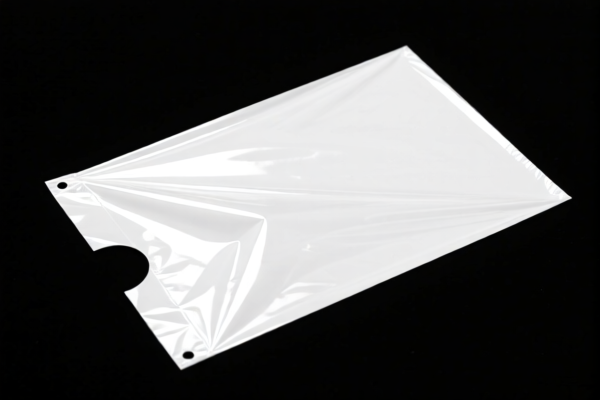
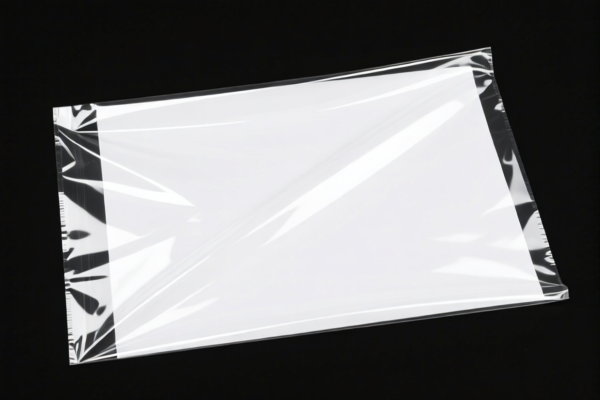
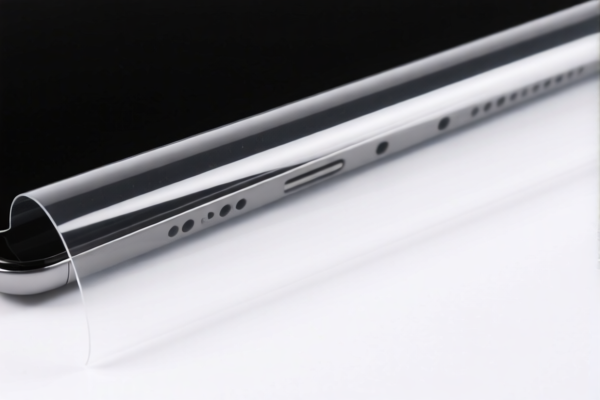
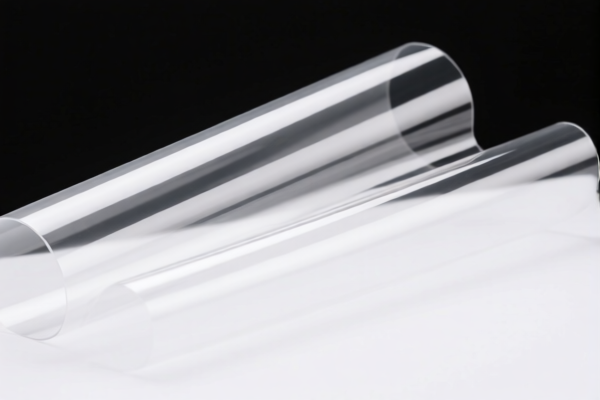
AI Analysis
🛋️ Furniture Surface Protective Film (塑料薄膜/制品)
🌐 HS Code Reference & Customs Clearance Guide | 2026 Latest Tariff Analysis | Professional Compliance Strategy
📌 I. Product Definition: What is "Furniture Surface Protective Film"?
Furniture Surface Protective Film is a specialized polymeric sheet used to shield furniture surfaces (wood, metal, glass, marble) from scratches, dust, adhesives, and chemical damage during manufacturing, transportation, and installation.
In international trade, its classification depends heavily on material composition, form factor, and specific usage intent. It is primarily categorized under Chapter 39 (Plastics and Articles Thereof).
⚠️ Critical Distinction:
- If the product is primarily a thin film/sheet used for protection (regardless of end-use), it often falls under Heading 3920 (Other plates, sheets, film, foil and strip, of plastics).
- If the product is a finished article designed specifically for furniture assembly or as a furniture component, it may fall under Heading 3926 (Other articles of plastics).
📦 II. HS Code Classification Details (2026 Latest Tariff Reference)
Based on the provided dataset, here are the 5 specific HS Codes with their corresponding tax implications:
| HS Code | Product Description | Summary & Logic | Total Tax Rate |
|---|---|---|---|
3920.99.10.00 |
Other Plastic Films | Based on plastic material and film form, classified as other plastic films. Specifically noted for laminated or composite purposes. | 41.0% |
3920.49.00.00 |
Other Plastic Films (e.g., PVC) | Based on plastic material (like PVC) and film form, classified as other plastic films. | 40.8% |
3926.30.50.00 |
Furniture Fittings of Plastic | Based on plastic material and furniture fitting purpose, classified as furniture plastic articles. | 22.8% |
3926.90.99.89 |
Other Plastic Articles | Based on plastic material and film form, classified as other plastic articles. | 22.8% |
3920.99.10.00 |
Other Plastic Films | Based on plastic material and film form, classified as other plastic films (laminated/composite use). | 41.0% |
🔍 Key Insight:
- There is a significant tax disparity (up to 18.2%) between 3920 (Film classification) and 3926 (Article/Fitting classification). - 3926 codes benefit from significantly lower additional tariffs (7.5% vs 25% for Section 301). - 3920 codes are treated as raw material films, incurring higher protectionist duties.
💰 III. Detailed Tariff Rate Breakdown (Including Additional Duties)
✅ Applicable Market: USA (US)
✅ Origin: China (CN)
✅ Effective Time: Current policies apply (Section 301 & Section 122)
🎯 1. 3920.99.10.00 —— Other Plastic Films (Laminated/Composite)
This is the most common classification for standard protective films but carries the highest tax burden.
| Item | Detail |
|---|---|
| Base Tariff | 6.0% (Ad Valorem) |
| Section 301 Additional Duty | +25.0% |
| Section 122 Tariff | +10.0% |
| Total Effective Tax Rate | 41.0% |
| Calculation Basis | CIF Value × 41.0% |
| De Minimis Exemption | ❌ Not Eligible (High duty rates usually negate de minimis benefits for commercial shipments) |
📌 Explanation:
- The 25% is the standard Section 301 tariff on Chinese goods under HTS 3920.99. - The 10% is the additional Section 122 tariff applied to certain plastic films to protect domestic manufacturers. - Total: 41%. This is a heavy tax burden.
🎯 2. 3920.49.00.00 —— Other Plastic Films (e.g., PVC)
Applicable if the film is specifically made of Polyvinyl Chloride (PVC) and doesn't fit the "other" category better.
| Item | Detail |
|---|---|
| Base Tariff | 5.8% (Ad Valorem) |
| Section 301 Additional Duty | +25.0% |
| Section 122 Tariff | +10.0% |
| Total Effective Tax Rate | 40.8% |
| Calculation Basis | CIF Value × 40.8% |
📌 Note:
- Slightly lower base rate (5.8% vs 6.0%) results in a total of 40.8%. - Still subject to the same punitive additional tariffs.
🎯 3. 3926.30.50.00 —— Furniture Fittings of Plastic
STRATEGIC ALTERNATIVE: Classify as a "Fitting" rather than a "Film".
| Item | Detail |
|---|---|
| Base Tariff | 5.3% (Ad Valorem) |
| Section 301 Additional Duty | +7.5% |
| Section 122 Tariff | +10.0% |
| Total Effective Tax Rate | 22.8% |
| Calculation Basis | CIF Value × 22.8% |
📌 Strategic Advantage:
- Savings: ~18% compared to 3920 classification. - Logic: If the film is pre-cut, has specialized adhesive patterns, or is marketed specifically as a "furniture protection kit/component," it may be argued as a "fitting" or "article" under 3926. - Risk: Customs may challenge this if the product is simply a roll of generic film. Strong technical documentation is required.
🎯 4. 3926.90.99.89 —— Other Plastic Articles
Another potential alternative if the product is not strictly a "fitting" but a finished "article".
| Item | Detail |
|---|---|
| Base Tariff | 5.3% (Ad Valorem) |
| Section 301 Additional Duty | +7.5% |
| Section 122 Tariff | +10.0% |
| Total Effective Tax Rate | 22.8% |
| Calculation Basis | CIF Value × 22.8% |
📌 Strategic Advantage:
- Same 22.8% total rate as 3926.30.50. - Used for plastic articles not elsewhere specified. May apply if the film has complex layers or is a finished protective sheet rather than a roll.
🛠️ IV. Customs Clearance Practical Advice (Real-World Pitfall Guide)
✅ 1. Documentation Checklist (Non-Negotiable)
| Document | Must Provide | Purpose |
|---|---|---|
| ✅ Product Specification Sheet | ✔️ | Detail material (PE, PVC, PET), thickness, adhesive type, tensile strength. |
| ✅ Commercial Invoice | ✔️ | Clearly state "Furniture Surface Protective Film" and avoid vague terms like "Plastic Wrap." |
| ✅ Labeling/Packaging Photos | ✔️ | Show if it’s sold as a "Fitting" kit vs. raw "Film" roll. |
| ✅ Material Safety Data Sheet (MSDS) | ✔️ | Required for chemical/adhesive components. |
| ✅ Certificate of Origin | ✔️ | Critical for confirming China origin and applying correct Section 301/122 duties. |
✅ 2. Classification Strategy & Tips
🔥 "Material vs. Function: Choose Wisely!"
| Scenario | Recommended HS Code | Why? |
|---|---|---|
| Generic Roll of PE Film | 3920.99.10.00 |
Standard film classification. High tax (41%). |
| PVC Protective Sheet | 3920.49.00.00 |
Specific PVC material code. High tax (40.8%). |
| Pre-cut Kits for Furniture | 3926.30.50.00 |
Argued as "Furniture Fitting." Lower tax (22.8%). Requires strong justification. |
| Complex Layered Protective Sheet | 3926.90.99.89 |
Argued as "Other Plastic Article." Lower tax (22.8%). |
📌 Crucial Tip:
- If you classify as 3926, ensure your product description emphasizes "Furniture Fitting" or "Finished Article" rather than just "Film." - Provide engineering drawings or product photos showing the film as an integrated part of furniture protection, not just a raw material.
✅ 3. Special Cases
| Situation | Handling Advice |
|---|---|
| Laminated/Composite Film | Must declare under 3920.99.10.00 if layers are distinct. Do not try to force 3926 if it's clearly a laminated film. |
| Adhesive-Backed Film | Adhesive presence doesn't change chapter from 39, but affects subheading. Still likely 3920 unless packaged as a specific furniture kit. |
| Non-Chinese Origin | If sourced from Vietnam/Malaysia, Section 301 (25%) and Section 122 (10%) may not apply. Check free trade agreements (e.g., ASEAN). Potential savings: 100% of additional duties. |
🌍 V. Global Market Comparison (2026)
| Market | Recommended HS Code | Estimated Total Duty (China Origin) | Key Certification |
|---|---|---|---|
| 🇺🇸 USA | 3920.99.10.00 (or 3926) |
22.8% - 41.0% | None specific, but MSDS required. |
| 🇨🇳 China | 3920.99.10.00 |
~5-6% (Import Duty) | CCC (if applicable) |
| 🇪🇺 EU | 3920.99.10.00 |
6.5% (MFN Rate) | REACH, RoHS |
| 🇬🇧 UK | 3920.99.10.00 |
6.5% (MFN Rate) | UKCA |
📌 Conclusion:
- The USA is the most challenging market due to Section 301 and Section 122 tariffs. - Duty Optimization is critical. Every 1% saved on a $100k shipment is $1,000.
📌 VI. Common Mistakes & Pitfalls (Lessons Learned)
❌ Mistake 1: Declaring as "Plastic Roll" without specifying use.
👉 Consequence: Customs assigns default film code (3920) → 41% Tax.
❌ Mistake 2: Using "Protective Wrap" in invoice description.
👉 Consequence: May be viewed as generic packaging → Still 3920, but raises red flags for misclassification.
❌ Mistake 3: Trying to classify 3926 for a generic film roll.
👉 Consequence: Customs rejection, audit, and potential penalties for misdeclaration.
❌ Mistake 4: Ignoring Section 122.
👉 Consequence: Missing the 10% surcharge on plastic films → Underpayment of duties.
✅ Correct Approach:
"Furniture Surface Protection Kit (PE Film, Pre-Cut, Adhesive-Backed) – Furniture Fitting"
🎯 VII. Conclusion: Precision Classification Saves Money!
🎯 Key Takeaway:
🔹 "Film = 41% | Fitting = 22.8%"
🔹 Difference: ~18.2% savings.
🔹 Can you justify "Fitting"? If yes, go for 3926. If no, prepare for 3920.
📌 Pro Tip:
- If your product is highly customized for furniture (e.g., specific shapes, colors, branding), emphasize the "Article/Fitting" aspect.
- If it's a commodity roll, accept the 41% rate or explore non-Chinese supply chains to avoid Section 301/122.
📣 Immediate Action:
📞 Consult a Customs Broker with product samples.
📄 Request a Binding Ruling if volume is high.
🚀 Optimize your supply chain to mitigate tariff risks!
✨ Professional Clearance, Starting with Precise Classification!
💼 Every Percent Counts in International Trade!
Customer Reviews
About HS Code Classification
The Harmonized System (HS) is an internationally standardized nomenclature developed by the World Customs Organization (WCO) to classify traded products. Over 200 countries use the HS system as the basis for customs tariffs, trade statistics, and import/export regulations.
Each HS code follows a hierarchical structure:
- Chapter (2 digits) — Broad category of goods (e.g., Chapter 84: Machinery and Mechanical Appliances)
- Heading (4 digits) — More specific grouping within the chapter
- Subheading (6 digits) — Internationally standardized breakdown, used by all WCO member countries
- National subdivisions (8-10 digits) — Country-specific extensions for further classification, such as US HTSUS 10-digit codes
Correct HS code classification is essential for smooth customs clearance, accurate duty payment, and compliance with trade regulations. Misclassification can lead to customs delays, overpayment of duties, or penalties.
When importing from CN to US, the applicable tariff rates may include:
- Most-Favored-Nation (MFN) rate — The standard duty rate applied to WTO members
- General rate — Applied to countries without trade agreements
- Trade remedy duties — Additional tariffs such as Section 301 (anti-dumping), Section 232 (national security), or countervailing duties
The information provided on this page is for reference purposes only. For official classification, please consult with your local customs authority or a licensed customs broker.