Furniture and Door/Window Metal Accessories
CN → US| HS Code | Tariff Rate | Origin | Destination | Doc |
|---|---|---|---|---|
| 8302419015 | 38.5% | CN | US | Official Doc |
| 8302106060 | 88.5% | CN | US | Official Doc |
| 7326908635 | 87.9% | CN | US | Official Doc |
| 7326908688 | 87.9% | CN | US | Official Doc |
Product Images
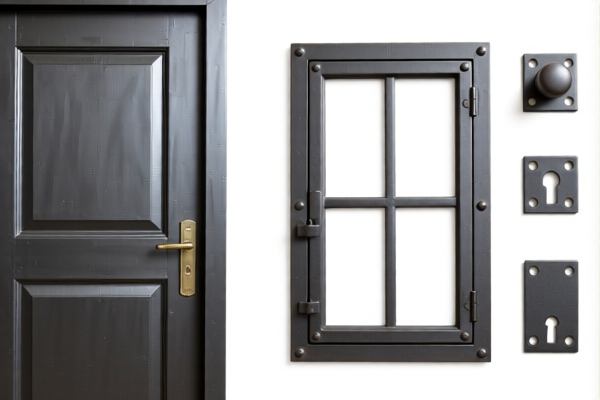
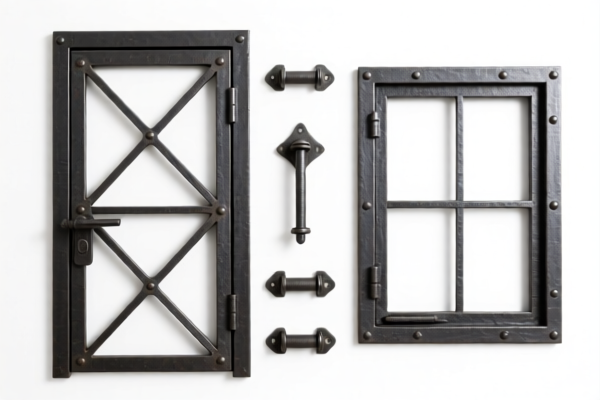
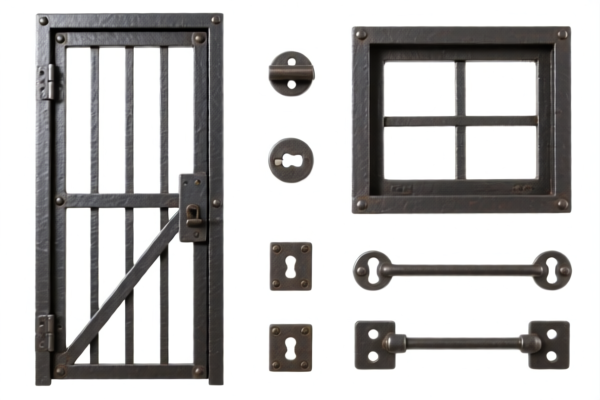
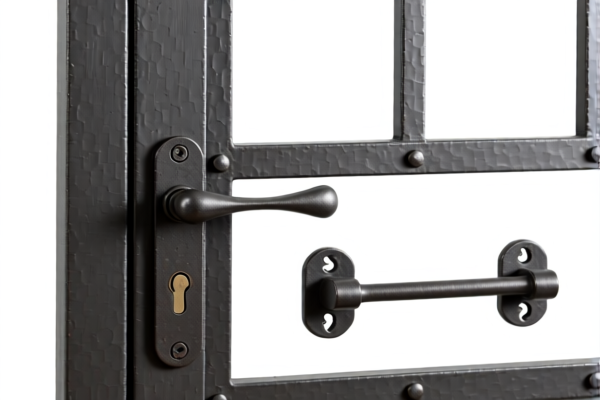
AI Analysis
🚪🖼️ Furniture & Door/Window Metal Accessories
🌐 HS Code Reference & Customs Clearance Guide | 2026 Latest Tariff Analysis | Professional Clearance Strategy
📌 1. Product Definition & Classification: Do You Really Understand "Metal Accessories"?
Furniture and Door/Window Metal Accessories are essential hardware components used in the construction, assembly, and finishing of furniture, doors, and windows. In international trade, these items are primarily classified based on their material composition (base metals vs. specific alloys) and function (handles, stops, hinges, locks).
For importers into the United States, the critical distinction lies in the Tariff Treatment: * Standard Base Metal Articles: Generally attract lower baseline duties but are subject to significant Section 301 and 122 tariffs. * Steel, Aluminum, and Copper Products: Subject to an additional 50% tariff, drastically increasing the total tax burden.
⚠️ Key Distinction Point:
- Door Handles/Stops (General): Often classified under 8302.41.90 or 8302.10, depending on whether they are "other" hinges/brackets or specifically "base metal mountings." - Steel/Aluminum/Copper Specifics: If the accessory is explicitly identified as a steel, aluminum, or copper product, it triggers the additional 50% tariff layer.
📦 2. HS Code Classification Details (2026 Latest Tariff Authority)
Based on the provided data, here are the specific HS Codes mapped to the product description, with their corresponding tax implications.
| HS Code | Product Description | Summary/Match Logic | Total Tax Rate |
|---|---|---|---|
8302.41.90.15 |
Other Base Metal Mountings, Fittings & Similar Articles (e.g., Door Handles, Door Stops) |
Matches non-ferrous or general base metal materials; used for doors/windows. | 38.5% |
8302.10.60.60 |
Base Metal Fittings for Furniture (Specifically Steel/Aluminum/Copper) |
Fully conforms to base metal furniture/door/window attachment definitions. | 88.5% |
7326.90.86.35 |
Other Articles of Iron or Steel | Matches iron/steel base metal material; suitable for general accessory forms. | 87.9% |
7326.90.86.88 |
Other Articles of Iron or Steel (Other) | Matches basic metal material & accessory morphology; falls under "other" articles. | 87.9% |
🔍 Critical Note:
- Codes8302.10.60.60,7326.90.86.35, and7326.90.86.88all include the "Steel, Aluminum, Copper Products Additional Tariff: 50%". - Code8302.41.90.15does not list the 50% steel/aluminum/copper surcharge in its detail, resulting in a significantly lower rate.
💰 3. 2026 Latest Tariff Rate Breakdown (Including Surcharges & Policies)
✅ Applicable Country: United States (US)
✅ Origin: China (CN)
✅ Effective Time: Current policies applicable for imports post-2025.
🎯 1. 8302.41.90.15 — Base Metal Mountings (Door Handles/Stops)
| Item | Detail |
|---|---|
| Basic Tariff | 3.5% |
| Section 301 Surcharge | +25.0% |
| 122 Clause Tariff | +10.0% |
| Steel/Al/Cu Surcharge | ❌ Not Listed (Standard base metal applies) |
| Total Rate | 38.5% |
| Tax Calculation | CIF Value × 38.5% |
| De Minimis Eligibility | ❌ Not Eligible (Deny De Minimis) |
| Legal Basis Path | USITC:8302.41.90.15 → Section 301 Footnote → 122 Clause |
📌 Explanation:
This code represents the most cost-effective option for door/window accessories if the product can be classified as "other base metal mountings" rather than specific steel/aluminum/copper articles. It avoids the heavy 50% surcharge.
🎯 2. 8302.10.60.60 — Base Metal Fittings (Furniture/Door)
| Item | Detail |
|---|---|
| Basic Tariff | 3.5% |
| Section 301 Surcharge | +25.0% |
| 122 Clause Tariff | +10.0% |
| Steel/Al/Cu Surcharge | +50.0% (Explicitly listed) |
| Total Rate | 88.5% |
| Tax Calculation | CIF Value × 88.5% |
| De Minimis Eligibility | ❌ Not Eligible |
| Legal Basis Path | USITC:8302.10.60.60 → Steel/Al/Cu Footnote |
📌 Warning:
The additional 50% tariff makes this a high-cost classification. This applies if the product is strictly defined as steel, aluminum, or copper fittings for furniture/doors.
🎯 3 & 4. 7326.90.86.35 & 7326.90.86.88 — Other Iron/Steel Articles
| Item | Detail |
|---|---|
| Basic Tariff | 2.9% |
| Section 301 Surcharge | +25.0% |
| 122 Clause Tariff | +10.0% |
| Steel/Al/Cu Surcharge | +50.0% (Explicitly listed) |
| Total Rate | 87.9% |
| Tax Calculation | CIF Value × 87.9% |
| De Minimis Eligibility | ❌ Not Eligible |
| Legal Basis Path | USITC:7326.90.86.xx → Steel/Al/Cu Footnote |
📌 Note:
These codes fall under "Other Articles of Iron or Steel." Like the furniture fittings, they attract the 50% steel/aluminum/copper surcharge, leading to a near-90% total tax burden.
🛠️ 4. Customs Clearance Practical Advice (Pitfall Avoidance)
✅ 1. Documentation Checklist (Mandatory)
| Document | Required | Purpose |
|---|---|---|
| ✅ Product Specification Sheet | ✔️ | Must detail material (e.g., "Zinc Alloy," "Stainless Steel," "Aluminum"). |
| ✅ Product Photos | ✔️ | Show handles, hinges, locks, and any branding/packaging. |
| ✅ Commercial Invoice | ✔️ | Must specify "Furniture Fittings" or "Door Accessories." |
| ✅ Packing List | ✔️ | Detail quantity and weight. |
| ✅ Certificate of Origin | ✔️ | Required for origin verification. |
| ✅ Material Composition Statement | ✔️ | Crucial for distinguishing between "Base Metal" (38.5%) and "Steel/Al/Cu" (88.5%). |
✅ 2. Declaration Strategy (Key Tips)
🔥 "Material is King, Code is Queen! Declare Accurately!"
| Scenario | Recommended HS Code | Reason |
|---|---|---|
| General Door Handles/Strikers | 8302.41.90.15 |
Lower tax (38.5%). Classify as "other base metal mountings." |
| Heavy-Duty Steel Hinges/Locks | 8302.10.60.60 |
Higher tax (88.5%). If explicitly steel/copper/aluminum furniture fittings. |
| Generic Metal Brackets/Parts | 7326.90.86.35/.88 |
Higher tax (87.9%). If not specifically "mountings" but "other steel articles." |
⚠️ Risk Alert:
- Misclassifying a steel hinge as a "general base metal fitting" to avoid the 50% surcharge is risky and may lead to audits, fines, and back taxes. - Ensure the material description on the invoice matches the HS Code justification.
✅ 3. Special Cases
| Case | Handling Advice |
|---|---|
| Mixed Materials | If an accessory has both plastic and metal parts, the metal component often dictates the classification if it forms the main structure/function. |
| OEM Custom Parts | Provide design drawings to prove the product is a "fitting" (8302) rather than a general "article" (7326). |
| High-Value Luxury Hardware | Even if classified under 8302.41.90.15, the 38.5% tax is significant. Plan for cash flow impact. |
🌍 5. Global Market Comparison (2026 Latest)
| Country/Region | Recommended HS Code | Est. Tariff | Certification | Notes |
|---|---|---|---|---|
| 🇺🇸 USA | 8302.41.90.15 or 8302.10.60.60 |
38.5% - 88.5% | None specific | High tariffs due to 301/122 clauses. |
| 🇨🇳 China | 8302.41.90.15 |
~6-10% | CCC (if applicable) | No additional US-style surcharges. |
| 🇪🇺 EU | 8302.41.90 |
~2.7-6% | CE (if electrical) | No Section 301 equivalent. |
| 🇬🇧 UK | 8302.41.90 |
~2.7-6% | UKCA | Post-Brexit standards apply. |
📌 Conclusion:
- The US market is uniquely expensive for these goods due to the layered tariffs (Basic + 301 + 122 + Steel/Al/Cu Surcharge). - Option8302.41.90.15(38.5%) is significantly cheaper than8302.10.60.60(88.5%). Classification strategy is vital.
📌 6. Common Errors & Pitfall Guide (Lessons Learned)
❌ Error 1: Classifying all metal accessories under 8302.41.90.15 to save tax, even if they are explicitly steel or aluminum fittings.
👉 Consequence: Customs audit → Back taxes + penalties for the missing 50% surcharge.
❌ Error 2: Listing items as "General Metal Parts" without specifying material.
👉 Consequence: Customs may assess the highest possible rate (e.g., 88.5%) due to lack of clarity.
❌ Error 3: Ignoring the "122 Clause Tariff" (10%).
👉 Consequence: Underestimating total landed cost by 10%.
✅ Correct Approach:
"Door Handle, Zinc Alloy, Model XYZ, For Residential Doors, No Electrical Components."
🎯 7. Conclusion: Precision Classification Saves Money!
🎯 Remember the Key Strategy:
🔹 "Check Material, Check Function!"
🔹 "If it's Steel/Al/Cu → 88.5% Tax!"
🔹 "If it's General Base Metal → 38.5% Tax!"
🔹 "Don't Guess, Verify!"
📌 Pro Tip:
If your accessories are made of Zinc Alloy or Brass (non-steel/copper/aluminum specific surcharges), fight for the 8302.41.90.15 classification to save 50% on the tax rate.
If they are Stainless Steel or Aluminum, prepare for the 88.5% rate or explore supply chain adjustments.
📣 Immediate Action:
📞 Consult with a Customs Broker for Pre-Ruling if the material composition is ambiguous.
📄 Ensure your Invoice Description is precise to avoid delays.
✨ Professional Clearance Starts with Accurate Classification!
💼 Every Percent of Tax Saved is Pure Profit!
Customer Reviews
About HS Code Classification
The Harmonized System (HS) is an internationally standardized nomenclature developed by the World Customs Organization (WCO) to classify traded products. Over 200 countries use the HS system as the basis for customs tariffs, trade statistics, and import/export regulations.
Each HS code follows a hierarchical structure:
- Chapter (2 digits) — Broad category of goods (e.g., Chapter 84: Machinery and Mechanical Appliances)
- Heading (4 digits) — More specific grouping within the chapter
- Subheading (6 digits) — Internationally standardized breakdown, used by all WCO member countries
- National subdivisions (8-10 digits) — Country-specific extensions for further classification, such as US HTSUS 10-digit codes
Correct HS code classification is essential for smooth customs clearance, accurate duty payment, and compliance with trade regulations. Misclassification can lead to customs delays, overpayment of duties, or penalties.
When importing from CN to US, the applicable tariff rates may include:
- Most-Favored-Nation (MFN) rate — The standard duty rate applied to WTO members
- General rate — Applied to countries without trade agreements
- Trade remedy duties — Additional tariffs such as Section 301 (anti-dumping), Section 232 (national security), or countervailing duties
The information provided on this page is for reference purposes only. For official classification, please consult with your local customs authority or a licensed customs broker.