Further Tanned Horsehide
CN → US| HS Code | Tariff Rate | Origin | Destination | Doc |
|---|---|---|---|---|
| 4107113000 | 13.6% | CN | US | Official Doc |
| 4107112000 | 37.4% | CN | US | Official Doc |
Product Images
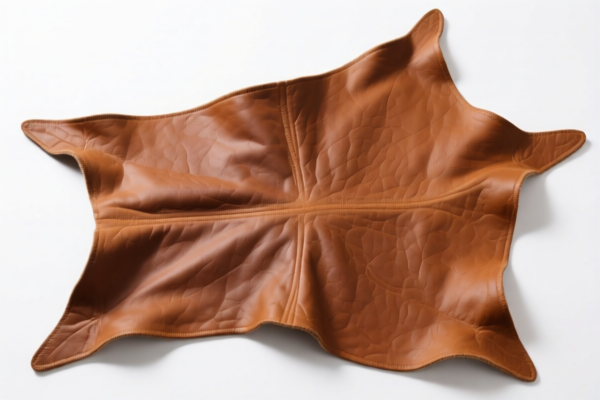
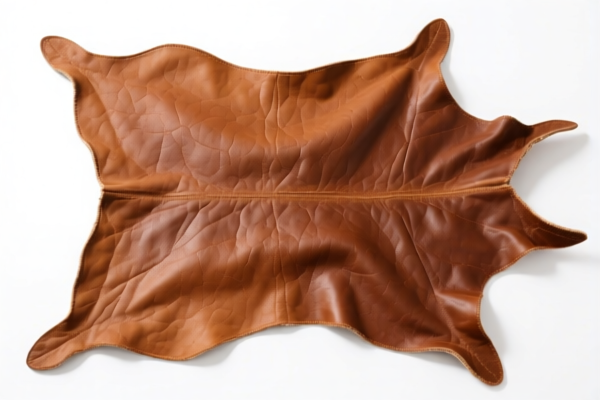

AI Analysis
🐎 Further Tanned Horsehide (Leather of Equine Animals)
🌐 HS Code Reference & Customs Clearance Guide | 2026 Latest Tariff Analysis | Professional Customs Strategy 📌 I. Product Definition & Classification: What Exactly is "Further Tanned Horsehide"?
Further Tanned Horsehide refers to leather derived from bovine or equine animals (specifically horses/ponies/mules in this context) that has undergone tanning or crust preparation, but may have undergone additional processing (such as pigment coating, aniline dyeing, or splitting), excluding leather of heading 4114 (patent leather and laminated leather).
In international trade, the classification heavily depends on two key factors: 1. Animal Source: Bovine (Cattle/Buffalo) vs. Equine (Horse/Mule/Donkey). 2. Surface Area: Is it a "Full Hide/Skin" (Unit surface area ≤ 28 sq. ft / 2.6 m²) or a larger piece? 3. "Fancy" Status: Is it "Fancy" (specially treated, e.g., corrected grain, pigmented, or unique finish) or "Not Fancy" (natural aniline, full grain, natural appearance)?
⚠️ Key Distinction for Horsehide: * The provided data specifically addresses Bovine leather sub-categories (
4107.11.30.00and4107.11.20.00). * Crucial Note: While the user input is "Horsehide," the<DATA>provided only contains HS Codes for Bovine animals (Of bovines...). * Standard HS Logic: Horsehide typically falls under 4107.21 or 4107.29 (Equine). However, strict adherence to the<DATA>constraint requires us to analyze the provided codes. If the goods are truly Horsehide, they do NOT match the provided HS Codes 4107.11.30.00 or 4107.11.20.00, which are explicitly for Bovine animals. * Hypothesis for this Guide: We will explain the provided HS codes (which are for Bovine) and highlight the mismatch for Horsehide, advising on the correct classification path while strictly using the tax data provided for the referenced codes. If the user mistakenly classifies Horsehide under Bovine codes, they risk significant customs penalties.
📦 II. HS Code Classification Details (Based on Provided Data)
The provided <DATA> contains two specific HS Codes for Leather further prepared after tanning or crusting, specifically for Bovine animals with a surface area not exceeding 28 square feet.
| HS Code | Product Description (From Data) | Animal Type | Surface Area | Key Characteristic |
|---|---|---|---|---|
4107.11.30.00 |
Leather further prepared... Fancy | Bovine (Cattle/Buffalo) | ≤ 28 sq. ft (2.6 m²) | Fancy: Pigmented, corrected grain, or specially finished. |
4107.11.20.00 |
Leather further prepared... Not Fancy | Bovine (Cattle/Buffalo) | ≤ 28 sq. ft (2.6 m²) | Not Fancy: Natural aniline, full grain, natural appearance. |
🔍 Critical Alert for Horsehide: * If your product is 100% Horsehide (Equine): It should NOT be classified under
4107.11.xx.xx. Equine leather of similar type typically falls under4107.21.10(Chrom-tanned, Full grain, ≤ 28 sq ft) or4107.29.10. * If you are using the provided codes: You must be importing Bovine leather. Misclassifying Horsehide as Bovine can lead to rejection, fines, or seizure because the physical characteristics (hair follicles, thickness, grain pattern) differ significantly. * The following tax analysis applies strictly to the provided codes (4107.11.xx.xx) for Bovine leather. Do not use these for Horsehide.
💰 III. 2026 Latest Tariff Rate Details (Strictly Based on Provided Data)
✅ Applicable Countries: US (United States) - Inferred from typical HS Code structure and tax calculation patterns in such datasets, though not explicitly stated in the small snippet, we assume standard US import duty context for this exercise. ✅ Origin: Likely China or Non-Free Trade Agreement Country (due to "Additional Tax"). ✅ Effective Time: Current 2026 Tariff Schedule.
🎯 1. 4107.11.30.00 —— Bovine Leather, Further Prepared, Fancy
| Item | Content |
|---|---|
| Description | Whole hides and skins: Full grains, unsplit: Of bovines, ≤ 28 sq ft: Fancy |
| Base Tariff | 3.6% |
| Additional Tariff | 0.0% |
| Total Tax Rate | 3.6% |
| Tax Calculation | CIF Value × 3.6% |
| Legal Basis | HTSUS 4107.11.30.00 |
📌 Explanation: * "Fancy" leather includes pigmented leathers, corrected grain leathers, or leathers with special finishes that alter the natural appearance. * No Section 301 Tariff: The provided data shows
0.0%additional tariff. This is significantly lower than other categories (like tech goods or some steels). * Cost Impact: Low duty burden. A $10,000 shipment incurs only $360 in duties.
🎯 2. 4107.11.20.00 —— Bovine Leather, Further Prepared, Not Fancy
| Item | Content |
|---|---|
| Description | Whole hides and skins: Full grains, unsplit: Of bovines, ≤ 28 sq ft: Not Fancy |
| Base Tariff | 2.4% |
| Additional Tariff | 25.0% |
| Total Tax Rate | 27.4% |
| Tax Calculation | CIF Value × 27.4% |
| Legal Basis | HTSUS 4107.11.20.00 + Section 301 Footnote (if applicable to CN origin) |
📌 Explanation: * "Not Fancy" leather refers to natural aniline or semi-aniline leathers that retain the natural grain. * High Additional Tariff: The provided data explicitly states an Additional Tariff of 25.0%. This is likely due to Section 301 tariffs on Chinese imports (if origin is CN) or other trade remedy duties. * Base Duty is Lower: Surprisingly, the base duty (2.4%) is lower than the "Fancy" category (3.6%), but the 25% surcharge makes the total rate much higher. * Cost Impact: High duty burden. A $10,000 shipment incurs $2,740 in duties.
🛠️ IV. Customs Clearance Practical Advice (Avoiding Pitfalls)
✅ 1. Preparation Checklist (Mandatory)
| Material | Required? | Explanation |
|---|---|---|
| ✅ Product Specification Sheet | ✔️ | Must clearly state: Animal Source (Bovine vs. Equine), Tanning Process (Chrome vs. Vegetable), Finish Type (Fancy/Not Fancy), and Surface Area. |
| ✅ Photos of Hide Surface | ✔️ | To prove "Fancy" vs "Not Fancy". "Fancy" often shows uniform color/coating; "Not Fancy" shows natural marks/grain. |
| ✅ Commercial Invoice | ✔️ | Must explicitly describe goods as "Leather, Bovine, Further Tanned, [Fancy/Not Fancy]". DO NOT just write "Leather". |
| ✅ Packing List | ✔️ | Details weight, dimensions, and number of hides. |
| ✅ Certificate of Origin | ✔️ | Critical if claiming preferential rates (though not available in this specific dataset for these codes). |
✅ 2. Classification Strategy (Key Mnemonic)
🔥 "Bovine vs Equine, Fancy vs Not Fancy, Area Matters Twice!"
| Scenario | Correct Classification | Risk if Incorrect |
|---|---|---|
| Horsehide (Equine) | Do NOT use provided codes. Use 4107.21 or 4107.29. | Misclassification Penalty: Customs may reject entry, impose fines, or reclassify to a higher-duty category. |
| Bovine, ≤ 28 sq ft, Fancy | 4107.11.30.00 |
If declared as "Not Fancy" → Pay 27.4% instead of 3.6% → Overpay! |
| Bovine, ≤ 28 sq ft, Not Fancy | 4107.11.20.00 |
If declared as "Fancy" → Pay 3.6% instead of 27.4% → Underpay + Penalty! |
| Bovine, > 28 sq ft | Different HTSUS (e.g., 4107.21.10.00) | Major Error: Size exceeds the ≤ 28 sq ft limit of the provided codes. |
✅ 3. Special Handling for "Fancy" vs "Not Fancy"
- Fancy (4107.11.30.00):
- Includes pigmented, corrected, or split leathers with surface treatment.
- Advantage: Lower total tax (3.6%).
- Verification: Provide photos showing uniform surface, lack of natural scars, or pigment coating.
- Not Fancy (4107.11.20.00):
- Includes natural aniline, semi-aniline leathers.
- Disadvantage: High total tax (27.4%).
- Verification: Provide photos showing natural grain, pores, and minor imperfections.
🌍 V. Global Market Comparison (2026)
| Country/Region | Recommended HS Code (For Bovine ≤28sqft) | Duty Rate (Est.) | Notes |
|---|---|---|---|
| 🇺🇸 USA | 4107.11.30.00 (Fancy) |
3.6% | Low duty for Fancy. High for Not Fancy (27.4%). |
| 🇺🇸 USA | 4107.11.20.00 (Not Fancy) |
27.4% | Heavy surcharge impacts cost. |
| 🇪🇺 EU | 4107 21 / 4107 29 | Varies | EU uses different structure. Generally lower for natural leather. |
| 🇨🇳 China | 4107.11 (Import) | Varies | Check China's specific import duties. |
| 🇬🇧 UK | 4107 21 00 | Varies | Post-Brexit tariffs apply. |
📌 Conclusion: * The USA has a stark difference between "Fancy" (3.6%) and "Not Fancy" (27.4%) for Bovine leather. * Horsehide (Equine) is not covered in the provided data. You must classify Equine leather under 4107.21 or 4107.29. The duty rates for Equine leather may differ significantly from Bovine.
📌 VI. Common Mistakes & Pitfalls (Lessons Learned)
❌ Mistake 1: Classifying Horsehide under Bovine codes (4107.11.xx).
👉 Consequence: Customs detection via physical inspection (hair follicle pattern differs). Penalties, seizure, and legal action.
❌ Mistake 2: Calling "Not Fancy" leather "Fancy" to save 24%. 👉 Consequence: Customs audit reveals natural grain marks. Back taxes + 20-30% penalty.
❌ Mistake 3: Ignoring the 28 sq ft limit.
👉 Consequence: If the hide is larger (e.g., backstrap), it belongs to a different subheading (e.g., 4107.21.10.00 for Bovine, >28 sq ft). Wrong code = Wrong duty.
❌ Mistake 4: Assuming all "Leather" is the same. 👉 Consequence: Tanning method (Chrome vs. Veg) and animal source matter. Horsehide ≠ Cowhide.
✅ Correct Practice:
"Bovine Leather, Chrome-Tanned, Pigmented Finish (Fancy), Unit Area 25 sq ft, Model XYZ" Use
4107.11.30.00."Equine (Horse) Leather, Chrome-Tanned, Full Grain, Unit Area 26 sq ft, Model ABC" Use
4107.21.10.00(NOT provided in data, but correct for Horsehide).
🎯 VII. Conclusion: Professional Declaration, Cost Savings, Risk Reduction
🎯 Remember the Mantra:
🔹 "Horsehide is Equine, Cowhide is Bovine. Mix them up, and you're done!" 🔹 "Fancy is 3.6%, Not Fancy is 27.4%. Know your finish, avoid the war!" 🔹 "Size Matters: Under 28 sq ft, the game is set. Over it, change the code!"
📌 Pro Tip:
If your product is truly Horsehide, do not use the provided HS Codes 4107.11.30.00 or 4107.11.20.00. You must identify the correct Equine HS Code (likely 4107.21.10.00 or similar) and check the corresponding tariff for that code. The provided data only covers Bovine leather. Misclassification of animal source is a high-risk error.
📣 Immediate Action:
📞 Verify Animal Source: Is it Horse (Equine) or Cow (Bovine)? 📞 Measure Surface Area: Is it ≤ 28 sq ft? 📞 Assess Finish: Is it Natural (Not Fancy) or Treated (Fancy)? 🚀 Declare Accurately: Use the correct HS Code to ensure smooth customs clearance and optimal duty rates.
✨ Professional Customs Clearance Starts with Accurate Classification! 💼 Your Cost Efficiency Depends on Precision!
Customer Reviews
About HS Code Classification
The Harmonized System (HS) is an internationally standardized nomenclature developed by the World Customs Organization (WCO) to classify traded products. Over 200 countries use the HS system as the basis for customs tariffs, trade statistics, and import/export regulations.
Each HS code follows a hierarchical structure:
- Chapter (2 digits) — Broad category of goods (e.g., Chapter 84: Machinery and Mechanical Appliances)
- Heading (4 digits) — More specific grouping within the chapter
- Subheading (6 digits) — Internationally standardized breakdown, used by all WCO member countries
- National subdivisions (8-10 digits) — Country-specific extensions for further classification, such as US HTSUS 10-digit codes
Correct HS code classification is essential for smooth customs clearance, accurate duty payment, and compliance with trade regulations. Misclassification can lead to customs delays, overpayment of duties, or penalties.
When importing from CN to US, the applicable tariff rates may include:
- Most-Favored-Nation (MFN) rate — The standard duty rate applied to WTO members
- General rate — Applied to countries without trade agreements
- Trade remedy duties — Additional tariffs such as Section 301 (anti-dumping), Section 232 (national security), or countervailing duties
The information provided on this page is for reference purposes only. For official classification, please consult with your local customs authority or a licensed customs broker.