Fusion Splicer
CN → US| HS Code | Tariff Rate | Origin | Destination | Doc |
|---|---|---|---|---|
| 8543706000 | 35.0% | CN | US | Official Doc |
| 8543709860 | 37.6% | CN | US | Official Doc |
| 8515190000 | 35.0% | CN | US | Official Doc |
| 8515800080 | 35.0% | CN | US | Official Doc |
| 9013809100 | 22.0% | CN | US | Official Doc |
| 9013104500 | 35.0% | CN | US | Official Doc |
Product Images
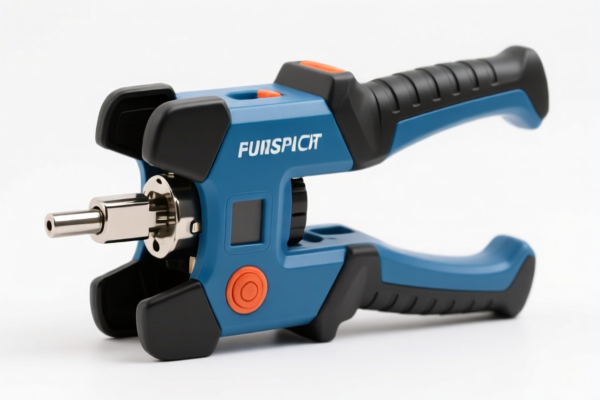
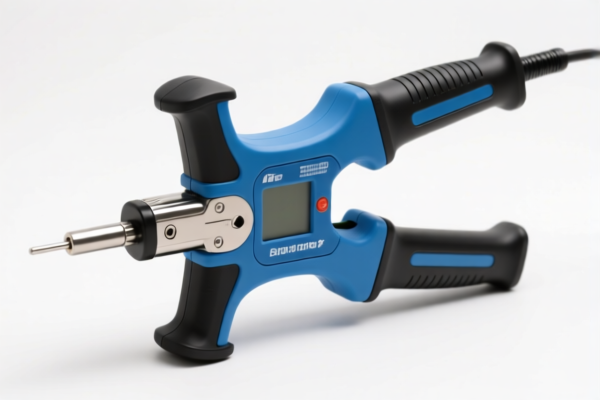
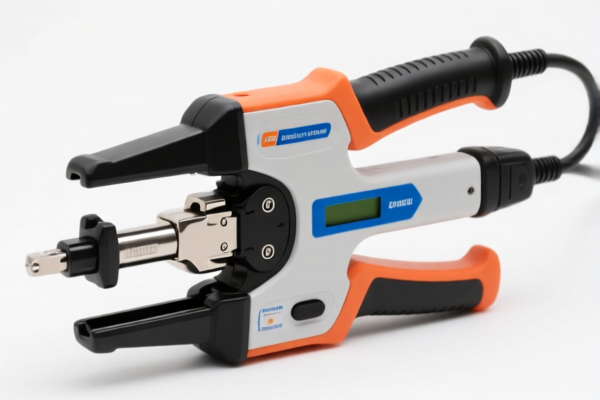
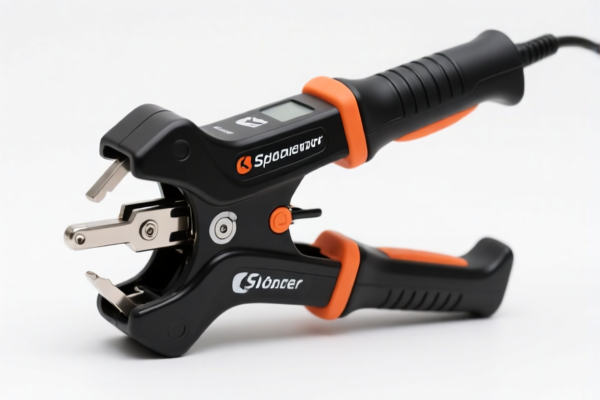
AI Analysis
📡 Fiber Optic Fusion Splicers: High-Precision Tax Classification & 2026 Clearance Guide
🌐 HS Code Reference & Customs Clearance Guide | 2026 Latest Tariff Analysis | Professional Strategy for Optical Instruments
📌 One: Product Definition: What Exactly is a "Fusion Splicer"?
A Fusion Splicer is a precision electromechanical device used primarily in telecommunications and fiber optics. It joins (splices) two optical fibers together by heating them with an electric arc until they melt and fuse.
In international trade, these devices are often confused with standard electronic testing equipment or generic optical instruments. However, their specific function—creating permanent optical joints—dictates their classification under the Harmonized System (HS).
⚠️ Key Distinction Point: - If the device is specifically designed to join optical fibers using an electric arc → It is classified under 8515 (Welding/Brazing Apparatus). - If the device is a standalone laser or optical instrument NOT used for welding/splicing → It is classified under 9013 (Lasers/Optical Appliances). - If it is an electrical accessory designed to connect to telegraphic/telephonic networks → It may fall under 8543.
📦 Two: HS Code Classification Details (2026 Latest Tariff Authority)
Based on the provided dataset, here are the relevant HS Codes for Fusion Splicers and related optical/electrical components. Note that while "Fusion Splicer" is a functional term, customs classifies it based on its technical mechanism (electric arc welding) or optical nature.
| HS Code | Product Description | Application Context | Classification Logic |
|--------|--------------------------|--------------------------|
| 8515.19.00.00 | Brazing or Soldering Machines and Apparatus: Other | Primary Classification for Fusion Splicers | Uses an electric arc to "fuse" (weld/braze) glass fibers. Falls under electric welding apparatus. |
| 8515.80.00.80 | Other Machines and Apparatus: Other | Secondary/Alternative Classification | If the splicer uses a different heating mechanism (e.g., thermal heating without arc) or is considered a "general" electric machine. |
| 8543.70.60.00 | Articles designed for connection to telegraphic or telephonic apparatus | Accessories/Interface Modules | If the device is merely an interface box or network adapter, not the splicer itself. |
| 9013.80.91.00 | Lasers, other than laser diodes; other optical appliances: Other devices | Laser-Based Optical Tools | If the device uses a laser for alignment/measurement but is NOT primarily for fusion/welding. |
| 9013.10.45.00 | Telescopic sights; periscopes; telescopes... Other | Optical Measurement Tools | Unlikely for splicers, but relevant if the device is purely for optical inspection/telescope alignment. |
| 8543.70.98.60 | Other machines and apparatus: Other | General Electrical Machines | Generic electrical equipment not fitting other specific headings. |
🔍 Critical Analysis: - Most Common: High-end fusion splicers are typically classified under 8515.19.00.00 because the core process is electric arc welding of the fiber ends. - Alternative: If the device is marketed strictly as an "optical testing instrument" with no welding function, it may go to 9013.80.91.00. - Warning: Do not classify a fusion splicer as a simple "optical tool" if it performs a welding function. Misclassification can lead to significant tariff differences.
💰 Three: 2026 Tariff Rate Details (Including Surcharge & Policy Additions)
✅ Applicable Country: USA (US) ✅ Origin: China (CN) ✅ Effective Date: 2025/2026 (Subject to current trade policies)
🎯 1. 8515.19.00.00 —— Brazing/Soldering Machines (Fusion Splicers)
| Item | Content |
|---|---|
| Base Tariff | 0.0% (Ad valorem) |
| Section 301 Surcharge | +25.0% |
| Total Tax Rate | 25.0% |
| Tax Calculation | CIF Value × 25% |
| De Minimis Exemption | ❌ Not Applicable (Deny De Minimis) |
| Legal Basis Path | USITC:8515.19.00.00 → Section 301 Footnote 9903.88.01 |
📌 Explanation: - Although the base tariff is 0%, the 25% Section 301 surcharge applies to Chinese-origin goods. - This is a high-duty item compared to pure optical instruments. - Strategy: Ensure the commercial invoice clearly states "Electric Arc Fusion Splicer" to justify the 8515 classification. If misclassified as 9013, you might face different scrutiny or lower rates (but risk penalties).
🎯 2. 8515.80.00.80 —— Other Machines and Apparatus
| Item | Content |
|---|---|
| Base Tariff | 0.0% |
| Section 301 Surcharge | +25.0% |
| Total Tax Rate | 25.0% |
| Tax Calculation | CIF Value × 25% |
| De Minimis Exemption | ❌ Not Applicable |
📌 Note: - Same tax burden as 8515.19.00.00. - Used if the splicer doesn't fit the "brazing/soldering" definition strictly (rare).
🎯 3. 8543.70.60.00 —— Telegraphic/Telephonic Apparatus Parts/Accessories
| Item | Content |
|---|---|
| Base Tariff | 0.0% |
| Section 301 Surcharge | +25.0% |
| Total Tax Rate | 25.0% |
| Tax Calculation | CIF Value × 25% |
| De Minimis Exemption | ❌ Not Applicable |
📌 Note: - Applies only if the item is an accessory (e.g., a network interface module), not the splicer itself. - Still subject to 25% surcharge.
🎯 4. 9013.80.91.00 —— Other Lasers/Optical Appliances
| Item | Content |
|---|---|
| Base Tariff | 4.5% |
| Section 301 Surcharge | +7.5% |
| Total Tax Rate | 12.0% |
| Tax Calculation | CIF Value × 12% |
| De Minimis Exemption | ❌ Not Applicable |
📌 Opportunity: - If your device is not a fusion splicer (e.g., an optical time-domain reflectometer OTDR, or a laser alignment tool), it may qualify for 12%. - Risk: Customs may reclassify a fusion splicer as 9013 if you don't provide evidence of its welding function. Do not misclassify to save 13% — the penalty risk is high.
🎯 5. 9013.10.45.00 —— Telescopic Sights/Telescopes
| Item | Content |
|---|---|
| Base Tariff | 0.0% |
| Section 301 Surcharge | +25.0% |
| Total Tax Rate | 25.0% |
| Tax Calculation | CIF Value × 25% |
📌 Note: - Only applies if the device is a telescope for arms or machinery. Not applicable to fusion splicers.
🎯 6. 8543.70.98.60 —— Other Electrical Machines
| Item | Content |
|---|---|
| Base Tariff | 2.6% |
| Section 301 Surcharge | +25.0% |
| Total Tax Rate | 27.6% |
| Tax Calculation | CIF Value × 27.6% |
📌 Note: - Highest total rate among electrical machines. Avoid unless no other classification fits.
🛠️ Four: Customs Clearance Practical Advice (Battle-Tested Tips)
✅ 1. Preparation Checklist (Non-Negotiable)
| Document | Mandatory | Description |
|---|---|---|
| ✅ Product Specification Sheet | ✔️ | Must detail: Arc power, fiber type support (SM/MM), clamping method. |
| ✅ Circuit/Structure Diagram | ✔️ | Proof of electric arc generator (if classifying under 8515). |
| ✅ High-Res Photos (with Nameplate) | ✔️ | Show brand, model, input voltage, and any warning labels (e.g., "High Voltage Arc"). |
| ✅ Third-Party Test Report | ✔️ | CE, FCC (for electronic interference), IEC (for safety). |
| ✅ Commercial Invoice | ✔️ | Use precise description: "Electric Arc Fusion Splicer for Optical Fibers, Model XYZ". |
| ✅ Certificate of Origin (CO) | ✔️ | Essential for tariff calculation. |
| ✅ Packing List | ✔️ | List all accessories (electrodes, cleaver, splicing sleeves). |
✅ 2. Declaration Strategy (Golden Rules)
🔥 "Function Defines Function, Arc Defines 8515, Lens Defines 9013!"
| Scenario | Correct HS Code | Wrong Approach | Consequence |
|---|---|---|---|
| Standard Fusion Splicer (Arc welding) | 8515.19.00.00 |
Misclassifying as "Optical Instrument" | Penalty + Back Taxes (25% vs 12% risk) |
| Splicer + Cleaning Kit | 8515.19.00.00 |
Splitting kit into separate line item | Overcomplication, possible duty on kit |
| Optical Tester (OTDR) (No welding) | 9013.80.91.00 |
Classifying as "Splicer" | Under-declaring tax (12% vs 25%) → Audit Risk |
| Fiber Cleaver (Cutting tool) | 8207 or 9013 |
Classifying as "Splicer" | Incorrect function → Customs hold |
✅ 3. Special Cases Handling
| Situation | Recommendation |
|---|---|
| OEM Custom Splicer | Provide client contract + design specs. Avoid "generic" descriptions. |
| Splicer with Battery | Declare as main unit. Battery is part of the machine. Do not separate unless battery is sold independently. |
| Used/Refurbished Splicer | Must declare as "Used". Some restrictions may apply. Provide proof of functionality. |
| Spare Electrodes/Carbons | Classify separately (likely 8515.80.00.80 or 8543.70.98.60). Do not bundle with main splicer if value is significant. |
🌍 Five: Global Market Comparison (2026)
| Country/Region | Recommended HS Code | Tariff (China Origin) | Certification | Notes |
|---|---|---|---|---|
| 🇺🇸 USA | 8515.19.00.00 |
25% | FCC + UL/ETL | High scrutiny on "welding" function. |
| 🇨🇳 China | 8515.19.00.00 |
5-8% | CCC | Import duty lower, no Section 301. |
| 🇪🇺 EU | 8515.19.00.00 |
0% | CE + RoHS | No Section 301. 0% duty in many cases. |
| 🇬🇧 UK | 8515.19.00.00 |
0% | UKCA | Post-Brexit rules apply. |
| 🇦🇺 Australia | 8515.19.00.00 |
5% | RCM | Moderate duty. |
📌 Conclusion: - USA is the most expensive market for Chinese fusion splicers due to 25% Section 301. - EU/UK offer 0% duty, making them more competitive. - Strategy: If exporting to the US, ensure strict documentation to avoid misclassification penalties. Consider sourcing from non-China origins (Vietnam, Malaysia) for IEEPA/Section 301 exemptions if possible.
📌 Six: Common Mistakes & Pitfalls (Blood Lessons)
❌ Mistake 1: Calling it "Optical Tool" to avoid 25% duty. 👉 Result: Customs reclassifies as 8515, charges 25% + penalties. Worse outcome.
❌ Mistake 2: Not declaring the "Electric Arc" function.
👉 Result: Customs may classify as 9013.80.91.00 (12%) initially, but if they discover the arc function, they will audit and charge the difference + interest.
❌ Mistake 3: Packaging splicer and accessories separately on the invoice. 👉 Result: Accessories may be taxed at different rates (e.g., 25% vs 12%), leading to overpayment or underpayment risks. Best practice: Bundle as one "Fusion Splicer System" if sold together.
❌ Mistake 4: Ignoring FCC Certification. 👉 Result: Seizure. Electronic devices with arcs generate interference. No FCC → No entry into USA.
✅ Correct Declaration Example:
"Electric Arc Fusion Splicer for Optical Fiber, Model XYZ, with Built-in Power Supply, FCC Certified, Designed for Telecommunication Network Installation"
🎯 Seven: Conclusion: Precision Classification Saves Money!
🎯 Remember the Mantra:
🔹 "Arc Welding = 8515 (25% Tax)"
🔹 "Pure Optical/Test = 9013 (12% Tax)"
🔹 "Misclassification = Penalties + Delays"
📌 Pro Tip: If your fusion splicer is not of Chinese origin (e.g., manufactured in Vietnam, Malaysia, or Thailand), you may exempt the 25% Section 301 surcharge. Always verify Country of Origin!
📣 Action Plan: 1. Verify Function: Is it welding (arc) or testing (optical)? 2. Check Origin: China? → Expect 25%. Non-China? → Check for exemptions. 3. Get Certifications: FCC, CE, RoHS mandatory. 4. Declare Accurately: Use precise HS Codes.
✨ Professional Clearance Starts with Accurate Classification! 💼 Your profit margin depends on every percentage point!
Customer Reviews
About HS Code Classification
The Harmonized System (HS) is an internationally standardized nomenclature developed by the World Customs Organization (WCO) to classify traded products. Over 200 countries use the HS system as the basis for customs tariffs, trade statistics, and import/export regulations.
Each HS code follows a hierarchical structure:
- Chapter (2 digits) — Broad category of goods (e.g., Chapter 84: Machinery and Mechanical Appliances)
- Heading (4 digits) — More specific grouping within the chapter
- Subheading (6 digits) — Internationally standardized breakdown, used by all WCO member countries
- National subdivisions (8-10 digits) — Country-specific extensions for further classification, such as US HTSUS 10-digit codes
Correct HS code classification is essential for smooth customs clearance, accurate duty payment, and compliance with trade regulations. Misclassification can lead to customs delays, overpayment of duties, or penalties.
When importing from CN to US, the applicable tariff rates may include:
- Most-Favored-Nation (MFN) rate — The standard duty rate applied to WTO members
- General rate — Applied to countries without trade agreements
- Trade remedy duties — Additional tariffs such as Section 301 (anti-dumping), Section 232 (national security), or countervailing duties
The information provided on this page is for reference purposes only. For official classification, please consult with your local customs authority or a licensed customs broker.