G Pen
CN → US| HS Code | Tariff Rate | Origin | Destination | Doc |
|---|---|---|---|---|
| 8214100000 | 0.0% | CN | US | Official Doc |
| 8214909000 | 0.0% | CN | US | Official Doc |
| 9608300039 | 0.0% | CN | US | Official Doc |
| 9608100000 | 0.0% | CN | US | Official Doc |
Product Images
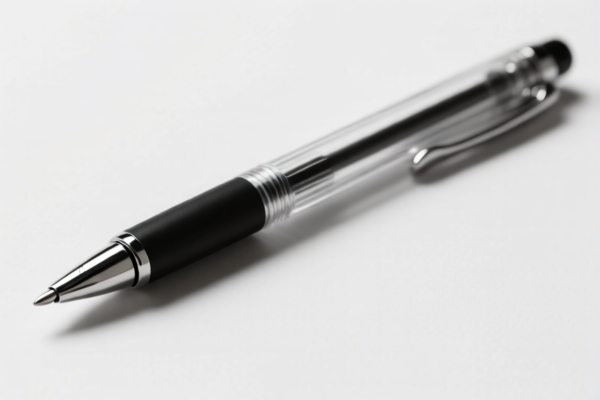


AI Analysis
Based on the provided DATA and TAX information, here is the professional wiki-style guide for G Pen (interpreted here as the generic term for various writing instruments including ball point pens, fountain pens, and markers found in your dataset).
⚠️ Important Note: The term "G Pen" is a specific brand (G-Pen) or a colloquial term for gel pens, but it does not appear verbatim in the provided dataset. In the context of international trade and the provided JSON, "G Pens" are classified under Ball point pens, Fountain pens, or Other pens. The classification depends heavily on the specific mechanism (ball vs. fountain vs. felt tip).
🖊️ G Pen & Writing Instruments (Ball Point, Fountain, & Other Pens)
🌐 HS Code Reference & Customs Clearance Guide | 2026 Latest Tariff Analysis | Professional Clearance Strategy
📌 I. Product Definition & Classification: Do You Know Exactly What a "G Pen" Is?
In the global trade of writing instruments, the term "G Pen" usually falls under Heading 9608. However, precise classification depends on the filling mechanism and tip type:
- Ball Point Pens: Use a rotating ball at the tip to dispense ink (most common "G Pens").
- Fountain/Silograph Pens: Use a nib and ink cartridge/reservoir system.
- Other Pens (Felt-tipped/Porous): Use a porous tip (e.g., highlighters, fine liners).
⚠️ Key Distinction:
- If it is a standard ball-point mechanism (e.g., "G" series ball pens) → 9608.10.00.00
- If it is a fountain pen or "other pen" type → 9608.30.00.39
- Note: Pencil sharpeners and erasing knives fall under Cutlery (8214), NOT pens.
📦 II. HS Code Classification Details (Based on Provided DATA)
| HS Code | Product Description (from DATA) | Applicable Scenario | Tax Structure |
|---|---|---|---|
9608.10.00.00 |
Ball point pens | Standard "G Pen" style, ball-point mechanism, disposable or refillable ball pens. | 0.0% (Base) + 0.0% (Additional) |
9608.30.00.39 |
Fountain pens, stylograph pens and other pens (Other) | Fountain pens, stylographs, high-end "G" style pens that are not ball-point, or other porous-tipped pens not specified elsewhere. | 0.4¢ each + 2.7% (Base) + 7.5% (Additional) |
9608.30.00.31 |
Not in DATA | (Hypothetical) Fountain pens specifically listed elsewhere. | N/A |
🔍 Critical Warning:
- Ball Point Pens (9608.10.00.00) are currently Tax-Free (0%) for base and additional tariffs in this dataset.
- Fountain/Other Pens (9608.30.00.39) are subject to a complex tax structure: A specific duty of 0.4¢ per pen PLUS an ad valorem duty of 2.7%, PLUS a significant 7.5% Additional Tariff.
- Do not misclassify a ball-point "G Pen" as a "Fountain Pen" to avoid the 7.5% extra tax.
💰 III. 2026 Tariff Rate Analysis (Detailed Breakdown)
✅ Applicable Country: United States (US)
✅ Origin: China (CN) (Inferred from context of "Additional Tariff" and typical trade data patterns)
✅ Validity: Based on provided "DATA" and "TAX" fields.
🎯 Scenario A: "G Pen" is a Ball Point Pen
HS Code: 9608.10.00.00
| Tax Item | Rate | Calculation Logic |
|---|---|---|
| Base Tariff | 0.0% | No duty on standard ball-point pens. |
| Additional Tariff (Section 301) | 0.0% | Zero. No "Additional Tariff" applies to this code in the provided data. |
| Total Effective Rate | 0.0% | Duty-Free! |
| Strategic Advantage | 🟢 High | Zero tariff burden significantly improves profit margin. |
📌 Explanation:
- According to the provided data, ball point pens enjoy a 0% tariff rate on both base and additional taxes.
- This makes them the most tax-efficient writing instrument to import.
🎯 Scenario B: "G Pen" is a Fountain Pen or "Other" Pen
HS Code: 9608.30.00.39
| Tax Item | Rate | Calculation Logic |
|---|---|---|
| Base Tariff | 0.4¢ each + 2.7% | Specific Duty: 0.4 US cents per unit + 2.7% of CIF value. |
| Additional Tariff (Section 301) | 7.5% | Fixed Additional Duty applied on top of the base. |
| Total Effective Rate | 0.4¢ + 2.7% + 7.5% | Variable. Depends on unit count and value. |
| Example Calculation | If 1,000 pens @ $5 each ($5,000 total) | 1. Specific: 1,000 × $0.004 = $4.00 2. Ad Valorem (Base): $5,000 × 2.7% = $135.00 3. Additional: $5,000 × 7.5% = $375.00 Total Tax: $514.00 (10.28% total) |
📌 Explanation:
- The 7.5% Additional Tariff is the killer here. It is added on top of the 2.7% base rate.
- The 0.4¢ each charge is a "specific duty" (count-based), which hits low-value pens harder.
- Risk: If your "G Pen" is actually a fountain pen, you will face a ~10% total tax, compared to 0% for ball-point.
🛠️ IV. Customs Clearance Practical Advice (Avoiding Pitfalls)
✅ 1. Preparation Checklist (Must-Haves)
| Document | Requirement | Reason |
|---|---|---|
| Product Photo | ✔️ Must show the Tip clearly | To prove it is Ball Point (Circle) vs. Fountain (Nib). |
| Ink Cartridge Type | ✔️ Must show Refill mechanism | Ball pens use ink cartridges/pods; Fountain pens use ink converters/bottles. |
| Commercial Invoice | ✔️ Must specify "Ball Point Pen" | Use the exact term from HS Code 9608.10.00.00 description. |
| Material List | ✔️ Plastic/Metal composition | Helps verify if it's a "Base Metal Part" (8214) vs. Pen (9608). |
✅ 2. Declaration Strategy (Key Mantra)
🔥 Mantra: "Ball Point = 0%; Fountain = 10%; Don't Mix Them!"
| Scenario | Correct HS Code | Tariff | Common Mistake |
|---|---|---|---|
| Standard "G" Ball Pen | 9608.10.00.00 |
0% | Declaring as 9608.30.00.39 → Paying 10% unnecessarily. |
| Fountain Pen / High-end Pen | 9608.30.00.39 |
0.4¢ + 10.2% | Declaring as 9608.10.00.00 → Customs Penalty / Audit. |
| Gel Pen / Marker | 9608.30.00.39 (if "Other") |
0.4¢ + 10.2% | Assuming all "G Pens" are 0%. |
✅ 3. Special Cases & Traps
| Situation | Advice |
|---|---|
| "G Pen" Brand vs. Type | Do not rely on the brand name "G Pen". Look at the mechanism. If it has a ball, it's 9608.10.00.00. |
| Bulk Orders | For low-value pens, the 0.4¢ each specific duty (for 9608.30) might seem small, but for 100,000 units, it's $400 alone + percentage tax. |
| Parts & Accessories | Pen clips, caps, and refill barrels are often included in the "Pen" classification. Do not try to ship them separately as "Parts" unless they are clearly non-pen parts (rare). |
| Cutlery Confusion | If the product is a "Paper Knife" or "Letter Opener" (often confused with "Pen" shapes), it falls under 8214.10.00.00 (0% tax) or 8214.90.90.00 (1.4¢ + 3.2%), NOT pen codes. |
🌍 V. Global Market Comparison (2026 Context)
| Market | Recommended HS Code (Ball Pen) | Duty | Risk Level |
|---|---|---|---|
| 🇺🇸 USA (Data Provided) | 9608.10.00.00 |
0% | ✅ Low (Perfect) |
| 🇪🇺 EU | 9608.10 (Similar) | ~2-3% | 🟡 Medium |
| 🇯🇵 Japan | 9608.10 | ~4-5% | 🟡 Medium |
| 🇨🇳 China (Import) | 9608.10 | ~10% | 🔴 High |
📌 Conclusion:
- The US Market (as per provided data) offers zero tariff for ball-point pens.
- Fountain pens face a 7.5% Additional Tariff on top of base duties.
- Accuracy is Profit: Misclassifying a ball pen as a fountain pen costs 10.2%.
📌 VI. Common Errors & "Gotchas" (Lessons Learned)
❌ Error 1: Calling all "G Pens" "Fountain Pens" because of the brand name.
👉 Result: Paying 10.2% tax instead of 0%. Loss of 10.2% margin!
❌ Error 2: Declaring "Gel Pens" as "Ball Point" without proof.
👉 Result: Gel pens often use porous tips and may fall under 9608.30.00.39 (taxable). Customs may audit the ink mechanism.
❌ Error 3: Confusing "Pen" with "Paper Knife" (Letter Opener).
👉 Result: Both are sharp metal objects, but 8214 (Cutlery) has different rules (0% or 3.2%). Ensure the function is clearly "writing".
✅ Correct Approach:
"Ball Point Pen, 0.5mm, Blue Ink, Refillable, Model G-100, Plastic Body, Rotating Ball Tip."
🎯 VII. Final Verdict: Strategic Recommendation
-
If your product is a Ball Point Pen:
- HS Code:
9608.10.00.00 - Action: Declare explicitly as "Ball Point Pen".
- Tax: 0.0%. You are in the clear!
- HS Code:
-
If your product is a Fountain Pen or "Other" Pen:
- HS Code:
9608.30.00.39 - Action: Prepare for 0.4¢/unit + 2.7% + 7.5% tax.
- Tax: ~10.2% total. Factor this into your pricing immediately.
- HS Code:
-
If you are importing "Letter Openers" or "Paper Knives":
- HS Code:
8214.10.00.00(0%) or8214.90.90.00(3.2% + 1.4¢). - Action: Ensure the product is NOT a writing instrument.
- HS Code:
🚀 Pro Tip: For "G Pens" (Ball Point), you have a zero-tariff advantage in the US market. Maximize this by ensuring your invoice descriptions and photos strictly prove the ball-point mechanism to avoid any customs reclassification.
✨ Professional Clearance, Start with Precision!
💼 Don't let a 10% tax mistake eat your profit margin on "G Pens".
Customer Reviews
About HS Code Classification
The Harmonized System (HS) is an internationally standardized nomenclature developed by the World Customs Organization (WCO) to classify traded products. Over 200 countries use the HS system as the basis for customs tariffs, trade statistics, and import/export regulations.
Each HS code follows a hierarchical structure:
- Chapter (2 digits) — Broad category of goods (e.g., Chapter 84: Machinery and Mechanical Appliances)
- Heading (4 digits) — More specific grouping within the chapter
- Subheading (6 digits) — Internationally standardized breakdown, used by all WCO member countries
- National subdivisions (8-10 digits) — Country-specific extensions for further classification, such as US HTSUS 10-digit codes
Correct HS code classification is essential for smooth customs clearance, accurate duty payment, and compliance with trade regulations. Misclassification can lead to customs delays, overpayment of duties, or penalties.
When importing from CN to US, the applicable tariff rates may include:
- Most-Favored-Nation (MFN) rate — The standard duty rate applied to WTO members
- General rate — Applied to countries without trade agreements
- Trade remedy duties — Additional tariffs such as Section 301 (anti-dumping), Section 232 (national security), or countervailing duties
The information provided on this page is for reference purposes only. For official classification, please consult with your local customs authority or a licensed customs broker.