GPS Tracker
CN → US| HS Code | Tariff Rate | Origin | Destination | Doc |
|---|---|---|---|---|
| 8526910020 | 35.0% | CN | US | Official Doc |
| 8517620020 | 35.0% | CN | US | Official Doc |
| 8517620090 | 35.0% | CN | US | Official Doc |
| 8526910040 | 35.0% | CN | US | Official Doc |
Product Images

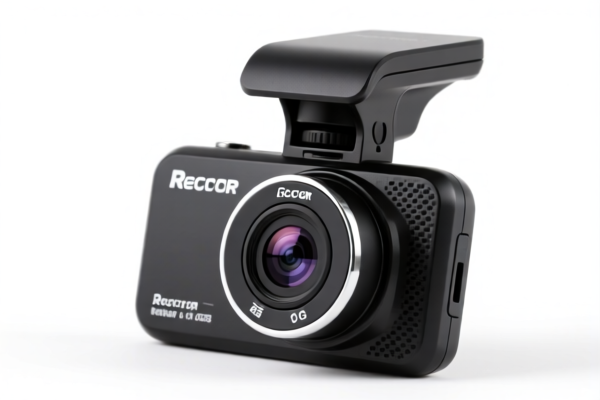


AI Analysis
🛰️ GPS Tracker: The Ultimate Clearance Guide (2026 Edition)
🌐 HS Code Masterclass & Tax Strategy | Decoded for 2026 Tariff Rules | Pro-Level Customs Compliance
📌 Part 1: What Is a "GPS Tracker"? The Classification Dilemma
A GPS Tracker is a sophisticated electronic device designed for real-time location monitoring, data transmission, and navigation assistance. In international trade, its classification is not straightforward because it straddles multiple tariff definitions:
- Radio Navigation Aids: Devices that receive and process satellite signals for positioning.
- Data Transmission Equipment: Machines that receive, convert, and transmit data over communication networks.
- General Electronic Devices: Catch-all categories for devices not fitting specific technical descriptions.
⚠️ Critical Insight:
- HS Code 8526.91.00: Focuses on the "navigation" function (receiving satellite signals).
- HS Code 8517.62.00: Focuses on the "data transmission" function (sending location data to servers).
- HS Code 8517.62.00.90: A "catch-all" for general electronic communication devices.
Your choice of HS Code depends on the device’s primary function and how it is marketed!
📦 Part 2: HS Code Breakdown & Tax Liability (2026 U.S. Import Rules)
Applicable to U.S. Imports from China
| HS Code | Product Description | Primary Function | Total Tax Rate | Tax Breakdown |
|---|---|---|---|---|
8526.91.00.20 |
GPS Tracker (Navigation Aid) | Receives/Processes GPS signals for positioning | 35.0% | Base: 0% + 25% (Add-on) + 10% (Section 122) |
8517.62.00.20 |
GPS Tracker (Data Transmission) | Transmits location data via cellular/satellite | 35.0% | Base: 0% + 25% (Add-on) + 10% (Section 122) |
8517.62.00.90 |
GPS Tracker (General Electronic) | Generic data receiver/converter/transmitter | 35.0% | Base: 0% + 25% (Add-on) + 10% (Section 122) |
8526.91.00.40 |
GPS Tracker (Radio Navigation) | Radio-based navigation assistance (non-GPS specific) | 35.0% | Base: 0% + 25% (Add-on) + 10% (Section 122) |
🔍 Tax Policy Deep Dive:
- Base Tariff (0%): Standard Most-Favored-Nation (MFN) rate for electronics.
- 25% Add-on Tariff: "Section 301" tariff (U.S. Trade Representative) targeting Chinese goods.
- 10% Section 122 Tariff: Special tariff under the International Emergency Economic Powers Act (IEEPA) for China-origin goods.
- Total = 35%: This is the maximum effective rate for all four HS Codes listed.
- No De Minimis Exemption: Small shipments (<$800) do not qualify for tax-free entry.
🛠️ Part 3: Customs Clearance Strategy & Risk Avoidance
✅ 1. Documentation Checklist (Mandatory for Smooth Clearance)
| Document | Purpose | Critical Details |
|---|---|---|
| Product Specification Sheet | Proves function | Highlight: "GPS Signal Reception" OR "Data Transmission Capability" |
| Circuit Diagram/Block Schematic | Confirms hardware design | Show antenna, processor, cellular modem (if applicable) |
| Clear Product Photos | Visual verification | Include labeled ports, antenna, branding, and model number |
| Commercial Invoice | Value declaration | State: "GPS Tracker, Model [X], Function: [Navigation/Data]" |
| Packing List | Cargo integrity | Specify units per carton, weight, dimensions |
| Origin Certificate | Country of origin | Must state "Made in China" to apply 35% rate |
| Third-Party Test Reports | Compliance proof | FCC (U.S.), CE (EU), RoHS (Environment) |
🚫 Critical Mistake:
- Incorrect HS Code Selection: Using8517.62.00.90for a device marketed as a "GPS Navigation System" risks misclassification.
- Vague Descriptions: "GPS Device" without specifying function (navigation vs. data transmission) leads to delays.
✅ 2. Optimal HS Code Selection Strategy
| Scenario | Recommended HS Code | Why? |
|---|---|---|
| Device marketed as "Navigation Aid" | 8526.91.00.20 |
Aligns with "GPS signal processing" function |
| Device marketed as "Data Transmitter" | 8517.62.00.20 |
Emphasizes cellular/satellite data transmission |
| Generic device with no specific function | 8517.62.00.90 |
Catch-all for ambiguous electronic devices |
| Device emphasizing radio navigation (not GPS) | 8526.91.00.40 |
For non-GPS radio-based tracking |
💡 Pro Tip:
- If your tracker sends data to a cloud server, use8517.62.00.20.
- If it displays location on a screen/map, use8526.91.00.20.
- Always match the HS Code to the product’s primary marketing claim!
✅ 3. Cost Calculation Example
Scenario: Importing 100 GPS Trackers from China to the U.S.
- Declared Value: $1,000 (FOB)
- Total Landed Cost: $1,000 × (1 + 35%) = $1,350
- Per Unit Cost: $13.50 (including all taxes)
📉 Impact:
- A 5% increase in product price to absorb taxes → Uncompetitive pricing.
- Strategy: Consider sourcing from non-China countries (e.g., Vietnam, Mexico) to avoid Section 301 + Section 122 tariffs.
🌍 Part 4: Global Market Comparison (2026)
| Country | Recommended HS Code | Total Tariff | Key Requirements |
|---|---|---|---|
| 🇺🇸 U.S. | 8526.91.00.20 |
35% | FCC, Section 301 + IEEPA |
| 🇨🇳 China | 8526.91.00.20 |
5% | CCC, RoHS |
| 🇪🇺 EU | 8526.91.00.20 |
0% | CE, GDPR (for data) |
| 🇯🇵 Japan | 8526.91.00.20 |
5% | PSE, Radio Law |
📌 Key Insight:
- U.S. is the most expensive market due to layered tariffs.
- EU/Japan have lower rates but stricter data privacy (GDPR) and radio compliance rules.
🚨 Part 5: Common Pitfalls & Solutions
| Mistake | Consequence | Solution |
|---|---|---|
| Misdeclaring Function | 35% tax + Penalty | Use precise HS Code matching marketing claims |
| Ignoring FCC Compliance | Seizure or Return | Obtain FCC ID before shipping |
| Vague Invoice Description | 2–4 Week Delay | Specify: "GPS Tracker, Model XYZ, Function: [Navigation/Data]" |
| Missing Origin Certificate | No Tariff Reduction | Provide CO for non-China origin (e.g., Vietnam) |
🎯 Final Takeaway: Win the Clearance Game!
🔹 "Function First, HS Code Second, Tax Third!"
🔹 "35% is unavoidable for China-origin GPS Trackers – Plan Ahead!"
🔹 "Pre-clearance (Advance Ruling) saves 10+ Days and $500+ in penalties!"
Next Steps:
1. Review Product Marketing: Is it "Navigation" or "Data Transmission"?
2. Select Correct HS Code: Match function to description.
3. Prepare Documents: FCC, Technical Specs, Invoice.
4. Apply for Advance Ruling: Avoid surprises at customs!
✨ Pro Tip: For U.S. imports, never skip Section 301 + IEEPA compliance.
💼 Your GPS Tracker’s Success = Precise Classification + Strategic Sourcing!
📞 Need Help? Contact a licensed customs broker + apply for an Advance Ruling from U.S. CBP.
🚀 Clear Faster, Pay Less, Ship Smarter!
Customer Reviews
About HS Code Classification
The Harmonized System (HS) is an internationally standardized nomenclature developed by the World Customs Organization (WCO) to classify traded products. Over 200 countries use the HS system as the basis for customs tariffs, trade statistics, and import/export regulations.
Each HS code follows a hierarchical structure:
- Chapter (2 digits) — Broad category of goods (e.g., Chapter 84: Machinery and Mechanical Appliances)
- Heading (4 digits) — More specific grouping within the chapter
- Subheading (6 digits) — Internationally standardized breakdown, used by all WCO member countries
- National subdivisions (8-10 digits) — Country-specific extensions for further classification, such as US HTSUS 10-digit codes
Correct HS code classification is essential for smooth customs clearance, accurate duty payment, and compliance with trade regulations. Misclassification can lead to customs delays, overpayment of duties, or penalties.
When importing from CN to US, the applicable tariff rates may include:
- Most-Favored-Nation (MFN) rate — The standard duty rate applied to WTO members
- General rate — Applied to countries without trade agreements
- Trade remedy duties — Additional tariffs such as Section 301 (anti-dumping), Section 232 (national security), or countervailing duties
The information provided on this page is for reference purposes only. For official classification, please consult with your local customs authority or a licensed customs broker.