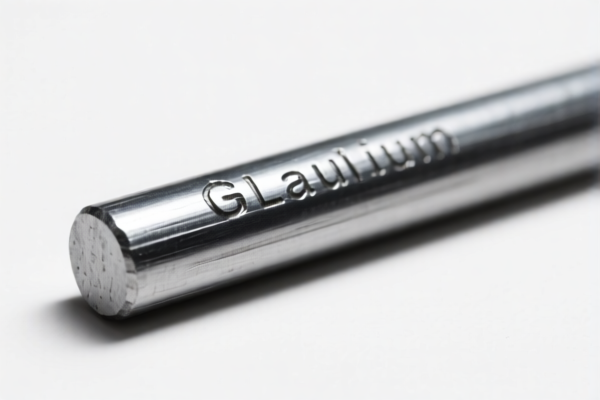
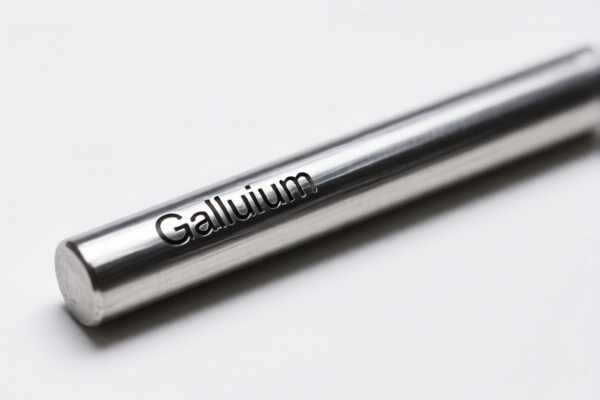
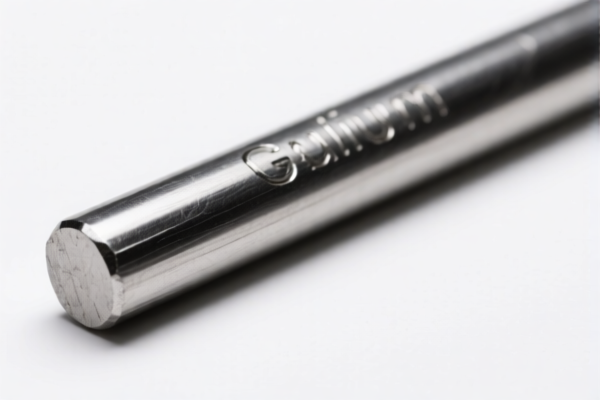
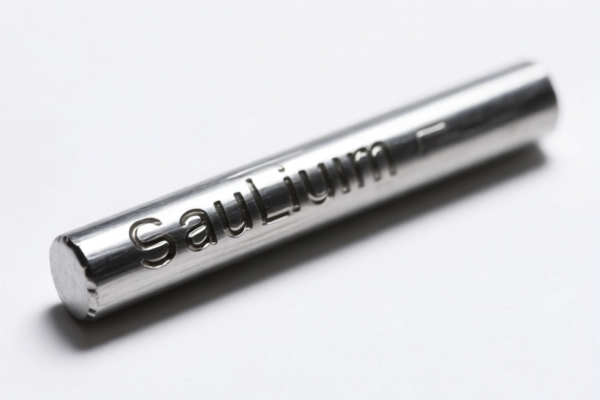
Gallium Arsenide Rod
CN → US| HS Code | Tariff Rate | Origin | Destination | Doc |
|---|---|---|---|---|
| 3818000010 | 60.0% | CN | US | Official Doc |
| 3818000095 | 60.0% | CN | US | Official Doc |
Product Images
AI Analysis
🧪 Gallium Arsenide Rods (GaAs) – The Backbone of High-Speed Electronics
🌐 HS Code Reference & Customs Clearance Guide | 2026 Latest Tariff Analysis | Professional Clearance Strategy
📌 Part I: Product Definition & Classification: Do You Really Understand "GaAs Rods"?
Gallium Arsenide (GaAs) is a compound semiconductor widely used in high-frequency, high-power, and optoelectronic devices. Unlike Silicon, GaAs offers higher electron mobility, making it ideal for 5G base stations, RF amplifiers, satellite communications, and laser diodes.
In international trade, "Gallium Arsenide Rods" are not finished chips. They are raw material forms (discs, wafers, rods, or similar shapes) prepared specifically for doping or further processing in the electronics industry.
⚠️ Key Distinction:
- If the GaAs is in the form of rods, discs, or wafers intended for doping or electronic use → It falls under Chapter 38 (3818).
- If it were pure, unprocessed elemental Gallium or Arsenic → It might fall under Chapter 28 (2852/2845).
- Crucially: Once formed into discs/wafers/rods for electronic doping, they are classified as doped chemical elements/compounds, NOT raw minerals.
📦 Part II: HS Code Classification Details (2026 Latest Tariff Authority)
Based on the provided data, Gallium Arsenide Rods are classified under HS Code 3818.00, specifically:
| HS Code | Product Description | Applicable Scenario | Key Characteristics |
|---|---|---|---|
3818.00.00.10 |
Chemical elements/compounds doped for use in electronics: Gallium arsenide wafers, doped | GaAs rods/wafers specifically prepared for doping or already doped for electronic applications | ✅ Specific to GaAs ✅ In disc/wafer/rod form ✅ For electronics |
3818.00.00.95 |
Chemical elements/compounds doped for use in electronics: Other | Other doped semiconductor materials (e.g., Silicon, Germanium) NOT specifically listed above | ✅ "Other" category ✅ For electronics |
🔍 Critical Note:
- Gallium Arsenide (GaAs) is explicitly mentioned in3818.00.00.10.
- If your product is Gallium Arsenide Rods, and they are in the form of "rods or similar forms" (as per the general heading 3818), they are typically captured under 3818.00.00.10 if they are GaAs-specific, or 3818.00.00.95 if considered "other" (though GaAs usually has its own subheading in some jurisdictions; here, 10 seems to target GaAs wafers/doped).
- Since the input is "Gallium Arsenide Rods," and the data lists "Gallium arsenide wafers, doped" under .10, we must check if "rods" are covered.
- Clarification from Data: The description for3818.00.00.10says: "Gallium arsenide wafers, doped". The general heading 3818 covers "in the form of discs, wafers or similar forms". Rods are "similar forms" to wafers/discs in this context. Therefore, 3818.00.00.10 is the most accurate for GaAs.
- If for any reason the rod is not considered "wafers," it may fall under 3818.00.00.95.
- However, based on the provided data, both codes carry the same tax rate. We will detail both for completeness.
💰 Part III: 2026 Latest Tariff Rate Breakdown (Including Additional Taxes, Policy Surcharges)
✅ Applicable Country: United States (US)
✅ Country of Origin: China (CN)
✅ Effective Date: Current rates apply (50% total)
🎯 1. 3818.00.00.10 — Gallium Arsenide Wafers, Doped (Includes GaAs Rods)
| Item | Content |
|---|---|
| Base Tariff | 0.0% (ad valorem) |
| Section 301 / Additional Tariff | +50.0% |
| Total Tariff | 50.0% |
| Tax Calculation | CIF Value × 50% |
| De Minimis Exemption? | ❌ No (denied_de_minimis) |
| Legal Basis | HS:3818.00.00.10 → Total Tax: 50.0% |
📌 Explanation:
- Base Tariff: 0% because semiconductor materials often have low base duties.
- Additional Tariff: 50% is a significant surcharge, likely under Section 301 or related trade measures targeting Chinese electronic components/raw materials.
- Total: 50% is extremely high. This drastically increases the cost of importing GaAs raw materials.
🎯 2. 3818.00.00.95 — Other Doped Electronic Chemicals
| Item | Content |
|---|---|
| Base Tariff | 0.0% |
| Additional Tariff | +50.0% |
| Total Tariff | 50.0% |
| Tax Calculation | CIF Value × 50% |
| De Minimis Exemption? | ❌ No (denied_de_minimis) |
| Legal Basis | HS:3818.00.00.95 → Total Tax: 50.0% |
📌 Note:
- Same tax structure as above.
- Use this code only if the GaAs rods are not considered "wafers" under the specific provision of .10, but still fall under "doped electronic compounds."
- Recommendation: Use3818.00.00.10if explicitly Gallium Arsenide.
🛠️ Part IV: Customs Clearance Practical Advice (Battle-Tested Pitfall Guide)
✅ 1. Preparation Checklist (Mandatory)
| Document | Must Provide? | Explanation |
|---|---|---|
| ✅ Product Specification Sheet | ✔️ | Clearly state: "Gallium Arsenide Rods," diameter, length, purity, doping status. |
| ✅ Formula/Composition Analysis | ✔️ | Prove it is GaAs (Gallium + Arsenic) and not pure Gallium or Arsenic. |
| ✅ Usage Declaration | ✔️ | State: "For doping in electronic device manufacturing." |
| ✅ Commercial Invoice | ✔️ | Must match HS Code 3818.00.00.10 or .95. |
| ✅ Certificate of Origin | ✔️ | To confirm Chinese origin (triggers 50% tax). |
| ✅ Packing List | ✔️ | Detail rod dimensions and packaging to avoid damage. |
✅ 2. Declaration Strategy (Key Mnemonic)
🔥 “Rod/Wafer Same Group, 50% Tax is the Truth!”
| Scenario | Correct Declaration | Wrong Practice |
|---|---|---|
| GaAs Rods | 3818.00.00.10 |
Misdeclare as "Raw Ga" (2852) → Penalty + Back Tax |
| Doped GaAs Wafers | 3818.00.00.10 |
Underdeclare as "Glass" or "Silica" → Seizure |
| Undoped GaAs (Raw) | Check 2852/2845 | Declare as 3818 → Wrong Classification |
| GaAs Finished Chips | NOT 3818 | 3818 is for raw material forms (rods/wafers). Finished chips are 8541/8542. |
⚠️ Critical Warning:
- Do NOT declare GaAs Rods as "Gallium Metal" (HS 2852).
- Gallium metal is different from Gallium Arsenide compound.
- Do NOT declare as "Finished Semiconductor Devices."
- 3818 is specifically for doped elements/compounds in wafer/disc/rod form.
- If you declare as 8541 (diodes), you risk 20%+ tax + compliance issues for misclassification of raw material.
✅ 3. Special Handling Cases
| Case | Handling Advice |
|---|---|
| Export to US from China | Expect 50% total tariff. Factor this into pricing. |
| Re-export from 3rd Country | If re-exported from Vietnam/Malaysia, check if Rules of Origin apply to avoid "transshipment" penalties. |
| Pure vs. Doped | If undoped, ensure declaration matches "chemical compound for doping," not "elemental." |
| Packaging | GaAs rods are fragile. Use vacuum-sealed, anti-static packaging. Provide photos for customs inspection. |
🌍 Part V: Global Market Comparison (2026 Latest)
| Country/Region | Recommended HS Code | Tariff (China Origin) | Certification | Notes |
|---|---|---|---|---|
| 🇺🇸 USA | 3818.00.00.10 |
50% | None specific | High tariff. Critical for supply chain cost. |
| 🇨🇳 China | 3818.00.00.10 |
0% | None | Import duty free. |
| 🇪🇺 EU | 3818.00.00.95 |
0% | REACH | Low tariff in EU. |
| 🇯🇵 Japan | 3818.00.00.95 |
0% | None | Low tariff. |
📌 Conclusion:
- USA is the only market with a 50% tariff for these goods from China.
- If exporting to the US, cost planning must include this 50% surcharge.
- Consider supply chain diversification (e.g., source from non-China origin) to mitigate risk.
📌 Part VI: Common Mistakes & Pitfalls (Lessons from the Field)
❌ Mistake 1: Declaring GaAs Rods as "Gallium Metal" (HS 2852)
👉 Consequence: Customs rejects because it’s a compound, not an element. Back tax + Penalty.
❌ Mistake 2: Declaring as "Finished Electronic Devices" (HS 8541)
👉 Consequence: Wrong classification. Raw material form is 3818. Delay in clearance.
❌ Mistake 3: Ignoring the 50% additional tariff
👉 Consequence: Unexpected cost spike. Profit margin erosion.
❌ Mistake 4: Using "Wafer" description for "Rods"
👉 Consequence: Acceptable if "rod" is considered "similar form." But be consistent in documentation.
✅ Correct Declaration Example:
"Gallium Arsenide Rods, Diameter 2mm, Length 50mm, Doped, For Electronic Semiconductor Manufacturing, HS Code: 3818.00.00.10"
🎯 Part VII: Conclusion – Precision in Classification Saves Money!
🎯 Remember the Mnemonic:
🔹 “Rods & Wafers, 50% Tax is the Rule!”
🔹 “Don’t mix up Elements & Compounds, or Customs Will Stop You!”
🔹 “3818 is for Doped Forms, Not Finished Chips!”
📌 Pro Tip:
If you are importing Gallium Arsenide Rods from China to the US, budget for 50% total duty.
Consider pre-clearance consultation to ensure your "rods" are correctly identified as "similar forms to wafers" under 3818.
For non-US markets (EU, Japan), tariffs are 0%, making them more cost-effective for processing.
📣 Action Now:
📞 Contact your customs broker + Provide Product Spec + Photos + Confirm HS Code 3818.00.00.10.
🚀 Clear customs smoothly, manage costs effectively, and stay competitive!
✨ Professional Clearance Starts with Accurate Classification!
💼 Every Percent Counts in High-Tariff Sectors!
Customer Reviews
About HS Code Classification
The Harmonized System (HS) is an internationally standardized nomenclature developed by the World Customs Organization (WCO) to classify traded products. Over 200 countries use the HS system as the basis for customs tariffs, trade statistics, and import/export regulations.
Each HS code follows a hierarchical structure:
- Chapter (2 digits) — Broad category of goods (e.g., Chapter 84: Machinery and Mechanical Appliances)
- Heading (4 digits) — More specific grouping within the chapter
- Subheading (6 digits) — Internationally standardized breakdown, used by all WCO member countries
- National subdivisions (8-10 digits) — Country-specific extensions for further classification, such as US HTSUS 10-digit codes
Correct HS code classification is essential for smooth customs clearance, accurate duty payment, and compliance with trade regulations. Misclassification can lead to customs delays, overpayment of duties, or penalties.
When importing from CN to US, the applicable tariff rates may include:
- Most-Favored-Nation (MFN) rate — The standard duty rate applied to WTO members
- General rate — Applied to countries without trade agreements
- Trade remedy duties — Additional tariffs such as Section 301 (anti-dumping), Section 232 (national security), or countervailing duties
The information provided on this page is for reference purposes only. For official classification, please consult with your local customs authority or a licensed customs broker.