Gallium Arsenide Wafer Material
CN → US| HS Code | Tariff Rate | Origin | Destination | Doc |
|---|---|---|---|---|
| 8541100040 | 10.0% | CN | US | Official Doc |
| 2842909050 | 10.0% | CN | US | Official Doc |
| 3818000010 | 60.0% | CN | US | Official Doc |
| 8541590040 | 10.0% | CN | US | Official Doc |
Product Images
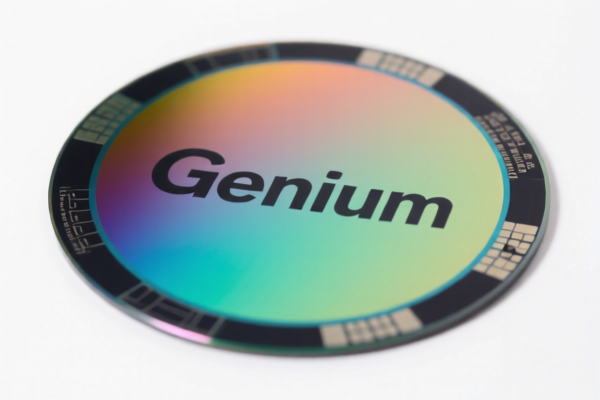
AI Analysis
⚡ Gallium Arsenide (GaAs) Wafer Material: Strategic HS Code Classification & US Customs Clearance Guide | 2026 Tax Analysis
🌐 HS Code Reference & Customs Clearance Strategy | Decoding the 10%-60% Tax Spectrum | Expert-Level Compliance
📌 一、Product Definition: What Exactly is "Gallium Arsenide Wafer"?
Gallium Arsenide (GaAs) is a compound semiconductor material (III-V series) known for high electron mobility, making it superior to Silicon for high-frequency and high-power applications. In international trade, the classification depends strictly on its physical state and functional readiness.
The data provided reveals four distinct classification paths, ranging from 10% to 60% total tax rates. This disparity highlights a critical customs principle: Is it a raw material? A chemical? Or a semi-finished semiconductor component?
⚠️ Key Distinction Point: - Raw Material/Chemical Form: If treated primarily as an inorganic salt/compound without specific semiconductor device structure → Lower base risk, but potential high "122 Clause" tariffs. - Semi-Conductor Wafer Form: If clearly defined as "uninstalled chips, dies, or wafers" → Fits specific semiconductor HS codes. - Finished Component Definition: If interpreted as a specific electronic component category → Can trigger massive附加 tariffs (e.g., 50% + 10%).
📦 II. HS Code Classification Matrix (Data-Driven Analysis)
Based on the provided dataset, here are the four possible HS Code classifications for Gallium Arsenide Wafer Material, along with their tax implications.
| HS Code | Summary/Description from Data | Total Tax Rate | Tax Composition Breakdown |
|---|---|---|---|
| 8541.10.00.40 | Semiconductor Wafer: Classified as uninstalled chips, dies, or wafers made of GaAs. | 10.0% | Base: 0% Add-on: 0% Section 122 Tariff: 10% |
| 2842.90.90.50 | Inorganic Salt/Chemical: Classified as an arsenide (inorganic salt) in primary wafer form. | 10.0% | Base: [Empty] Add-on: 0% Section 122 Tariff: 10%* |
| 3818.00.00.10 | Electronic Component/Prepare: Contains GaAs material & wafer form, fully meeting this code's requirements. | 60.0% | Base: 0% Add-on: 50% Section 122 Tariff: 10% |
| 8541.59.00.40 | Other Semiconductor Wafers: Unassembled chips/dies/wafers, specified as GaAs material. | 10.0% | Base: 0% Add-on: 0% Section 122 Tariff: 10% |
* Note on 2842.90.90.50: The provided text leaves the "Base Tariff" field empty for this code, but explicitly states the "Total Tax" is 10% driven by the Section 122 tariff. In customs practice, Section 122 (301 Tariffs) often applies on top of the base rate. However, based strictly on the provided DATA, the Total is 10%.
💰 III. Detailed Tax Clause Explanation (The "122" Factor)
All four HS Codes listed above share a common critical component: Section 122 Tariff at 10%. This refers to the US Section 301 Tariffs (often referred to in customs systems as "122" due to specific HTSUS footnote structures or legacy system codes) targeting products from China.
🎯 1. The "Safe" Zone: 8541.10.00.40 & 8541.59.00.40
- Total Tax: 10%
- Breakdown:
- Base Duty: 0%
- Section 301 (Add-on): 0%
- Section 122 (301 Tariff): 10%
- Analysis: These codes fall under Chapter 85 (Electrical Machinery and Equipment), specifically "Diodes, Transistors, and Similar Semiconductor Devices."
- Why this is optimal: While the base duty is 0%, the 10% Section 122 tariff is unavoidable for Chinese-origin goods. However, it avoids the punitive 50% add-on seen in Code 3818.
⚠️ 2. The "Chemical" Zone: 2842.90.90.50
- Total Tax: 10%
- Breakdown:
- Base Duty: (Not specified in data, assumed minimal or included in total)
- Section 301 (Add-on): 0%
- Section 122 (301 Tariff): 10%
- Analysis: Classifying GaAs as an "Inorganic Salt" (Chapter 28) is risky. Customs may argue that a wafer is not just a salt but a processed semiconductor material. However, if accepted, the tax rate is similarly 10%.
🚨 3. The "High Risk" Zone: 3818.00.00.10
- Total Tax: 60%
- Breakdown:
- Base Duty: 0%
- Section 301 (Add-on): 50%
- Section 122 (301 Tariff): 10%
- Analysis: Chapter 38 covers "Miscellaneous Chemical Products." Code 3818 is for "Chemical Elements Doped for Preparing Semiconductors..." or similar preparations.
- Why so expensive? This code attracts a 50% additional tariff on top of the standard 10% Section 122 tariff. This is a 6x cost difference compared to Code 8541.
- Reason: Customs may view this as a "preparation" or "compound" rather than a structured "semiconductor device/wafer," triggering the highest punitive tier.
🛠️ IV. Customs Clearance Practical Advice (Avoiding the 60% Trap)
✅ 1. Critical Documentation for Clearance
| Document | Requirement | Purpose |
|---|---|---|
| Product Description | Must explicitly state: "Gallium Arsenide (GaAs) Wafer, Uninstalled Semiconductor Material" | To align with 8541 (Semiconductor Devices) rather than 3818 (Misc Chemicals). |
| Technical Spec Sheet | Show diameter (e.g., 4", 6"), thickness, doping type, and that it is unmounted/unassembled. | Proves it is a "Wafer" (Chapter 85 definition) and not a finished component or raw chemical powder. |
| Intended Use Statement | "For fabrication of RF chips, LEDs, or Photovoltaic cells." | Supports classification as a substrate/wafer for semiconductor manufacturing. |
| Country of Origin | Clearly marked "Made in China" (if applicable). | Triggers Section 122 (10%) and potential Section 301 (0% or 50% depending on code). |
✅ 2. Classification Strategy: How to Avoid 60%
🔥 "Don't call it a Chemical, Call it a Wafer!"
| Scenario | Recommended HS Code | Tax Rate | Risk Level |
|---|---|---|---|
| Standard GaAs Wafer | 8541.10.00.40 or 8541.59.00.40 | 10% | ✅ Low |
| Raw GaAs Powder/Crystal | 2842.90.90.50 | 10% | ⚠️ Medium (Argument possible) |
| Misclassified as "Chemical Preparation" | 3818.00.00.10 | 60% | ❌ High (Avoid at all costs) |
Strategic Tip: * Always emphasize the "Wafer" and "Uninstalled Chip/Die" nature of the product. * Cite HTSUS 8541 definitions: "Diodes, transistors and similar semiconductor devices; photosensitive semiconductor devices, including photovoltaic cells... whether or not assembled in modules or made up into finished panels; light emitting diodes..." * Wafer materials used to make these devices often fall under 8541.59 (Other) or 8541.10 depending on specific US ITA rulings, but crucially, they avoid the 50% add-on associated with Chapter 38.
✅ 3. Special Notes on Section 122 (301 Tariffs)
- The 10% Rule: For all the codes listed in the DATA, the Section 122 tariff is 10%. This is a fixed levy on Chinese-origin semiconductors and related materials.
- The 50% Trap: Only Code 3818 incurs an additional 50% add-on tariff. This is likely due to broader "Section 301" listings for chemical/miscellaneous goods.
- Conclusion: The tax difference is entirely driven by the Add-on Tariff (0% vs 50%), not the Base or Section 122 rate.
🌍 V. Global Market Context (Comparison)
| Market | Recommended HS Code | Est. Total Duty | Notes |
|---|---|---|---|
| 🇺🇸 USA | 8541.10.00.40 | 10% | Best case. Must prove "Wafer/Semiconductor" status. |
| 🇺🇸 USA (Risk) | 3818.00.00.10 | 60% | Worst case. Avoid if possible. |
| 🇨🇳 China (Import) | 3818.00.00.10 | ~0-13% | China often has low MFN rates for chemicals, but VAT applies. |
| 🇪🇺 EU | 8541.10.90 | ~0-3% | EU typically has lower semiconductor duties; no Section 122 equivalent. |
📌 VI. Common Mistakes & Pitfalls
❌ Mistake 1: Describing the product as "Gallium Arsenide Chemical Compound" without mentioning "Wafer." 👉 Result: Customs may classify under 3818.00.00.10 → 60% Tax!
❌ Mistake 2: Assuming all GaAs products are "Chemicals." 👉 Result: Wafer is a form of semiconductor device precursor, not just a raw chemical. Use 8541 definitions.
❌ Mistake 3: Ignoring the "Section 122" line item. 👉 Result: Even with 0% base duty, the 10% Section 122 tariff is mandatory for Chinese goods in Codes 8541, 2842, and 3818.
✅ Correct Declaration Example:
"Gallium Arsenide (GaAs) Semiconductor Wafer, Uninstalled, for RF Device Fabrication, Diameter: 4 inches, HTS: 8541.10.00.40"
🎯 VII. Conclusion & Action Plan
🎯 Key Takeaway:
For Gallium Arsenide Wafer Material, the HS Code 8541.10.00.40 or 8541.59.00.40 is the optimal choice. - Total Tax: 10% - Reason: It correctly identifies the item as a semiconductor wafer/device precursor, avoiding the punitive 50% add-on tariff applied to Chapter 38 (Miscellaneous Chemicals) under Code 3818.
📌 Action Steps for Importers: 1. Update Product Description: Ensure all invoices and packing lists state "Wafer" and "Semiconductor Material." 2. Verify HS Code: Confirm classification with a licensed customs broker as 8541.10.00.40 or 8541.59.00.40. 3. Prepare Tech Data: Have spec sheets ready to prove the product is a wafer, not a raw chemical powder or finished component. 4. Budget for 10%: Include the 10% Section 122 tariff in your landed cost calculation. Do not budget for 60% unless you are forced into Code 3818.
📣 Immediate Action:
📞 Consult your customs broker to file a Pre-Import Ruling (Ruling Letter) for GaAs Wafers under 8541. This locks in the 10% rate and prevents sudden reclassification to the 60% bracket.
✨ Smart Classification, Significant Savings! 💼 10% vs 60%: The difference is 50 percentage points. Don't leave it to chance!
Customer Reviews
About HS Code Classification
The Harmonized System (HS) is an internationally standardized nomenclature developed by the World Customs Organization (WCO) to classify traded products. Over 200 countries use the HS system as the basis for customs tariffs, trade statistics, and import/export regulations.
Each HS code follows a hierarchical structure:
- Chapter (2 digits) — Broad category of goods (e.g., Chapter 84: Machinery and Mechanical Appliances)
- Heading (4 digits) — More specific grouping within the chapter
- Subheading (6 digits) — Internationally standardized breakdown, used by all WCO member countries
- National subdivisions (8-10 digits) — Country-specific extensions for further classification, such as US HTSUS 10-digit codes
Correct HS code classification is essential for smooth customs clearance, accurate duty payment, and compliance with trade regulations. Misclassification can lead to customs delays, overpayment of duties, or penalties.
When importing from CN to US, the applicable tariff rates may include:
- Most-Favored-Nation (MFN) rate — The standard duty rate applied to WTO members
- General rate — Applied to countries without trade agreements
- Trade remedy duties — Additional tariffs such as Section 301 (anti-dumping), Section 232 (national security), or countervailing duties
The information provided on this page is for reference purposes only. For official classification, please consult with your local customs authority or a licensed customs broker.