Game Card Storage Box
CN → US| HS Code | Tariff Rate | Origin | Destination | Doc |
|---|---|---|---|---|
| 3926908700 | 40.3% | CN | US | Official Doc |
| 4421999880 | 38.3% | CN | US | Official Doc |
| 4823908680 | 35.0% | CN | US | Official Doc |
| 4421919880 | 38.3% | CN | US | Official Doc |
| 3926909989 | 22.8% | CN | US | Official Doc |
Product Images
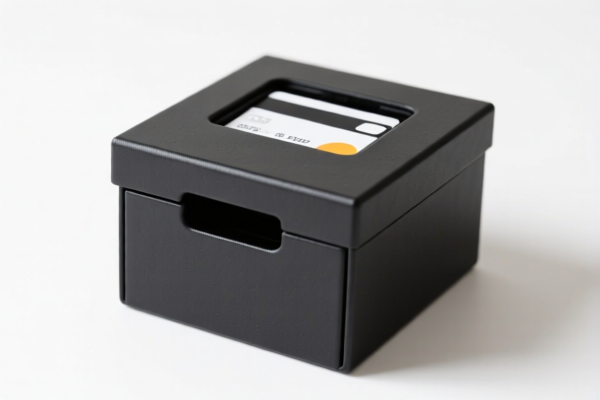
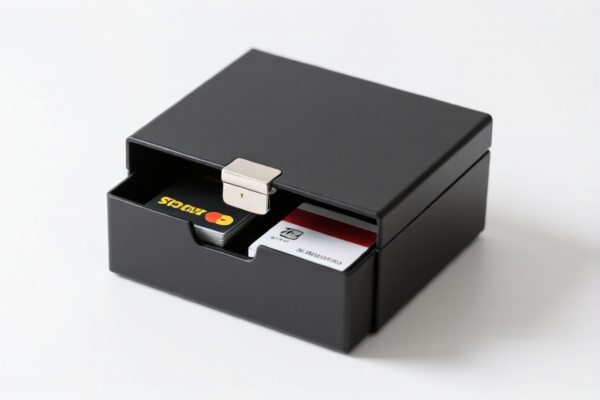
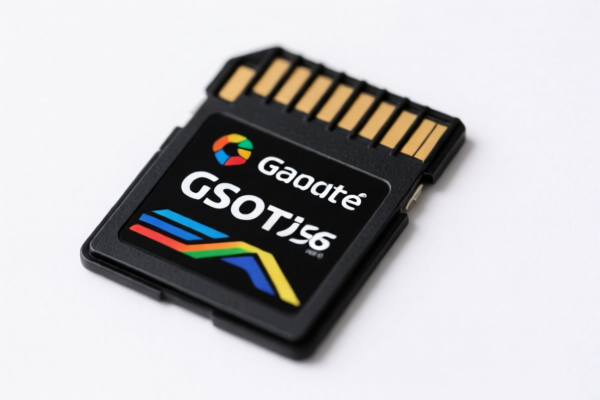
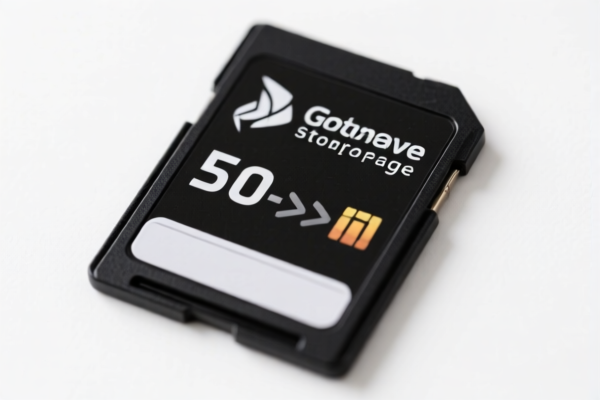
AI Analysis
🎮 Game Card Storage Box (Card Holder for Gaming Accessories)
🌐 HS Code Reference & Customs Clearance Guide | 2026 Updated Tariff Analysis | Pro-Level Import Strategy
📌 One, Product Definition & Classification: What Exactly Is a Game Card Storage Box?
A Game Card Storage Box is a storage container designed specifically for organizing and protecting game cards — such as those used in trading card games (e.g., Pokémon, Magic: The Gathering), video game cartridges (e.g., Nintendo Switch, PlayStation), or collectible digital game cards.
These boxes are not just storage — they’re accessory organizers that enhance usability, prevent damage, and support collector culture. In international trade, their classification depends on material composition, not intended use.
⚠️ Key Distinction:
- If made of plastic, it falls under plastic制品 (plastic goods).
- If made of wood, it’s classified under wooden制品.
- If made of paper, it’s treated as paper制品.
- If made of bamboo, it's still considered wood-based due to botanical classification.
📦 Two, HS Code Classification Details (2026 Official Tariff Match)
| HS Code | Product Description | Material Type | Tax Rate | Legal Basis |
|---|---|---|---|---|
3926.90.87.00 |
Plastic game card storage box, other plastic articles | Plastic | 40.3% | Base: 5.3%, +25% (Section 301), +10% (IEEPA) |
4421.99.98.80 |
Wooden game card storage box, other wood articles | Wood | 38.3% | Base: 3.3%, +25% (Section 301), +10% (IEEPA) |
4823.90.86.80 |
Paper-based game card storage box, other paper articles | Paper | 35.0% | Base: 0%, +25% (Section 301), +10% (IEEPA) |
4421.91.98.80 |
Bamboo game card storage box, other wooden articles | Bamboo (wood-like) | 38.3% | Base: 3.3%, +25% (Section 301), +10% (IEEPA) |
3926.90.99.89 |
Other plastic game card storage boxes, other plastic goods | Plastic (non-standard) | 22.8% | Base: 5.3%, +7.5% (Section 301), +10% (IEEPA) |
🔍 Critical Insight:
- Material determines HS code, not function or branding.
- Even if a box says “gaming” or “for Pokémon cards”, the material decides the tariff.
- Bamboo is treated as wood, not plant fiber — so it gets wood tax treatment.
💰 Three, 2026 Tariff Breakdown (Detailed Tax Clause Analysis)
✅ Applicable Country: United States (US)
✅ Origin: China (CN)
✅ Effective Date: November 10, 2025 (including future imports)
🎯 1. 3926.90.87.00 — Plastic Game Card Storage Box
| Item | Detail |
|---|---|
| Base Tariff | 5.3% (ad valorem) |
| Section 301 Tariff | +25.0% (under USITC Footnote 9903.88.01) |
| IEEPA Tariff | +10.0% (International Emergency Economic Powers Act, targeting China/HK) |
| Total Duty | 40.3% |
| Tax Calculation | CIF Value × 40.3% |
| De Minimis Exemption? | ❌ No (denied under IEEPA rules) |
| Legal Pathway | IEEPA:9903.01.25 → IEEPA:9903.01.24 → USITC:3926.90.87.00 → FOOTNOTE:9903.88.01 |
📌 Explanation:
- The 5.3% base applies to standard plastic goods.
- The 25% Section 301 tariff is from the U.S. Trade Representative’s list targeting Chinese goods under unfair trade practices.
- The 10% IEEPA tariff is a national emergency measure against China, effective since 2025.
- Combined: 40.3% — one of the highest tariffs for consumer goods.
🎯 2. 4421.99.98.80 — Wooden Game Card Storage Box
| Item | Detail |
|---|---|
| Base Tariff | 3.3% |
| Section 301 Tariff | +25.0% |
| IEEPA Tariff | +10.0% |
| Total Duty | 38.3% |
| Tax Calculation | CIF × 38.3% |
| De Minimis Exemption? | ❌ No |
| Legal Pathway | IEEPA:9903.01.25 → IEEPA:9903.01.24 → USITC:4421.99.98.80 → FOOTNOTE:9903.88.01 |
📌 Note:
- Wood-based products are subject to same附加 tariffs as plastic.
- Even if the wood is reclaimed or sustainably sourced, tariff treatment remains unchanged.
🎯 3. 4823.90.86.80 — Paper-Based Game Card Storage Box
| Item | Detail |
|---|---|
| Base Tariff | 0.0% |
| Section 301 Tariff | +25.0% |
| IEEPA Tariff | +10.0% |
| Total Duty | 35.0% |
| Tax Calculation | CIF × 35.0% |
| De Minimis Exemption? | ❌ No |
| Legal Pathway | IEEPA:9903.01.25 → IEEPA:9903.01.24 → USITC:4823.90.86.80 → FOOTNOTE:9903.88.01 |
📌 Key Point:
- Despite zero base tariff, the 25% + 10% combo still pushes total to 35%.
- Paper boxes are not exempt from Section 301 or IEEPA.
🎯 4. 4421.91.98.80 — Bamboo Game Card Storage Box
| Item | Detail |
|---|---|
| Base Tariff | 3.3% |
| Section 301 Tariff | +25.0% |
| IEEPA Tariff | +10.0% |
| Total Duty | 38.3% |
| Tax Calculation | CIF × 38.3% |
| De Minimis Exemption? | ❌ No |
| Legal Pathway | IEEPA:9903.01.25 → IEEPA:9903.01.24 → USITC:4421.91.98.80 → FOOTNOTE:9903.88.01 |
📌 Important Clarification:
- Bamboo is classified as wood under U.S. Customs rules (HTSUS Chapter 44).
- Even if marketed as “eco-friendly” or “biodegradable”, it does not qualify for lower tariffs.
🎯 5. 3926.90.99.89 — Other Plastic Game Card Storage Boxes
| Item | Detail |
|---|---|
| Base Tariff | 5.3% |
| Section 301 Tariff | +7.5% (lower tier under USITC) |
| IEEPA Tariff | +10.0% |
| Total Duty | 22.8% |
| Tax Calculation | CIF × 22.8% |
| De Minimis Exemption? | ❌ No |
| Legal Pathway | IEEPA:9903.01.25 → IEEPA:9903.01.24 → USITC:3926.90.99.89 → FOOTNOTE:9903.88.01 |
📌 Why Lower?
- This code applies to non-standard plastic items not covered under3926.90.87.00.
- The Section 301 tariff is reduced to 7.5% due to lower strategic impact.
- Still, 10% IEEPA applies — no relief.
🛠️ Four, Customs Clearance Best Practices (Pro Tips to Avoid Penalties)
✅ 1. Required Documentation (MUST-HAVE)
| Document | Required? | Why It Matters |
|---|---|---|
| ✅ Product Specification Sheet | ✔️ | Shows material, dimensions, design, and intended use |
| ✅ Material Test Report | ✔️ | Proves plastic/wood/paper/bamboo composition |
| ✅ Product Photos (with labels) | ✔️ | Critical for customs visual inspection |
| ✅ Commercial Invoice | ✔️ | Must state exact HS code and product name |
| ✅ Certificate of Origin (CO) | ✔️ | If from China, confirms tariff eligibility |
| ✅ Packing List | ✔️ | Prevents split-shipment risks |
| ✅ 3rd-Party Certification (FCC, CE, RoHS) | ✔️ | Optional but recommended for compliance |
✅ 2.申报技巧 (申报口诀)
🔥 “Material rules, not name! Plastic = 40.3%, Wood/Bamboo = 38.3%, Paper = 35.0%”
| Scenario | Correct HS Code | Wrong Approach |
|---|---|---|
| Plastic box with “Pokémon” design | 3926.90.87.00 |
Misreported as “paper” → 35% → underpaid |
| Wooden box with “Nintendo” logo | 4421.99.98.80 |
Claimed as “bamboo” → still 38.3% |
| Paper box labeled “eco-friendly” | 4823.90.86.80 |
Still taxed at 35% — no green exemption |
| Bamboo box with “sustainable” claim | 4421.91.98.80 |
Cannot bypass IEEPA or Section 301 |
✅ 3. Special Cases Handling
| Situation | Recommended Action |
|---|---|
| OEM Custom Box (Private Label) | Provide design drawings + client PO — avoid “non-standard” classification |
| Multi-material Box (e.g., plastic + wood) | Classify by dominant material — if plastic >50%, use plastic code |
| Box with Printed Artwork | Does NOT change HS code — only material matters |
| Used/Refurbished Box | Still subject to same tariffs — no discount |
| Gift Box with Cards Inside | Declare as single unit — do not split into “box” and “cards” |
🌍 Five, Global Market Comparison (2026)
| Country | Recommended HS Code | Tariff | Certification | Notes |
|---|---|---|---|---|
| 🇺🇸 USA | Depends on material | 22.8%–40.3% | FCC, RoHS | No de minimis |
| 🇨🇳 China | 3926.90.87.00 etc. |
5% | CCC | No extra tariffs |
| 🇪🇺 EU | 3926.90.87.00 |
0% (if CE compliant) | CE | No Section 301 |
| 🇦🇺 Australia | 3926.90.87.00 |
5% | RCM | No IEEPA |
| 🇯🇵 Japan | 3926.90.87.00 |
0% | PSE | No extra taxes |
📌 Takeaway:
- The U.S. is the only market with 10% IEEPA + 25% Section 301.
- China-origin products face the highest cost in the U.S.
- Consider shifting production to Vietnam, Mexico, or Thailand for IEEPA exemption.
📌 Six, Common Mistakes & How to Avoid Them (Real-World Pitfalls)
❌ Mistake 1: Calling a plastic box “eco-friendly” to avoid 40.3%
👉 Result: Still taxed at 40.3% — no green discount.
❌ Mistake 2: Splitting a box + cards into separate shipments
👉 Result: Each item taxed at 40.3% → total 80.6% → huge penalty.
❌ Mistake 3: Claiming bamboo is “non-wood” to avoid 38.3%
👉 Result: Customs reclassifies → penalty + delay.
❌ Mistake 4: Using “card holder” instead of “storage box” in invoice
👉 Result: Misleading description → audit risk.
✅ Correct Declaration Example:
“Plastic Game Card Storage Box, 12-slot, for Nintendo Switch Cartridges, Model XYZ, 100% Recycled Plastic, FCC & RoHS Certified”
🎯 Seven, Conclusion: Smart Classification = Cost Control
🎯 Remember the Golden Rule:
🔹 “Material decides tariff — not brand, not design, not ‘eco’ claims.”
🔹 “Plastic = 40.3% | Wood/Bamboo = 38.3% | Paper = 35.0% | Other Plastic = 22.8%”
🔹 “Splitting = Disaster. Declaring wrong = Penalty.”
📌 Pro Tip:
If your product is originating from Vietnam, Mexico, or Malaysia, you may qualify for IEEPA exemption — tariff drops to 0–5%.
✅ Apply for Advance Ruling (Pre-Clearance) before shipment — avoid surprises.
📣 Act Now!
📞 Contact a licensed customs broker + provide product photos + request HS Code pre-ruling
🚀 Ensure your game card boxes clear smoothly, avoid penalties, and protect your margins!
✨ Professional Clearance Starts with Accurate Classification!
💼 Every dollar saved begins with the right HS Code.
Customer Reviews
About HS Code Classification
The Harmonized System (HS) is an internationally standardized nomenclature developed by the World Customs Organization (WCO) to classify traded products. Over 200 countries use the HS system as the basis for customs tariffs, trade statistics, and import/export regulations.
Each HS code follows a hierarchical structure:
- Chapter (2 digits) — Broad category of goods (e.g., Chapter 84: Machinery and Mechanical Appliances)
- Heading (4 digits) — More specific grouping within the chapter
- Subheading (6 digits) — Internationally standardized breakdown, used by all WCO member countries
- National subdivisions (8-10 digits) — Country-specific extensions for further classification, such as US HTSUS 10-digit codes
Correct HS code classification is essential for smooth customs clearance, accurate duty payment, and compliance with trade regulations. Misclassification can lead to customs delays, overpayment of duties, or penalties.
When importing from CN to US, the applicable tariff rates may include:
- Most-Favored-Nation (MFN) rate — The standard duty rate applied to WTO members
- General rate — Applied to countries without trade agreements
- Trade remedy duties — Additional tariffs such as Section 301 (anti-dumping), Section 232 (national security), or countervailing duties
The information provided on this page is for reference purposes only. For official classification, please consult with your local customs authority or a licensed customs broker.