Gap Measuring Instrument
CN → US| HS Code | Tariff Rate | Origin | Destination | Doc |
|---|---|---|---|---|
| 9031494000 | 35.0% | CN | US | Official Doc |
| 9031905900 | 35.0% | CN | US | Official Doc |
| 9017304000 | 40.8% | CN | US | Official Doc |
| 9017308000 | 38.9% | CN | US | Official Doc |
Product Images
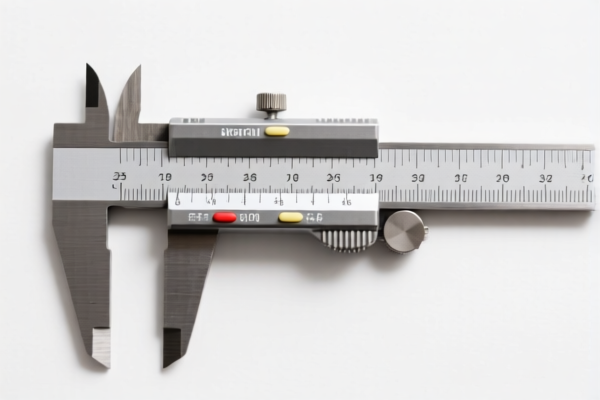
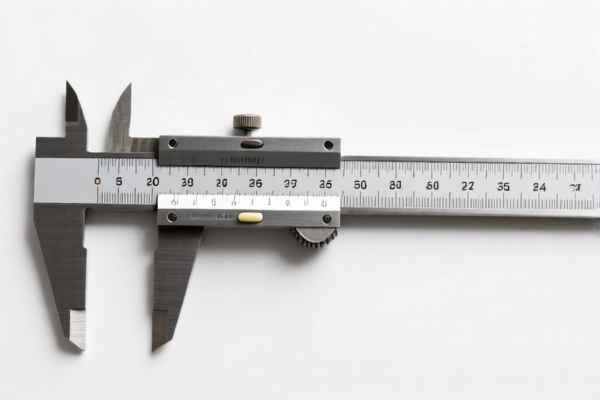
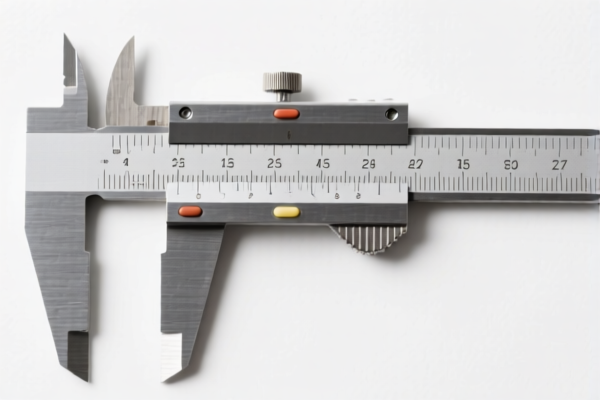
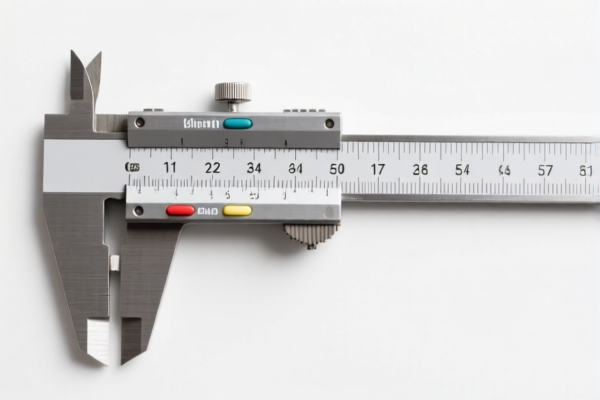
AI Analysis
🔍 Gap Measuring Instruments (Feeler Gauges & Precision Spacers)
🌐 HS Code Reference & Customs Clearance Guide | 2026 Latest Tariff Analysis | Professional Clearance Strategy
📌 One, Product Definition & Classification: What Exactly is a "Gap Measuring Instrument"?
In industrial manufacturing, automotive maintenance, and precision engineering, "Gap Measuring Instruments" primarily refer to tools used to measure small distances, clearances, or gaps between two surfaces. The two most common categories are:
- Feeler Gauges (Blade-Type): A set of metal blades of varying thicknesses used to measure clearance gaps (e.g., spark plug gaps, valve clearances).
- Precision Spacer Blocks/Gauges: Solid metal blocks or rings with precise dimensions, used for setting gaps or checking flatness.
⚠️ Critical Distinction for Classification: * If the item is a manual handheld tool for measuring length/gap directly (like a feeler gauge or caliper) → Chapter 9017 * If the item is a large, electronic coordinate-measuring machine (CMM) used in labs → Chapter 9031 * Note: Most "Gap Measuring Instruments" purchased for general use fall under 9017.
📦 Two, HS Code Classification Details (2026 Latest Tariff Authority)
Based on the provided <DATA>, here are the exact classifications for different types of gap measuring instruments.
| HS Code | Product Description | Applicable Scenario | Key Features |
|---|---|---|---|
9017.30.40.00 |
Micrometers and Calipers | Handheld precision instruments for measuring thickness, diameter, or gap width. | Includes standard mechanical micrometers, dial calipers, and digital calipers. |
9017.30.80.00 |
Other Measuring Instruments | Includes Feeler Gauges (blade sets), plug gauges, ring gauges, and other non-micrometer/caliper gap tools. | Standard blade-style feeler gauges, precision spacer blocks, and simple mechanical gauges. |
9031.49.40.00 |
Coordinate-Measuring Machines (CMM) | Large, automated or semi-automated machines for 3D measurement. | Electronic/Digital CMMs, profile projectors. Not for simple hand tools. |
9031.90.59.00 |
Parts and Accessories of Other Optical Instruments | Spare parts or accessories for the large machines in 9031.49.40.00. | Not for standalone tools. |
🔍 Key Reminder: * Simple Feeler Gauges (metal blades) →
9017.30.80.00* Calipers/Micrometers (precision handheld) →9017.30.40.00* Large CMM Machines →9031.49.40.00* Avoid misclassifying simple tools as "Optical Instruments" (9031) unless they are complex electronic machines.
💰 Three, 2026 Latest Tariff Rate Details (Including Add-ons)
✅ Applicable Country: United States (US) ✅ Origin: China (CN) ✅ Effective Time: Based on current trade data (Check for recent updates)
🎯 1. 9017.30.40.00 —— Micrometers and Calipers
| Item | Content |
|---|---|
| Base Tariff Rate | 0.0% (Ad Valorem) |
| Additional Tariff (Section 301) | 25.0% |
| Total Tax Rate | 25.0% |
| Tax Calculation | CIF Value × 25% |
| De Minimis Exemption | ❌ Not Applicable (Generally, Section 301 goods are excluded) |
| Legal Basis Path | USITC:9017.30.40.00 → Section 301: Footnote 1 |
📌 Explanation: * While the base MFN rate is 0%, Section 301 tariffs add a significant 25% duty for Chinese-made precision measuring tools. * This applies to micrometers, calipers, and similar precision hand tools.
🎯 2. 9017.30.80.00 —— Other Measuring Instruments (e.g., Feeler Gauges)
| Item | Content |
|---|---|
| Base Tariff Rate | 0.0% (Ad Valorem) |
| Additional Tariff (Section 301) | 0.0% |
| Total Tax Rate | 0.0% |
| Tax Calculation | FREE (No Duties) |
| De Minimis Exemption | ✅ Applicable (If value <$800) |
| Legal Basis Path | USITC:9017.30.80.00 |
📌 Important: * Feeler gauges (blade sets) often fall under "Other" (
9017.30.80.00) and currently enjoy 0% total duty. * This is a major cost-saving advantage compared to calipers/micrometers.
🎯 3. 9031.49.40.00 —— Coordinate-Measuring Machines (CMM)
| Item | Content |
|---|---|
| Base Tariff Rate | 0.0% (Ad Valorem) |
| Additional Tariff (Section 301) | 25.0% |
| Total Tax Rate | 25.0% |
| Tax Calculation | CIF Value × 25% |
| De Minimis Exemption | ❌ Not Applicable |
📌 Note: * Large CMMs are subject to the same 25% Section 301 tariff as other precision instruments.
🛠️ Four, Customs Clearance Practical Advice (Battle-Tested Tips)
✅ 1. Documentation Checklist (Must-Have)
| Document | Required | Description |
|---|---|---|
| ✅ Product Specification Sheet | ✔️ | Must specify type: "Feeler Gauge Set" vs. "Digital Caliper" vs. "CMM". |
| ✅ Photos of Product | ✔️ | Clear images showing the tool, scale markings, and packaging. |
| ✅ Commercial Invoice | ✔️ | Must clearly describe the item (e.g., "Steel Feeler Gauge Set, 10 pcs"). Avoid vague terms like "Tool". |
| ✅ HS Code Pre-Ruling | ✔️ | Recommended for CMMs to avoid classification disputes. |
| ✅ Country of Origin Label | ✔️ | Clearly mark "Made in China" on product/packaging. |
✅ 2. Classification Strategy (Key Mnemonic)
🔥 "Blades are Free, Calipers Pay 25, Machines Pay 25!"
| Situation | Correct HS Code | Duty Rate | Why? |
|---|---|---|---|
| Feeler Gauges (Blade sets) | 9017.30.80.00 |
0% | Classified as "Other" instruments, not subject to Section 301 in current data. |
| Calipers / Micrometers | 9017.30.40.00 |
25% | Explicitly listed under Section 301 tariff list for precision instruments. |
| CMM Machines | 9031.49.40.00 |
25% | Large electronic/optical machines subject to Section 301. |
| Parts for CMM | 9031.90.59.00 |
25% | Accessories follow the main machine's tariff rate. |
📌 Pro Tip: * If you sell feeler gauges, ensure your invoice description matches
9017.30.80.00(e.g., "Precision Steel Feeler Gauges") to benefit from 0% duty. * Do not label feeler gauges as "Calipers" or "Measuring Machines" to avoid unnecessary 25% duties.
✅ 3. Special Cases
| Scenario | Handling Advice |
|---|---|
| Digital vs. Mechanical | Both Calipers and Micrometers (digital or analog) fall under 9017.30.40.00 → 25% duty. |
| CMM with Software | The hardware is classified under 9031.49.40.00. Software alone may have different treatment, but bundled hardware is 25%. |
| Feeler Gauge Sets | If the set includes a holder case, it is still classified as the gauge set itself → 0% duty. |
| Custom Precision Blocks | If not a "gauge" but a "spacer block" used in assembly, check if it fits 9017.30.80.00 for 0% duty. |
🌍 Five, Global Market Comparison (2026 Latest)
| Country/Region | Recommended HS Code | Duty Rate (China Origin) | Notes |
|---|---|---|---|
| 🇺🇸 USA | 9017.30.80.00 (Gauges) |
0% | Best for feeler gauges. |
| 🇺🇸 USA | 9017.30.40.00 (Calipers) |
25% | High duty for precision calipers. |
| 🇺🇸 USA | 9031.49.40.00 (CMM) |
25% | High duty for machines. |
| 🇪🇺 EU | 9017.20 (Gauges) |
0% | Generally low duty for tools. |
| 🇨🇳 China | 9017.30 (Gauges) |
0%~6% | Low import duty. |
| 🇯🇵 Japan | 9017.80 (Gauges) |
0% | FTA benefits may apply. |
📌 Conclusion: * USA is the only market with significant Section 301 duties on precision measuring instruments. * Feeler gauges remain duty-free in the US (0%), making them a competitive export product. * Calipers and CMMs face 25% extra duty, impacting price competitiveness.
📌 Six, Common Errors & Pitfalls (Lessons Learned)
❌ Error 1: Labeling Feeler Gauges as "Calipers" to fit a different code. 👉 Consequence: Customs may reclassify, leading to 25% duty + penalties.
❌ Error 2: Assuming all measuring tools are exempt from Section 301. 👉 Consequence: 25% surprise duty on calipers/micrometers.
❌ Error 3: Importing CMMs as "Parts" to avoid duty. 👉 Consequence: Customs will assess based on the machine's rate (25%), plus potential fraud charges.
❌ Error 4: Vague Invoice Description: "Measuring Tool." 👉 Consequence: Customs delay, manual inspection, possible misclassification.
✅ Correct Practice:
"Set of 10 Steel Feeler Gauges, Precision 0.05mm-1.0mm, Model FG-100" →
9017.30.80.00(0%) "Digital Vernier Caliper, 6-Inch Range, Model DC-600" →9017.30.40.00(25%)
🎯 Seven, Conclusion: Precise Classification Saves Money!
🎯 Remember the Golden Rules:
🔹 "Feeler Gauges are Free (0%), Calipers Pay 25%, Machines Pay 25%." 🔹 "HS Code Determines Duty, Description Determines Accuracy."
📌 Pro Tip: If your product is Feeler Gauges, ensure it is clearly described as such to benefit from 0% duty. If it is Calipers, budget for the 25% additional duty. Always provide clear photos and specifications to support your HS Code claim.
📣 Immediate Action:
📞 Consult with a licensed customs broker for Pre-Ruling if you are unsure. 📝 Ensure your Commercial Invoice matches the HS Code exactly. 🚀 Clear Customs Smoothly, Minimize Costs, Maximize Profits!
✨ Professional Clearance Starts with Accurate Classification! 💼 Every Dollar Saved is a Dollar Earned!
Customer Reviews
About HS Code Classification
The Harmonized System (HS) is an internationally standardized nomenclature developed by the World Customs Organization (WCO) to classify traded products. Over 200 countries use the HS system as the basis for customs tariffs, trade statistics, and import/export regulations.
Each HS code follows a hierarchical structure:
- Chapter (2 digits) — Broad category of goods (e.g., Chapter 84: Machinery and Mechanical Appliances)
- Heading (4 digits) — More specific grouping within the chapter
- Subheading (6 digits) — Internationally standardized breakdown, used by all WCO member countries
- National subdivisions (8-10 digits) — Country-specific extensions for further classification, such as US HTSUS 10-digit codes
Correct HS code classification is essential for smooth customs clearance, accurate duty payment, and compliance with trade regulations. Misclassification can lead to customs delays, overpayment of duties, or penalties.
When importing from CN to US, the applicable tariff rates may include:
- Most-Favored-Nation (MFN) rate — The standard duty rate applied to WTO members
- General rate — Applied to countries without trade agreements
- Trade remedy duties — Additional tariffs such as Section 301 (anti-dumping), Section 232 (national security), or countervailing duties
The information provided on this page is for reference purposes only. For official classification, please consult with your local customs authority or a licensed customs broker.