Garden Cork Pellets
CN → US| HS Code | Tariff Rate | Origin | Destination | Doc |
|---|---|---|---|---|
| 9604000000 | 22.4% | CN | US | Official Doc |
| 2530908050 | 10.0% | CN | US | Official Doc |
| 2530100000 | 35.0% | CN | US | Official Doc |
| 3105100000 | 35.0% | CN | US | Official Doc |
| 3824999397 | 40.0% | CN | US | Official Doc |
Product Images
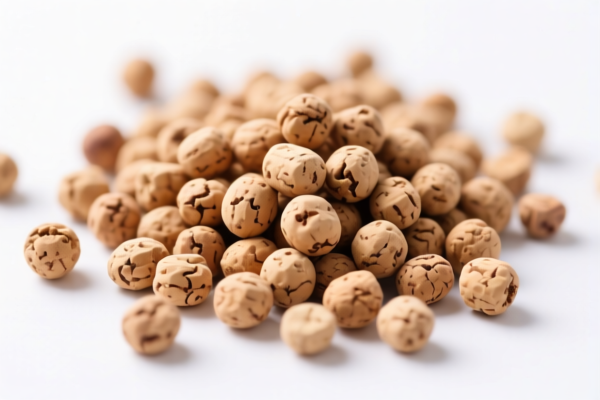
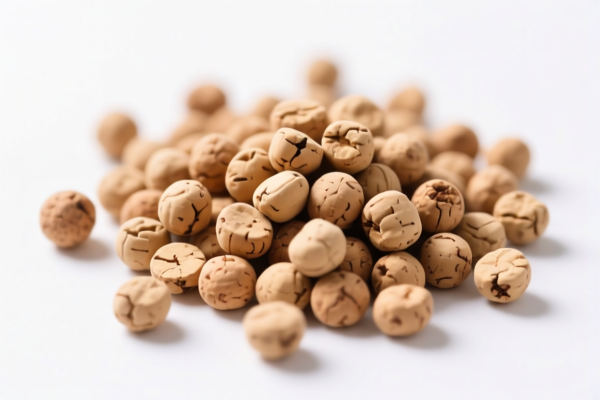
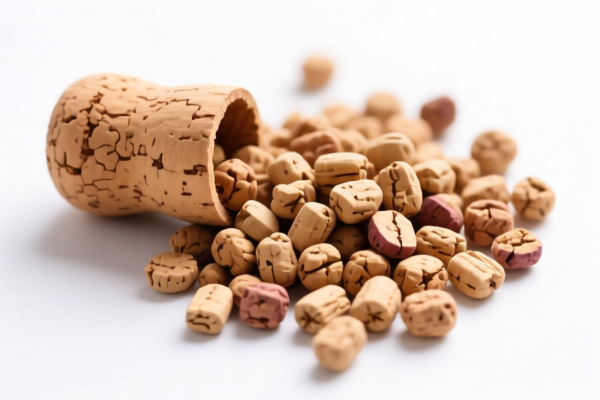
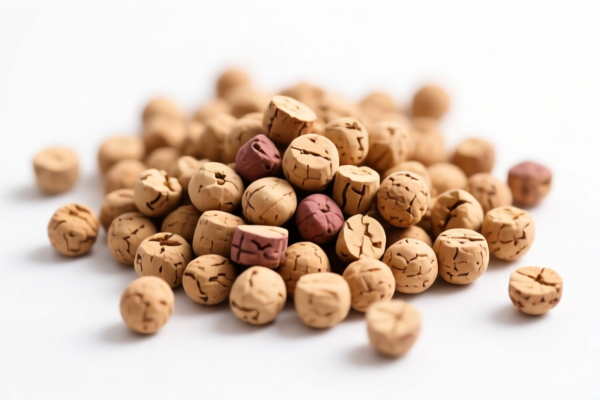
AI Analysis
🌿 Garden Cork Pellets & Horticultural Granules | HS Code Classification & US Customs Clearance Guide
🌐 HS Code Reference & Customs Clearance Guide | 2024 Latest Tariff Analysis | Professional Logistics Strategy
📌 I. Product Definition: What Are "Garden Cork Pellets"?
In international trade, "Garden Cork Pellets" is a generic term that can refer to several distinct products depending on their material composition, physical form, and intended use. Because the English input "Garden Cork Pellets" is ambiguous, it may fall into five different Harmonized System (HS) codes. Misclassification can lead to significant tariff penalties (up to 40% vs. 10%) or customs delays.
Key Distinction Factors: 1. Material: Is it natural cork (tree bark), mineral (perlite/vermiculite), or chemical mixture? 2. Form: Are they granules/pellets? 3. Use: Is it for planting medium, fertilization, or structural insulation?
⚠️ Critical Warning:
- If the product is natural cork (from oak bark) → It is NOT an agricultural product in HS Chapter 31. It is a vegetable product or work of cork (Chapter 96).
- If the product is mineral-based (e.g., expanded perlite often confused with cork due to lightness) → It falls under Chapter 25 or 26.
- If it contains fertilizers → It falls under Chapter 31.
📦 II. HS Code Classification Matrix (2024 Latest Tariff Schedule)
Below are the 5 possible HS Codes for products described as "Garden Cork Pellets" or similar horticultural granules, based on the provided data.
| HS Code | Product Description (Summary) | Material Composition | Primary Use Case |
|---|---|---|---|
| 9604.00.00.00 | Cork-Filled Granules | Natural Cork (Softwood) | Insulation, flotation, or industrial granular filler. Note: Uncommon for direct soil use. |
| 2530.90.80.50 | Horticultural Granules (Mineral) | Mineral (e.g., Vermiculite, Perlite) | Soil amendment, aeration, water retention. Lowest Risk. |
| 2530.10.00.00 | Unexpanded Mineral Matter | Mineral (Perlite/Vermiculite) | Raw horticultural substrate. High Tariff Risk. |
| 3105.10.00.00 | Horticultural Granules (Fertilizer) | N-P-K Elements (Nitrogen, Phosphorus, Potassium) | Fertilizer application. High Tariff Risk. |
| 3824.99.93.97 | Chemical/Natural Mixture | Chemical & Natural Product Blend | Specialized soil conditioners, coatings, or non-fertilizer additives. Highest Tariff. |
🔍 Classification Logic:
- 9604.00.00.00: Specifically for cork granules. If your product is truly made from cork oak bark, this is the correct code. It is classified under "Works of cork."
- 2530.90.80.50 vs. 2530.10.00.00: Both are mineral-based. 2530.90 is for "Other" mineral matters, while 2530.10 is specifically for "Unexpanded" mineral substances. If the perlite/vermiculite is expanded (processed for horticulture), 2530.90.80.50 is often used to avoid the higher 35% rate of 2530.10.00.00.
- 3105.10.00.00: Only if the granules are fertilizers (contain N, P, K).
- 3824.99.93.97: A "catch-all" for chemical/natural mixtures not elsewhere specified.
💰 III. 2024 US Customs Tariff Rate Breakdown (Detailed)
✅ Applicable Country: United States (US)
✅ Origin: China (CN) (Assumed for Section 301/IEEPA applicability based on data)
✅ Policy Context: Includes Base Tariff, Section 301 Tariff, and IEEPA (122-Clause) Tariff.
🎯 1. 9604.00.00.00 — Cork-Filled Granules
| Item | Details |
|---|---|
| Base Tariff | 4.9% |
| Section 301 Tariff | 7.5% |
| IEEPA (122-Clause) | 10.0% |
| Total Effective Rate | 22.4% |
| Calculation | CIF Value × 22.4% |
| De Minimis Exemption | ❌ Not Eligible (Section 301 goods are excluded) |
| Legal Basis | Base HTS + Footnote 10 (Sec 301) + IEEPA Order 10408 |
📌 Explanation:
- 22.4% is a moderate-to-high tariff.
- This code applies only if the product is genuinely made of cork. If it is mineral-based, this code is incorrect, leading to misdeclaration penalties.
🎯 2. 2530.90.80.50 — Horticultural Granules (Mineral)
| Item | Details |
|---|---|
| Base Tariff | 0.0% |
| Section 301 Tariff | 0.0% |
| IEEPA (122-Clause) | 10.0% |
| Total Effective Rate | 10.0% |
| Calculation | CIF Value × 10.0% |
| De Minimis Exemption | ❌ Not Eligible (IEEPA goods are excluded) |
| Legal Basis | IEEPA Order 10408 |
📌 Explanation:
- 10.0% is the lowest possible tariff among all options.
- This code is highly recommended if the product is mineral-based (e.g., perlite, vermiculite, diatomaceous earth) and not a fertilizer.
- Why 0% Section 301? Many mineral products fall outside the Section 301 list, but the IEEPA 10% still applies.
🎯 3. 2530.10.00.00 — Unexpanded Mineral Matter
| Item | Details |
|---|---|
| Base Tariff | 0.0% |
| Section 301 Tariff | 25.0% |
| IEEPA (122-Clause) | 10.0% |
| Total Effective Rate | 35.0% |
| Calculation | CIF Value × 35.0% |
| De Minimis Exemption | ❌ Not Eligible |
| Legal Basis | Base HTS + Footnote 10 (Sec 301) + IEEPA |
📌 Explanation:
- 35.0% is a high tariff.
- This code applies if the mineral matter is classified as "Unexpanded." If your product is expanded perlite, using this code is a misclassification. Using2530.90.80.50instead saves 25% in tariffs.
🎯 4. 3105.10.00.00 — Fertilizer Granules
| Item | Details |
|---|---|
| Base Tariff | 0.0% |
| Section 301 Tariff | 25.0% |
| IEEPA (122-Clause) | 10.0% |
| Total Effective Rate | 35.0% |
| Calculation | CIF Value × 35.0% |
| De Minimis Exemption | ❌ Not Eligible |
| Legal Basis | Base HTS + Footnote 10 (Sec 301) + IEEPA |
📌 Explanation:
- 35.0% applies if the product is fertilizer.
- If your "garden pellets" are just soil amendments (perlite/cork) and do not contain nutrients, do not use this code. Misdeclaring non-fertilizer as fertilizer can lead to EPA/USDA scrutiny.
🎯 5. 3824.99.93.97 — Chemical/Natural Mixture
| Item | Details |
|---|---|
| Base Tariff | 5.0% |
| Section 301 Tariff | 25.0% |
| IEEPA (122-Clause) | 10.0% |
| Total Effective Rate | 40.0% |
| Calculation | CIF Value × 40.0% |
| De Minimis Exemption | ❌ Not Eligible |
| Legal Basis | Base HTS + Footnote 10 (Sec 301) + IEEPA |
📌 Explanation:
- 40.0% is the highest tariff.
- This is a "catch-all" for chemical/natural mixtures. It should only be used if the product is a complex mixture that doesn't fit into cork, mineral, or fertilizer categories. Avoid this code if possible.
🛠️ IV. Customs Clearance Recommendations (Practical Tips)
✅ 1. Prepare Documentation (Mandatory)
| Document | Requirement | Notes |
|---|---|---|
| Commercial Invoice | ✔️ | Must clearly state Material Composition (e.g., "100% Natural Cork Granules" vs. "Expanded Perlite"). |
| Product Specification Sheet | ✔️ | Detail particle size, density, and chemical composition. |
| Certificate of Origin | ✔️ | Confirm Country of Origin to determine Section 301 applicability. |
| MSDS (Material Safety Data Sheet) | ✔️ | Required for chemicals/minerals to prove non-hazardous nature. |
| Usage Declaration | ✔️ | Clearly state: "For Horticultural Soil Amendment" or "For Industrial Insulation." |
✅ 2. Classification Strategy (Avoid Pitfalls)
🔥 "Know Your Material, Save Your Money!"
| Scenario | Correct HS Code | Total Tax | Why? |
|---|---|---|---|
| Product is TRUE CORK (Oak bark) | 9604.00.00.00 |
22.4% | Only natural cork fits this code. |
| Product is PERLITE/VERMICULITE (Expanded) | 2530.90.80.50 |
10.0% | Lowest tariff. Avoid 2530.10 (35%). |
| Product is FERTILIZER (N-P-K) | 3105.10.00.00 |
35.0% | High tax. Only if nutrients are present. |
| Product is CHEMICAL MIX | 3824.99.93.97 |
40.0% | Highest tax. Avoid if possible. |
| Product is MINERAL (Unexpanded) | 2530.10.00.00 |
35.0% | High tax. Use 2530.90 instead if expanded. |
✅ 3. Common Mistakes & Solutions
❌ Mistake 1: Calling all garden granules "Cork Pellets" regardless of material.
👉 Solution: If it is perlite, declare it as "Expanded Perlite Granules" and use 2530.90.80.50. Do not use "Cork" in the description if it is not cork.
❌ Mistake 2: Misclassifying Expanded Perlite as 2530.10.00.00 (Unexpanded).
👉 Solution: Use 2530.90.80.50. The difference is 25% in tariffs. Provide photos showing the expanded, lightweight nature of the product.
❌ Mistake 3: Declaring Fertilizer as "Soil Amendment" to avoid 301 Tariffs.
👉 Solution: If it contains N-P-K, it must be declared as fertilizer (3105.10.00.00). USDA/EPA may inspect, but misdeclaration leads to seizures.
🌍 V. Global Market Comparison (Quick Reference)
| Market | Recommended HS Code | Total Tariff (China Origin) | Key Requirement |
|---|---|---|---|
| 🇺🇸 USA | 2530.90.80.50 (Mineral) or 9604.00.00.00 (Cork) |
10.0% (Mineral) / 22.4% (Cork) | IEEPA 10% applies to all Chinese goods. |
| 🇨🇳 China | Same HS Code | 0% - 5% | No Section 301/IEEPA. |
| 🇪🇺 EU | Varies by HS Code | 0% - 6.5% | No IEEPA/Section 301. |
| 🇬🇧 UK | Varies by HS Code | 0% - 6.5% | No IEEPA/Section 301. |
📌 Conclusion for US Importers:
- Mineral-based garden pellets (2530.90.80.50) are the most cost-effective with only a 10% IEEPA tariff.
- True Cork (9604.00.00.00) incurs a 22.4% tariff, which is moderate but significant.
- Avoid3824and3105unless necessary, due to 35-40% total tariffs.
📌 VI. Final Checklist for Importers
- Identify Material: Is it Cork, Mineral, or Fertilizer?
- Check Expansion: If mineral, is it expanded? (Use
2530.90not2530.10). - Calculate Tax:
- Cork: 22.4%
- Mineral (Expanded): 10.0%
- Mineral (Unexpanded): 35.0%
- Fertilizer: 35.0%
- Chemical Mix: 40.0%
- Document Accurately: Ensure invoices match the HS Code material description.
- Consult Customs Broker: For pre-classification ruling if unsure.
🎯 Pro Tip:
"If it floats in water and is light as foam, it’s likely Perlite (10% tax). If it’s from oak bark, it’s Cork (22.4% tax). Don’t pay 40% for a 10% product!"
✨ Professional Clearance, Precise Classification, Maximum Savings!
💼 Your Bottom Line Depends on Your HS Code!
Customer Reviews
About HS Code Classification
The Harmonized System (HS) is an internationally standardized nomenclature developed by the World Customs Organization (WCO) to classify traded products. Over 200 countries use the HS system as the basis for customs tariffs, trade statistics, and import/export regulations.
Each HS code follows a hierarchical structure:
- Chapter (2 digits) — Broad category of goods (e.g., Chapter 84: Machinery and Mechanical Appliances)
- Heading (4 digits) — More specific grouping within the chapter
- Subheading (6 digits) — Internationally standardized breakdown, used by all WCO member countries
- National subdivisions (8-10 digits) — Country-specific extensions for further classification, such as US HTSUS 10-digit codes
Correct HS code classification is essential for smooth customs clearance, accurate duty payment, and compliance with trade regulations. Misclassification can lead to customs delays, overpayment of duties, or penalties.
When importing from CN to US, the applicable tariff rates may include:
- Most-Favored-Nation (MFN) rate — The standard duty rate applied to WTO members
- General rate — Applied to countries without trade agreements
- Trade remedy duties — Additional tariffs such as Section 301 (anti-dumping), Section 232 (national security), or countervailing duties
The information provided on this page is for reference purposes only. For official classification, please consult with your local customs authority or a licensed customs broker.