Garden Hose
CN → US| HS Code | Tariff Rate | Origin | Destination | Doc |
|---|---|---|---|---|
| 3917320050 | 38.1% | CN | US | Official Doc |
| 3917390050 | 13.1% | CN | US | Official Doc |
| 4009110000 | 37.5% | CN | US | Official Doc |
| 4009120050 | 20.0% | CN | US | Official Doc |
| 5909001000 | 35.0% | CN | US | Official Doc |
Product Images
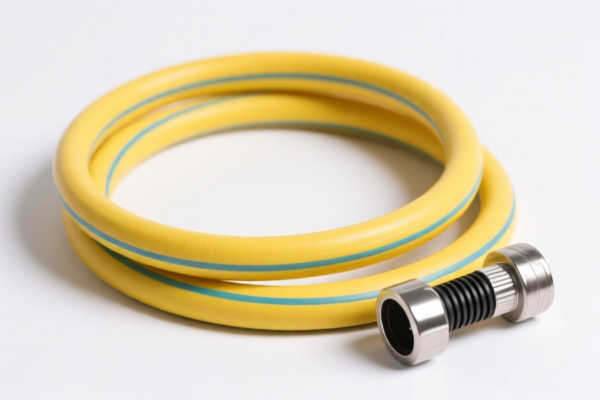


AI Analysis
🌿 Garden Hose (Garden Hose, Irrigation Tube)
🌐 HS Code Reference & Customs Clearance Guide | 2026 Tariff Analysis | Strategic Entry Strategy
📌 I. Product Definition & Classification: Do You Truly Understand "Garden Hose"?
A garden hose is a flexible tube used for transporting water in residential, agricultural, and commercial settings. However, under international trade laws, it is NOT a single unified product. Its classification depends entirely on the material and construction.
In the provided dataset, garden hoses fall into three distinct categories, each with drastically different tax implications:
1. Plastic Hoses (Non-reinforced): * Pure plastic, no fabric/metal reinforcement. * Commonly used for: Simple watering, light-duty gardening.
2. Reinforced/Textile Hoses: * Plastic tubes with fabric backing OR Textile hoses made of plant fibers. * Commonly used for: High-pressure washing, heavy-duty agriculture, commercial landscaping.
3. Rubber Hoses (Vulcanized): * Sulfur-treated rubber. * Key Split: Whether it comes with end fittings (couplers/attachments) or is just a bare tube.
⚠️ Critical Distinction: * Is it Plastic or Rubber? * Is it Reinforced (Textile/Mesh) or Plain? * Does it have fittings attached at the factory?
Answering these correctly determines if you face 13% or 38% in taxes.
📦 II. HS Code Classification Matrix (2026 Tariff Data)
| HS Code | Product Description | Material | Key Feature | Applicable Scenario |
|---|---|---|---|---|
| 3917.32.00.50 | Plastic Hose, Not Reinforced | Plastic | No fabric/metal reinforcement | Simple plastic water hose, basic gardening |
| 3917.39.00.50 | Other Plastic Tubes/Hoses | Plastic | Reinforced or combined with other materials | Reinforced plastic hose, industrial plastic tubing |
| 4009.11.00.00 | Vulcanized Rubber Hose, No Attachments | Rubber | Bare tube, no couplings | Rubber hose sold as "by the foot" or raw material |
| 4009.12.00.50 | Vulcanized Rubber Hose, With Attachments | Rubber | Has end fittings (couplers) | Ready-to-use rubber hose set |
| 5909.00.10.00 | Textile Hose (Plant Fiber) | Natural Fiber | Made of plant fibers | Traditional canvas/leather-style hose |
🔍 Focus Point: * Plastic vs. Rubber: The material difference alone shifts the "Basic Tariff" between 2.5% and 3.1%. * With/Without Fittings: For rubber hoses, adding a simple plastic coupling moves you from HS 4009.11 (25% surcharge) to 4009.12 (7.5% surcharge). This is a massive savings opportunity! * Reinforcement: If a plastic hose has a mesh inside, it must be classified under 3917.39, NOT 3917.32.
💰 III. 2026 Tariff Rate Breakdown (Detailed Policy Analysis)
✅ Applicable Market: United States (US) ✅ Country of Origin: China (CN) ✅ Effective Date: Current/Upcoming Regulations
The total tax consists of three parts: Basic Tariff + Section 301 Surcharge + Section 122 Tariff.
🎯 1. Plastic Hoses (Non-Reinforced) - 3917.32.00.50
- Description: Plain plastic hose, no reinforcement.
- 🔴 Total Tax: 38.1%
- Breakdown:
- Basic Tariff: 3.1% (Most Favored Nation)
- Section 301 Surcharge: 25.0% (High punitive tax for plastic products)
- Section 122 Tariff: 10.0% (Targeted policy tax)
- Legal Path:
301:3917.32+122:3917 - Strategy Alert: This is the highest tax bracket. Do not attempt to classify reinforced hoses as "non-reinforced" to avoid this; the risk of audit is high.
🎯 2. Other Plastic Tubes (Reinforced) - 3917.39.00.50
- Description: Plastic hose with fabric/metal reinforcement or combined materials.
- 🟢 Total Tax: 13.1%
- Breakdown:
- Basic Tariff: 3.1%
- Section 301 Surcharge: 0.0% (No punitive surcharge for this sub-category!)
- Section 122 Tariff: 10.0%
- Legal Path:
122:3917.39 - Strategy Alert: CRITICAL OPPORTUNITY! If your product has any textile reinforcement, classify as 3917.39. You save 25% in taxes immediately!
🎯 3. Vulcanized Rubber Hose (No Attachments) - 4009.11.00.00
- Description: Rubber tube without end fittings.
- 🔴 Total Tax: 37.5%
- Breakdown:
- Basic Tariff: 2.5%
- Section 301 Surcharge: 25.0%
- Section 122 Tariff: 10.0%
- Legal Path:
301:4009.11+122:4009 - Strategy Alert: High tax. Avoid this if possible by adding fittings or changing material.
🎯 4. Vulcanized Rubber Hose (With Attachments) - 4009.12.00.50
- Description: Rubber tube with couplings/fittings attached.
- 🟡 Total Tax: 20.0%
- Breakdown:
- Basic Tariff: 2.5%
- Section 301 Surcharge: 7.5% (Significantly reduced!)
- Section 122 Tariff: 10.0%
- Legal Path:
301:4009.12+122:4009 - Strategy Alert: Smart Move! By pre-attaching fittings (which are cheap), you drop the 301 surcharge from 25% to 7.5%. Total Savings: 17.5%!
🎯 5. Textile Hose (Plant Fiber) - 5909.00.10.00
- Description: Hoses made of plant fibers (e.g., cotton, jute).
- 🔴 Total Tax: 35.0%
- Breakdown:
- Basic Tariff: 0.0% (Duty-free base)
- Section 301 Surcharge: 25.0%
- Section 122 Tariff: 10.0%
- Legal Path:
301:5909.00+122:5909 - Strategy Alert: Even with 0% basic tax, the 301 surcharge hits hard. Suitable only for niche high-end "vintage" hoses.
🛠️ IV. Customs Clearance Practical Advice (Real-World Strategy)
✅ 1. Material Verification (The "Reinforcement" Test)
- Action: Before shipping, physically inspect your hoses.
- Check: Does the plastic hose have a mesh or fabric layer inside?
- YES → Classify as 3917.39.00.50 (Tax: 13.1%).
- NO → Must be 3917.32.00.50 (Tax: 38.1%).
- Warning: Misclassifying a reinforced hose as plain plastic to "save" space (or hoping for a lower rate) will result in a customs audit and heavy penalties. The 301 surcharge is the key differentiator here.
✅ 2. The "Fittings" Strategy for Rubber Hoses
- Action: If shipping rubber hoses, assemble them with plastic/metal couplings before shipping to the US.
- Why?
- Bare Tube (4009.11): 37.5% Tax.
- With Fittings (4009.12): 20.0% Tax.
- Calculation: On a $10,000 shipment:
- Bare Tube Tax: $3,750
- With Fittings Tax: $2,000
- Savings: $1,750 (even accounting for the cost of the fittings).
✅ 3. Declaration Keywords
Ensure your Commercial Invoice uses precise descriptions: * ❌ Wrong: "Garden Hose" (Too vague, invites audit) * ❌ Wrong: "Plastic Tube" (May miss the "reinforced" nuance) * ✅ Right (Plastic): "Plastic Garden Hose, Reinforced with Polyester Mesh" * ✅ Right (Rubber): "Vulcanized Rubber Hose Assembly with Plastic Couplers" * ✅ Right (Textile): "Natural Fiber (Cotton) Woven Garden Hose"
✅ 4. Supply Chain & Origin
- Origin: If the product is manufactured in Vietnam or Thailand, the Section 301 surcharge (25%) might be avoided, but you must prove Substantial Transformation occurred there.
- Section 122: This specific tariff is often applied regardless of origin for specific Chinese-origin products. Verify if your specific HS code is exempt.
🚨 V. Common Pitfalls & How to Avoid Them
| ❌ Mistake | 🚫 Consequence | ✅ Solution |
|---|---|---|
| Classifying Reinforced Plastic as "Plain" | 25% Penalty + Back Taxes (38.1% vs 13.1%) | Add a photo of the cross-section showing the reinforcement mesh. |
| Shipping Bare Rubber Tubes | Missing out on 17.5% savings | Pre-attach cheap fittings before export. |
| Vague Invoice Description | Customs holds shipment for inspection | Use: "Vulcanized Rubber Hose w/ Couplers" (4009.12). |
| Ignoring "Section 122" | Underestimating total cost | Always include the +10% in your cost calculation. |
🌍 VI. Summary of Tax Savings Opportunities
| Product Type | Current HS Code | Current Tax | Recommended Action | New HS Code | New Tax | Savings |
|---|---|---|---|---|---|---|
| Reinforced Plastic | 3917.32.00.50 |
38.1% | Reclassify (Check Reinforcement) | 3917.39.00.50 |
13.1% | 25.0% 💰 |
| Rubber (Bare) | 4009.11.00.00 |
37.5% | Add Fittings | 4009.12.00.50 |
20.0% | 17.5% 💰 |
🎯 VII. Final Conclusion: Smart Classification = Higher Profit
🔥 Golden Rule: "If it's plastic, check for mesh. If it's rubber, attach the fitting."
- Plastic Hoses: The difference between 38.1% and 13.1% lies in the reinforcement. Ensure your product spec sheet explicitly states the reinforcement material if applicable.
- Rubber Hoses: The difference between 37.5% and 20.0% lies in the fittings. Pre-assembly is the cheapest way to reduce tariffs.
💡 Pro Tip: Always request a Binding Ruling from US Customs (CBP) if your hose design is unique (e.g., hybrid materials). This locks in your HS code and prevents future disputes during customs clearance.
✨ Clear Customs, Keep Your Margin! 🚚💨 Your garden hose should carry water, not a 38% tax bill!
Customer Reviews
About HS Code Classification
The Harmonized System (HS) is an internationally standardized nomenclature developed by the World Customs Organization (WCO) to classify traded products. Over 200 countries use the HS system as the basis for customs tariffs, trade statistics, and import/export regulations.
Each HS code follows a hierarchical structure:
- Chapter (2 digits) — Broad category of goods (e.g., Chapter 84: Machinery and Mechanical Appliances)
- Heading (4 digits) — More specific grouping within the chapter
- Subheading (6 digits) — Internationally standardized breakdown, used by all WCO member countries
- National subdivisions (8-10 digits) — Country-specific extensions for further classification, such as US HTSUS 10-digit codes
Correct HS code classification is essential for smooth customs clearance, accurate duty payment, and compliance with trade regulations. Misclassification can lead to customs delays, overpayment of duties, or penalties.
When importing from CN to US, the applicable tariff rates may include:
- Most-Favored-Nation (MFN) rate — The standard duty rate applied to WTO members
- General rate — Applied to countries without trade agreements
- Trade remedy duties — Additional tariffs such as Section 301 (anti-dumping), Section 232 (national security), or countervailing duties
The information provided on this page is for reference purposes only. For official classification, please consult with your local customs authority or a licensed customs broker.