Garden Hose Faucet Adapter
CN → US| HS Code | Tariff Rate | Origin | Destination | Doc |
|---|---|---|---|---|
| 3917320010 | 38.1% | CN | US | Official Doc |
| 8307103000 | 38.8% | CN | US | Official Doc |
| 8307106000 | 38.8% | CN | US | Official Doc |
| 3917320020 | 38.1% | CN | US | Official Doc |
| 5909002000 | 38.3% | CN | US | Official Doc |
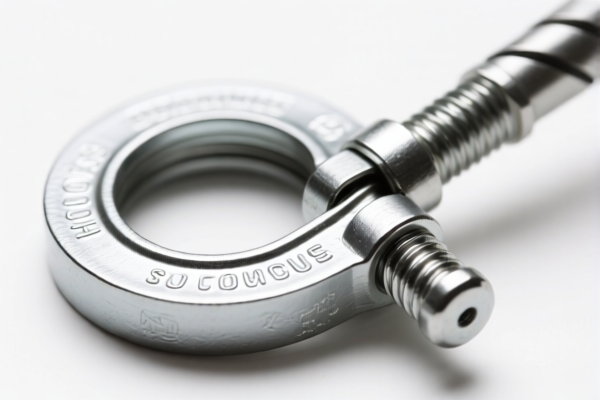
Product Images


AI Analysis
🚿 Garden Hose Faucet Adapter (HS Code & Duty Guide)
🌐 Smart Customs Clearance Strategy | 2026 Tax Breakdown | Material-Based Classification
📌 One-Stop Guide for Plastic, Metal, and Braided Hoses!
🛠️ 1. What is a "Garden Hose Faucet Adapter"?
In the global plumbing and irrigation trade, this item is not a single product. Its classification depends entirely on the core material and construction method (e.g., molded plastic, solid metal, or braided reinforcement).
Why it matters:
Misclassifying a braided metal hose as a plastic pipe can lead to a 100% penalty or rejection at US borders.
- Plastic Core → Classified under Chapter 39 (Plastics).
- Iron/Steel Core → Classified under Chapter 83 (Base Metal Articles).
- Braided/Textile → Classified under Chapter 59 (Textile Reinforcement).
⚠️ Critical Rule: The "Adapter" must be a flexible hose (形态匹配软管). Rigid metal pipes or simple threaded caps have different codes.
📦 2. HS Code Classification Matrix (2026 Tax Regime)
Based on the exact material composition, here are the 5 authoritative HS Codes for Garden Hose Faucet Adapters (Flexible Hoses):
| HS Code | Material Composition | Product Description | Key Feature |
|---|---|---|---|
3917.32.00.10 |
Plastic OR Metal (Mixed/Composite) | Flexible hose with plastic/metal mix | Mixed Material |
8307.10.30.00 |
Metal (General) | All-metal flexible hose (e.g., Stainless Steel) | Solid Metal |
8307.10.60.00 |
Iron or Steel | Hose made specifically of Iron/Steel | Ferrous Metal |
3917.32.00.20 |
Plastic | Pure plastic flexible hose (e.g., PVC/PE) | 100% Plastic |
5909.00.20.00 |
Braided Metal OR Textile | Reinforced hose with braided mesh or fabric | Textile/Metal Braid |
🔍 Classification Logic:
- If the hose is pure plastic → Use3917.32.00.20.
- If it is all metal → Use8307.10.30.00or8307.10.60.00(depending on Iron vs. Steel).
- If it has braided metal/fabric layers → Use5909.00.20.00.
- If the material is a mixture (hard to separate) → Use3917.32.00.10.
💰 3. 2026 Tariff Rate Breakdown (USA Import)
Target Market: 🇺🇸 United States
Origin: 🇨🇳 China
Effective Date: Current Trade Policy (2026)
All items below are subject to Three Layers of Taxation:
1. Base Duty (MFN Rate)
2. Section 301 Additional Duty (25%)
3. Section 122 Additional Duty (10%)
🎯 Scenario A: Plastic & Mixed Hoses (3917.32.00.10 & 3917.32.00.20)
| Tax Component | Rate | Explanation |
|---|---|---|
| Base Duty | 3.1% | Standard MFN rate for plastic hoses |
| Section 301 (Add-on) | 25.0% | High tariff for "Plastics & Plastics Products" from China |
| Section 122 (Add-on) | 10.0% | Additional punitive tariff on specific plastic goods |
| 💰 TOTAL DUTY | 38.1% | 3.1 + 25 + 10 |
📌 Impact: If your goods are valued at $10,000, you pay $3,810 in duty immediately.
🎯 Scenario B: All-Metal Hoses (8307.10.30.00 & 8307.10.60.00)
| Tax Component | Rate | Explanation |
|---|---|---|
| Base Duty | 3.8% | Standard MFN rate for metal articles |
| Section 301 (Add-on) | 25.0% | High tariff for "Iron/Steel Articles" from China |
| Section 122 (Add-on) | 10.0% | Additional punitive tariff on specific metal goods |
| 💰 TOTAL DUTY | 38.8% | 3.8 + 25 + 10 |
📌 Impact: Slightly higher than plastic due to the base rate, but the 50% combined penalty (301+122) remains the same.
🎯 Scenario C: Braided/Textile Reinforced Hoses (5909.00.20.00)
| Tax Component | Rate | Explanation |
|---|---|---|
| Base Duty | 3.3% | Standard MFN rate for textile reinforced hoses |
| Section 301 (Add-on) | 25.0% | High tariff for "Textile/Reinforced" products |
| Section 122 (Add-on) | 10.0% | Additional punitive tariff |
| 💰 TOTAL DUTY | 38.3% | 3.3 + 25 + 10 |
📌 Impact: This is the middle ground for cost, but still subject to heavy penalties.
🛠️ 4. Customs Clearance Tips (Avoid the "No Entry" Sign)
✅ 1. Material Declaration is KING (👑)
海关 (Customs) will destroy or delay your shipment if the description is vague.
- ❌ BAD: "Garden Hose" (Too generic, triggers random inspection).
- ✅ GOOD: "Flexible Faucet Adapter, 3/4", Made of Braided Stainless Steel, for Outdoor Water Use."
Pro Tip: If the hose is Plastic + Metal Braid, declare it as Plastic (
3917.32.00.10) if the plastic is the core, or Textile (5909.00.20.00) if the braid is the primary reinforcement. Be consistent!
✅ 2. Section 301 & 122 Logic (The "Double Penalty")
Many importers forget Section 122.
- Section 301 (25%) applies to 8307 and 3917.
- Section 122 (10%) applies specifically to certain plastic and metal hoses.
- Result: You cannot claim a "de minimis" exemption for these items. Even small shipments are taxed.
✅ 3. Packaging & Labeling
- Label: Must state "Product of China" clearly.
- Invoice: Must list the HS Code and Material in the description field.
- Photo: Provide a photo showing the braided texture or plastic body to prove classification.
🚨 5. Common Mistakes & "Blood" Lessons
| ❌ Mistake | 🚫 Consequence | ✅ Fix |
|---|---|---|
| Calling it "Faucet Fitting" | Classified as Fitting (8307.10.99) → 38.8% (Same tax!) | Correct name: "Flexible Hose / Adapter" |
| Ignoring the "Braided" Layer | Classified as Solid Metal → Misses 5909 nuance |
Check for Textile/Metal Braid and use 5909.00.20.00 |
| Mixing Plastic & Metal | Using wrong HS Code → Audited & Fined | Use 3917.32.00.10 (Mixed) if unsure |
| Not declaring Section 122 | Underpayment → Seizure | Always add 10% for Section 122 |
🌍 6. Global Market Summary (2026)
| Market | HS Code Strategy | Effective Duty | Notes |
|---|---|---|---|
| 🇺🇸 USA | 3917.32 or 8307.10 |
38.1% - 38.8% | High Risk: Heavy Section 301+122 |
| 🇪🇺 EU | Similar codes | ~0% - 6% | No Section 301/122; lower risk |
| 🇨🇦 Canada | Similar codes | ~5% - 10% | Generally stable |
| 🇦🇺 Australia | Similar codes | ~5% | No punitive tariffs |
📌 Conclusion: The US market is the most expensive due to the 38.1%~38.8% total duty.
Strategy: For US imports, negotiate FOB pricing to absorb the tax, or source from Vietnam/Mexico (if eligible for tariff exemptions).
🎯 Final Verdict: "The 38% Rule"
No matter if it's Plastic, Metal, or Braided, if it comes from China to the US:
1. Base Tax is low (~3-4%).
2. Penalty Tax (301+122) is 35%.
3. Total is ~38%.
🔥 Action Plan:
- Verify Material (Plastic? Metal? Braid?) before shipping.
- Use the exact HS Code from the list above.
- Budget 38% of the CIF value for duties.
- Avoid "General Hose" descriptions in invoices.
🚀 Customs Clearance Success = Accurate Material + Precise HS Code + Realistic Tax Budget!
💡 Ready to Ship? Confirm your hose material today to avoid a $38% surprise at the port!
Customer Reviews
About HS Code Classification
The Harmonized System (HS) is an internationally standardized nomenclature developed by the World Customs Organization (WCO) to classify traded products. Over 200 countries use the HS system as the basis for customs tariffs, trade statistics, and import/export regulations.
Each HS code follows a hierarchical structure:
- Chapter (2 digits) — Broad category of goods (e.g., Chapter 84: Machinery and Mechanical Appliances)
- Heading (4 digits) — More specific grouping within the chapter
- Subheading (6 digits) — Internationally standardized breakdown, used by all WCO member countries
- National subdivisions (8-10 digits) — Country-specific extensions for further classification, such as US HTSUS 10-digit codes
Correct HS code classification is essential for smooth customs clearance, accurate duty payment, and compliance with trade regulations. Misclassification can lead to customs delays, overpayment of duties, or penalties.
When importing from CN to US, the applicable tariff rates may include:
- Most-Favored-Nation (MFN) rate — The standard duty rate applied to WTO members
- General rate — Applied to countries without trade agreements
- Trade remedy duties — Additional tariffs such as Section 301 (anti-dumping), Section 232 (national security), or countervailing duties
The information provided on this page is for reference purposes only. For official classification, please consult with your local customs authority or a licensed customs broker.