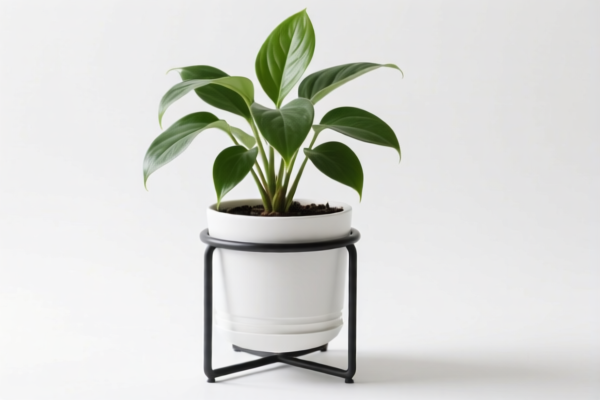
Garden Plant Butterfly Support Stand
CN → US| HS Code | Tariff Rate | Origin | Destination | Doc |
|---|---|---|---|---|
| 4421919880 | 38.3% | CN | US | Official Doc |
| 4421999880 | 38.3% | CN | US | Official Doc |
| 3926904000 | 12.8% | CN | US | Official Doc |
| 3926400090 | 15.3% | CN | US | Official Doc |
Product Images



AI Analysis
🌿 Garden Plant Butterfly Support Stand
🌐 HS Code Reference & Customs Clearance Guide | 2026 Latest Tariff Analysis | Professional-Level Compliance Strategy
📌 I. Product Definition & Classification: Do You Really Understand the "Butterfly Stand"?
The Garden Plant Butterfly Support Stand is an ornamental or functional gardening accessory designed to support climbing plants or serve as decorative garden decor. In international trade, its classification depends strictly on the material composition. The key distinction lies in whether it is made of vegetable material (Bamboo/Wood) or non-vegetable material (Plastic/Metal).
⚠️ Key Distinction Point:
- If made of Bamboo or Wood → Classified under Chapter 44 (Wood/Bamboo Products)
- If made of Plastic or Metal → Classified under Chapter 39 (Plastics) or Chapter 73/76 (Metals), depending on specific sub-heading rules.
📦 II. HS Code Classification Details (2026 Latest Tariff Authority Comparison)
Based on the provided data, there are four primary classification options. Below is the detailed breakdown for each:
| HS Code | Product Description | Material Attribute | Primary Use Case |
|---|---|---|---|
4421.91.98.80 |
Bamboo-based Plant Garden Butterfly Support | Bamboo (Vegetable Material) | Eco-friendly, natural aesthetic gardening tools |
4421.99.98.80 |
Wood-based Plant Garden Butterfly Support | Wood (Vegetable Material) | General wooden garden decorations/supports |
3926.90.40.00 |
Support Stand (Non-conflicting Material) | Plastic/Metal (General Plastic Part) | Durable, weather-resistant plastic/metal supports |
3926.40.00.90 |
Decorative Plastic Stand | Plastic (Decorative Article) | Ornamental garden pieces, purely decorative function |
🔍 Critical Reminder:
- Bamboo is legally classified as Wood in Chapter 44. Do not confuse it with Chapter 46 (Bamboo articles) unless it is woven/plaited; structured stands are usually 4421.
- If the stand is primarily metal, but classified under 3926, it implies it is considered an "article of plastic" with metal components, or the data source groups non-conflicting materials under 3926.90.40.00.
- Decisive Factor: The material dictates the HS Code, which dramatically affects the tariff rate.
💰 III. 2026 Latest Tariff Rate Breakdown (Including Surtaxes & Policy Add-ons)
✅ Applicable Country: United States (US)
✅ Origin: China (CN) (Implied by "122 Clause" and high surtaxes)
✅ Effective Time: Current applicable rates as per data
🎯 1. 4421.91.98.80 & 4421.99.98.80 —— Bamboo/Wood-Based Stands
These two codes represent the highest tax burden due to the inclusion of Section 301 (Trade War) tariffs and Section 122 penalties.
| Item | Content |
|---|---|
| Base Tariff | 3.3% (Most Favored Nation Rate) |
| Section 301 Surcharge | +25.0% (Retaliatory/Trade War Tariff) |
| Section 122 Tariff | +10.0% (Retaliatory measure related to trade disputes) |
| Total Tariff Rate | 38.3% |
| Tax Calculation | CIF Value × 38.3% |
| De Minimis Exemption | ❌ NOT Eligible (Declarations for bamboo/wood products from China are subject to full taxation under these surcharges) |
📌 Explanation:
- The 38.3% rate is punitive. It combines the standard MFN rate (3.3%) with aggressive political tariffs.
- Section 301 (25%) applies to most wood and bamboo articles from China.
- Section 122 (10%) is a specific retaliatory tariff applicable to certain Chinese imports.
- Risk: This is a high-cost classification. Importers must account for nearly 40% additional cost on top of the product price.
🎯 2. 3926.90.40.00 —— General Plastic/Metal Support Stand
This code offers a significant cost advantage compared to wood/bamboo, primarily due to the absence of Section 301 surcharges on this specific sub-heading.
| Item | Content |
|---|---|
| Base Tariff | 2.8% |
| Section 301 Surcharge | 0.0% (Exempt from Section 301) |
| Section 122 Tariff | +10.0% (Still applicable) |
| Total Tariff Rate | 12.8% |
| Tax Calculation | CIF Value × 12.8% |
| De Minimis Exemption | ❌ NOT Eligible (Due to Section 122) |
📌 Explanation:
- The 12.8% rate is much more competitive.
- The 0% Section 301 rate is the key benefit. Plastics (Chapter 39) often have different tariff lists than wood.
- However, the 10% Section 122 tariff still applies, preventing a zero-tariff outcome.
🎯 3. 3926.40.00.90 —— Decorative Plastic Stand
This code is intended for decorative items made of plastic. It has a slightly higher base rate but no Section 301 surcharge.
| Item | Content |
|---|---|
| Base Tariff | 5.3% |
| Section 301 Surcharge | 0.0% (Exempt from Section 301) |
| Section 122 Tariff | +10.0% (Still applicable) |
| Total Tariff Rate | 15.3% |
| Tax Calculation | CIF Value × 15.3% |
| De Minimis Exemption | ❌ NOT Eligible (Due to Section 122) |
📌 Explanation:
- The 15.3% rate is the middle ground.
- It is more expensive than3926.90.40.00due to the higher base rate (5.3% vs 2.8%).
- Key Condition: The item must be demonstrably decorative. If it functions primarily as a structural support, Customs may reject this code and reclassify it to3926.90.40.00or even Wood (if misidentified).
🛠️ IV. Customs Clearance Practical Advice (Battle-Tested Pitfall Avoidance)
✅ 1. Material Verification is Critical
| Material | Correct HS Code | Risk of Wrong Code |
|---|---|---|
| Bamboo | 4421.91.98.80 |
Misclassifying as Plastic (3926) → Penalty for Fraud + Back Taxes (38.3% vs 12.8%) |
| Wood | 4421.99.98.80 |
Same as Bamboo; high tariff exposure |
| Plastic | 3926.90.40.00 or 3926.40.00.90 |
Ensure it is NOT wooden. If it has wood veneer, it likely falls under Chapter 44. |
| Metal | 3926.90.40.00 (as per data) |
Note: Pure metal stands usually go to Chapter 73/76. The provided data suggests grouping under 3926.90.40.00 for "non-conflicting." Verify with CBP if your metal stand is purely metal. |
✅ 2. Declaration Strategy (Key Mantras)
🔥 “Material Defines Code, Tax Savings Are Real!”
| Scenario | Recommended Action | Why? |
|---|---|---|
| Product is Bamboo | Use 4421.91.98.80 |
Legally required. No choice. Accept 38.3% cost. |
| Product is Plastic | Use 3926.90.40.00 |
Best Cost Option (12.8%). Ensure description emphasizes "Plastic Support." |
| Product is Decorative Plastic | Use 3926.40.00.90 |
Only if purely decorative (no plant support function). Otherwise, risky. |
| Mixed Materials | Classify based on Essential Character | If >50% weight/value is wood → Chapter 44. If plastic → Chapter 39. |
✅ 3. Documentation Requirements
| Document | Requirement | Purpose |
|---|---|---|
| Product Photos | ✔️ Mandatory | Prove material (Bamboo grain vs. Plastic texture). |
| Bill of Materials (BOM) | ✔️ Mandatory | Detail % of wood vs. plastic vs. metal. |
| Commercial Invoice | ✔️ Mandatory | Clearly state: "Garden Support Stand, Made of [Material]." |
| Origin Certificate | ✔️ Recommended | To confirm CN origin (triggers Section 301/122). |
🌍 V. Global Market Clearance Comparison (2026 Latest)
| Country/Region | Recommended HS Code | Estimated Total Tax (China Origin) | Notes |
|---|---|---|---|
| 🇺🇸 USA | 3926.90.40.00 |
12.8% (Plastic) / 38.3% (Wood) | Highest Differentiator. Plastic saves ~25% tax. |
| 🇨🇳 China | 4421.99.90.00 (Local Equivalent) |
~10-15% | Domestic consumption. |
| 🇪🇺 EU | 4421.99 (Wood) / 3926.90 (Plastic) |
0-6% | No Section 301/122. EU tariffs are much lower. |
| 🇬🇧 UK | 4421.99 / 3926.90 |
0-6% | Post-Brexit rules apply; no US-style surcharges. |
📌 Conclusion:
- USA Tariffs are Material-Dependent. Plastic saves you ~25.5% in taxes compared to Bamboo/Wood.
- If your supply chain can switch to Plastic, do it for US imports. If you must use Bamboo/Wood, budget for 38.3%.
📌 VI. Common Errors & Pitfalls (Blood & Tears Lessons)
❌ Error 1: Declaring Bamboo as "Plastic" to save tax
👉 Consequence: Customs Audit, Penalty, and Seizure. Customs experts can identify bamboo by weight, texture, and origin.
❌ Error 2: Using 3926.40.00.90 for a Structural Support
👉 Consequence: Reclassified to 3926.90.40.00 or higher duty if deemed functional. Stick to 3926.90.40.00 for functional supports.
❌ Error 3: Ignoring Section 122 Tariff (10%)
👉 Consequence: Even "low tariff" items (12.8%) still carry the 10% penalty. Do not assume 0% total tax.
✅ Correct Practice:
"Garden Plant Support Stand, Model XYZ, Material: Polypropylene Plastic, Color: Green, Intended for Outdoor Use."
HS Code:3926.90.40.00→ Tax: 12.8%
🎯 VII. Conclusion: Smart Classification, Maximizing Profit!
🎯 Remember the Mantra:
🔹 "Bamboo/Wood = 38.3% (Ouch!)"
🔹 "Plastic = 12.8% (Great!)"
🔹 "Material Truth > Tax Evasion"
📌 Pro Tip:
If your product is Bamboo, consider substantial transformation in a third country (e.g., Vietnam, Thailand) to change origin and potentially avoid US Section 301/122 tariffs. However, simple cutting/painting in Vietnam may not suffice. Consult a trade lawyer for Substantial Transformation rules.
📣 Immediate Action:
📞 Audit your BOM: Is it 100% Plastic? → Use
3926.90.40.00.
📞 If Bamboo: Accept the 38.3% cost or find alternative markets (EU/UK) where tariffs are lower.
🚀 Pre-classify: Apply for a Binding Ruling with US CBP to lock in the HS Code and avoid surprises.
✨ Professional Clearance Starts with Precise Classification!
💼 Every Percent in Tax is Directly Impacting Your Margin!
Customer Reviews
About HS Code Classification
The Harmonized System (HS) is an internationally standardized nomenclature developed by the World Customs Organization (WCO) to classify traded products. Over 200 countries use the HS system as the basis for customs tariffs, trade statistics, and import/export regulations.
Each HS code follows a hierarchical structure:
- Chapter (2 digits) — Broad category of goods (e.g., Chapter 84: Machinery and Mechanical Appliances)
- Heading (4 digits) — More specific grouping within the chapter
- Subheading (6 digits) — Internationally standardized breakdown, used by all WCO member countries
- National subdivisions (8-10 digits) — Country-specific extensions for further classification, such as US HTSUS 10-digit codes
Correct HS code classification is essential for smooth customs clearance, accurate duty payment, and compliance with trade regulations. Misclassification can lead to customs delays, overpayment of duties, or penalties.
When importing from CN to US, the applicable tariff rates may include:
- Most-Favored-Nation (MFN) rate — The standard duty rate applied to WTO members
- General rate — Applied to countries without trade agreements
- Trade remedy duties — Additional tariffs such as Section 301 (anti-dumping), Section 232 (national security), or countervailing duties
The information provided on this page is for reference purposes only. For official classification, please consult with your local customs authority or a licensed customs broker.