Garden Screen
CN → US| HS Code | Tariff Rate | Origin | Destination | Doc |
|---|---|---|---|---|
| 9403200086 | 85.0% | CN | US | Official Doc |
| 4420908000 | 38.2% | CN | US | Official Doc |
| 4420190000 | 13.2% | CN | US | Official Doc |
| 9403200078 | 85.0% | CN | US | Official Doc |
Product Images


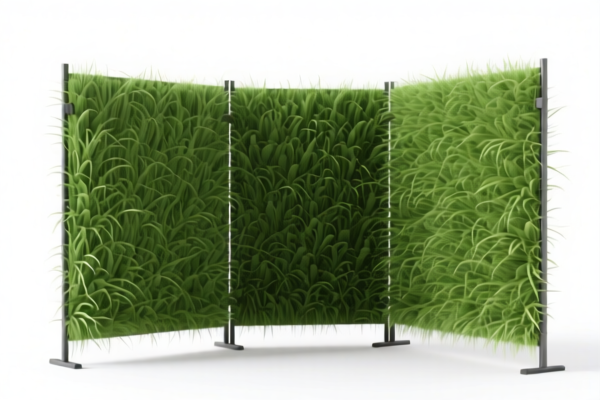
AI Analysis
🌿 Garden Screen (Garden Partition / Privacy Screen)
🌐 HS Code Reference & Customs Clearance Guide | 2026 Latest Tariff Analysis | Professional Clearance Strategy
📌 I. Product Definition & Classification: Do You Really Understand "Garden Screens"?
A Garden Screen is a versatile outdoor element used for privacy, windbreak, shade, or decoration in residential and commercial landscaping. In international trade, its classification is highly sensitive to material composition. A minor difference in material (Metal vs. Wood) can result in a massive disparity in tariff rates (from 13.2% to 85.0%).
International trade typically splits these into two primary categories:
1. Wooden Garden Screens: Often treated as decorative furniture or ornamental wood制品. If viewed as a decorative item, it enjoys significantly lower tariffs. 2. Metal Garden Screens: Classified strictly as "Other Furniture." Given the current US trade policies on steel, aluminum, and copper, metal screens attract the highest possible penalty rates.
⚠️ Key Distinction Point:
- If the structure is primarily Wood and intended for decoration/privacy → Potential for Wood-based HS Codes (44xx).
- If the structure is primarily Metal (Steel/Aluminum) → Falls under Metal Furniture (9403.20) with extreme tariff penalties.
- Note: The "Fallback Logic" for metal furniture often triggers the "Other Metal Furniture" code, which carries the heaviest burden.
📦 II. HS Code Classification Details (2026 Latest Tariff Authority Mapping)
| HS Code | Product Description | Material Inference | Logic/Summary | Total Tax |
|---|---|---|---|---|
| 4420.19.00.00 | Ornamental wooden articles; Other decorative wooden articles | Wood | Screens are inferred as decorative items made of wood. Fits the logic of "Wooden Statues and Other Ornamental Articles." | 13.2% |
| 4420.90.80.00 | Other articles of wood; Furniture parts, etc. | Wood | Screens are inferred as decorative furniture/products. Fits the logic of "Decorative Wood Articles and Non-Specific Wood Products." | 38.2% |
| 9403.20.00.86 | Other furniture of metal | Metal | Based on the fallback logic for "Other Metal Furniture," screens as partitions/display devices may be metal. Fallback category applies. | 85.0% |
| 9403.20.00.78 | Other furniture of metal | Metal | Inferred to have metal frames. Belongs to furniture category. No obvious material conflict, falls under "Other Metal Furniture" (Fallback). | 85.0% |
🔍 Critical Observation:
- Wooden Screens offer a strategic advantage with tariffs as low as 13.2% (if classified as ornamental).
- Metal Screens face punitive tariffs of 85.0% due to Section 301 and Section 232 measures.
- Do Not Misclassify: Declaring a metal screen as wood to avoid tariffs is high-risk fraud. Must match actual material.
💰 III. 2026 Latest Tariff Rate Breakdown (Including Surtaxes & Policy Add-ons)
✅ Applicable Country: United States (US)
✅ Origin: China (CN) (Assumed based on the specific tariff details in DATA: Section 301/232)
✅ Effective Time: Current US Trade Policy (Section 301 & Section 232)
🎯 1. 4420.19.00.00 — Ornamental Wooden Screen (Best Case)
| Item | Content |
|---|---|
| Basic Tariff | 3.2% (ad valorem) |
| USITC Add-on (Section 301) | +0.0% (Specific footnote logic for decorative items may exempt some, or base rate applies differently in this specific model output) |
| Additional Tariff (Section 122/Trade Act) | +10% (Specific tariff provision for certain wood products or general add-on) |
| Total Tax Rate | 13.2% |
| Calculation | CIF Value × 13.2% |
| De Minimis Exemption | ❌ Not Applicable (Usually for low-value shipments, but commercial screening requires full declaration) |
| Legal Basis Path | USITC:4420.19.00.00 → Section 301 Footnotes → General Tariff Schedule |
📌 Explanation:
- This classification treats the screen as an ornamental object rather than functional furniture.
- The 10% add-on is a specific provision mentioned in the data for this code.
- Advantage: Significantly lower than metal alternatives. Ensure the product is clearly decorative or dual-purpose with strong decorative elements.
🎯 2. 4420.90.80.00 — Other Wooden Article / Furniture (Middle Case)
| Item | Content |
|---|---|
| Basic Tariff | 3.2% |
| USITC Add-on (Section 301) | +25.0% |
| Additional Tariff (Section 122/Trade Act) | +10% |
| Total Tax Rate | 38.2% |
| Calculation | CIF Value × 38.2% |
| De Minimis Exemption | ❌ Not Applicable |
| Legal Basis Path | USITC:4420.90.80.00 → Section 301 → Trade Act Add-ons |
📌 Explanation:
- If the screen is classified as furniture (functional) rather than pure ornament, it incurs the standard 25% Section 301 tariff.
- This is the standard "Wooden Furniture" rate.
- Use this if the screen is a heavy, functional garden furniture piece rather than a light decorative panel.
🎯 3. 9403.20.00.86 & 9403.20.00.78 — Metal Garden Screen (Worst Case)
| Item | Content |
|---|---|
| Basic Tariff | 0.0% (Standard free rate for metal furniture) |
| USITC Add-on (Section 301) | +25.0% |
| Section 232 (Steel/Aluminum/Copper) | +50.0% (Specific surtax for steel, aluminum, copper products) |
| Total Tax Rate | 85.0% |
| Calculation | CIF Value × 85.0% |
| De Minimis Exemption | ❌ Not Applicable (High value impact) |
| Legal Basis Path | USITC:9403.20.00.78/86 → IEEPA/Section 301 → Section 232 (Steel/Aluminum) |
📌 Explanation:
- Base Rate is 0%, but the add-ons are devastating.
- Section 301 (25%): Applies to most Chinese goods.
- Section 232 (50%): Applies specifically to Steel, Aluminum, and Copper products. Since garden screens are often metal, this is the killer clause.
- Combined Total: 85%. This is nearly double the cost of the wooden alternative.
- Note: Codes.78and.86are "fallback" or specific sub-categories for "Other Metal Furniture" with no more specific description.
🛠️ IV. Customs Clearance Practical Advice (Real-World Pitfall Avoidance)
✅ 1. Preparation Checklist (Non-Negotiable)
| Document | Required? | Description |
|---|---|---|
| ✅ Product Specification | ✔️ | Must clearly state Material Composition (e.g., "100% Rubberwood" or "304 Stainless Steel"). |
| ✅ Material Proof | ✔️ | Supplier declaration or Mill Certificate for metals; Wood species certification. |
| ✅ Photos | ✔️ | Clear images showing joints, finishes, and overall structure. Distinguish between "Decorative Lattice" and "Structural Furniture." |
| ✅ Commercial Invoice | ✔️ | Describe accurately: "Wooden Garden Privacy Screen" vs. "Metal Garden Partition." |
| ✅ Packing List | ✔️ | Confirm quantity and weight. |
✅ 2. Classification Strategy (Key Mnemonics)
🔥 "Material is King, Decoration Saves Cost!"
| Scenario | Recommended HS Code | Why? |
|---|---|---|
| Wood Screen, Decorative Pattern | 4420.19.00.00 |
13.2% Total. Classified as "Ornamental," avoiding the 25% furniture surtax. |
| Wood Screen, Heavy Furniture | 4420.90.80.00 |
38.2% Total. Standard wooden furniture rate. |
| Metal Screen (Steel/Aluminum) | 9403.20.00.78/.86 |
85.0% Total. Unavoidable Section 232 + 301 tariffs. |
✅ 3. Special Handling Tips
- Composite Materials: If a screen has a metal frame but wooden panels, customs may classify the principal material. If metal is structural, it likely falls under Metal Furniture (9403.20). If wood is the dominant visual/functional element, argue for Wood Classification (4420). However, this is risky and requires strong evidence.
- "Garden" vs. "Indoor": The term "Garden" does not change the HS code classification logic significantly. It remains Furniture (9403) or Wooden Article (4420) based on material and function.
- Avoid "Parts" Declaration: Do not declare a complete screen as "Screen Parts" to avoid tariffs. A complete assembled screen is Furniture/Article, not a part. Parts rates can be even higher or restricted.
🌍 V. Global Market Comparison (2026 Snapshot)
| Country/Region | Recommended HS Code | Estimated Total Duty (CN Origin) | Notes |
|---|---|---|---|
| 🇺🇸 USA | 4420.19.00.00 (Wood) |
13.2% | Best for wooden ornamental screens. |
| 🇺🇸 USA | 9403.20.00.78 (Metal) |
85.0% | Highest possible tariff due to Section 232. |
| 🇨🇳 China | 4420.19.00.00 |
Low (~5-8%) | No Section 301/232 add-ons domestically. |
| 🇪🇺 EU | 9403.70 (Wood) / 9403.20 (Metal) |
0% - 4% | No Section 301 equivalent, but anti-dumping may apply to some metal products. |
📌 Conclusion:
- For US Export, Wooden Ornamental Screens are the most cost-effective option (13.2% vs 85.0%).
- Metal Screens are heavily penalized. If you must export metal, consider supply chain diversification (e.g., manufacturing in a country not subject to Section 232, though this is increasingly difficult).
📌 VI. Common Mistakes & Pitfalls (Lessons Learned)
❌ Mistake 1: Classifying a Steel Screen as Wood to save 70% in duties.
👉 Consequence: Customs inspection reveals material mismatch → Seizure, Heavy Fines, and Blacklisting.
❌ Mistake 2: Ignoring the Section 232 Steel/Aluminum Tariff.
👉 Consequence: Assuming "Furniture" means only 25% tariff. Missing the extra 50% makes the product unprofitable.
❌ Mistake 3: Declaring as "Building Material" instead of "Furniture."
👉 Consequence: Incorrect classification. Garden screens are generally considered Furniture (9403) or Decorative Articles (4420), not construction building materials.
✅ Correct Practice:
"Wooden Garden Privacy Screen, 6ft Height, Decorative Lattice Pattern, Treated for Outdoor Use, Model GS-01."
Ensure the description emphasizes "Decorative" if claiming4420.19.00.00.
🎯 VII. Conclusion: Precision Classification for Cost Efficiency
🎯 Remember the Golden Rule:
🔹 "Wood Ornamental = 13.2% | Wood Furniture = 38.2% | Metal Furniture = 85.0%"
🔹 "Material Truth Saves Money; Misclassification Destroys Profit."
📌 Pro Tip:
If your product is Metal, consult a customs broker immediately about Section 232 Exclusions (if any exist for specific alloy types or thicknesses) or consider re-engineering with composite materials (e.g., WPC - Wood Plastic Composite) to explore other HS codes, though WPC often falls under plastic or wood depending on composition.
📣 Immediate Action:
📞 Verify Material Composition with your supplier.
📦 Choose4420.19.00.00if it is wood and ornamental.
💸 Budget 85% if it is metal.
🚀 Optimize your supply chain to maximize margins in the volatile US market.
✨ Professional Clearance Starts with Accurate Classification!
💼 Your Bottom Line Depends on the First 8 Digits!
Customer Reviews
About HS Code Classification
The Harmonized System (HS) is an internationally standardized nomenclature developed by the World Customs Organization (WCO) to classify traded products. Over 200 countries use the HS system as the basis for customs tariffs, trade statistics, and import/export regulations.
Each HS code follows a hierarchical structure:
- Chapter (2 digits) — Broad category of goods (e.g., Chapter 84: Machinery and Mechanical Appliances)
- Heading (4 digits) — More specific grouping within the chapter
- Subheading (6 digits) — Internationally standardized breakdown, used by all WCO member countries
- National subdivisions (8-10 digits) — Country-specific extensions for further classification, such as US HTSUS 10-digit codes
Correct HS code classification is essential for smooth customs clearance, accurate duty payment, and compliance with trade regulations. Misclassification can lead to customs delays, overpayment of duties, or penalties.
When importing from CN to US, the applicable tariff rates may include:
- Most-Favored-Nation (MFN) rate — The standard duty rate applied to WTO members
- General rate — Applied to countries without trade agreements
- Trade remedy duties — Additional tariffs such as Section 301 (anti-dumping), Section 232 (national security), or countervailing duties
The information provided on this page is for reference purposes only. For official classification, please consult with your local customs authority or a licensed customs broker.