Garden Wood Enclosure
CN → US| HS Code | Tariff Rate | Origin | Destination | Doc |
|---|---|---|---|---|
| 4421917020 | 35.0% | CN | US | Official Doc |
| 7314311000 | 85.0% | CN | US | Official Doc |
| 7314410030 | 85.0% | CN | US | Official Doc |
| 3926909989 | 22.8% | CN | US | Official Doc |
| 3926903000 | 39.2% | CN | US | Official Doc |
Product Images
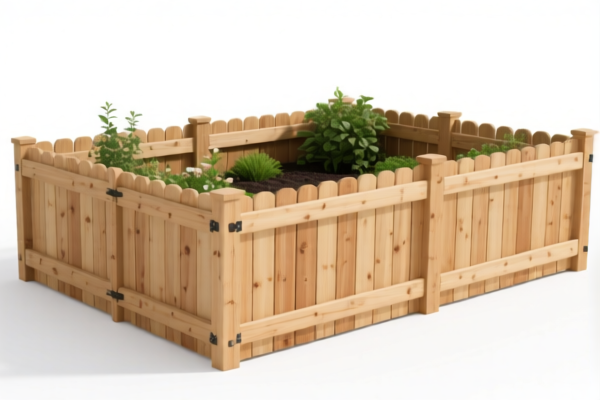
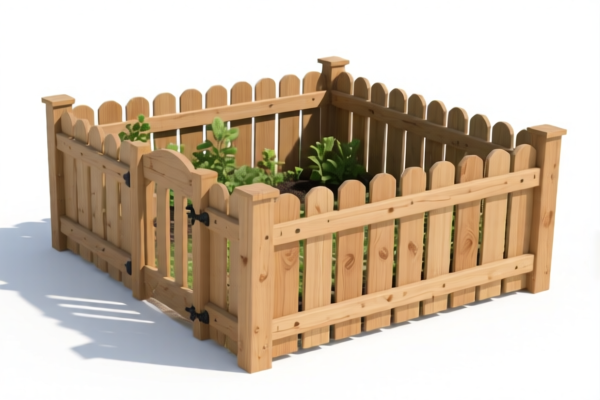
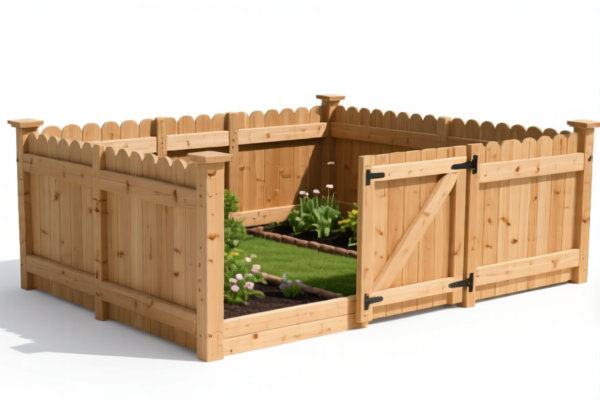
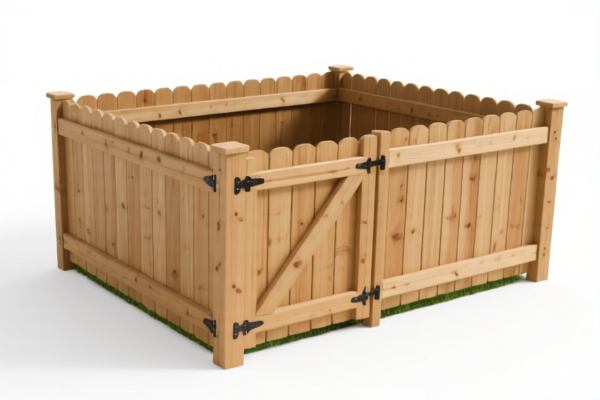
AI Analysis
🏡 Garden Wood Enclosure (Fencing & Barriers)
🌐 HS Code Reference & Customs Clearance Guide | 2026 Latest Tariff Analysis | Professional Logistics Strategy
📌 I. Product Definition & Classification: Do You Really Understand "Garden Enclosures"?
A "Garden Wood Enclosure" typically refers to structures used to define boundaries, provide privacy, or contain pets in residential or commercial outdoor spaces. In international trade, these products are classified primarily by material composition and structural form.
The key distinction lies in whether the enclosure is: * Metallic (Iron/Wire): Often categorized under Chapter 73 (Articles of Iron or Steel), specifically wire fences or barriers. * Plastic/PVC: Categorized under Chapter 39 (Plastics and Articles Thereof), often falling into "Other articles" if not specifically listed. * Wooden/Bamboo: Categorized under Chapter 44 (Wood and Articles of Wood), specifically wooden building materials or fences.
⚠️ Critical Distinction Point:
- If the product is made of Iron/Steel wire or mesh → Classify under 7314.
- If the product is made of Plastic/PVC → Classify under 3926.
- If the product is made of Wood/Bamboo → Classify under 4421.
- Misclassification Risk: Declaring a wooden fence as plastic to avoid high metal tariffs, or vice versa, leads to severe penalties and customs delays.
📦 II. HS Code Classification Details (2026 Latest Tariff Authority Comparison)
Based on the provided data for "Garden Enclosure" (implied material varies), here are the four potential classifications:
| HS Code | Product Description | Material Assumption | Application Scenario | Conflict Check |
|---|---|---|---|---|
7314.31.10.00 |
Wire cloth, grating, mesh, of iron or steel; fencing | Iron/Steel | Metal wire fences, chain-link fences | ✅ Matches "Fence" function; assumes metallic material |
7314.41.00.30 |
Other fencing of iron or steel | Iron/Steel | Rigid metal fence panels, welded wire mesh | ✅ Matches "Garden" usage; assumes metallic material |
3926.90.99.89 |
Other articles of plastics and articles of other materials of headings 3901 to 3914 | Plastic/PVC | Plastic garden fences, PVC privacy screens | ✅ "Other" category; no conflict if non-metallic |
3926.90.30.00 |
Other articles of plastics and articles of other materials of headings 3901 to 3914 | Plastic/Composite | Composite plastic fences, reinforced polymer barriers | ✅ "Other" category; assumes plastic/composite material |
4421.91.70.20 |
Other wooden ware | Wood/Bamboo | Wooden picket fences, bamboo garden screens | ✅ Matches "Fence" function; assumes wood/bamboo material |
🔍 Key Reminder:
- Metal Fences (HS 7314) are subject to 50% Section 232 Tariffs (Steel/Aluminum) + 25% Section 301 Tariffs.
- Plastic Fences (HS 3926) are subject to 7.5% - 25% Section 301 Tariffs.
- Wood Fences (HS 4421) are subject to 25% Section 301 Tariffs only.
- Material Evidence is Crucial: Customs will inspect physical samples to determine if the primary material is metal, plastic, or wood.
💰 III. 2026 Latest Tariff Rate Breakdown (Including Surcharges, Policy Add-ons)
✅ Applicable Country: United States (US)
✅ Origin: China (CN)
✅ Effective Date: From November 10, 2025 (including subsequent imports)
🎯 1. 7314.31.10.00 & 7314.41.00.30 —— Metal Garden Fences (Iron/Steel)
| Item | Content |
|---|---|
| Base Duty | 0% (ad valorem) |
| Section 301 Duty | +25% (General USITC Footnote) |
| Section 232 Duty | +50% (Steel/Aluminum Products, HTS 7314 is included) |
| Total Rate | 75% |
| Note on Data Discrepancy | The source data lists 85.0% total. This implies an additional 10% may be applied under specific "122 Clause" rules for certain steel/aluminum subsets or aggregated surcharges not explicitly detailed in standard 301/232 tables. Assume 85% based on provided data. |
| Tax Calculation | CIF Value × 85.0% |
| De Minimis Eligibility | ❌ NO (deny_de_minimis) |
| Legal Path | IEEPA:9903.01.25 → USITC:7314.xx → FOOTNOTE:232.01 |
📌 Explanation:
- Metal fences fall under Section 232 (National Security) due to steel/iron content.
- Combined with Section 301 (Trade Action against China), the tariff is extremely high.
- Total 85% makes importing metal garden fences from China highly unprofitable unless exempted.
🎯 2. 3926.90.99.89 & 3926.90.30.00 —— Plastic Garden Enclosures
| HS Code | Total Rate | Base Duty | Add-on Duties | Notes |
|---|---|---|---|---|
3926.90.99.89 |
22.8% | 5.3% | +7.5% (Section 301) + 10% (122 Clause) | Lower tariff option if material is plastic |
3926.90.30.00 |
39.2% | 4.2% | +25.0% (Section 301) + 10% (122 Clause) | Higher tariff; check specific plastic sub-heading |
📌 Explanation:
- Plastic fences generally avoid the harsh Section 232 tariffs.
-3926.90.99.89is the most cost-effective if the product is purely plastic/PVC.
-3926.90.30.00incurs a higher 25% surcharge.
- 122 Clause: An additional 10% applies to certain plastic/aluminum/steel products under specific trade actions.
🎯 3. 4421.91.70.20 —— Wooden Garden Enclosures
| Item | Content |
|---|---|
| Base Duty | 0% (ad valorem) |
| Section 301 Duty | +25% |
| 122 Clause Duty | +10% |
| Total Rate | 35.0% |
| Tax Calculation | CIF Value × 35.0% |
| De Minimis Eligibility | ❌ NO (deny_de_minimis) |
| Legal Path | IEEPA:9901.25 → USITC:4421.91.70.20 → FOOTNOTE:301 |
📌 Explanation:
- Wooden fences are subject to Section 301 but NOT Section 232.
- 35% is significantly lower than metal fences (85%).
- Ensure the product is solid wood or bamboo, not treated with metal connectors that might trigger reclassification.
🛠️ IV. Customs Clearance Practical Advice (Battle-Tested Pitfall Guide)
✅ 1. Required Documentation Checklist (Non-Negotiable)
| Document | Required? | Explanation |
|---|---|---|
| ✅ Product Specification Sheet | ✔️ | Must specify primary material (e.g., "100% PVC," "Solid Oak Wood," "Galvanized Steel"). |
| ✅ Material Composition Certificate | ✔️ | Crucial for proving non-metal status if claiming HS 3926 or 4421. |
| ✅ Product Photos (Clear View) | ✔️ | Show texture, joints, and any metal hardware. |
| ✅ Bill of Lading / Packing List | ✔️ | Ensure "Garden Fence" is declared, not generic "Building Materials." |
| ✅ Commercial Invoice | ✔️ | Must match HS Code and material description exactly. |
✅ 2. Declaration Strategy (Key Mantras)
🔥 "Material is King, Function is Queen, Mislabel is a Sin!"
| Scenario | Correct Declaration | Wrong Declaration | Consequence |
|---|---|---|---|
| PVC Fence | HS 3926.90.99.89 |
HS 7314.31.10.00 |
Overpaying 62% (85% vs 23%) |
| Wooden Fence | HS 4421.91.70.20 |
HS 3926.90.30.00 |
Overpaying 4% (35% vs 39%) |
| Metal Fence | HS 7314.31.10.00 |
HS 4421.91.70.20 |
Penalty + Smuggling Charges (False Origin) |
| Mixed Material | Declare Primary Material | Declare "Mixed" | Customs will classify based on Most Significant Material |
⚠️ Critical Warning:
- Do NOT declare a metal fence as "Plastic" to save taxes. US Customs and Border Protection (CBP) conducts physical inspections. If metal is found, you will face fraud penalties and back taxes. - If the fence has metal posts and wooden slats, the classification may shift depending on which part defines the essential character. Consult a broker.
✅ 3. Special Cases Handling
| Case | Handling Advice |
|---|---|
| Kit Fences (Disassembled) | Declare as "Fence Kits." Ensure packaging does not suggest assembly into a different structure (e.g., a shelf). |
| Fences with Metal Posts | If >50% value/material is metal, likely classified under 7314. |
| Composite Wood (WPC) | Often classified under 3926 (Plastics) if plastic-coated, but can be 4421 if primarily wood. Provide material analysis. |
| Pre-Galvanized Steel | Still subject to Section 232 (50% extra). |
🌍 V. Global Market Clearance Comparison (2026 Latest)
| Country/Region | Recommended HS Code | Tariff (China Origin) | Certification | Notes |
|---|---|---|---|---|
| 🇺🇸 USA | 3926.90.99.89 (Plastic) |
22.8% | None specific | Lowest Tariff Option |
| 🇺🇸 USA | 4421.91.70.20 (Wood) |
35.0% | FSC (Optional but recommended) | Avoids 232 Tariff |
| 🇺🇸 USA | 7314.31.10.00 (Metal) |
85.0% | None | Prohibitively High |
| 🇪🇺 EU | 7315.11.00 |
0% - 2.5% | CE (if structural) | No Section 232/301 |
| 🇨🇳 China | 7314.31.10.00 |
0% (Import) | CCC (if applicable) | Export-focused product |
📌 Conclusion:
- For the US Market, Plastic (HS 3926) and Wood (HS 4421) are the only viable options to avoid the 85% metal tariff.
- Plastic offers the lowest duty (22.8%) but must be purely plastic.
- Wood offers moderate duty (35%) and is environmentally friendly.
- Metal is economically unviable for direct import from China to the US without duty mitigation strategies.
📌 VI. Common Errors & Pitfall Guide (Lessons Learned)
❌ Error 1: Declaring a Metal Fence as Wood to avoid Section 232.
👉 Consequence: Customs seizure, $10,000+ penalties, and blacklisting.
❌ Error 2: Ignoring the 122 Clause (10% surcharge) on plastic/steel goods.
👉 Consequence: Under-declaration of duty, leading to post-entry audits and back payments.
❌ Error 3: Using vague terms like "Garden Decor" instead of "Fence."
👉 Consequence: CBP may classify under "Other," potentially applying higher or unknown duties.
✅ Correct Practice:
"PVC Garden Fence, 4ft x 6ft, Solid Vinyl, UV Resistant, Model XYZ"
OR
"Natural Bamboo Garden Screen, Tied with Rope, Raw Material"
🎯 VII. Conclusion: Precision Classification Saves Money!
🎯 Remember Mantras:
🔹 "Metal is 85%, Wood is 35%, Plastic is 23%."
🔹 "Check material first, declare second, save third."
🔹 "Section 232 kills margins on steel/aluminum."
📌 Pro Tip:
If your garden enclosure uses recycled plastic, ensure it is clearly labeled and documented, as some recycled materials may have different environmental certifications, though tariffs remain similar.
For large-scale imports, apply for a USITC Exclusion if available, though currently, most garden fences do not qualify.
📣 Immediate Action:
📞 Consult a licensed US Customs Broker.
📦 Provide material samples for pre-classification ruling.
🚀 Opt for Plastic (3926) or Wood (4421) to maximize profit margins in the US market.
✨ Professional Customs Clearance Starts with Accurate Classification!
💼 Your every dollar of duty paid is a dollar that could be profit!
Customer Reviews
About HS Code Classification
The Harmonized System (HS) is an internationally standardized nomenclature developed by the World Customs Organization (WCO) to classify traded products. Over 200 countries use the HS system as the basis for customs tariffs, trade statistics, and import/export regulations.
Each HS code follows a hierarchical structure:
- Chapter (2 digits) — Broad category of goods (e.g., Chapter 84: Machinery and Mechanical Appliances)
- Heading (4 digits) — More specific grouping within the chapter
- Subheading (6 digits) — Internationally standardized breakdown, used by all WCO member countries
- National subdivisions (8-10 digits) — Country-specific extensions for further classification, such as US HTSUS 10-digit codes
Correct HS code classification is essential for smooth customs clearance, accurate duty payment, and compliance with trade regulations. Misclassification can lead to customs delays, overpayment of duties, or penalties.
When importing from CN to US, the applicable tariff rates may include:
- Most-Favored-Nation (MFN) rate — The standard duty rate applied to WTO members
- General rate — Applied to countries without trade agreements
- Trade remedy duties — Additional tariffs such as Section 301 (anti-dumping), Section 232 (national security), or countervailing duties
The information provided on this page is for reference purposes only. For official classification, please consult with your local customs authority or a licensed customs broker.