Garlic Crusher
CN → US| HS Code | Tariff Rate | Origin | Destination | Doc |
|---|---|---|---|---|
| 8203208000 | 39.5% | CN | US | Official Doc |
| 8210000000 | 38.7% | CN | US | Official Doc |
| 7615107180 | 63.1% | CN | US | Official Doc |
| 7615109100 | 70.6% | CN | US | Official Doc |
| 8205517500 | 38.7% | CN | US | Official Doc |
Product Images
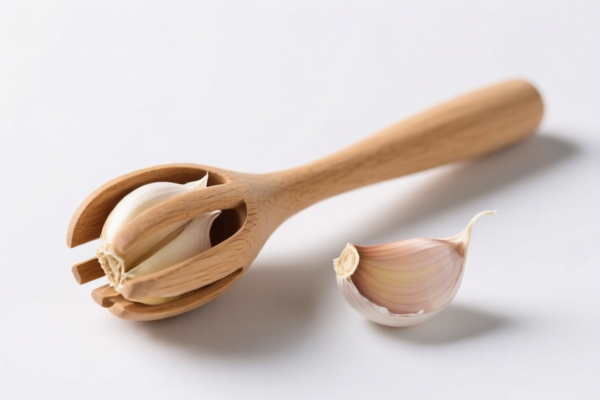
AI Analysis
🧄 Garlic Crusher / Garlic Press (Manual Kitchen Tool)
🌐 HS Code Reference & Customs Clearance Guide | 2024/2025 Latest Tariff Analysis | Professional Level Entry Strategy
📌 I. Product Definition & Classification: Do You Really Know "Garlic Crusher"?
A garlic crusher (or garlic press) is a manual kitchen utensil used to crush or puree garlic cloves. In international trade, its classification depends heavily on its material, mechanism, and intended use. It is generally categorized under Chapter 73, 76, or 82, depending on whether it is made of aluminum, steel, or classified as a hand tool.
⚠️ Key Distinction Points:
- If the device is primarily a hand tool (lever-based mechanism) regardless of material → Often falls under Chapter 82 (Tools).
- If it is primarily a kitchen utensil (container/dipper style) made of Aluminum → Falls under 7615.10.
- If it is a kitchen utensil made of Other Base Metals (e.g., Steel/Stainless Steel not specifically as a tool) → Can fall under 8210.00 or 8203.20.
- Material matters: Aluminum items often face different surcharges compared to Steel/Other Base Metals.
📦 II. HS Code Classification Details (Latest Tariff Alignment)
Based on the provided data, here are the five possible HS Codes for a Garlic Crusher, along with their logic and tax implications.
| HS Code | Product Description | Logic & Justification | Material Assumption |
|---|---|---|---|
8203.20.80.00 |
Garlic Crusher Container | Classified as a part/component of pliers or similar tools. Form is a container/parts. | Plastic or Metal (Base Metal Parts) |
8210.00.00.00 |
Garlic Crusher (Manual) | Food preparation utensil. Manual mechanical device. | Plastic or Metal |
7615.10.71.80 |
Garlic Crusher (Aluminum) | Kitchen utensil. "Other" category. Material: Aluminum. | Aluminum / Light Metal |
7615.10.91.00 |
Garlic Crusher (Aluminum) | Household kitchen item. "Other" category. Material: Aluminum. | Aluminum / Light Metal |
8205.51.75.00 |
Hand-Push Garlic Press | Hand tool. Household tool. | Base Metal (Steel/Iron) |
🔍 Critical Note:
- Aluminum vs. Steel: Aluminum garlic presses (7615.10.xx) generally attract lower base tariffs (3.1%) but may face specific surcharges depending on the exact subtype.
- Hand Tools (8205,8203): These are often viewed as "tools" rather than just "utensils," which can sometimes offer slightly better duty profiles depending on the specific mechanical action, though surcharges still apply.
-8210.00: This is a "basket" code for other hand instruments for food preparation, often used when the specific tool doesn't fit neatly into knives or graters.
💰 III. 2024/2025 Latest Tariff Rate Breakdown (Including Additional Taxes)
✅ Applicable Country: USA (US)
✅ Origin: China (CN)
✅ Effective Time: Current Trade War Tariffs (Section 301 & 122)
🎯 1. 8203.20.80.00 – Part of Pliers/Similar Tools (Container/Component)
| Item | Detail |
|---|---|
| Base Tariff | 4.5% (Ad Valorem) |
| Section 301 Surcharge | +25.0% |
| Section 122 Surcharge | +10.0% |
| Total Effective Rate | 39.5% |
| Tax Calculation | CIF Value × 39.5% |
| Legal Basis | Base Duty + USITC Footnote 301 + IEEPA/Section 122 Specifics |
📌 Explanation:
- This code treats the garlic press as a part or component of a larger tool (like pliers).
- The 4.5% base is moderate, but the 35% total surcharge (25% + 10%) makes the landed cost high.
- Risk: If customs disputes the "component" status and views it as a finished utensil, reclassification risk exists.
🎯 2. 8210.00.00.00 – Other Hand Instruments for Food Preparation
| Item | Detail |
|---|---|
| Base Tariff | 3.7% (Ad Valorem) |
| Section 301 Surcharge | +25.0% |
| Section 122 Surcharge | +10.0% |
| Total Effective Rate | 38.7% |
| Tax Calculation | CIF Value × 38.7% |
| Legal Basis | Chapter 82 General Provision + Additional Surcharges |
📌 Explanation:
- This is a common classification for manual garlic presses.
- It has the lowest base rate (3.7%) among the "Tool/Utlensil" options.
- Total tax is 38.7%, slightly better than8203.20.80.00.
- Best For: Standard stainless steel or hybrid garlic presses where the mechanism is the primary feature.
🎯 3. 7615.10.71.80 – Kitchen Utensils (Aluminum)
| Item | Detail |
|---|---|
| Base Tariff | 3.1% (Ad Valorem) |
| Section 301 Surcharge | 0.0% (Note: See below for Metal Surcharge) |
| Section 122 Surcharge | +10.0% |
| Steel/Al/Cu Surcharge | +50.0% (Specific to Steel, Aluminum, Copper Products) |
| Total Effective Rate | 63.1% |
| Tax Calculation | CIF Value × 63.1% |
| Legal Basis | Chapter 76 + Specific Metal Surcharge Rule |
📌 Critical Warning:
- Although the Section 301 25% surcharge is listed as 0% here, the data explicitly states a 50% surcharge for Steel, Aluminum, and Copper products.
- This is a HIGHER total tax rate (63.1%) than the hand tool classifications.
- Why? Specific trade actions on raw aluminum/steel products from China often trigger additional duties beyond the general Section 301.
- Risk: High. Only use if you can prove it is NOT subject to the specific aluminum surcharge (rare for China origin).
🎯 4. 7615.10.91.00 – Other Aluminum Kitchen Utensils
| Item | Detail |
|---|---|
| Base Tariff | 3.1% (Ad Valorem) |
| Section 301 Surcharge | +7.5% (Note: Partial Surcharge) |
| Section 122 Surcharge | +10.0% |
| Steel/Al/Cu Surcharge | +50.0% |
| Total Effective Rate | 70.6% |
| Tax Calculation | CIF Value × 70.6% |
| Legal Basis | Chapter 76 + Specific Metal Surcharge Rule |
📌 Critical Warning:
- This is the MOST EXPENSIVE classification at 70.6%.
- The combination of 7.5% + 10% + 50% makes aluminum-based garlic presses very costly to import from China.
- Recommendation: Avoid this HS Code for Chinese-origin aluminum garlic presses unless absolutely necessary.
🎯 5. 8205.51.75.00 – Hand Tools (Household)
| Item | Detail |
|---|---|
| Base Tariff | 3.7% (Ad Valorem) |
| Section 301 Surcharge | +25.0% |
| Section 122 Surcharge | +10.0% |
| Total Effective Rate | 38.7% |
| Tax Calculation | CIF Value × 38.7% |
| Legal Basis | Chapter 82 Hand Tools |
📌 Explanation:
- Identical tax rate to8210.00.00.00(38.7%).
- Classified specifically as a Hand Tool.
- Best For: Presses that are explicitly marketed and designed as "tools" with a lever mechanism, rather than just a "squeezer."
🛠️ IV. Customs Clearance Practical Advice (Pitfall Avoidance Guide)
✅ 1. Material Declaration is Key
| Material | Recommended HS Code | Why? |
|---|---|---|
| Stainless Steel / Iron | 8210.00.00.00 or 8205.51.75.00 |
Lower total tax (38.7%) compared to Aluminum. Avoid the 50% metal surcharge. |
| Aluminum | 8210.00.00.00 (If possible) OR 7615.10.91.00 |
Be very careful. If classified under Chapter 76, you face 63-70%. Try to classify as a "Hand Tool" (82xx) to avoid the metal surcharge, but ensure it fits the definition. |
| Plastic with Metal Spring | 8210.00.00.00 |
Often classified as "Other hand instruments" because the metal mechanism is the functional part. |
📌 Strategy:
- Avoid Chapter 76 (7615.10) for Chinese aluminum products if possible, due to the 50% surcharge.
- Prefer Chapter 82 (8210,8205) for manual garlic presses, as they attract 38.7% total tax.
✅ 2. Packaging & Presentation Tips
| Scenario | Advice |
|---|---|
| Retail Box | Clearly label as "Manual Garlic Press" or "Garlic Crusher". Do NOT use vague terms like "Kitchen Gadgets" without specifics. |
| Bulk/Loose | Provide clear photos showing the lever mechanism or pressing chamber to support "Hand Tool" classification. |
| Accessories | If selling with cleaning brushes, declare them separately or include in the main HS Code if de minimis. |
✅ 3. Special Cases & Exceptions
| Case | Handling |
|---|---|
| OEM/Private Label | Ensure the manufacturer's certificate matches the material declaration (e.g., 304 Stainless Steel vs. Aluminum). |
| Multi-Material | If >50% value is metal, customs will look at Chapter 73/82. If the metal part is the essential character, use 82xx. |
| Electric Garlic Presses | Different Category! If it has a motor, it moves to Chapter 85 (Machinery). This data does not cover electric models. |
| Small Gift Set | If garlic press is part of a set, the whole set may be classified by the principal item. |
🌍 V. Global Market Comparison (Quick Reference)
| Country/Region | Recommended HS Code | Est. Total Duty (China Origin) | Notes |
|---|---|---|---|
| 🇺🇸 USA | 8210.00.00.00 |
38.7% | Avoid 7615.10 due to 50% surcharge. |
| 🇨🇳 China (Import) | 8210.00.00.00 |
3.7% (No Surcharges) | Low duty if importing into China. |
| 🇪🇺 EU | 8210.00.00.00 |
4.7% (Standard) | No Section 301/122 surcharges. |
| 🇬🇧 UK | 8210.00.00.00 |
4.7% (Standard) | Post-Brexit tariffs apply. |
📌 Conclusion:
- The USA is the most challenging market due to Section 301 + 122 + Metal Surcharges.
- Chapter 82 (8210) is the safest and cheapest route for Chinese-manufactured garlic presses in the US.
- Chapter 76 (7615) for aluminum is expensive and should be avoided for Chinese goods.
📌 VI. Common Mistakes & Pitfalls (Lessons Learned)
❌ Mistake 1: Classifying Aluminum Garlic Press as 7615.10.91.00
👉 Result: 70.6% Tax.
👉 Fix: Check if it can be classified as a "Hand Tool" (8210.00.00.00) to reduce tax to 38.7%.
❌ Mistake 2: Ignoring Section 122 Surcharge
👉 Result: Underpayment of 10%.
👉 Fix: Always add +10% for Section 122 on most consumer goods from China to the US.
❌ Mistake 3: Vague Description "Kitchen Tool"
👉 Result: Customs delay, potential reclassification to higher duty codes.
👉 Fix: Use specific terms: "Manual Stainless Steel Garlic Press, Lever Type".
✅ Correct Declaration Example:
"Manual Garlic Press, Stainless Steel Construction, Lever Mechanism, for Home Kitchen Use, Model GP-01"
HS Code:8210.00.00.00
Total Duty: 38.7%
🎯 VII. Conclusion: Professional Classification Saves Money!
🎯 Key Takeaway:
🔹 For China-Origin Garlic Presses:
- Best HS Code:8210.00.00.00
- Total Tax: 38.7% (3.7% Base + 25% 301 + 10% 122)
- Avoid:7615.10series (Aluminum) due to 63-70% tax.🔹 Remember:
- Aluminum = Expensive (in US trade context for China).
- Steel/Hand Tool = Cheaper.
- Always declare Section 122 (10%) if applicable.
📌 Pro Tip:
If you are sourcing Aluminum garlic presses, consider asking your supplier if they can produce a Stainless Steel version for the US market to save 25-30% in duties.
📣 Immediate Action:
📞 Verify material composition with your supplier.
📋 Prepare product photos showing the mechanism.
📄 File entry under8210.00.00.00for optimal tax efficiency in the US.
✨ Smart Classification, Smarter Profits!
💼 Don't let classification errors eat your margin!
Customer Reviews
About HS Code Classification
The Harmonized System (HS) is an internationally standardized nomenclature developed by the World Customs Organization (WCO) to classify traded products. Over 200 countries use the HS system as the basis for customs tariffs, trade statistics, and import/export regulations.
Each HS code follows a hierarchical structure:
- Chapter (2 digits) — Broad category of goods (e.g., Chapter 84: Machinery and Mechanical Appliances)
- Heading (4 digits) — More specific grouping within the chapter
- Subheading (6 digits) — Internationally standardized breakdown, used by all WCO member countries
- National subdivisions (8-10 digits) — Country-specific extensions for further classification, such as US HTSUS 10-digit codes
Correct HS code classification is essential for smooth customs clearance, accurate duty payment, and compliance with trade regulations. Misclassification can lead to customs delays, overpayment of duties, or penalties.
When importing from CN to US, the applicable tariff rates may include:
- Most-Favored-Nation (MFN) rate — The standard duty rate applied to WTO members
- General rate — Applied to countries without trade agreements
- Trade remedy duties — Additional tariffs such as Section 301 (anti-dumping), Section 232 (national security), or countervailing duties
The information provided on this page is for reference purposes only. For official classification, please consult with your local customs authority or a licensed customs broker.