Gas Leak Detector
CN → US| HS Code | Tariff Rate | Origin | Destination | Doc |
|---|---|---|---|---|
| 8531100045 | 11.3% | CN | US | Official Doc |
| 8531100035 | 36.3% | CN | US | Official Doc |
| 8543709860 | 37.6% | CN | US | Official Doc |
| 8543706000 | 35.0% | CN | US | Official Doc |
| 9027102000 | 35.0% | CN | US | Official Doc |
| 9027106000 | 35.0% | CN | US | Official Doc |
Product Images
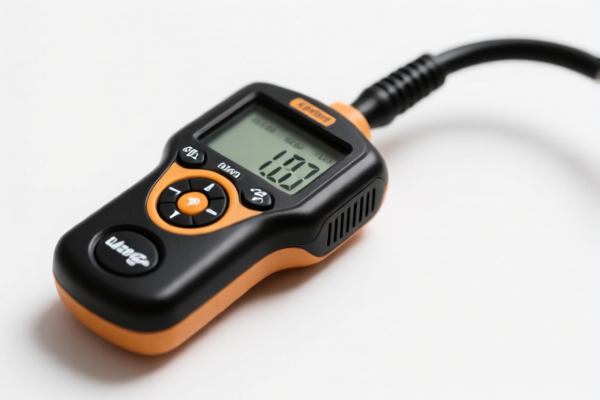
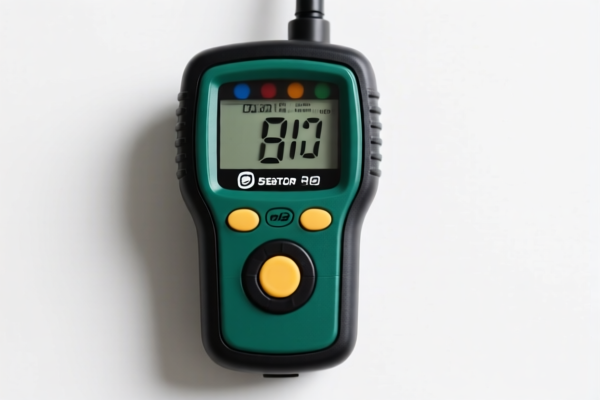
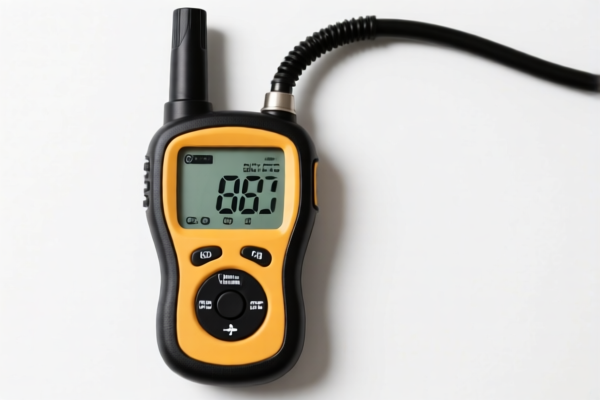
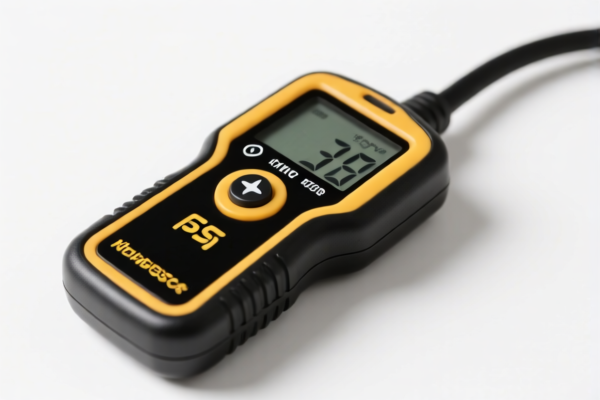
AI Analysis
💨 Gas Leak Detector (Gas Detectors & Analyzers)
🌐 HS Code Reference & Customs Clearance Guide | 2026 Latest Tariff Analysis | Professional Entry Strategy
📌 I. Product Definition & Classification: Do You Really Know "Gas Leak Detectors"?
Gas Leak Detectors are critical safety devices used in industrial, commercial, and residential settings to identify the presence of hazardous gases (such as methane, carbon monoxide, propane, or toxic vapors). In international trade, these devices are strictly categorized based on their primary function:
1. Safety/Signaling Apparatus: Devices primarily designed to alarm (sound/visual) when gas is detected. These fall under signaling apparatus. 2. Analysis/Measurement Instruments: Devices primarily designed to measure, analyze, or quantify the gas concentration or composition (e.g., spectrometers, chromatographs). These fall under analysis instruments.
⚠️ Key Distinction:
- If the device’s main purpose is to trigger an alarm (bell, siren, light) for safety → It is a Signaling Apparatus.
- If the device’s main purpose is to provide data/readings (digital display, output signal for control systems) → It is an Analysis/Measurement Instrument.
📦 II. HS Code Classification Details (2026 Latest Tariff Authority Match)
Based on the provided <DATA>, here are the applicable HS Codes for Gas Leak Detectors, categorized by their functional type:
| HS Code | Product Description | Functional Category | Primary Use Case |
|---|---|---|---|
8531.10.00.35 |
Burglar Alarms (Part of: Burglar or fire alarms and similar apparatus) | Safety Signaling | Devices primarily used as gas alarms that trigger sound/light alerts. Often used in residential or simple industrial safety contexts where the primary output is an alert, not precise measurement. |
8531.10.00.45 |
Other (Part of: Burglar or fire alarms and similar apparatus) | Safety Signaling | Other signaling apparatus for gas detection that does not fit the specific "burglar alarm" sub-category but still functions as a safety alarm. |
9027.10.20.00 |
Gas or smoke analysis apparatus: Electrical | Analysis & Measurement | Professional gas detectors that measure gas composition, concentration, or analyze gas properties electronically (e.g., electrochemical sensors, IR gas analyzers). |
9027.10.60.00 |
Gas or smoke analysis apparatus: Other | Analysis & Measurement | Non-electrical or complex gas analysis instruments (less common for standard portable detectors, but covers advanced lab-grade equipment). |
8543.70.98.60 |
Electrical machines and apparatus, having individual functions... Other | Specialized Electrical Apparatus | Gas detection devices with unique individual functions not specifically listed elsewhere. This is a "catch-all" for specialized electrical sensors or detectors that don’t fit neatly into signaling (8531) or standard analysis (9027). |
8543.70.60.00 |
Articles designed for connection to telegraphic or telephonic apparatus | Communication-Linked Apparatus | Gas detectors specifically designed to communicate with telephonic networks (e.g., IoT gas sensors that send SMS/calls upon detection). |
🔍 Critical Note:
- Most industrial/portable gas detectors that show a digital reading (ppm/%) belong to 9027.10.20.00.
- Simple fixed gas alarms (bells/lights) often fall under 8531.10.00.
- IoT/Smart Sensors connecting to phone networks may use 8543.70.60.00.
- Never confuse a "measurement instrument" with a "signaling apparatus." If it measures, it’s likely 9027.
💰 III. 2026 Latest Tariff Rate Breakdown (Including Surtaxes)
✅ Applicable Country: United States (US)
✅ Origin: China (CN)
✅ Effective Time: 2025 November 10 onwards (Including subsequent imports)
🎯 1. 9027.10.20.00 – Electrical Gas/Smoke Analysis Apparatus
(Most Common for Professional Gas Detectors)
| Item | Content |
|---|---|
| Base Tariff | 0.0% (ad valorem) |
| Additional Tariff (Section 301) | +25.0% |
| Total Tariff | 25.0% |
| Tax Calculation | CIF Value × 25.0% |
| De Minimis Exemption | ❌ Not Eligible |
| Legal Basis | USITC:9027.10.20.00 → Section 301 Surcharge |
📌 Explanation:
- Although the base tariff is 0%, the 25% Section 301 surcharge applies heavily to Chinese-origin analysis instruments.
- This is the most likely classification for professional-grade gas leak detectors (e.g., Honeywell, MSA, Industrial Scientific).
🎯 2. 8531.10.00.35 & 8531.10.00.45 – Burglar/Fire Alarms & Similar Apparatus
(For Simple Gas Alarm Units)
| Item | Content |
|---|---|
| Base Tariff | 0.0% |
| Additional Tariff | 0.0% |
| Total Tariff | 0.0% |
| Tax Calculation | No duty |
| De Minimis Exemption | ✅ Eligible (if under $800) |
| Legal Basis | USITC:8531.10.00.35 / 8531.10.00.45 |
📌 Explanation:
- If the device is classified as a "signaling apparatus" (alarm only), it benefits from 0% total duty.
- Risk: Customs may reclassify it as9027.10.20.00if it has measurement capabilities, leading to 25% back taxes.
- Strategy: Ensure product descriptions clearly emphasize "alarm/signal" function if aiming for this code, but ensure technical specs don’t contradict.
🎯 3. 8543.70.98.60 – Other Electrical Machines/Apparatus (Individual Function)
(For Specialized/Non-Standard Detectors)
| Item | Content |
|---|---|
| Base Tariff | 2.6% |
| Additional Tariff (Section 301) | +25.0% |
| Total Tariff | 27.6% |
| Tax Calculation | CIF Value × 27.6% |
| De Minimis Exemption | ❌ Not Eligible |
| Legal Basis | USITC:8543.70.98.60 → Section 301 Surcharge |
📌 Explanation:
- Used for specialized detectors with unique functions not covered by 9027 or 8531.
- Highest tax burden (27.6%). Avoid unless no other code fits.
🎯 4. 8543.70.60.00 – Articles for Telegraphic/Telephonic Apparatus
(IoT/Network-Connected Gas Sensors)
| Item | Content |
|---|---|
| Base Tariff | 0.0% |
| Additional Tariff (Section 301) | +25.0% |
| Total Tariff | 25.0% |
| Tax Calculation | CIF Value × 25.0% |
| De Minimis Exemption | ❌ Not Eligible |
| Legal Basis | USITC:8543.70.60.00 → Section 301 Surcharge |
📌 Explanation:
- Only applicable if the primary function is connection to telephonic networks (e.g., alarm calls).
- Same tax rate as analysis apparatus (25%).
🛠️ IV. Customs Clearance Practical Advice (Battle-Tested Pitfall Avoidance)
✅ 1. Required Documentation Checklist (Non-Negotiable)
| Document | Must Provide | Notes |
|---|---|---|
| ✅ Technical Specification Sheet | ✔️ | Must clearly state: "Gas Detection," "Measurement Range," "Sensor Type" (Electrochemical/IR/Catalytic). |
| ✅ Product Photos | ✔️ | Show display screen, sensors, and any alarm indicators. |
| ✅ Declaration of Function | ✔️ | Explicitly state if the device is for Alarm only or Measurement/Analysis. |
| ✅ Certifications | ✔️ | UL, FM, CE, ATEX (if applicable). |
| ✅ Commercial Invoice | ✔️ | Use precise HS Code description. Avoid vague terms like "Sensor." |
✅ 2. Classification Strategy (Key Mnemonic)
🔥 "Measure it, it’s 9027 (25%); Alarm it, it’s 8531 (0%); Special it, it’s 8543 (27.6%)."
| Scenario | Recommended HS Code | Why? |
|---|---|---|
| Portable Gas Detector (with LCD screen showing ppm) | 9027.10.20.00 |
It measures/analyzes gas concentration. |
| Fixed Gas Alarm (bells/lights only, no reading) | 8531.10.00.35 or 8531.10.00.45 |
It only signals. |
| IoT Gas Sensor (sends SMS/Call) | 8543.70.60.00 |
Primary function is telephonic connection. |
| Unique Chemical Sensor (non-standard) | 8543.70.98.60 |
No specific category fits; "individual function." |
✅ 3. Critical Clearance Warnings
| Pitfall | Consequence | Solution |
|---|---|---|
| Misclassifying Measurement Device as Alarm | Customs reclassification → 25% Duty + Penalties | Provide technical specs proving if it measures. |
| Vague Description: "Gas Sensor" | Customs Delay/Rejection | Use specific terms: "Electrochemical Gas Analyzer" or "Gas Leak Alarm System." |
| Ignoring Section 301 Surtaxes | Unexpected Cost | All codes except 8531 (alarm) have 25% surcharge. Budget accordingly. |
| Using De Minimis for Non-Alarm Items | Seizure/Rejection | Items >$800 with HS codes like 9027/8543 cannot use de minimis. |
🌍 V. Global Market Comparison (2026)
| Market | Recommended HS Code | Tariff (China Origin) | Key Requirement |
|---|---|---|---|
| 🇺🇸 USA | 9027.10.20.00 |
25% | FCC, UL, Detailed Specs |
| 🇪🇺 EU | 9027.80 (Similar) |
0-4% | CE, ATEX (if explosive) |
| 🇨🇳 China | 9027.80 |
5-7% | CCC (if applicable) |
| 🇯🇵 Japan | 9027.80 |
0-3% | PSE, JIS Standard |
📌 Conclusion:
- USA is the most costly market due to Section 301 surcharges.
- Precision in classification is key. If you can legitimately classify a device as an "Alarm" (8531), you save 25%. However, do not misrepresent measurement devices.
📌 VI. Common Mistakes & Blood-Lesson Guide
❌ Mistake 1: Calling a digital gas detector a "Gas Alarm" to save tax.
👉 Result: Customs checks specs, finds measurement capability → Reassigns to 9027.10.20.00 → 25% Back Duty + Fine.
❌ Mistake 2: Ignoring the 25% Surtax on 8543.70.98.60.
👉 Result: Unexpected 27.6% cost instead of 2.6%.
❌ Mistake 3: Using vague invoice description "Gas Detector."
👉 Result: Customs query → Delayed Clearance → Demurrage Charges.
✅ Correct Practice:
"Electrochemical Gas Analyzer, Model XYZ, Measures CO/Methane, Digital Display, UL Listed, FCC Certified"
🎯 VII. Conclusion: Precision Leads to Profit
🎯 Remember the Golden Rule:
🔹 "If it measures, pay 25%. If it just alarms, pay 0%. If it’s weird, pay 27.6%."
🔹 "HS Code is King. Misclassification costs more than correct classification."
📌 Pro Tip:
If your product is a simple gas alarm (no measurement), ensure it is strictly classified under 8531 to enjoy 0% duty. However, if it has any digital display or output signal, move to 9027 and budget for 25%.
📣 Immediate Action:
📞 Consult a licensed customs broker.
📄 Provide full technical specifications.
🚀 Clear Customs Smoothly, Avoid Surprises, Maximize Profit!
✨ Professional Clearance Starts with Accurate Classification!
💼 Every Percentage Point Saved is Pure Profit!
Customer Reviews
About HS Code Classification
The Harmonized System (HS) is an internationally standardized nomenclature developed by the World Customs Organization (WCO) to classify traded products. Over 200 countries use the HS system as the basis for customs tariffs, trade statistics, and import/export regulations.
Each HS code follows a hierarchical structure:
- Chapter (2 digits) — Broad category of goods (e.g., Chapter 84: Machinery and Mechanical Appliances)
- Heading (4 digits) — More specific grouping within the chapter
- Subheading (6 digits) — Internationally standardized breakdown, used by all WCO member countries
- National subdivisions (8-10 digits) — Country-specific extensions for further classification, such as US HTSUS 10-digit codes
Correct HS code classification is essential for smooth customs clearance, accurate duty payment, and compliance with trade regulations. Misclassification can lead to customs delays, overpayment of duties, or penalties.
When importing from CN to US, the applicable tariff rates may include:
- Most-Favored-Nation (MFN) rate — The standard duty rate applied to WTO members
- General rate — Applied to countries without trade agreements
- Trade remedy duties — Additional tariffs such as Section 301 (anti-dumping), Section 232 (national security), or countervailing duties
The information provided on this page is for reference purposes only. For official classification, please consult with your local customs authority or a licensed customs broker.