Gas Producer
CN → US| HS Code | Tariff Rate | Origin | Destination | Doc |
|---|---|---|---|---|
| 8403900000 | 17.5% | CN | US | Official Doc |
| 8419815080 | 17.5% | CN | US | Official Doc |
| 8403100000 | 17.5% | CN | US | Official Doc |
Product Images
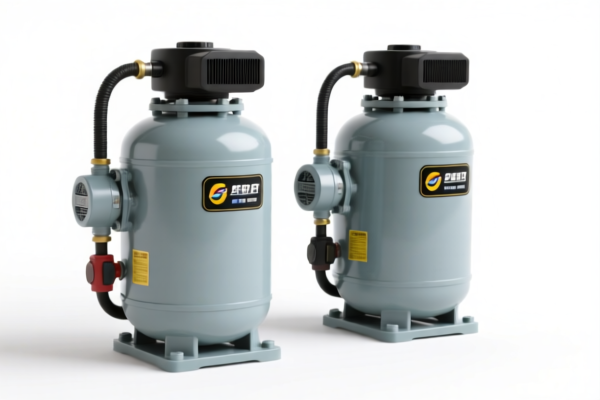
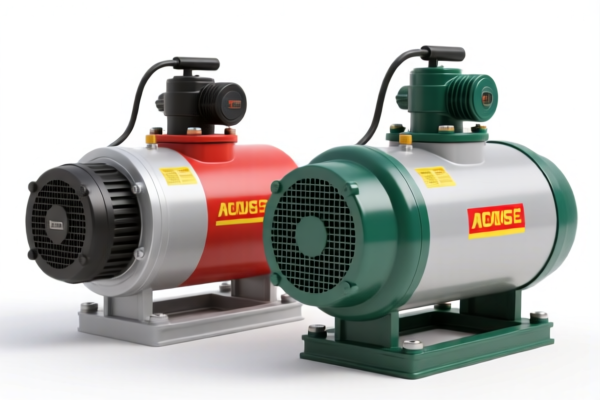
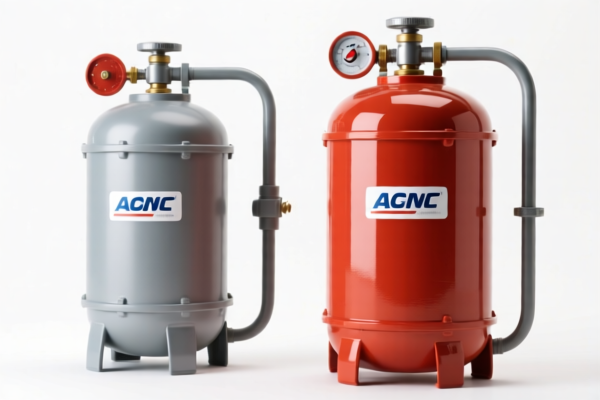
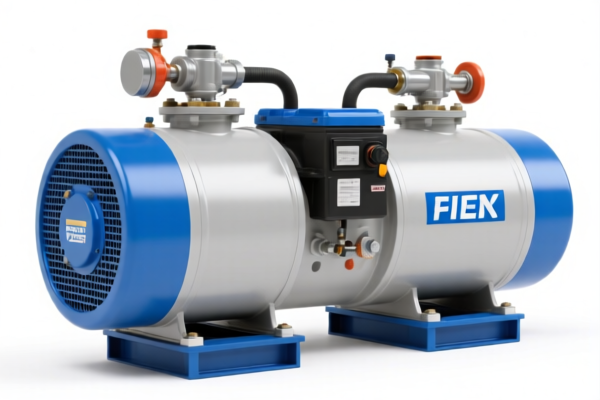
AI Analysis
🔥 Gas Producer (Coal Gas Producer / Gasifier)
🌐 HS Code Reference & Customs Clearance Guide | 2026 Latest Tariff Analysis | Professional Clearance Strategy
📌 I. Product Definition & Classification: What Exactly is a "Gas Producer"?
A Gas Producer (often referred to as a Gas Generator or Coal Gas Producer) is an industrial apparatus designed to convert solid carbonaceous fuels (such as coal, coke, or biomass) into combustible gas (synthesis gas, producer gas, or town gas) through pyrolysis and partial oxidation.
In international trade, the classification of this equipment is critical and often debated between two main categories: 1. Heating Appliances (Central Heating Boilers): If the primary function is to generate heat for central heating systems via the gas produced. 2. Thermal Processing Equipment: If the primary function is the chemical/physical process of gasification or heating liquids/foods using the generated gas.
⚠️ Key Distinction Point:
- If the device is explicitly designed and marketed as part of a central heating system for buildings/facilities → Likely 8403.
- If the device is used for industrial thermal processing, cooking, or heating fluids where gasification is the core mechanical function → Likely 8419.
- Note: Despite functional differences, the tariff burden for the provided HS Codes in the dataset is identical, simplifying the financial impact analysis.
📦 II. HS Code Classification Details (Based on Provided Data)
| HS Code | Product Description | Summary & Logic | Function Alignment |
|---|---|---|---|
8403.90.00.00 |
Parts of Central Heating Boilers | Gas producers are classified as heating/gas equipment, aligning with central heating boilers. | ✅ Central Heating Boiler Context |
8419.81.50.80 |
Machinery for Heating/Cooking | Classified as equipment for heating/processing food or hot liquids, aligning with cooking/heating appliances. | ✅ Cooking/Heating Device Context |
8403.10.00.00 |
Central Heating Boilers | Logically falls under equipment that generates heat/gas via combustion or heat exchange, fitting the central heating boiler category. | ✅ Central Heating Boiler Context |
🔍 Critical Insight:
- All three HS Codes in the provided data share the exact same tax rate (17.5%). - The classification difference lies in the functional description used for customs declaration: - 8403 Series: Emphasizes the "Heating" aspect (Boilers/Parts). - 8419 Series: Emphasizes the "Processing/Thermal Treatment" aspect (Machinery).
💰 III. 2026 Latest Tariff Rate Breakdown (Detailed Tax Clauses)
✅ Total Tax Rate: 17.5%
✅ Applicable To: All listed HS Codes (8403.90.00.00,8419.81.50.80,8403.10.00.00)
✅ Effective Time: Current Policy (As per Data)
🎯 Detailed Tax Composition
| Tax Component | Rate | Explanation |
|---|---|---|
| Basic Customs Duty | 0.0% | No standard import duty applied for these categories in the provided data. |
| Surtax (Retaliatory/Section 301) | 7.5% | Additional duty imposed on Chinese-origin goods under specific trade sections. |
| 122 Clause Tariff | 10.0% | A specific regulatory tariff clause (likely referencing Section 122 or specific trade enforcement actions) applied to these industrial thermal/gas equipment. |
| TOTAL EFFECTIVE RATE | 17.5% | Sum of Basic (0%) + Surtax (7.5%) + 122 Clause (10%) |
📌 Why 17.5%?
- It is not a standard MFN rate.
- It is a composite rate combining multiple surcharges.
- Important: Even if you classify it as a "Boiler Part" (8403) vs. "Processing Machine" (8419), the financial cost to the importer remains exactly 17.5%. Therefore, the classification decision should be driven by legal accuracy (correct functional description) rather than tax savings.
🛠️ IV. Customs Clearance Practical Advice (Pitfall Avoidance Guide)
✅ 1. Documentation Checklist (Essential for Smooth Clearance)
| Document | Required? | Purpose |
|---|---|---|
| ✅ Technical Specification Sheet | ✔️ | Must clearly state: Fuel type (coal/coke/biomass), Gas Output (m³/h), Heating Capacity (kW), and Primary Function (Heating vs. Process Gas). |
| ✅ Circuit/Piping Diagram | ✔️ | To prove whether it includes control systems (pushing towards 8419) or is a simple combustion chamber (pushing towards 8403). |
| ✅ Commercial Invoice | ✔️ | Must explicitly describe the item as "Gas Producer" or "Coal Gas Generator," not just "Heater." |
| ✅ Origin Certificate | ✔️ | Crucial for verifying surtax applicability. |
| ✅ Packing List | ✔️ | Detailing any separate components (gas scrubbers, fans) to ensure they are not declared separately. |
✅ 2. Declaration Strategy (Key Keywords)
| Scenario | Recommended Declaration Description | Risk |
|---|---|---|
| Primary Use: Central Heating | "Gas Producer for Central Heating System, Model XYZ" | Low Risk. Aligns with 8403. |
| Primary Use: Industrial Processing | "Industrial Gas Generator for Thermal Processing, Model XYZ" | Low Risk. Aligns with 8419. |
| Ambiguous Use | "Gas Generating Equipment" | High Risk. Customs may request additional proof of function. |
🔥 Pro Tip:
- Do NOT under-declare the value or split the shipment (e.g., declaring the boiler separately from the gasifier) to avoid scrutiny.
- Since the tax rate is identical, choose the HS code that best matches the technical manual. Misclassification can lead to penalties, even if the tax amount is the same.
✅ 3. Special Cases & Notes
| Case | Handling Advice |
|---|---|
| Used vs. New | Used gas producers may face stricter environmental inspections. Ensure they meet current emission standards. |
| Accessories | If sold with water scrubbers or dedusters, declare them as "Parts" of the main HS code to avoid separate classification issues. |
| Environmental Compliance | Gas producers often require EPA or local environmental permits. Ensure the equipment is certified to avoid detention. |
🌍 V. Global Market Comparison (Contextual)
| Market | Typical HS Code | Typical Duty | Notes |
|---|---|---|---|
| 🇺🇸 USA | 8403 / 8419 |
17.5% (as per data) | High surtaxes due to trade policies. |
| 🇨🇳 China | 8403 / 8419 |
Varies (Often 0-5%) | No surtaxes; focus on VAT (13%). |
| 🇪🇺 EU | 8403 / 8419 |
0-5% | CE Marking required. |
📌 Conclusion for US Importers:
- The 17.5% rate is fixed in the provided data.
- Focus on correct documentation to prevent delays, rather than trying to optimize tax rates through classification changes (since rates are equal).
📌 VI. Common Errors & Pitfalls (Lessons Learned)
❌ Error 1: Declaring as "Part of Boiler" when it's a complete standalone gasifier.
👉 Consequence: Customs may reject 8403.90 if the item is not a part but a whole machine. Use 8403.10 or 8419 instead.
❌ Error 2: Ignoring the "122 Clause" in financial planning.
👉 Consequence: Unexpected 10% cost increase if not budgeted.
❌ Error 3: Vague Description ("Gas Machine").
👉 Consequence: Customs examination delay. Always specify "Gas Producer," "Coal Gasifier," or "Heating Equipment."
✅ Correct Declaration Example:
"Industrial Gas Producer, Model GP-100, used for central heating in factories, generating gas from coal, complete with control system. HS Code: 8403.90.00.00"
🎯 VII. Conclusion: Precise Classification for Efficient Clearance
🎯 Remember:
🔹 "Function Dictates Code, Not Just Tax."
🔹 "17.5% is the flat rate: 0% Basic + 7.5% Surtax + 10% Clause."
🔹 "Accurate Documentation prevents delays more than HS Code selection in this case."
📌 Pro Tip:
If your Gas Producer is part of a larger automated system, ensure the primary function is clearly stated in the invoice. If it's purely for heating buildings, lean towards 8403. If it's for industrial thermal processes, lean towards 8419.
📣 Immediate Action:
📞 Consult with a Licensed Customs Broker to verify the "Primary Function" based on your specific technical manual.
🚀 Prepare Technical Docs Early to avoid hold-ups during customs inspection.
✨ Professional Clearance, Starting from Accurate Classification!
💼 Your Cost is 17.5% — Make Sure Your Paperwork is 100% Correct!
Customer Reviews
About HS Code Classification
The Harmonized System (HS) is an internationally standardized nomenclature developed by the World Customs Organization (WCO) to classify traded products. Over 200 countries use the HS system as the basis for customs tariffs, trade statistics, and import/export regulations.
Each HS code follows a hierarchical structure:
- Chapter (2 digits) — Broad category of goods (e.g., Chapter 84: Machinery and Mechanical Appliances)
- Heading (4 digits) — More specific grouping within the chapter
- Subheading (6 digits) — Internationally standardized breakdown, used by all WCO member countries
- National subdivisions (8-10 digits) — Country-specific extensions for further classification, such as US HTSUS 10-digit codes
Correct HS code classification is essential for smooth customs clearance, accurate duty payment, and compliance with trade regulations. Misclassification can lead to customs delays, overpayment of duties, or penalties.
When importing from CN to US, the applicable tariff rates may include:
- Most-Favored-Nation (MFN) rate — The standard duty rate applied to WTO members
- General rate — Applied to countries without trade agreements
- Trade remedy duties — Additional tariffs such as Section 301 (anti-dumping), Section 232 (national security), or countervailing duties
The information provided on this page is for reference purposes only. For official classification, please consult with your local customs authority or a licensed customs broker.