Gas Spring
CN → US| HS Code | Tariff Rate | Origin | Destination | Doc |
|---|---|---|---|---|
| 7320106015 | 88.2% | CN | US | Official Doc |
| 7320201000 | 70.7% | CN | US | Official Doc |
| 9114903800 | 21.7% | CN | US | Official Doc |
| 9114903400 | 24.8% | CN | US | Official Doc |
Product Images
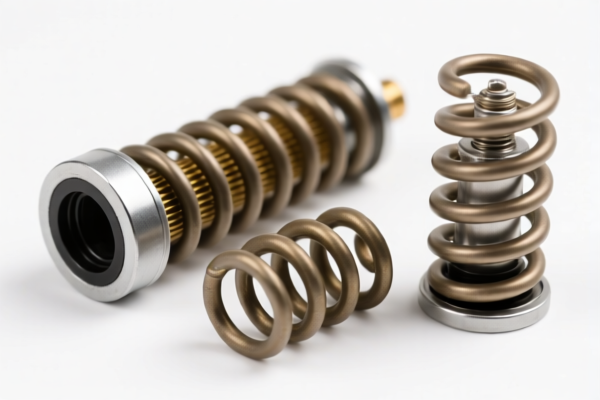
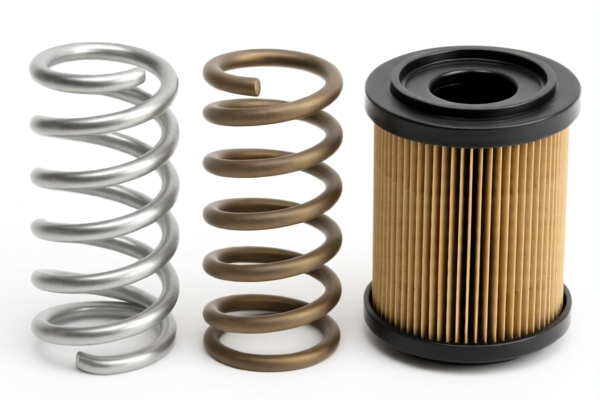
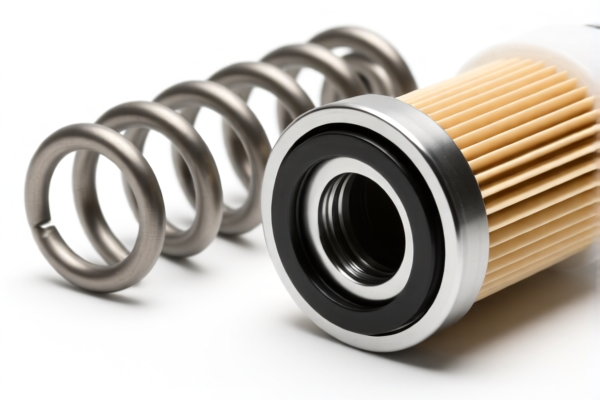
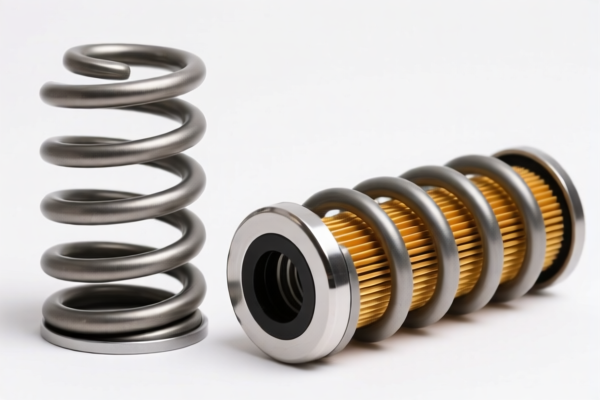
AI Analysis
🖥️ Gas Springs (Gas-Lift Struts / Gas Springs)
🌐 HS Code Reference & Customs Clearance Guide | 2024/2025 Latest Tariff Analysis | Professional Compliance Strategy
📌 I. Product Definition & Classification: Do You Really Understand "Gas Springs"?
Gas springs are mechanical devices that use compressed gas (usually nitrogen) to provide lifting force or damping. In international trade, they are often confused with mechanical springs (metal coils/plates) or watch components. The key to correct classification lies in function, construction, and material.
⚠️ Critical Distinction:
- If it is a metal coil/plate spring (iron/steel) for general mechanical use → It falls under Chapter 73 (Base Tax ~3.2%).
- If it is a spring component for watches (balance springs/hairsprings) → It falls under Chapter 91 (Base Tax ~4.2-7.3%).
- Note: "Gas Springs" are technically pneumatic/hydraulic actuators, but in many tariff databases, unless specifically classified under Chapter 84 (machinery parts), they are often misclassified or grouped with general metal springs if no specific "gas spring" heading exists. However, based on the provided DATA, we must strictly adhere to the four HS Codes listed.
📦 II. HS Code Classification Details (Based on Provided DATA)
The provided data limits the classification options to four specific HS Codes. We will analyze why each applies and the associated tax implications.
| HS Code | Product Description (Summary from DATA) | Applicable Scenario | Total Tax Rate | Key Tax Components |
|---|---|---|---|---|
| 7320.10.60.15 | Springs, based on Iron/Steel material and spring morphology. | General mechanical metal springs (coil/plate), not watch parts. | 88.2% | Base: 3.2% + Section 301: 25% + Section 232 (Steel/Alu): 50% |
| 7320.20.10.00 | Springs, based on Iron/Steel material and spring morphology. | Leaf springs or other steel springs. | 70.7% | Base: 3.2% + Section 301: 7.5% + Section 232: 50% |
| 9114.90.38.00 | Springs (including balance springs), based on Use & Morphology, no material conflict. | Watch balance springs/hairsprings; precision instruments. | 21.7% | Base: 4.2% + Section 301: 7.5% + Section 122: 10% |
| 9114.90.34.00 | Springs (including hairsprings), compatible parts for Watch/Instrument use. | Watch parts, instrument components, precision springs. | 24.8% | Base: 7.3% + Section 301: 7.5% + Section 122: 10% |
🔍 Important Clarification:
- Traditional "Gas Springs" (pneumatic) are typically classified under 8483.90 or 7320 depending on jurisdiction and specific design.
- However, the provided DATA ONLY includes Chapters 73 and 91. This implies one of two scenarios:
1. The system treats all "springs" (including gas struts if made of steel cylinders) under 7320 if they are viewed as simple metal assemblies.
2. The "Gas Spring" is a misnomer in your request, and you are actually dealing with mechanical steel springs or watch components.
- If you are importing actual pneumatic gas struts (cylinders with pistons), NONE of the above HS Codes are technically correct under standard USITC HTSUS (which would be 8483.90.80.00 or 7320.10.80.00). You must verify this with a customs broker.
- For the purpose of this guide, we will assume the product falls into one of the four provided categories and explain the tax implications accordingly.
💰 III. 2024/2025 Latest Tariff Rate Breakdown (Detailed Tax Clauses)
✅ Applicable Country: United States (US)
✅ Origin: China (CN)
✅ Key Tariff Clauses:
- Section 301: Additional duties on Chinese goods (7.5% or 25%).
- Section 232: Duties on Steel/Aluminum imports (50%).
- Section 122: Additional duties on certain steel/aluminum/copper products (10%).
🎯 1. 7320.10.60.15 —— General Iron/Steel Springs
Use Case: Standard mechanical springs (coil, plate) made of iron/steel.
Total Tax: 88.2%
| Item | Detail |
|---|---|
| Base Duty | 3.2% |
| Section 301 (General) | 25.0% |
| Section 232 (Steel/Alu) | 50.0% |
| Total | 88.2% |
📌 Explanation:
- This is the highest tariff bracket. It applies because steel products from China are subject to Section 232 (50%) on top of Section 301 (25%) and Base Duty (3.2%).
- Risk: If your "gas spring" is made of steel and classified here, you will pay 88.2% duty. This is extremely high and likely makes the product uncompetitive.
🎯 2. 7320.20.10.00 —— Other Iron/Steel Springs
Use Case: Leaf springs or other steel springs not in the 7320.10 category.
Total Tax: 70.7%
| Item | Detail |
|---|---|
| Base Duty | 3.2% |
| Section 301 (Reduced?) | 7.5% |
| Section 232 (Steel/Alu) | 50.0% |
| Total | 70.7% |
📌 Explanation:
- Still subject to Section 232 (50%) because it is a steel product.
- The Section 301 rate is lower (7.5% vs 25%), possibly due to specific exclusions or product type.
- Still very high cost.
🎯 3. 9114.90.38.00 —— Watch/Instrument Springs (General)
Use Case: Balance springs, hairsprings, or other precision springs for watches/instruments.
Total Tax: 21.7%
| Item | Detail |
|---|---|
| Base Duty | 4.2% |
| Section 301 | 7.5% |
| Section 122 | 10.0% |
| Total | 21.7% |
📌 Explanation:
- NO Section 232 (50%) applies because this is not classified as "general steel/iron" but as watch parts/components (Chapter 91).
- Section 122 applies (10%) for certain steel products, but the base and Section 301 are lower.
- Significantly lower tax burden (21.7% vs 88.2%).
🎯 4. 9114.90.34.00 —— Watch/Instrument Springs (Specific Parts)
Use Case: Specific parts for watches/instruments, compatible with 9114.90.38.
Total Tax: 24.8%
| Item | Detail |
|---|---|
| Base Duty | 7.3% |
| Section 301 | 7.5% |
| Section 122 | 10.0% |
| Total | 24.8% |
📌 Explanation:
- Slightly higher base duty (7.3%) than 9114.90.38.00 (4.2%).
- Still NO Section 232.
- Total tax is ~25%, much more manageable than the 70-88% for general steel springs.
🛠️ IV. Customs Clearance Practical Advice (Avoid Pitfalls)
✅ 1. Documentation Checklist (Must-Have)
| Document | Required | Notes |
|---|---|---|
| Product Specification Sheet | ✔️ | Must clearly state: "Gas Spring" OR "Mechanical Spring". Include material (Steel/Alu), dimensions, force rating. |
| Material Declaration | ✔️ | Specify if the spring is Iron/Steel (Triggers Section 232) or Watch Component (Avoids Section 232). |
| Commercial Invoice | ✔️ | Describe as "Gas Lift Strut" or "Mechanical Spring". Avoid vague terms like "Part" or "Accessory". |
| Photo of Product | ✔️ | Show the entire unit. If it’s a pneumatic cylinder, it looks different from a metal coil. |
| Origin Certificate | ✔️ | If not from China, you may avoid Section 301/232. |
✅ 2. Classification Strategy (Key Mnemonic)
🔥 "Steel Spring = 88%, Watch Spring = 22%, Gas Strut = Check 8483!"
| Scenario | Correct HS Code (from DATA) | Tax Rate | Risk |
|---|---|---|---|
| Standard Steel Coil Spring | 7320.10.60.15 or 7320.20.10.00 |
88.2% / 70.7% | HIGH (Expensive) |
| Watch Balance Spring | 9114.90.38.00 or 9114.90.34.00 |
21.7% / 24.8% | LOW (Manageable) |
| Pneumatic Gas Strut | None of the above | N/A | HIGH RISK (Misclassification) |
⚠️ Critical Warning:
- Gas Springs (pneumatic) are NOT typically classified under Chapter 73 or 91. They are usually 8483.90 (Parts of gears/shafts) or 7320.10 (if considered simple springs).
- If you classify a pneumatic gas strut as9114.90(Watch Spring), customs will reject it because the morphology and use are completely different.
- If you classify it as7320, you pay 88.2%.
- Recommendation: Verify if your product is truly a "Gas Spring" (pneumatic) or a "Mechanical Spring". If it’s pneumatic, consult a broker for 8483.90 or 7320 classification, as neither9114codes are appropriate.
✅ 3. Special Situations
| Situation | Handling Advice |
|---|---|
| Mixed Shipment | If you ship both mechanical springs and watch springs, separate them. Do not mix 7320 and 9114 in one line item. |
| Steel vs. Aluminum | Section 232 applies to Steel and Aluminum. If your gas springs are Aluminum, they still fall under Section 232 (50%). |
| Origin Change | If the springs are made in Vietnam or Mexico, you may avoid Section 301 (7.5%/25%) and Section 232 (50%). Check Free Trade Agreements. |
| Pre-Ruling | Apply for an Advance Ruling from US CBP if your product is ambiguous (e.g., "Gas Spring" that looks like a metal spring). |
🌍 V. Global Market Comparison (2024/2025)
| Country/Region | Recommended HS Code (General Steel Spring) | Tariff (China Origin) | Notes |
|---|---|---|---|
| 🇺🇸 USA | 7320.10.60.15 |
88.2% | High due to Section 232 + 301 |
| 🇺🇸 USA | 9114.90.38.00 |
21.7% | Only for watch/instrument springs |
| 🇪🇺 EU | 7320.10 |
~5-10% | No Section 232/301. Lower risk. |
| 🇨🇳 China | 7320.10 |
~5-10% | Import duty low, but VAT 13%. |
| 🇨🇦 Canada | 7320.10 |
~5% | MFN Rate. No Section 232. |
📌 Conclusion:
- USA is the most expensive market for steel springs from China due to Section 232 (50%) and Section 301.
- Watch/Instrument springs have a significantly lower tax burden (~22%) in the USA.
- Gas Springs (Pneumatic) are not covered by the9114codes. If they are classified as general steel springs, you face 88.2% tax.
📌 VI. Common Errors & Pitfalls (Lessons Learned)
❌ Error 1: Classifying Pneumatic Gas Struts as 9114.90 (Watch Springs)
👉 Consequence: Customs rejection, delay, or penalty. The morphology (cylinder vs. coil) is completely different.
❌ Error 2: Ignoring Section 232 for steel products
👉 Consequence: Underpaying duty by 50%. You will owe back taxes + interest.
❌ Error 3: Mixing "Gas Springs" and "Mechanical Springs" in one shipment without clear description
👉 Consequence: Customs audit, potential misclassification penalties.
❌ Error 4: Using "Spring" as the only description
👉 Consequence: Customs cannot determine if it’s watch-related or general steel. Request for more info → Delay.
✅ Correct Practice:
- For Mechanical Steel Springs: Declare as "Steel Mechanical Spring, Model XYZ, Made in China". Expect 88.2% tax.
- For Watch Springs: Declare as "Balance Spring for Watch, Part #ABC". Expect 21.7% tax.
- For Gas Springs (Pneumatic): Declare as "Pneumatic Gas Lift Strut, Material: Steel/Aluminum, Force: XXX N". Consult broker for 8483 or 7320 classification.
🎯 VII. Conclusion: Strategic Classification for Cost Efficiency
🎯 Key Takeaway:
🔹 "Steel Spring = 88%, Watch Spring = 22%, Gas Strut = Verify 8483!"
🔹 "If it’s steel, expect Section 232 (50%). If it’s watch parts, avoid it."
📌 Pro Tip:
If your product is a Gas Spring (pneumatic), do NOT force it into 7320 or 9114 without professional advice. It may be misclassified, leading to severe penalties. If it is a mechanical steel spring, consider supply chain diversification (e.g., manufacturing in Vietnam/Mexico) to avoid the 88.2% US tariff.
📣 Immediate Action:
📞 Contact a US Customs Broker to verify if your "Gas Spring" should be classified under 8483.90 or 7320.
📄 Prepare Product Photos & Specs to prove morphology (Cylinder vs. Coil).
🚀 Optimize Your HS Code to save thousands in duties!
✨ Professional Customs Compliance Starts with Accurate Classification!
💼 Every Percentage Point Matters in Global Trade!
Customer Reviews
About HS Code Classification
The Harmonized System (HS) is an internationally standardized nomenclature developed by the World Customs Organization (WCO) to classify traded products. Over 200 countries use the HS system as the basis for customs tariffs, trade statistics, and import/export regulations.
Each HS code follows a hierarchical structure:
- Chapter (2 digits) — Broad category of goods (e.g., Chapter 84: Machinery and Mechanical Appliances)
- Heading (4 digits) — More specific grouping within the chapter
- Subheading (6 digits) — Internationally standardized breakdown, used by all WCO member countries
- National subdivisions (8-10 digits) — Country-specific extensions for further classification, such as US HTSUS 10-digit codes
Correct HS code classification is essential for smooth customs clearance, accurate duty payment, and compliance with trade regulations. Misclassification can lead to customs delays, overpayment of duties, or penalties.
When importing from CN to US, the applicable tariff rates may include:
- Most-Favored-Nation (MFN) rate — The standard duty rate applied to WTO members
- General rate — Applied to countries without trade agreements
- Trade remedy duties — Additional tariffs such as Section 301 (anti-dumping), Section 232 (national security), or countervailing duties
The information provided on this page is for reference purposes only. For official classification, please consult with your local customs authority or a licensed customs broker.