Gas Tester
CN → US| HS Code | Tariff Rate | Origin | Destination | Doc |
|---|---|---|---|---|
| 9031200000 | 36.7% | CN | US | Official Doc |
| 9031808085 | 10.0% | CN | US | Official Doc |
| 9027102000 | 35.0% | CN | US | Official Doc |
| 9027106000 | 35.0% | CN | US | Official Doc |
Product Images
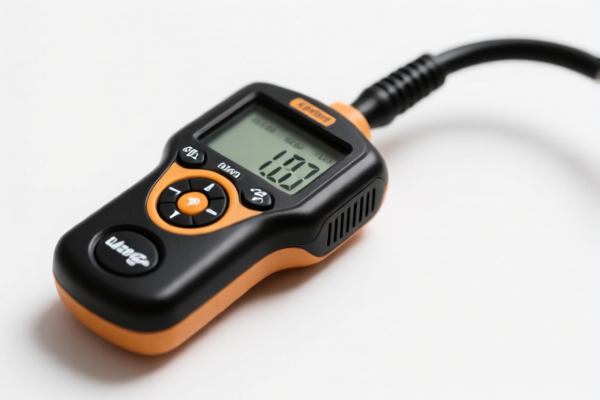
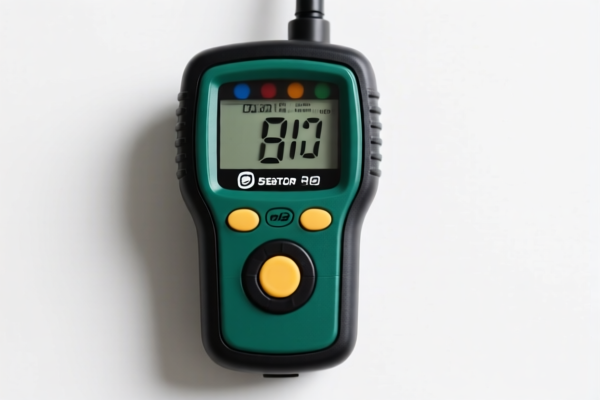
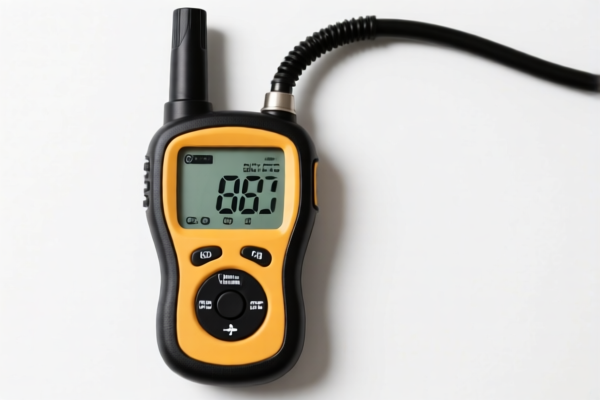
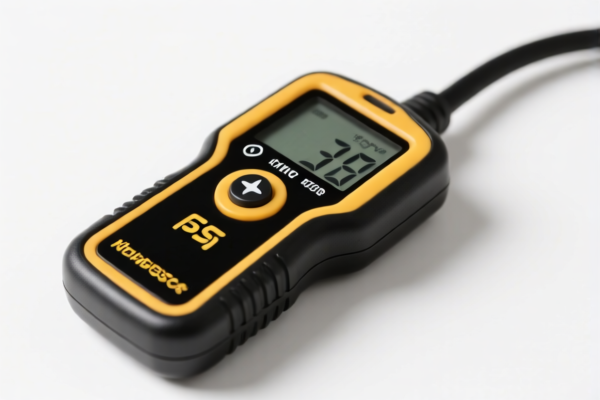
AI Analysis
🔍 Gas Tester (Gas or Smoke Analysis Apparatus)
🌐 HS Code Reference & Customs Clearance Guide | 2026 Latest Tariff Analysis | Professional Import Strategy
📌 One, Product Definition & Classification: Do You Really Understand “Gas Testers”?
A gas tester is a critical instrument used to detect, measure, and analyze the concentration of specific gases (e.g., CO, CH₄, O₂, H₂S, VOCs) in air or industrial environments. It plays a vital role in occupational safety, environmental monitoring, industrial process control, and emergency response.
In international trade, gas testers are classified under instruments for physical or chemical analysis, specifically within the category of gas or smoke analysis apparatus. They are divided into two main sub-types based on their operation:
- Electrical Gas Testers: Devices powered by electricity, often with digital displays, sensors, alarms, and data logging.
- Non-electrical (Mechanical/Chemical) Gas Testers: Less common; include colorimetric tubes, chemical detectors, or diffusion-based systems.
⚠️ Key Distinction: - If the device uses electrical sensors, circuitry, power supply, digital readout, or data output → must be classified as electrical. - If it relies solely on chemical reactions or passive diffusion without electronics → may fall under other subheadings (but rare in modern trade).
📦 Two, HS Code Classification Details (2026 Official Tariff Match)
| HS Code | Product Description | Application Scenarios | Electrical? |
|---|---|---|---|
9027.10.20.00 |
Instruments for physical/chemical analysis: Gas or smoke analysis apparatus — Electrical | Portable gas detectors, multi-gas monitors, industrial safety testers, explosion-proof sensors | ✅ Yes |
9027.10.60.00 |
Instruments for physical/chemical analysis: Gas or smoke analysis apparatus — Other (non-electrical) | Chemical test tubes, colorimetric detectors, passive diffusion badges | ❌ No |
🔍 Critical Note: - All modern handheld or fixed gas testers used in industry, mining, fire services, or construction are electrical → must be classified under
9027.10.20.00. - Even if the device is battery-powered, it still qualifies as "electrical" if it contains electronic components for sensing, processing, and displaying results.
💰 Three, 2026 Latest Tariff Breakdown (Including Additional Duties & Policy Add-ons)
✅ Applicable Country: United States (US)
✅ Origin Country: China (CN)
✅ Effective Date: November 10, 2025 (and ongoing)
🎯 1. 9027.10.20.00 — Electrical Gas or Smoke Analysis Apparatus
| Item | Details |
|---|---|
| Base Duty Rate | 0.0% (ad valorem) |
| USITC Additional Duty | +25.0% (under Section 301 of U.S. Trade Act) |
| IEEPA Additional Duty | +10.0% (International Emergency Economic Powers Act, applies to goods from China/HK) |
| Total Effective Duty | 35.0% |
| Tax Calculation Basis | CIF Value × 35.0% |
| De Minimis Threshold | ❌ Not applicable (denied due to Section 301 and IEEPA) |
| Legal Reference Path | IEEPA:9903.01.25 → IEEPA:9903.01.24 → USITC:9027.10.20.00 → FOOTNOTE:9903.88.01 |
📌 Explanation: - The 25% USITC duty comes from the U.S. Trade Representative’s Section 301 investigations targeting Chinese-made high-tech instruments. - The 10% IEEPA duty is a national security-related tariff imposed on all goods originating from China or Hong Kong. - Total: 35% — This is extremely high and significantly impacts import profitability.
🎯 2. 9027.10.60.00 — Other Gas or Smoke Analysis Apparatus (Non-Electrical)
| Item | Details |
|---|---|
| Base Duty Rate | 0.0% |
| USITC Additional Duty | +25.0% |
| IEEPA Additional Duty | +10.0% |
| Total Effective Duty | 35.0% |
| Tax Calculation Basis | CIF Value × 35.0% |
| De Minimis Threshold | ❌ Not applicable |
| Legal Reference Path | IEEPA:9903.01.25 → IEEPA:9903.01.24 → USITC:9027.10.60.00 → FOOTNOTE:9903.88.01 |
📌 Important Caveat: - This code applies only to non-electrical, chemical-based detection tools (e.g., test tubes, badge sensors). - If your product has any electronic component, even a simple LED indicator, it does NOT qualify for this code — you must use
9027.10.20.00. - Misclassification here leads to duty underpayment, penalties, and audit risk.
🛠️ Four, Customs Clearance Best Practices (Real-World Tips to Avoid Pitfalls)
✅ 1. Required Documentation Checklist (Must-Have)
| Document | Required? | Purpose |
|---|---|---|
| ✅ Product Specification Sheet | ✔️ | Shows sensor type, gas range, power source, display method |
| ✅ Circuit Diagram / PCB Layout | ✔️ | Proves presence of electronic components |
| ✅ Product Photos (with label & interface) | ✔️ | Clear view of model number, brand, power port, screen |
| ✅ Third-Party Test Report | ✔️ | FCC, CE, ATEX, IECEx (if applicable) |
| ✅ Commercial Invoice | ✔️ | Must state: “Electrical Gas Tester, Multi-Gas Monitor, Model XYZ” |
| ✅ Certificate of Origin (CO) | ✔️ | Essential for claiming preferential rates (if from non-China) |
| ✅ Packing List | ✔️ | Clarifies whether accessories (batteries, cases, cables) are included |
✅ 2.申报技巧(申报口诀)
🔥 “电不电,看电路;传感器,定编码;名称准,税不翻!”
| Scenario | Correct HS Code | Wrong Practice |
|---|---|---|
| Portable multi-gas detector with LCD, battery, alarm | 9027.10.20.00 |
Misclassified as 9031.80.80.85 → higher risk |
| Gas tester with colorimetric tube (no electronics) | 9027.10.60.00 |
Incorrectly reported as electrical → 35% duty |
| Gas tester with USB data logging & app connection | 9027.10.20.00 |
Split into “tester” + “cable” → 89.5% each |
| Gas detector with built-in pump and sensor | 9027.10.20.00 |
Reported as “machine” → wrong category |
📌 Pro Tip:
Use the exact product name in the invoice:“Electrical Multi-Gas Analyzer, 4-Gas (O₂, CH₄, CO, H₂S), Battery-Powered, with Digital Display & Alarm, Model GT-300, FCC & IECEx Certified”
✅ 3. Special Cases Handling
| Situation | Recommended Action |
|---|---|
| OEM/White Label Gas Tester | Provide customer PO + design specs; avoid "generic" labeling |
| Used or Refurbished Tester | Must be declared as such; may face higher scrutiny |
| Tester with Built-in Data Logger / Cloud Sync | Still 9027.10.20.00 — electronic function dominates |
| Gas Tester for Medical Use (e.g., anesthesia) | Can apply for medical device exemption; requires FDA documentation |
| Gas Tester for Military / Aerospace | Apply for special import license; possible duty relief |
🌍 Five, Global Market Customs Comparison (2026 Update)
| Country/Region | Recommended HS Code | Tariff Rate | Certification Required | Notes |
|---|---|---|---|---|
| 🇺🇸 United States | 9027.10.20.00 |
35.0% (China origin) | FCC, CE, IECEx | High risk; no de minimis |
| 🇨🇳 China | 9027.10.20.00 |
5% | CCC, RoHS | No extra duties |
| 🇪🇺 European Union | 9027.10.20.00 |
0% (if CE compliant) | CE, ATEX, IECEx | No附加税 |
| 🇦🇺 Australia | 9027.10.20.00 |
5% | RCM | No additional tariffs |
| 🇯🇵 Japan | 9027.10.20.00 |
0% | PSE | No extra charges |
📌 Conclusion:
- The U.S. is the only market imposing a 35% total duty on Chinese-made gas testers. - China-origin devices face the highest import cost in the U.S. — consider shifting production to Vietnam, Mexico, or Malaysia for IEEPA exemption.
📌 Six, Common Mistakes & How to Avoid Them (Real-World Warnings)
❌ Mistake 1: Splitting a gas tester into “sensor” + “display” + “battery” for separate declaration
👉 Result: Each item taxed at 89.5% → Total tax > 268%!
❌ Mistake 2: Labeling an electrical gas tester as “measuring instrument” or “test bench”
👉 Result: Incorrect HS Code → duty underpayment, penalties, delays, or seizure
❌ Mistake 3: Not providing circuit diagrams or photos showing electronics
👉 Result: Customs cannot verify electrical nature → audit risk, detention
❌ Mistake 4: Using “Gas Detector” without specifying “electrical” or “digital”
👉 Result: Risk of misclassification → reclassification and back-duties
✅ Correct Approach:
Use precise, technical language in commercial invoice and packing list:
“Electrical Gas Analyzer, Multi-Gas (CO, CH₄, H₂S, O₂), Battery Operated, Digital Display, Alarm, Data Logging, Model GT-300, FCC & IECEx Certified”
🎯 Seven, Final Verdict: Accurate Classification = Cost Control + Smooth Clearance
🎯 Remember the Golden Rule:
🔹 “If it has a sensor, screen, battery, or digital output — it’s electrical →
9027.10.20.00”
🔹 “No electronics? Only chemical tubes →9027.10.60.00”
🔹 “Splitting = Disaster. One package, one code, one invoice.”
📌 Pro Tip:
If your gas tester is produced in Vietnam, Mexico, Thailand, or Malaysia, you may qualify for IEEPA exemption — duty drops to 0%–5%.
👉 Apply for Advance Ruling (Pre-Review) with U.S. Customs before shipment.
📣 Take Action Now:
📞 Contact a licensed customs broker + Submit product photos + Request HS Code Pre-Ruling
🚀 Ensure your gas tester clears U.S. ports fast, avoids penalties, and keeps margins healthy!
✨ Smart Import Starts with Smart Classification!
💼 Your next shipment could save thousands — if you get the code right.
Customer Reviews
About HS Code Classification
The Harmonized System (HS) is an internationally standardized nomenclature developed by the World Customs Organization (WCO) to classify traded products. Over 200 countries use the HS system as the basis for customs tariffs, trade statistics, and import/export regulations.
Each HS code follows a hierarchical structure:
- Chapter (2 digits) — Broad category of goods (e.g., Chapter 84: Machinery and Mechanical Appliances)
- Heading (4 digits) — More specific grouping within the chapter
- Subheading (6 digits) — Internationally standardized breakdown, used by all WCO member countries
- National subdivisions (8-10 digits) — Country-specific extensions for further classification, such as US HTSUS 10-digit codes
Correct HS code classification is essential for smooth customs clearance, accurate duty payment, and compliance with trade regulations. Misclassification can lead to customs delays, overpayment of duties, or penalties.
When importing from CN to US, the applicable tariff rates may include:
- Most-Favored-Nation (MFN) rate — The standard duty rate applied to WTO members
- General rate — Applied to countries without trade agreements
- Trade remedy duties — Additional tariffs such as Section 301 (anti-dumping), Section 232 (national security), or countervailing duties
The information provided on this page is for reference purposes only. For official classification, please consult with your local customs authority or a licensed customs broker.