Gas Turbine Engine
CN → US| HS Code | Tariff Rate | Origin | Destination | Doc |
|---|---|---|---|---|
| 8411214000 | 35.0% | CN | US | Official Doc |
| 8411224000 | 35.0% | CN | US | Official Doc |
Product Images
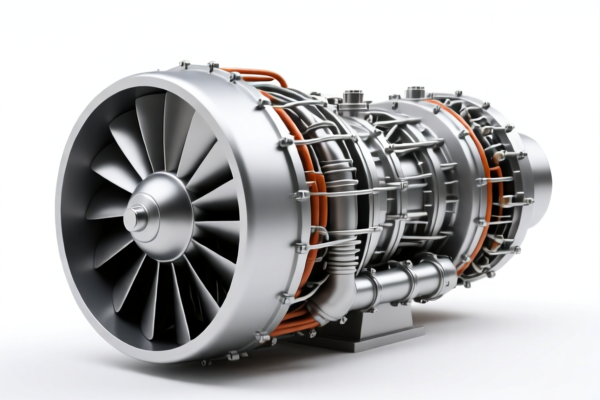
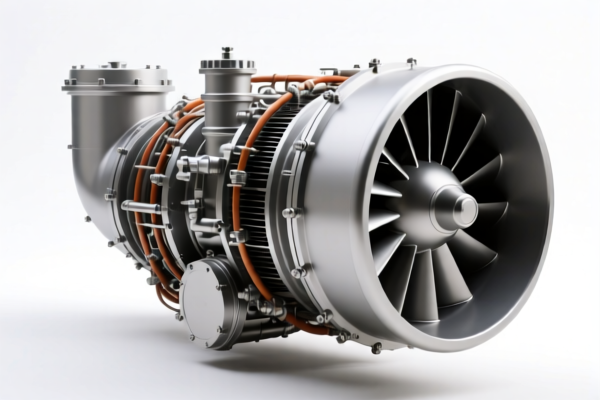
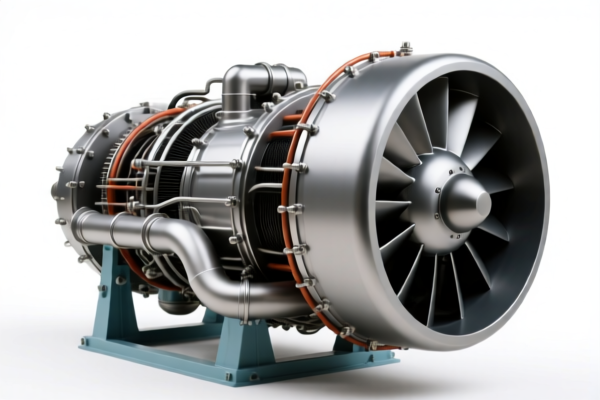
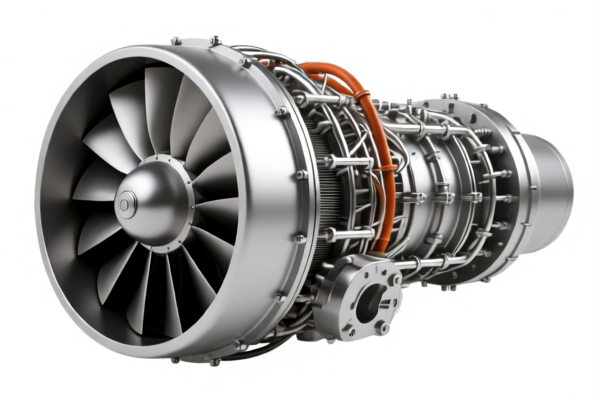
AI Analysis
🚀 Gas Turbine Engines (Aircraft Turbopropellers & Turbines)
🌐 HS Code Reference & Customs Clearance Guide | 2026 Latest Tariff Analysis | Professional Strategy
📌 I. Product Definition & Classification: Do You Really Understand "Gas Turbine Engines"?
Gas turbine engines are the heart of modern aviation, offering high power-to-weight ratios. In international trade, they are strictly categorized by application (Aircraft vs. Other) and power output (kW). For Aircraft Turbopropellers and Aircraft Turbines, the classification hinges on two critical factors: 1. Power Threshold: Whether the power output is ≤ 1,100 kW or > 1,100 kW. 2. End Use: Specifically "Aircraft" turbines.
⚠️ Key Distinction Point:
- Turbopropellers (propellers driven by gas turbines) are classified under8411.21or8411.22.
- Other Gas Turbines (simple cycle, complex cycle) for aircraft fall under8411.81or8411.82.
- Crucial Note: The provided data only covers Turbopropellers for aircraft. Other aircraft turbines (e.g., turbofans, turboshafts) are not included in the provided<DATA>snippet. We must strictly adhere to the provided HS codes.
📦 II. HS Code Classification Details (2026 Latest Tariff Authority Match)
Based on the provided <DATA>, here are the exact HS codes and descriptions for Turbopropellers used in aircraft:
| HS Code | Product Description | Power Range | Application |
|---|---|---|---|
8411.21.40.00 |
Turbopropellers: Of a power not exceeding 1,100 kW: Aircraft turbines | ≤ 1,100 kW | Aircraft |
8411.22.40.00 |
Turbopropellers: Of a power exceeding 1,100 kW: Aircraft turbines | > 1,100 kW | Aircraft |
🔍 Important Clarification:
- The term "Aircraft turbines" in the description refers specifically to Turbopropellers under HS Heading8411.2.
- If the product is a pure turbine engine (e.g., turbojet, turbofan) NOT driving a propeller, it falls under Heading8411.8(Other gas turbines), which is NOT covered in the provided<DATA>.
- Do not misclassify other gas turbines (e.g.,8411.81.40.00) using these codes unless they are explicitly turbopropellers.
💰 III. 2026 Latest Tariff Rate Breakdown
✅ Applicable Countries: United States (US)
✅ Origin: China (CN) (Inferred from tax details in data)
✅ Effective Time: 2025+ (Current Trade Regime)
🎯 1. 8411.21.40.00 — Turbopropellers (≤ 1,100 kW)
| Item | Detail |
|---|---|
| Base Tariff | 0.0% (ad valorem) |
| Section 301 Additional Tariff | 25.0% |
| Total Tariff Rate | 25.0% |
| Tax Calculation | CIF Value × 25.0% |
| De Minimis Eligibility | ❌ Not Eligible (High-value machinery) |
| Legal Basis Path | USITC:8411.21.40.00 → Section 301: Footnote 9903.88.01 |
📌 Explanation:
- The 0% base rate reflects the low standard duty for aviation components.
- The 25% additional tariff is imposed under Section 301 of the Trade Act of 1974 against Chinese imports.
- Total Cost Impact: Importers must budget for 25% of the CIF value in duties alone, excluding other fees (MTD, HMF, etc.).
🎯 2. 8411.22.40.00 — Turbopropellers (> 1,100 kW)
| Item | Detail |
|---|---|
| Base Tariff | 0.0% (ad valorem) |
| Section 301 Additional Tariff | 25.0% |
| Total Tariff Rate | 25.0% |
| Tax Calculation | CIF Value × 25.0% |
| De Minimis Eligibility | ❌ Not Eligible (High-value machinery) |
| Legal Basis Path | USITC:8411.22.40.00 → Section 301: Footnote 9903.88.01 |
📌 Note:
- Despite the higher power output, the tariff structure is identical to the ≤1,100 kW category in this dataset.
- Both categories are subject to the same 25% Section 301 duty.
- No preferential treatment is indicated in the provided data for higher-power engines.
🛠️ IV. Customs Clearance Practical Advice (Battle-Tested Pitfall Guide)
✅ 1. Documentation Checklist (Non-Negotiable)
| Document | Required? | Purpose |
|---|---|---|
| ✅ Technical Specification Sheet | ✔️ | Must explicitly state Power Output in kW and Type (Turbopropeller vs. Turbojet). |
| ✅ Part Number & Manufacturer Info | ✔️ | To verify HS code alignment. |
| ✅ Commercial Invoice | ✔️ | Must clearly describe as "Turbopropeller for Aircraft" to avoid misclassification as "Other Gas Turbines". |
| ✅ Packing List | ✔️ | Detailing any parts/spare components. |
| ✅ Export License (if applicable) | ✔️ | Some aircraft engines may be subject to ITAR/EAR restrictions (USA). |
✅ 2. Declaration Tips (Key Mantra)
🔥 "Power is King, Propeller is Key, Declare 'Turbopropeller', Avoid 'Gas Turbine'!"
| Scenario | Correct Declaration | Wrong Practice |
|---|---|---|
| Turbopropeller, 900 kW | 8411.21.40.00 |
Misdeclare as 8411.81.40.00 (Other turbine) → Risk of penalty. |
| Turbopropeller, 1,500 kW | 8411.22.40.00 |
Under-declare power to fit in 8411.21 → Fraud Risk. |
| Pure Turbofan Engine | NOT IN DATASET | Attempt to force into 8411.21/22 → Rejection/Seizure. |
| Spare Parts for Turboprop | Different HS Code (e.g., 8411.90) |
Misdeclare as complete engine → Valuation issues. |
✅ 3. Special Considerations
| Situation | Handling Advice |
|---|---|
| ITAR/EAR Compliance | Aircraft turbines are often High-Tech/Military-Dual-Use. Check if BIS (Bureau of Industry and Security) approval is needed. |
| Used/Refurbished Engines | Must provide Overhaul Records. Customs may require proof of airworthiness. |
| Parts vs. Complete Unit | If importing components (e.g., blades, casings), they may fall under 8411.90 (Parts). Ensure description matches. |
🌍 V. Global Market Comparison (2026 Update)
| Country/Region | Recommended HS Code (Turboprop) | Tariff Rate (China Origin) | Notes |
|---|---|---|---|
| 🇺🇸 USA | 8411.21.40.00 / 8411.22.40.00 |
25.0% (Total) | High Section 301 duty. |
| 🇨🇳 China | 8411.21.40.00 / 8411.22.40.00 |
Varies (MFN) | Check current MFN rate (often low or 0 for parts). |
| 🇪🇺 EU | 8411.21 / 8411.22 |
0% (Most cases) | No Section 301 equivalent. |
| 🇬🇧 UK | 8411.21 / 8411.22 |
0% | Post-Brexit tariff schedule favors aviation parts. |
📌 Conclusion:
- The USA imposes a steep 25% duty on Chinese-origin turbopropellers.
- EU/UK are more favorable with 0% duty, assuming no specific anti-dumping measures.
- Strategic Tip: If exporting to the US, consider supply chain diversification (e.g., final assembly in a non-affected country) to mitigate tariff risks, if feasible.
📌 VI. Common Errors & Pitfalls (Blood & Tears Lessons)
❌ Error 1: Confusing Turbopropellers (8411.2) with Other Gas Turbines (8411.8).
👉 Consequence: Misclassification → Seizure or Heavy Penalties. Turbopropellers drive propellers; other turbines drive generators or ships.
❌ Error 2: Incorrect Power Declaration.
👉 Consequence: If you declare 1,000 kW but it's 1,200 kW, you shift from 8411.21 to 8411.22. While tax is same in this dataset, regulatory scrutiny increases for higher power.
❌ Error 3: Ignoring ITAR/EAR Restrictions.
👉 Consequence: Criminal Charges for exporting controlled military/dual-use technology without a license.
✅ Correct Practice:
"Turbopropeller for Aircraft, Model XYZ, 950 kW, Export Control Classification Number (ECCN) 9A99X, Compliant with ITAR/EAR."
🎯 VII. Conclusion: Precision in Classification, Savings in Cost
🎯 Remember the Mantra:
🔹 "Power < 1,100 kW → 8411.21.40.00"
🔹 "Power > 1,100 kW → 8411.22.40.00"
🔹 "Total Duty: 25% (Section 301)"
🔹 "Only for Turbopropellers, Not Other Turbines!"
📌 Pro Tip:
If your product is not a turbopropeller (e.g., turbojet, turbofan, turboshaft), it is NOT covered by the provided <DATA>. You must consult HS Heading 8411.8 or 8411.9 separately. Do not force-fit non-turbopropeller engines into these codes.
📣 Immediate Action:
📞 Verify Power Output in kW
📄 Confirm Product Type (Turbopropeller vs. Other)
🔍 Check ITAR/EAR Status
🚀 Pre-Clearance with Customs Broker to Avoid Delays!
✨ Expert Customs Clearance Starts with Accurate Classification!
💼 Your Bottom Line Depends on It!
Customer Reviews
About HS Code Classification
The Harmonized System (HS) is an internationally standardized nomenclature developed by the World Customs Organization (WCO) to classify traded products. Over 200 countries use the HS system as the basis for customs tariffs, trade statistics, and import/export regulations.
Each HS code follows a hierarchical structure:
- Chapter (2 digits) — Broad category of goods (e.g., Chapter 84: Machinery and Mechanical Appliances)
- Heading (4 digits) — More specific grouping within the chapter
- Subheading (6 digits) — Internationally standardized breakdown, used by all WCO member countries
- National subdivisions (8-10 digits) — Country-specific extensions for further classification, such as US HTSUS 10-digit codes
Correct HS code classification is essential for smooth customs clearance, accurate duty payment, and compliance with trade regulations. Misclassification can lead to customs delays, overpayment of duties, or penalties.
When importing from CN to US, the applicable tariff rates may include:
- Most-Favored-Nation (MFN) rate — The standard duty rate applied to WTO members
- General rate — Applied to countries without trade agreements
- Trade remedy duties — Additional tariffs such as Section 301 (anti-dumping), Section 232 (national security), or countervailing duties
The information provided on this page is for reference purposes only. For official classification, please consult with your local customs authority or a licensed customs broker.